GILLES DELEUZE · CINEMA & PHILOSOPHYFilms, concepts, books, and research

Deleuze and cinema

Explore film analyses, concepts, shot-by-shot stills, primary passages, and book guides: movement, perception, and action; memory, time, sound, and the body.

A map of Deleuze's concepts

Movement and time in cinema, connected to difference, desire, becoming, sensation and politics.

See how movement and time relate

Two ways of organizing images can intertwine within one film.

Read the relations in detail
How does cinema make time perceptible?
Time appears indirectly through movement

Movement-image

Movement differentiates images; montage gives an indirect image of time.

Cinema 1: The Movement-Image

Six differentiations

  • perception-image

    Perception selects interactions relevant to a body; cinema can also move seeing beyond a fixed human centre.

  • affection-image

    Faces, close-ups and any-spaces-whatever express power-qualities, making intensities between receiving a stimulus and acting perceptible.

  • Impulse-image

    Elementary impulses penetrate behaviour and seize fragments from derived milieus, exposing an originary world through symptoms and fetishes.

  • action-image

    Situation and action determine one another: the large form begins with a milieu, the small form infers it through action.

  • Reflection-image

    Attraction, inversion and discourse relate situation and action indirectly, turning problems within action forms into objects of thought.

  • Mental / relation-image

    Relations, symbolic acts and intellectual feelings become objects of thought; Hitchcock gives relations their own cinematic form.

Explore movement-image concepts and films
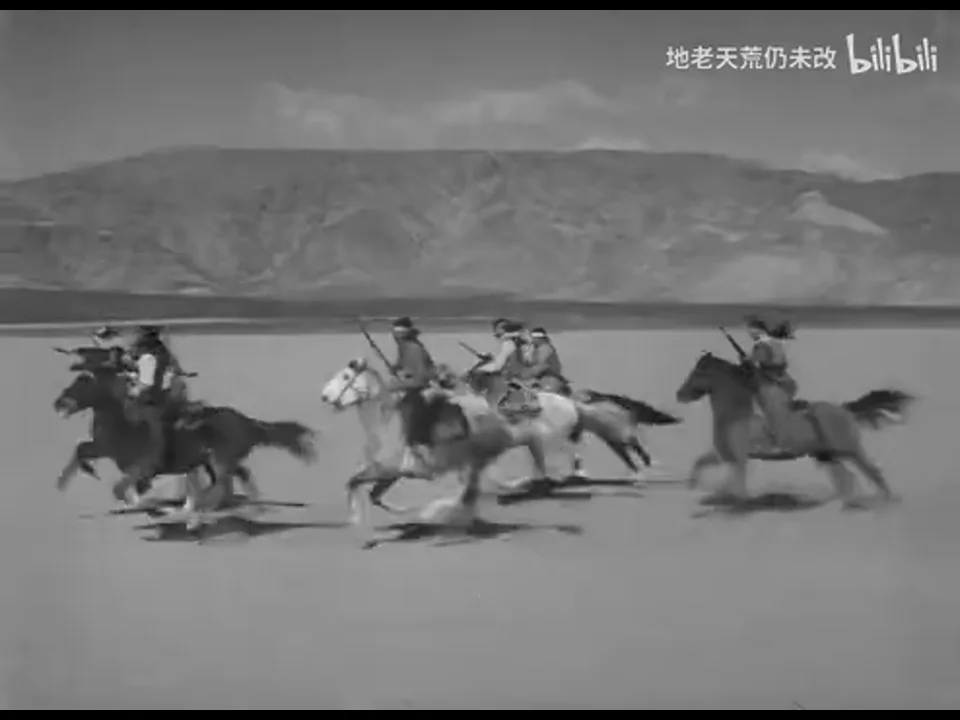
Several riders are spread laterally across open ground, some holding firearms; distant rock faces and the horizon hold the figures low in the frame.
Stagecoach

Space, looks and action coordinate during the chase.

When perception exceeds the capacity to act

Crisis of the action-imageSensory-motor links loosenPure optical / sound situation

As sensory-motor links break, seeing and hearing become autonomous, opening a threshold to the problem of direct time.

Opens the question of direct time
Explore pure seeing and hearing
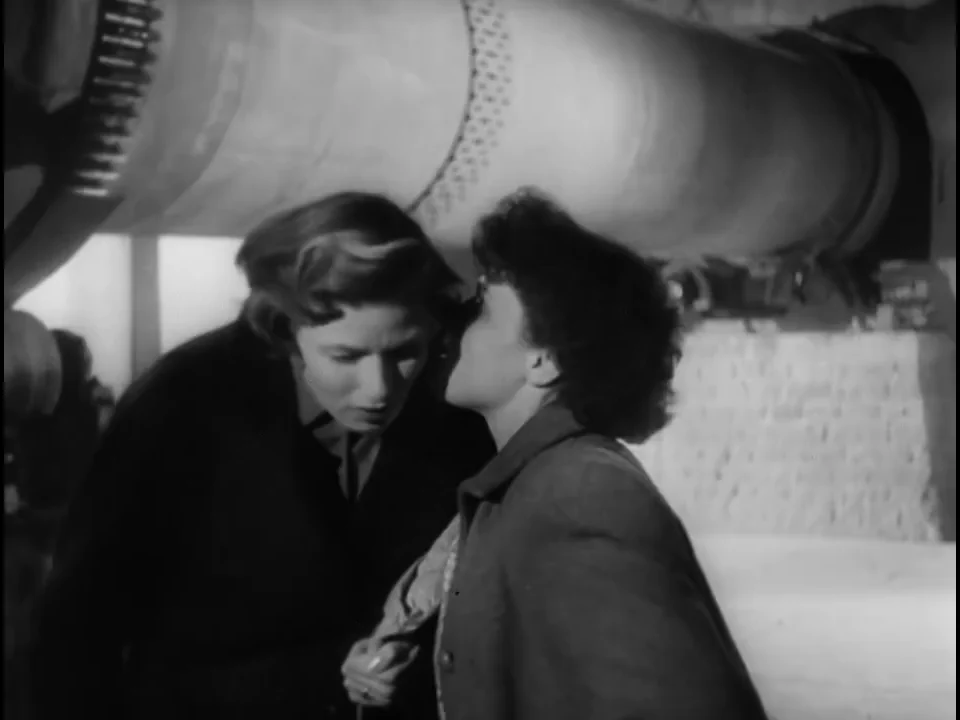
Irene leans toward a woman worker beneath an enormous cylindrical machine in a passage crowded by pipes and machinery
Europe ’51

Irene enters the factory; seeing exceeds its everyday use.

Temporal relations organize images directly

direct time-image / direct presentation of time

Relations of coexistence, splitting and becoming connect images.

Cinema 2: The Time-Image

Explore these problems

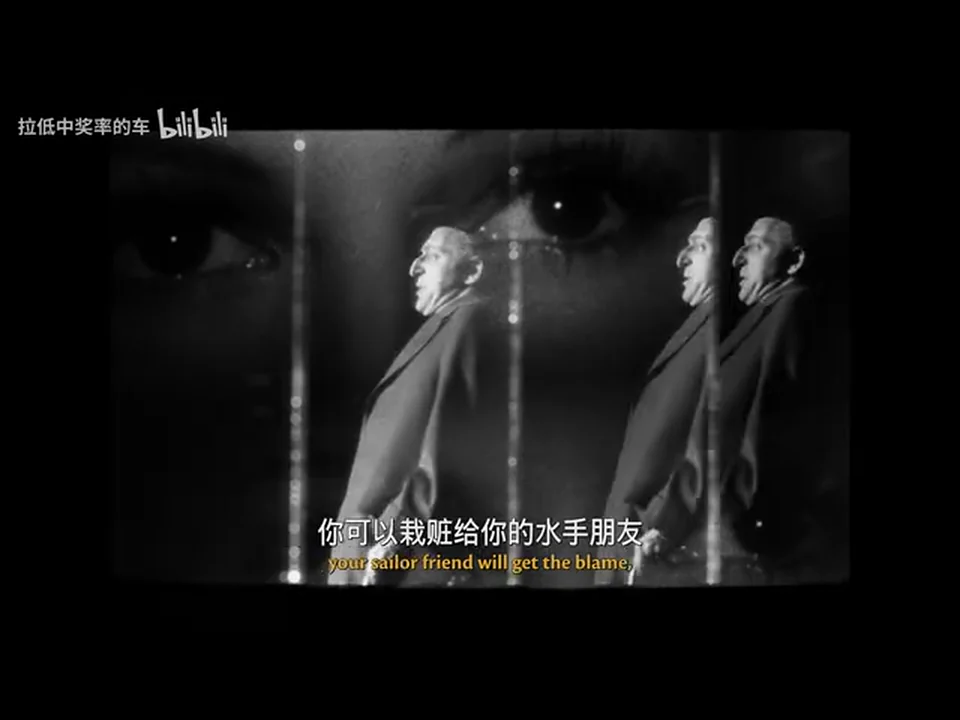
Bannister's body is repeated as three profiles between vertical mirror seams, with a pair of enlarged eyes layered behind him
The Lady from Shanghai

Bodies and reflections exchange actual and virtual positions in the hall of mirrors.

Read across other philosophical problems

Difference asks how things come into being; desire and assemblages concern how relations form and change.

Difference and repetition

Differential relations and singularities generate things; repetition transforms conditions instead of merely reproducing an identical object.

Read the source text
Desire, assemblages and becoming

Bodies, objects and speech form assemblages in which desire produces relations, while becoming and deterritorialization transform their connections.

Read the source text

Select a concept for its definition, a branch for films and books, or an image to play the passage.

How the concepts connect

Types of movement-image, conditions of direct time, and problems of difference and becoming: each connection explains a relation and leads to its text.

  1. A differentiation of the movement-image

    Cinema 1, ch. 4–12
  2. A differentiation of the movement-image

    Cinema 1, ch. 4–12
  3. A differentiation of the movement-image

    Cinema 1, ch. 4–12
  4. A differentiation of the movement-image

    Cinema 1, ch. 4–12
  5. A differentiation of the movement-image

    Cinema 1, ch. 4–12
  6. A differentiation of the movement-image

    Cinema 1, ch. 4–12
  7. Situation, action, transformed situation: S–A–S′

    Cinema 1, ch. 9
  8. Infer the situation from an act, then revise the act: A–S–A′

    Cinema 1, ch. 10
  9. Making relations themselves the object of the image realizes the mental problem-field

    Cinema 1, ch. 12
  10. As sensory-motor links loosen, pure optical and sound situations become autonomous

    Cinema 1, ch. 12; Cinema 2, ch. 1–2
  11. A condition for the question of direct time, not a synonym for direct time

    Cinema 2, ch. 1–2
  12. Actual and virtual enter the smallest inseparable circuit of exchange

    Cinema 2, ch. 4
  13. Recollection actualizes a past; the crystal reveals the present and its virtual image forming together

    Cinema 2, ch. 3–4
  14. Coexisting pasts are one form of the direct order of time

    Cinema 2, ch. 5; conclusion
  15. Incompatible peaks of present form another direct order of time

    Cinema 2, ch. 5; conclusion
  16. The genesign names temporal series, distinct from the two forms of temporal order

    Cinema 2, conclusion §2
  17. The model of truth is unsettled and narration participates in change and becoming

    Cinema 2, ch. 6
  18. The cut ceases to be merely a join and forces thought into the interval between images

    Cinema 2, ch. 7
  19. Sound and the visual develop autonomously; images ask to be read, not merely recognized

    Cinema 2, ch. 9
  20. A character's act of speaking and the becoming of a people affect one another

    Cinema 2, ch. 6, 8
  21. Repetition is not confined to copying the same: difference is produced within repetition

    Difference and Repetition, ch. 1–2
  22. Differential relations and singularities determine a multiplicity without presupposing a unified identity

    Difference and Repetition, ch. 4
  23. Virtual problematic structures become actual through differentiation

    Difference and Repetition, ch. 4
  24. Realization of the possible proceeds by resemblance; actualization of the virtual produces difference

    Bergsonism, ch. 5
  25. Heterogeneous elements can connect laterally without belonging to a single root or centre

    A Thousand Plateaus, Introduction
  26. An assemblage's relations can form territories and also change along lines of flight

    A Thousand Plateaus, Conclusion
  27. Departures from a territory accompany new territorial formations, rather than reaching a final state of freedom

    A Thousand Plateaus, Conclusion
  28. Rhythm and expressive repetition establish a territory and can also open it

    A Thousand Plateaus, 1837: Of the Refrain
  29. Fabulation lets speakers and the collective they speak become together instead of imitating an already given people

    Cinema 2, ch. 6, 8

How movement organizes images

Back to map

Movement differentiates into perception, affection, impulse, action, reflection and mental relations. Time appears indirectly through movement and montage. The large form proceeds from situation to action; the small form infers a situation from action.

Several riders are spread laterally across open ground, some holding firearms; distant rock faces and the horizon hold the figures low in the frame.Play
Stagecoach

Reins, horses, shooters, coach body, and pursuers divide action into interdependent local tasks.

Read the passage analysis

Movement-image

image-mouvement

The movement-image is a regime in which movement differentiates into perception, affection, impulse, action, reflection, and mental relation to organize the image directly, while time appears indirectly through movement and montage. The relation-image is a decisive realization within the mental-image's problem-field, not an additional source-level rank parallel to it, and films need not pass through one fixed action-chain.

A question for the shot

Which differentiation—perception, affection, impulse, action, reflection, or mental relation—governs the shot, and how does it alter connections among parts so that the whole changes qualitatively?

Cinema 1; Cinema 2, ch. 1–2

Impulse-image

image-pulsion

The impulse-image stands between affection and action. Deleuze divides its naturalist structure into four terms arranged in two pairs: originary world/derived milieu and elementary impulse/real behaviour. A historically, geographically, and socially determinate derived milieu remains present while elementary impulse penetrates real behaviour from within; impulse seizes object-fragments from that milieu and thereby exposes an uncoordinated originary world. Symptom and fetish are not additional structural terms but two classes of signs: a symptom is the appearance of impulse in the derived milieu, while a fetish is the appearance of the seized object-fragment itself. Stroheim realizes this structure through decay, descent, and entropy; Buñuel through repetition, cycles, and restart. These are distinct realizations, not cumulative thresholds that every example must satisfy.

A question for the shot

Within a specific shot, first distinguish how the four-part structure operates: how an originary world appears within a derived milieu, and how elementary impulse penetrates real behaviour while seizing object-fragments. Then identify which of the two types of signs makes this operation visible—a symptom, or a fetish as the appearance of an object-fragment—before determining whether the film follows Stroheimian descent/entropy, Buñuelian repetition/cycle, or another demonstrable realization.

Cinema 1, ch. 8, pp. 123–140 (Minnesota 1986)

Action-image: large form

grande forme de l'image-action

The large form of the action-image follows S–A–S′. A milieu, collective, historical pressure, or danger first composes an encompassing situation S; that pressure leaves an internal imprint upon the character and concentrates itself in action A as effort, duel, or collective coordination; action then carries the milieu into a situation S′ different from the initial one. Its decisive question is how a situation demands action and whether action actually reorganizes that situation.

A question for the shot

Specify the encompassing pressure of S, trace how it contracts through bodies and groups into A, then compare the institutional, spatial, and force relations of S with S′. If only a task is completed while the situation remains unchanged, the circuit has not been demonstrated.

Cinema 1, ch. 9, pp. 141–159 (Minnesota 1986)

Action-image: small form

petite forme de l'image-action

The small form of the action-image follows A–S–A′. It begins from an action A already underway whose meaning remains equivocal; indices of lack or ambiguity progressively disclose the situation S in which that act is embedded, forcing a revised action A′. The situation is not given in advance as a known whole but inferred through local gestures, misrecognitions, clues, gags, and the consequences of action.

A question for the shot

What initially unintelligible act does the shot give us? Which index of lack or equivocity makes its situation inferable, and how does that inference rewrite the next action? If the situation is fully established from the outset, A–S–A′ is not the most precise account.

Cinema 1, ch. 10, pp. 160–177 (Minnesota 1986)

Reflection-image

image-réflexion

Following Cinema 2, pp. 32–33, which retrospectively revisits the first semiotics, the atlas gathers the figures developed in Cinema 1, chapters 10–11—attraction, inversion, and discourse—under reflection-image. All three still transform the situation–action relation from within the action forms: attraction uses a substitute or rehearsal to miniaturize, prefigure, or stage another situation or act; inversion exchanges large and small powers; discourse makes an implicit problem into an audible and visible object of thought. Reflection-image must not be prematurely equated with chapter 12's relation-image.

A question for the shot

Identify the third term introduced between situation and action, then demonstrate shot by shot whether it transforms the prior S–A or A–S direction through substitution and prefiguration, inversion of large and small powers, or discourse that makes an implicit problematic relation into the image's object.

Cinema 1, ch. 10, pp. 171–173 (discursive figure), ch. 11, pp. 182–187 (attraction and inversion) (Minnesota 1986); Cinema 2, ch. 2, pp. 32–33 (retrospective sign classification) (Minnesota 1989)

Mental-image

image mentale

In Cinema 1, the mental-image takes relations, symbolic acts and intellectual feelings as objects of thought rather than representing a character's inner states. Relations are external to their terms and irreducible to any single term's properties; symbolic acts and intellectual feelings must likewise become operations performed by framing, sound and editing, not merely story content. Hitchcock's relation-image is a decisive realization of this problem-field: camera and montage make the spectator's inference part of the image. The mental-image is not a parent category for recollection-images and dream-images.

A question for the shot

First determine whether the shot takes a relation, symbolic act, or intellectual feeling as its object. Then ask how camera, editing, and sound distribute that operation among character, film, and spectator rather than merely supplying psychological information; a further diagnosis of relation-image requires separate evidence of Thirdness at work.

Cinema 1, ch. 12, pp. 197–205 (Minnesota 1986); Cinema: The Classification of Signs and Time, lecture 12, 1 March 1983

Relation-image

image-relation

The relation-image is a decisive realization of the mental-image's problem-field in Hitchcock: it makes relations themselves the object of the image and organizes its signs through Peircean thirdness. Marks sustain natural or habitual series; demarks divert a series through an anomalous term; symbols let concrete terms carry abstract relations. Hitchcock also forms a three-part arrangement of director, film and spectator who must enter the process of inference. Mental-image and relation-image connect in this way rather than constituting two parallel higher-order types.

A question for the shot

First list the habitual series, then identify the demark that makes it deviate or contradict itself, or the concrete symbol that bears several relations or variations of one relation. Finally show how the film lets spectators know or discover the relation ahead of a character and incorporates that response into framing, editing, and suspense rather than merely making them wait for a solution.

Cinema 1, ch. 12, pp. 197–205 (Minnesota 1986)
Terms explained

imageimage
Bergson starts from images to understand matter: bodies, brains and things belong to one field of interacting images. An image precedes the division between an external object and its mental copy. Perception selects from these interactions; it does not add pictures to an otherwise imageless world.
movement-imageimage-mouvement
Movement organizes images directly through six differentiations: perception, affection, impulse, action, reflection and the mental image. Relations among movements and montage give an indirect image of time. The relation-image realizes the mental problem in a distinctive way; these six differentiations are not successive stages that every film must complete.
perception-imageimage-perception
The perception-image selects aspects of things in relation to a centre and its possible actions. Framing and viewpoint determine what becomes visible and what recedes. Cinema can also loosen the human centre and approach movements within things themselves. A character's point-of-view shot is one form of this broader operation.
affection-imageimage-affection
The affection-image expresses a power-quality before it becomes a determinate action in a situation. A face, an intensive close-up, or light and colour in an any-space-whatever can carry this affect. Affection occupies the interval between receiving a stimulus and acting, extending beyond an explanation of a character's private emotions.
action-imageimage-action
The action-image actualizes qualities and powers in a determinate milieu. Characters respond to situations through effort, confrontation or cooperation, and their actions transform those situations. The relation may begin with an encompassing situation or emerge through local clues. What matters is this reciprocal organization, rather than the amount of bodily movement.
impulse-imageimage-pulsion
The impulse-image lies between affection and action. Elementary impulses penetrate real behaviour within a derived milieu, seizing object-fragments and exposing an originary world. A symptom manifests impulse; a fetish manifests the seized fragment. These are types of signs. Decay and repetitive cycles provide different realizations of this structure, rather than requirements that must always coincide.
large form of the action-image / S–A–S′grande forme de l’image-action / S–A–S′
The large form follows S–A–S′: an encompassing situation distributes pressures and forces; an action answers them and produces a changed situation. A duel, sustained effort or collective coordination concentrates the transformation. Large names the situation's structural role in encompassing action, not the size of the spectacle or the production budget.
small form of the action-image / A–S–A′petite forme de l’image-action / A–S–A′
The small form follows A–S–A′: an initially ambiguous act reveals a situation through gestures, clues or consequences, and that discovery redirects subsequent action. The situation is inferred from behaviour rather than presented beforehand as an encompassing whole. Small describes this direction of inference, not a film's length, budget or apparent importance.
reflection-imageimage-réflexion
The reflection-image makes situation and action relate indirectly through attraction, inversion and discourse. A substitute or rehearsal can prefigure another action; an inversion exchanges the functions of large and small powers; discourse brings an implicit problem into thought. These operations transform action forms from within, rather than simply depicting mirrors or private introspection.
mental imageimage mentale
The mental-image takes relations, symbolic acts and intellectual feelings as objects of thought. Relations are external to their terms: no single character or object contains the relation that connects them. Images, sounds and editing make this relation perceptible to thought. Hitchcock's relation-image is a crucial realization of this problem, rather than a separate parallel rank.
relation-imageimage-relation
The relation-image is Hitchcock's decisive realization of the mental-image: relations become the image's object and reorganize how characters and things are understood. A mark sustains a habitual series, a demark interrupts it with an anomalous term, and a symbol carries an abstract relation in something concrete. The spectator participates through comparison and inference.

From action in crisis to pure seeing and hearing

Back to map

A character can walk, speak or complete a local act while perception no longer leads to action adequate to the situation. Opsigns and sonsigns make this break visible and audible, opening the question of direct time without being identical to it.

Irene leans toward a woman worker beneath an enormous cylindrical machine in a passage crowded by pipes and machineryPlay
Europe ’51

Cylindrical machinery occupies the upper frame while Irene turns and leans toward the worker below; mechanical noise and dialogue coexist in the same shop-floor sound field. Scale, sound, and bodily distance can each be checked at this moment. Bilibili timecode 01:00:00.

Read the passage analysis

Crisis of the action-image

crise de l'image-action

The crisis of the action-image is not the disappearance of movement but the loss of a credible bond among situation, perception, and action capable of changing the world. Cinema 1 lists a constellation of five surface symptoms: dispersive situations that replace a totality with gaps; deliberately weak links among events; wandering that displaces goal-directed travel; consciousness of clichés, as figures and spectators begin to recognize how ready-made schemata obscure real relations; and the exposure or denunciation of conspiracy—the network of control behind the plot. These are external negative conditions for a new image-regime, not a checklist that every film and every sequence must complete.

A question for the shot

Identify the symptoms actually present and how they combine, without forcing all five into the sequence. Then explain how these surface features deprive action of its power to integrate the world, and whether that failure produces a new optical or sound relation or remains a plot setback.

Cinema 1, ch. 12, pp. 205–216 (Minnesota 1986); Cinema 2, ch. 1, pp. 1–13 (Minnesota 1989)

Sensory-motor schema

schème sensori-moteur

The sensory-motor schema is not the definition of the movement-image but one specific body-world organization within it. A body receives movement from its milieu, selects perceptions according to its needs, retains what it cannot immediately discharge as affection, and answers the milieu through action. Its crisis does not mean that characters cease moving; the link from perception and affection to an action capable of changing the situation comes loose.

A question for the shot

Record what the figure perceives, how the body is affected, and what action follows; then ask whether that action alters the milieu and supplies usable cues for the next perception. At which link does the circuit break?

Cinema 1, chs. 4–10, 12; Cinema 2, chs. 1–2

Pure optical / sound situation

opsigne / sonsigne

A visual or auditory situation acquires a duration autonomous from cues for action or narration. Unable to translate what is seen or heard immediately into an effective response, the figure becomes a seer, listener, or witness. This is a threshold of the time-image, not direct time by itself.

A question for the shot

Can action use up this sound or image? What does the remainder compel us to notice?

Cinema 2, ch. 1–2

The seer

voyant

The agent loses mastery over the situation and sees what habitual action concealed. The seer is a body struck by something too strong, too beautiful, terrible, or intolerable.

A question for the shot

Does the character’s inability to act produce a more powerful seeing?

Cinema 2, ch. 1

Any-space-whatever

espace quelconque

A space stripped of stable coordinates, total continuity, and practical use: ruins, empty lots, fractured streets, waiting rooms, or virtual spaces built from light, colour, and fragments. Relations can be recomposed within it. In Cinema 1 it carries affection and power-qualities; in Cinema 2 it can also become a spatial condition of the sensory-motor break.

A question for the shot

Does the space contain action, or dissolve the coordinates action requires?

Cinema 1, ch. 7; Cinema 2, ch. 1

Terms explained

crisis of the action-imagecrise de l’image-action
The crisis of the action-image loosens the credible bond between perception, situation and effective action. Characters still move, but lose reliable ways of transforming their world. Dispersive situations, weak connections, wandering, awareness of clichés and exposure of conspiracy mark this crisis. These symptoms open conditions for new images without themselves establishing direct relations of time.
sensory-motor schemaschème sensori-moteur
The sensory-motor schema organizes a body-world relation: perception selects relevant stimuli, affection occupies the interval, and action responds to the milieu. It is one organization within the movement-image, not its full definition. When the schema loosens, what characters see or hear exceeds an adequate practical response, even while their bodies continue moving.
pure optical and sound situationsituation optique et sonore pure
A pure optical or sound situation arises when seeing or hearing exceeds its habitual practical use. Perception persists while an adequate action no longer follows. Pure names this independence of relations, not visual or acoustic purity. Such situations are thresholds to the problem of direct time; their temporal relations still need to take specific form.
opsign / optical signopsigne
An opsign marks a pure optical situation: a sight exceeds a character's capacity to act, and seeing develops its own problems and relations. Composition, light or empty space can support this organization, but visual beauty alone does not establish it. The opsign is a threshold to direct time, whose relations require further articulation.
sonsign / sound signsonsigne
A sonsign marks a pure sound situation. Sound exceeds its function as a cue for action and develops its own duration, intervals or relations with images. Noise, speech and silence can participate. It is a threshold to the problem of direct time; prominence or an unidentified sound source alone does not establish direct temporal relations.
tactisign / tactile signtactisigne
In Bresson's cinema, the tactisign concerns touch connecting fragments of space. An establishing view does not organize the space in advance; hands touching, brushing and passing objects connect its parts locally. Seeing thereby acquires a tactile relation. The decisive operation is this connection, not merely a close-up of a hand or a textured surface.
seervoyant
The seer is a body struck by something too powerful, beautiful, terrible or intolerable to master through action. The character may keep walking, speaking or attempting to intervene, while seeing what habitual responses concealed. Diminished practical mastery becomes intensified perception or witnessing, rather than a simple absence of movement or interest.
any-space-whateverespace quelconque
An any-space-whatever retains singular light, colour and texture while losing fixed coordinates or predetermined overall connections. Its disconnected parts can be recombined, and emptied spaces can expose the potential of power-qualities. Whatever names this openness of relations, not an arbitrary location. A ruin or an empty shot must actually produce that spatial operation.

Duration, memory and dreams

Back to map

Duration is not a slowed clock: qualitatively different moments interpenetrate. The coexistence of pure past, the actualization of recollection and the expanding circuits of dreams involve distinct mechanisms. A flashback or a nonlinear plot alone does not establish a time-image.

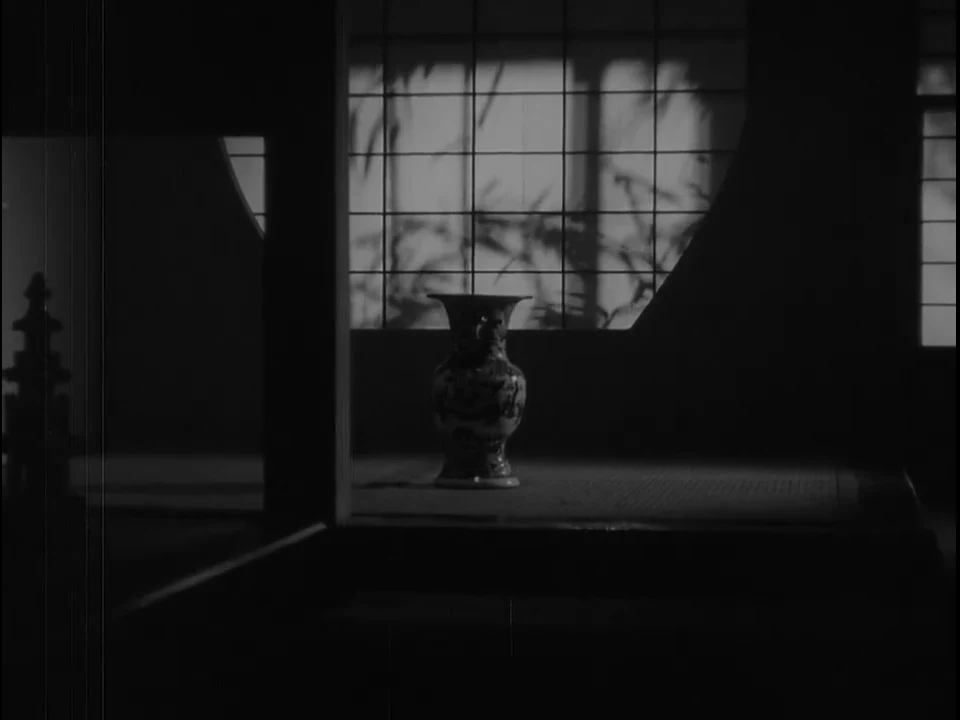
A vase stands centered before a shoji, with bamboo shadows cast on the paper screenPlay
Late Spring

During the second vase shot, the vase remains nearly motionless while bamboo shadows continue moving across the shoji. The still records composition only. The 27.277-second interval from 01:28:20.380 to 01:28:47.657 begins with the first cut to the vase, passes through Noriko's face and the second vase shot, and ends at the cut into the rock garden; the preceding smiling face lies outside these stored bounds. Bilibili timecode 01:28:42.

Read the passage analysis

Terms explained

time-imageimage-temps
Temporal relations directly organize images: past and present coexist, incompatible presents persist, or characters change through time. Movement and editing can continue, but an action goal no longer governs their relations. A slow shot or a flashback supplies a possible form, not a sufficient definition.
direct time-image / direct presentation of timeimage-temps directe / présentation directe du temps
Time becomes the relation organizing movement rather than a measure inferred from it. Its division, coexistence or becoming can appear through editing and audiovisual relations. Opsigns and sonsigns open a threshold to this problem; direct presentation names time's organizing role, not an unedited recording or an absence of movement.
durationdurée
Duration is qualitative change in which moments interpenetrate: what has passed continues to affect what follows. In a melody, earlier notes alter how the next note is heard. Dividing the experience into equal clock units loses this relation of accumulation and transformation; duration is not simply subjective slowness.
pure past / past-in-itselfpassé pur / passé en soi
The pure past coexists with the passing present and provides the condition for a present to pass and for recollection to occur. It is preserved virtually rather than stored as a ready-made set of pictures. A particular recollection actualizes an image from it without exhausting the past.
recollection-imageimage-souvenir
A recollection-image actualizes the past in a present situation: a person, object or problem draws someone toward a particular memory. It can explain a cause or guide an action, remaining an indirect presentation of time. The specific remembered image differs from the virtual past that makes recollection possible.
mnemosign / memory signmnémosigne
A mnemosign marks the enlarged circuit between a present perception and a recollection-image: the situation calls up a memory, which changes how the situation is recognized. That circuit can still support action and causal explanation. In the cinematic taxonomy it therefore remains an indirect presentation of time.
onirosign / dream signonirosigne
An onirosign emerges as perception loosens its connection to action. One image transforms into another, and local bodily movement gives way to dream or world movement. Its enlarged circuits present time indirectly. The sign concerns how images continue and transform, rather than whether a story simply contains a dream.
cinematic still lifenature morte
Cinematic still life combines the presence of objects, their composition and the shot's duration, unlike empty space defined through absence. In Late Spring, the vase persists between changing facial expressions, making the enduring form of time perceptible through change. Adjacent shots and sound develop this relation beyond an object's symbolism.

Actual, virtual and crystal

Back to map

The virtual is real and distinct from the actual. Actualization produces concrete differences rather than copying a preformed possibility. The crystal places an actual image and its coexisting virtual image in the smallest circuit of exchange. Limpid and opaque, seed and environment describe how that exchange unfolds.

Bannister's body is repeated as three profiles between vertical mirror seams, with a pair of enlarged eyes layered behind himPlay
The Lady from Shanghai

One speaker becomes body, reflection, and watched double at the same time.

Read the passage analysis

Actual / virtual

actuel / virtuel

The actual is a formed and locatable state. The virtual consists of fully determined and fully real differential relations, singularities, memories, and tendencies. It is not a possible future or a blurred copy of the actual. The virtual is actualized through differenciation: actualization creates a solution rather than making a pre-existing model resemble reality, and the formed actual continues to carry the virtual problem to which it responds.

A question for the shot

Identify the unactualized yet already operative relations, memories, or tendencies that constrain the shot, then show how they differentiate into this actual composition, performance, sound, or narrative form. Merely imagining a possible future does not pass the test.

Cinema 2, ch. 4, pp. 68–97 (Minnesota 1989); Matter and Memory, chs. 2–3; Bergsonism, ch. 3 and ch. 5; Difference and Repetition, ch. 4, pp. 168–221

Crystal-image

image-cristal / hyalosigne

A crystal-image forms when an actual image and its own virtual image coalesce in the smallest internal circuit. The two faces pursue, feed back into, and exchange with one another. They preserve their difference in kind, yet the stable assignment of one face permanently to the actual and the other permanently to the virtual becomes undecidable. This objective indiscernibility makes visible the present's continual split into an actual present and a coexisting virtual past.

A question for the shot

Name both faces of the circuit and track how each reflection, recollection, performance, or copy acts back upon the supposed original. Can the faces continue to exchange while the analysis still specifies their difference in kind?

Cinema 2, ch. 4, pp. 68–97 (Minnesota 1989)

Limpid and opaque

limpide et opaque

As one face of the crystal becomes a clear actual image, the other recedes into opaque virtuality; then the two exchange. Their relation produces visibility.

A question for the shot

Which face is momentarily clear, how does it darken the other, and where do they reverse?

Cinema 2, ch. 4; Deamer, 2016

Seed and environment

germe et milieu

A seed triggers crystallization within an as-yet amorphous environment, while that environment must itself possess a virtual crystalline structure. Seed and milieu reciprocally individuate one another, making the crystal a world in formation.

A question for the shot

What world is a local form crystallizing, and how does that world act back upon it?

Cinema 2, ch. 4; Deamer, 2016

Terms explained

actual / the actualactuel / l’actuel
The actual is the real insofar as it takes a determinate form and operates within a concrete situation. A present perception or an actualized recollection can be an actual image. Its distinction from the virtual neither gives it exclusive reality nor guarantees the factual truth of what an image narrates.
virtual / the virtualvirtuel / le virtuel
The virtual is fully real as a structure of differential relations capable of actualization. The past can coexist with the present in this way and acquire a determinate image through recollection. Virtuality exceeds what is presently given without meaning falsehood, a digital environment or a pre-drawn possible outcome.
real / the realréel / le réel
The real includes both actual and virtual: determinate images are real, and so are the virtual relations through which memory and transformation occur. This distinction concerns modes of existence. Whether a documentary statement is factually true remains a different question about the event and evidence to which it refers.
possible / the possiblepossible / le possible
The possible is conceived as a preformed option that lacks realization. Realization brings an option into existence while preserving its resemblance to the prior model. Actualization of the virtual instead produces differences while resolving a problem: the resulting form is not sufficiently explained as a copy of an already completed plan.
actualizationactualisation
Actualization is the process by which virtual relations differentiate into concrete forms. A recollection takes shape from a coexisting past, just as a problem can produce different solutions. What emerges remains related to its virtual conditions without having to resemble a preformed model as a copy resembles its original.
crystal-imageimage-cristal
An actual image and its simultaneously forming virtual image enter the smallest circuit, remaining distinct while exchanging positions. The present's passing and the past's preservation become visible together. Mirrors, actor and role, or stage and life can carry this exchange; a decorative reflection alone does not establish the reciprocal relation.
hyalosign / crystal signhyalosigne
A hyalosign names the crystalline exchange in which actual and virtual remain distinct yet inseparable. It makes visible the splitting of the present into a passing present and a preserved past, one form of direct time. Limpid and opaque, seed and environment describe further dimensions of this circuit's development.
indiscernibility / indiscernibleindiscernabilité / indiscernable
Indiscernibility is a relation in which distinct qualities exchange their assignment. Within the crystal, actual and virtual remain differentiated, yet neither face can be permanently secured as original while the other is fixed as copy. The difficulty belongs to the image's structure, rather than blur or temporarily missing information.

Sheets of past, peaks of present and falsification

Back to map

Sheets of past coexist, while peaks of present sustain mutually incompatible presents. Falsifying narration is not simply a puzzle about who lied: it unsettles a pre-existing model for judging truth and lets characters and narration change together.

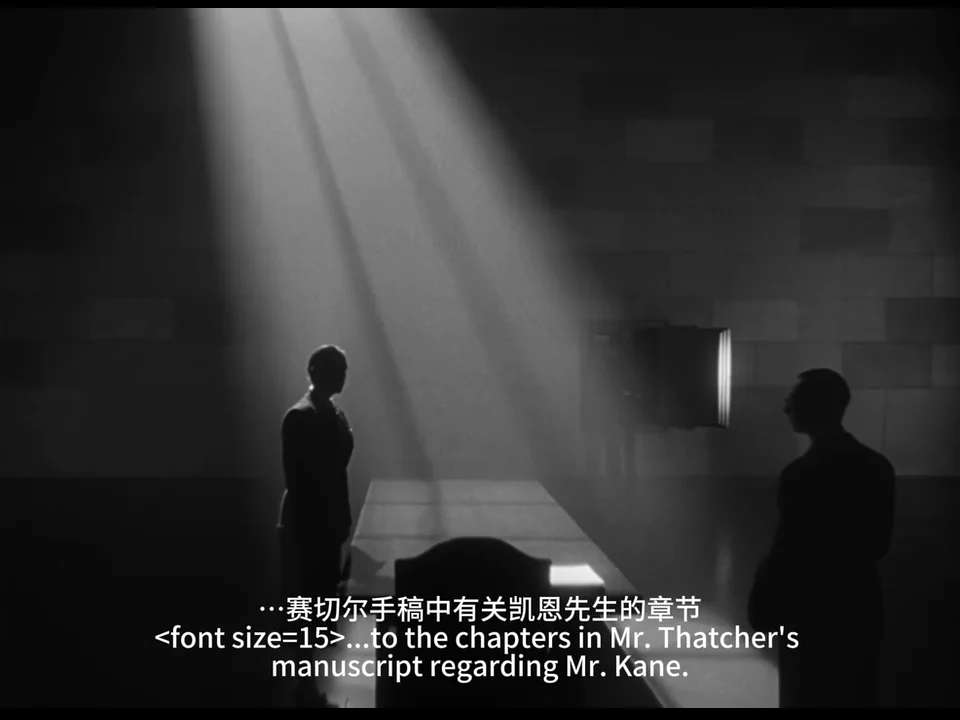
A shaft of overhead light illuminates a long archive table and manuscript while Thompson and an attendant stand as silhouettes on opposite sidesPlay
Citizen Kane

The investigation does not return to one past; it enters one sheet through a witness document.

Read the passage analysis

Sheets of the past

nappes de passé

Sheets of the past are not former presents stacked in chronological order but virtual regions in which the pure past exists at different degrees of contraction; the whole past coexists virtually with every present. Recollection does not retrieve a ready-made copy from storage. Starting from a present problem, it leaps into a region, searches along a sheet, and actualizes a recollection-image; the search may also change sheets, misrecognize, or fail.

A question for the shot

Identify the present problem that triggers recollection, then trace how the figure enters, changes, or fails to reach a region of the past. If a flashback merely supplies causal information and returns to one timeline, it remains a causal flashback.

Cinema 2, ch. 5, pp. 98–125 (Minnesota 1989); Bergson, Matter and Memory, ch. 3

Peaks of the present

pointes de présent

Peaks of the present make several mutually incompossible presents persist as present and thereby deactualize the single continuous and decidable 'real present.' This is not a set of viewpoints upon an already settled event. The image sustains mutually exclusive present worlds without an external master version that can reduce the others to errors.

A question for the shot

List the figures, events, and audiovisual relations altered by each present version, then ask whether the film finally restores one adjudicating master present. If every difference can be explained by missing information, deactualization has not occurred.

Cinema 2, ch. 5, pp. 98–125 (Minnesota 1989)

Chronosign

chronosigne

Chronosign is the superordinate classification used when temporal relations directly organize the connection of images rather than merely measuring or resulting from action. Chapter 5 distinguishes two branches that are distinct and non-interchangeable: sheets of past make the virtual past coexisting with the present into regions of recollection-search, while peaks of present sustain incompossible presents and deactualize the single present. Both are signs of direct time, but they answer different problems.

A question for the shot

How do temporal relations connect the images: a search through sheets of past, coexisting incompossible presents, or temporal series in which before and after become qualities of change? Does this relation still organize the shots when the action-goal is removed?

Cinema 2, ch. 5, pp. 98–125 (Minnesota 1989)

Powers of the false

puissances du faux

Narration abandons a recoverable model of truth and lets characters, testimonies, memories, and worlds mutate through a series of falsifiers. The false gains creative power by freeing itself from a model of truth.

A question for the shot

Does the film expose a lie to restore truth, or alter the rules by which truth and falsity are produced?

Cinema 2, ch. 6; Cinema seminar 1983–84

Falsifying narration

narration falsifiante

Characters and narrative positions escape calibration by an omniscient centre. Each falsifier refers to another, while identity and past mutate according to degrees of power.

A question for the shot

Who can adjudicate among versions, and is that position itself drawn into the series of falsifiers?

Cinema 2, ch. 6

Terms explained

sheets of the pastnappes de passé
The whole past coexists at different degrees of contraction, forming sheets that recollection can enter and search. A particular memory-image is actualized from a selected sheet. Citizen Kane distributes this search across different witnesses: no single remembered period secures possession of the character's entire past.
peaks / points of the presentpointes de présent
Peaks of present sustain mutually incompossible presents: an encounter may have happened, be happening or remain to happen without those presents submitting to one final chronology. This is an order of coexistence among presents, distinct from searching different sheets of past for the recollection that would explain an event.
chronosignchronosigne
Chronosigns connect images directly through temporal relations, with temporal order and temporal series as distinct branches. Coexisting sheets of past and peaks of present belong to order. The genesign names series, where before and after become qualities of transformation. Date captions and clocks alone do not establish these relations.
genesign / genetic signgénésigne
The genesign names a temporal series in which before and after become qualities of change rather than relative positions on a chronology. A character becomes other through speech and action, giving the series its direction. This differs from the temporal order of sheets and peaks and is narrower than becoming generally.
powers of the falsepuissances du faux
The powers of the false unsettle a fixed model for judging truth as characters and narration transform through encounters. The question becomes what transformations can create new relations of life. A forger's manipulation, unreliable narration and artistic creation exercise different powers; uncertainty about truth alone does not make them equivalent.
falsifying narrationnarration falsifiante
Falsifying narration draws the position that judges truth into transformation: witnesses, investigators, authors and narrated subjects alter one another. Narration participates in the becoming it presents. If a stable final judge can restore one definitive account, elaborate flashbacks or lying characters may still belong to a truth-seeking narrative.

Thought, sound, images and bodies

Back to map

Images do more than convey a character's completed thoughts. Irrational cuts, audiovisual disjunction, bodily attitudes and cerebral connections alter the conditions of thinking: what forces thought, and which connections does narration cease to supply?

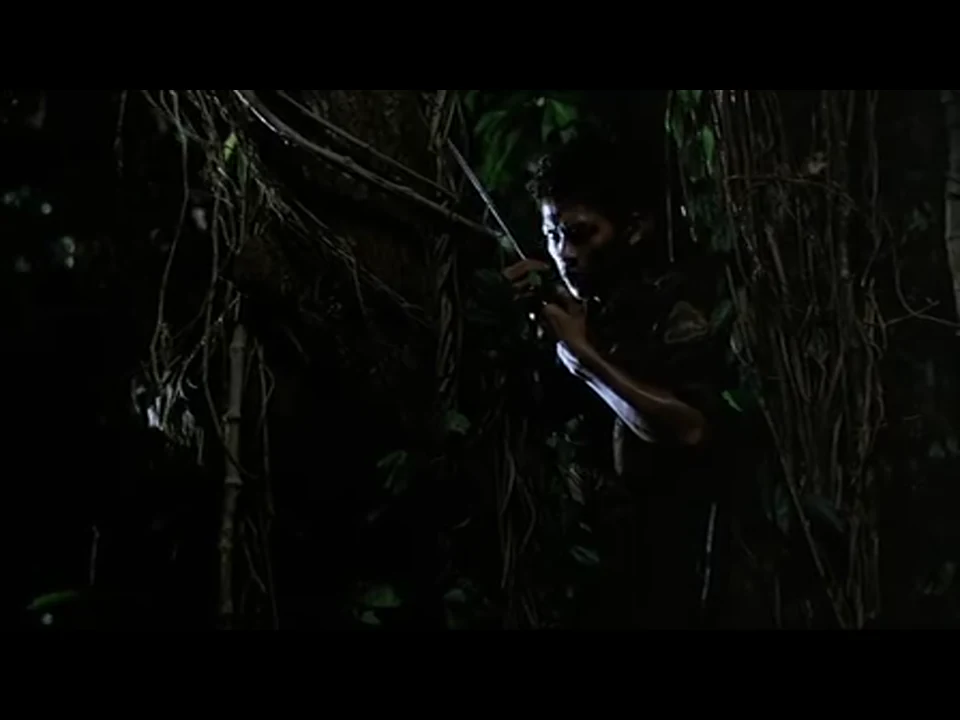
Among nearly black vines, the soldier raises a radio; only one side of his face is caught by a narrow lightPlay
Tropical Malady

The communication device sends a call but does not turn the forest back into a mappable action-space. Bilibili timecode 01:08:47.

Read the passage analysis

Irrational cut / interstice

coupure irrationnelle / interstice

Deducible continuity among shots, sounds, and images gives way to an irreducible interval between series. Thought is forced to happen within it.

A question for the shot

Does this cut conceal an ellipsis, or produce an irreducible relation?

Cinema 2, ch. 7–9

Noosign

noosigne

The noosign marks a crisis in the relation between image and thought. Classical cinema's promise that an organic whole and shock would automatically reach thought fails; the image instead confronts thought with the Outside, the unthought, and its own powerlessness, reopening the problem of belief in the world.

A question for the shot

Does the image merely present a puzzle, or does it undo an established whole of thought and force thinking to face the Outside, the unthought, and its own powerlessness?

Cinema 2, ch. 7–8

Body / brain

corps / cerveau

Everyday attitudes and gestus sediment time in the body; cinema of the brain turns space, light, colour, and connection into a map of thought. Body and brain form two distinct cinematic mechanisms of thought.

A question for the shot

First state whether the analysis concerns body or brain: how does an attitude bear time before story, or how do cinematic connections organize space, probability, and disjunction into a map of thought?

Cinema 2, ch. 8

Lectosign

lectosigne

The time-image tends toward an image that must be read: picture, sound, text, data, and invisible relations form strata. Viewing becomes an ongoing work of comparison, recomposition, and concept formation.

A question for the shot

Beyond showing objects, which invisible relations does the image ask you to read?

Cinema 2, ch. 9

Terms explained

irrational cutcoupure irrationnelle
An irrational cut prevents adjacent images from being smoothly derived through continuous space, action causality or an organic whole. The cut acquires its own force, relating series through their separation. Black frames, jump cuts and interruptions of sound can carry this relation, but no editing device alone defines it.
intersticeinterstice
The interstice is an active relation between images or audiovisual series. One side does not complete the other, and the two need not form a closed whole. Viewing must construct connections within this between. Its force depends on the heterogeneous relations of the series, rather than a gap's measurable length.
audio-visual disjunction / disjunction of sound and imagedisjonction audio-visuelle / image visuelle et image sonore
Audiovisual disjunction gives sound and vision autonomous series related through an irreducible gap. Heard histories, speech or events cease merely to explain visible action. Viewing must attend to the relation between these different series. A technical mismatch of synchronization or a hidden sound source alone does not establish disjunction.
image of thoughtimage de la pensée
The image of thought names the presuppositions through which thought understands its own activity, such as recognition, common sense and an assumed affinity with truth. Deleuze asks how these assumptions restrict the emergence of new problems. A character thinking, philosophical dialogue and the cinema seminar's thought-image raise related but distinct questions.
noosignnoosigne
The noosign marks a crisis in the relation between image and thought. Shock and a whole no longer guarantee understanding; thought encounters its powerlessness, the unthought and the Outside. Images force the problem to be formed anew. The criterion concerns altered conditions of thinking, rather than intelligent characters or philosophical dialogue.
lectosign / readable signlectosigne
The lectosign makes the image readable as strata: visible space, sound, speech and absent histories remain different while organizing viewing together. The spectator must recompose relations between these layers rather than merely recognize objects or decode a symbol. Subtitles and written text are possible materials within this operation.

Difference, immanence and sensation

Back to map

Difference is not merely a comparison between already constituted things; it concerns how identities come into being. Repetition, singularities and multiplicities connect to this question of genesis. Affects and percepts concern the sensible forces an artwork preserves beyond personal experience.

Terms explained

affectaffect
Affect concerns changes in a body's capacity to act and be affected through encounters, rather than simply a person's identifiable emotion. Art can also extract affects from individual experience: a face, a colour or a rhythm can express powers and intensities that exceed the feelings of a particular character or viewer.
perceptpercept
A percept is a compound of perception preserved in an artwork, not simply the artist's impression or the viewer's present perception. Landscape, light, distance and rhythm acquire a consistency that outlasts an individual's encounter with them. Percepts and affects together compose the work's bloc of sensation.
difference / difference-in-itselfdifférence / différence en elle-même
Difference is not merely a contrast between already identified things. Deleuze asks which differential relations generate things, qualities and identities in the first place. Identity is consequently a result to explain, rather than the prior measure of every comparison. The question shifts from recognizing an object to understanding its genesis.
repetitionrépétition
Repetition is not equivalent to reproducing interchangeable objects under a general rule. When a gesture, event or rhythm returns, its relations to the past, to bodies and to intensity can change. Deleuze investigates the differences and temporal syntheses operating within repetition, rather than treating its apparent sameness as the whole process.
multiplicity / manifoldmultiplicité
A multiplicity is defined by its dimensions, relations and modes of variation, rather than by simply collecting many individuals. Quantitative multiplicities permit counting and division; qualitative multiplicities, such as duration, change in nature when divided. What matters is how their components relate and vary, not merely how many there are.
singularity / singular pointsingularité / point singulier
A singularity is a distinctive point in a field of relations: a turning point, threshold or branching condition that shapes a process. It is not simply someone's unique personality. Individuals can instead emerge through the actualization of such preindividual conditions, acquiring their particular qualities and trajectories around them.
transcendental empiricismempirisme transcendantal
Transcendental empiricism asks how real experience is generated, rather than merely specifying universal forms for any possible experience. Intensities, differential relations and singularities become genetic conditions within experience itself. Thought begins from encounters that force it beyond recognition, toward conditions not already modelled on familiar objects or a preconstituted subject.
plane of immanenceplan d’immanence
The plane of immanence is the image of thought presupposed by philosophical creation: what thinking means and how it relates to being. It is not a supreme concept governing all others, nor a transcendent foundation behind the world. Concepts populate this plane, whose movements orient their creation and connections.

Desire, assemblages and becoming

Back to map

Desiring-production connects bodies and social machines. Assemblages consist of heterogeneous elements and their relations. Territorialization, deterritorialization and reterritorialization describe how these relations stabilize, depart and reorganize; becoming is not imitation of another identity.

Terms explained

assemblage / arrangementagencement
An assemblage brings heterogeneous bodies, objects and expressions into working relations. Material arrangements and collective enunciation interact, while territorial formations coexist with movements of deterritorialization. Its capacities depend on these connections, not on a single controlling subject or shared essence. Reorganizing the connections can transform what the assemblage does.
rhizomerhizome
A rhizome organizes heterogeneous elements through connections and multiplicities, allowing paths to resume elsewhere after a rupture. It differs from a tree that derives hierarchical branches from a unified root. The point is not to abolish all structure, but to map actual connections, breaks and new routes without assuming one governing origin.
becomingdevenir
Becoming is neither imitation of another identity nor evolution toward a predetermined endpoint. Heterogeneous beings enter relations of proximity that alter their speeds, rhythms and capacities to affect one another. Existing identities cease to explain the process completely; the question concerns what takes shape between its terms, not which model one finally resembles.
territorializationterritorialisation
Territorialization gives a set of relations a recognizable territory through rhythms, marks, habits and ranges of activity. A territory is therefore more than a piece of mapped land: sounds, gestures and ways of living can establish it. Such arrangements offer consistency while organizing boundaries and possibilities of entry.
deterritorializationdéterritorialisation
Deterritorialization is the movement by which relations, flows or functions leave established territorial coordinates, as when a sound departs from a fixed use and enters another arrangement. It does not automatically bring liberation. New attachments and controls may accompany that movement, making its relation to reterritorialization essential to understanding it.
reterritorializationreterritorialisation
Reterritorialization gives displaced relations and flows new footholds, such as identities, institutions, markets or habits. It is not simply a return to the original location. New territories can form through migration and innovation, stabilizing possibilities opened by deterritorialization or bringing them under another distribution of roles and control.
body without organs (BwO)corps sans organes (CsO)
The body without organs contests the organization that fixes organs into prescribed hierarchies and functions, not the existence of organs themselves. It approaches the body as a field of intensities and experimental connections, asking what else it can feel or do. Such experimentation can encounter blockage or destruction rather than guaranteeing freedom.
desiring-productionproduction désirante
Desiring-production treats desire as a real process of connections, flows and interruptions, not merely a pursuit of a missing object. Desire and social production are not separate realms: they operate within different arrangements of the same productive process. Institutions, labour and consumption participate in organizing desire and the objects it invests.
line of flightligne de fuite
A line of flight changes an assemblage by moving beyond established coordinates and opening new connections, rather than simply leaving a geographical place. It may transform roles and relations, but can also be recaptured or become destructive. Its consequences depend on the possibilities of living it actually opens and sustains.
refrain / ritornelloritournelle
A refrain is more than a recurring melody. Sounds, gestures or marks establish a centre within chaos, organize a habitable territory and can open that territory outward. Deleuze and Guattari connect humming, animal territorial behaviour and musical transformation through these movements of forming consistency and departing from it.

Speech, a people and the world

Back to map

Fabulation is not an escape from reality into fiction. Speaking changes the character and the question of who can speak for a collective. A people to come and belief in this world concern how shared relations can be made when action no longer has a guaranteed foundation.

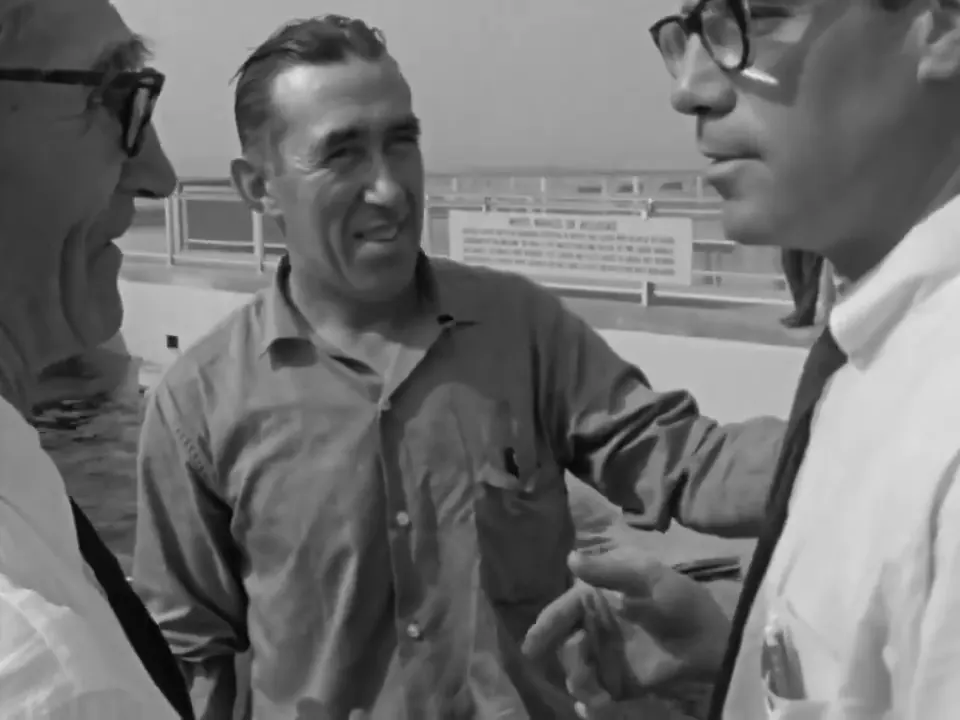
Three men converse in an outdoor area of the aquarium, with one positioned between the other two.Play
Pour la suite du monde

The group delegates one member to speak for them inside an institutional setting.

Read the passage analysis

Fabulation

fabulation

Characters and filmmakers jointly remake reality through narration, performance, and re-enactment. Story no longer serves a prior truth; it creates a speaking position for a collective still in formation.

A question for the shot

Does narration change the actual relation among speaker, filmmaker, and collective?

Cinema 2, ch. 6; ch. 8

Speech act and a people to come

acte de parole / peuple à venir

The storytelling speech-act crosses private affairs and politics, produces collective utterances, and prefigures the people who are missing.

A question for the shot

Who speaks, to whom, through which path, and which conditions, responses, and consequences does the image show?

Cinema 2, ch. 8

Terms explained

fabulationfabulation
Fabulation is a storytelling process through which speakers exceed assigned identities and participate in collective enunciation, rather than an arbitrary fabrication of facts. Filmed people and filmmakers can transform one another through their encounter. Stories need not represent an already constituted community; they can open possibilities of speech and connection for a people in formation.
belief in this worldcroyance en ce monde
Belief in the world responds to a broken link between human beings and their world. When familiar action and knowledge no longer sustain that link, cinema can pose the need to reconnect with this world, bodies and life. This is neither faith in another world nor a promise that events will turn out well.
speech actacte de parole
A speech act concerns not only the information in dialogue but who addresses whom and how speaking transforms their relations. Sound cinema makes this interaction audible; modern cinema can also develop sound and visual images along distinct lines. Narration, silence and collective enunciation then participate in reorganizing what can be seen and said.
a people to come / the people are missingpeuple à venir / le peuple manque
A people to come is not a unified population waiting for cinema to speak on its behalf. It names a political situation in which collective identity and enunciation remain in formation. Stories, languages and encounters can participate in that process without erasing internal differences or predetermining the community's future shape.
ONE SHOT, ONE COMPLETE ARGUMENT

Why does the character’s situation remain unchanged even after a local act is completed?

Germany Year Zero does not become a time-image merely through ruins or tragedy. Movement continues and local acts finish, yet action is no longer adequate to the world.

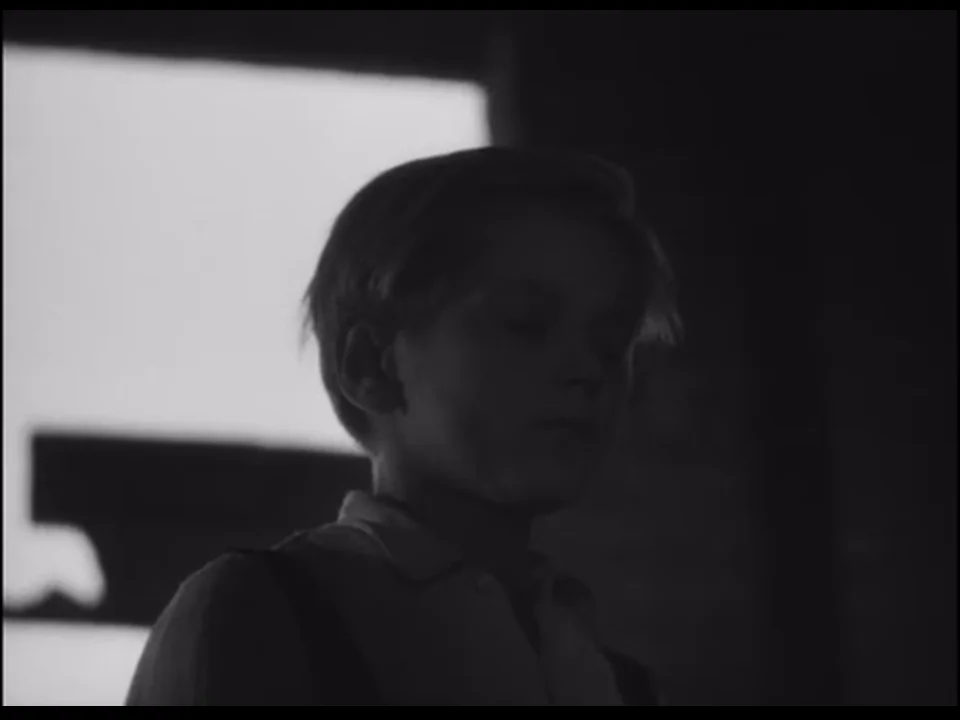
Inside a dark ruined building, Edmund's face is silhouetted against a bright rectangular openingReplay on Bilibili 01:12:18 ↗
Sequence window

The long wandering turns streets, church, ruined buildings, traffic, and children's play from usable action-space into a city layer that must be watched. Bilibili timecode 01:12:18.

01 · Shot facts

Begin with what can be seen and heard

From 01:05:01 to 01:12:44 Edmund crosses streets, a church wall, and a ruined building; he watches children, traffic, and the street below, handles rubble, and climbs. Speech nearly disappears while orchestral music, traffic, and distant children continue.

02 · Why action fails

Failure is not an absence of movement

Walking, stopping, handling rubble, looking, and climbing are all completed, but none can reverse the father’s death, rebuild the family, or lead to a viable next step. The sensory-motor chain loosens here: the body keeps moving, yet action no longer produces a change in the situation that can be carried forward.

Countertest: if these acts still produced a new task, chain of responsibility, or reparable result, the sensory-motor schema would not have broken here.

03 · How viewing changes

The situation makes the child see

An uncleared wartime past, the father’s recent death, and children’s play still continuing force Edmund to see. The viewer likewise cannot read a settled psychology from his face in advance; the fall makes the preceding pauses, sounds, and touches legible only retrospectively.

04 · Concepts follow the relation

Four terms, four checkable criteria

  • Sensory-motor schema

    Test whether perception still extends naturally into action adequate to transform the situation.

  • The seer

    Place motor helplessness and the compelled capacity to see more within the same relation.

  • Pure optical / sound situation

    Urban sound and ruined images cease to be action cues and become durations that must be endured.

  • Any-space-whatever

    The ruined building and streets retain only fractured routes, openings, walls, and relations of height.

Tragedy, silence, wandering, and ruins are not time-images by themselves. Ask whether the character’s acts can still change the situation, and whether images and sounds cease merely to indicate where he is going and acquire a duration that action cannot exhaust.

05 · Primary locator

Gilles Deleuze, Cinema 2: The Time-Image

Minnesota 1989 translation: Preface, p. xi; ch. 1, p. 2. 2004 Simplified Chinese edition: ch. 1, p. 3.

Brief primary-text mention: Deleuze uses the child in Germany Year Zero to connect motor helplessness with a greater capacity to see and hear. Preface p. x and the chapter's following passages are adjacent conceptual context, not direct pages on the film; the scene windows, facts, and criteria are this atlas's shot analysis.

Film, child, and seer: Deleuze’s Cinema 2. The shot analysis above: P4.

06 · Scholarship is not a consensus list

Three disagreements limit the claim

Jaimey Fisher ↗

Fisher resists equating the neorealist child with natural weakness and studies the child’s body, ruined masculinity, and tension of action.

The passive/active binary must give way to consequences and adequacy between act and situation.
Benedict Morrison ↗

Morrison shows that the film’s formal disarticulation and complex style cannot be reduced to Edmund’s psychology.

Psychological explanation must be tested against shot organization.
David Martin-Jones ↗

Martin-Jones affirms the time-image’s power for thinking World War II modernity while criticizing a world film history periodized by European experience.

The film analysis can hold while a universal global periodization requires separate proof.

The film-level analysis can hold, while turning European experience of World War II into a universal periodization of world cinema requires separate historical evidence.

07 · Return the concept to filming

P01 · Suspend action, intensify the shot

Film a character whose perception fails to become action. Keep psychology implicit; let space and sound bear the pressure.

Deliverable
≤6 shots · 2 min · sync sound
Test
Do space and sound bear the pressure the character cannot state, without performance explaining the psychology?
Enter the six constraint exercises →
FOUR READER NEEDS

Browse by reading topic

P4 RESEARCH

Six paths through films and concepts

Action and seeing, crystals, sound, bodies, colonial memory, and platform time: each path connects films, concept articles, and books. These are atlas readings and research hypotheses.

01Editorial synthesis

After action breaks, who is still seeing?

The crisis of the action-image is not simply slowness: a body may keep moving while what it sees no longer extends naturally into an action adequate to the situation. This only opens the problem of direct time; further proof must show how pure optical and sound situations, crystals, temporal series, or audio-visual intervals reorganize movement.

What do Edmund, Katherine, and Noriko each lose: movement, a goal, or the world that could connect the two?Test through films, concepts, and books →
02Editorial synthesis

The crystal is not a mirror: how do actual and virtual exchange?

The crystal-image is not defined by a mirror or a doubled character, but by actual and virtual appearing together, remaining different, and rewriting one another.

Which layer becomes actual now: the reflected image, the memory sheet, or the body being watched?Test through films, concepts, and books →
03Editorial synthesis

How does sound outlive the image?

Sound is not atmosphere added to an image; it can leave its visible source and reorganize space, memory, and ethical pressure.

Where does the heard sound come from? When its source is delayed, absent, or invisible, who bears this present?Test through films, concepts, and books →
04Editorial synthesis

The body no longer executes commands; it bears time in gesture

When action is no longer governed by a goal, the body leaves time in the situation through waiting, repetition, fatigue, touch, and attitude.

Does the shot record a character’s psychology, or an attitude composed by bodies, objects, sounds, and institutions together?Test through films, concepts, and books →
05Editorial synthesis

How history becomes visible again: restitution, translation, and positions of collective speech

Cinema's political force lies not only in exposing the intolerable but in rearranging who keeps an archive, who translates a language, how absences are marked, and whether a collective can help determine history's visible form.

Who narrates, who is translated, and who decides the visible form of a history?Test through films, concepts, and books →
06Hypothesis under test

From archive to platform: who arranges the next second?

Contemporary platforms turn dwell, skip, and replay into system inputs, making the next item an outcome of ranking and scheduling; time is therefore not only presented in images but governed while viewing occurs.

Does a viewer’s dwell, skip, or replay change the image, or only help the system arrange the next item more accurately?Test through films, concepts, and books →

Collections and entries

Current version 2.1.0

27Concept records
147Film cases
64Scene records
75Scholar records
69Term records
31Books and editions
93Source gateways
34Chinese corpus records
13Research chapters
2Formal P4 propositions
Site version2.1.0
Dataset update