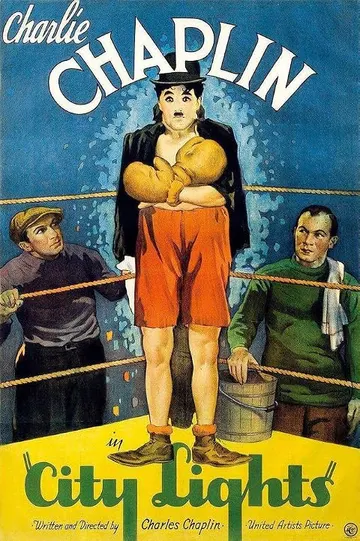
Charles Chaplin / 查理·卓别林 · 1931
City Lights
City Lights
Cinema 1 chapter 10 gives the general structure of small form A–S–A′ and its lacking or equivocal indices on pp. 160–163. Page 169 directly names City Lights as an example of a 'personality split of a pivotal character,' without assigning the millionaire's drunk or sober passages or a rule of recognition shot by shot. The atlas tests the drunken welcome from 00:11:30 to 00:15:50 and sober rejection from 00:34:14 to 00:35:48 as the concrete filmic realization of that phrase. The sequence directly named on p. 171 is the thread-unravelling gag around 00:52:32–00:53:54, not the final recognition. In the first meeting from 00:07:20 to 00:09:38, the film juxtaposes a dropped flower, its recovery, a coin, an approaching figure, and a departing car for the viewer; the flower seller can draw on touch, transaction, and sound, while exact attribution of each door sound still requires track-level review. In the touch recognition from 01:24:56 to 01:26:12, the action chain contracts into an affective instant of face, hand, shyness, and smile, without automatically establishing a new practical A′ or turning the film into a time-image. The theoretical relations assigned to all three located groups remain the atlas's responsibility.
Film details
- Original title
- City Lights
- Director
- Charles Chaplin / 查理·卓别林
- Year
- 1931
- Region
- United States
Film analysis: how shots organize concepts
Close-reading questions
- 01In the first meeting from 00:07:20 to 00:09:38, the film juxtaposes a dropped flower, its recovery, a coin, an approaching figure, and a departing car for the viewer. How do touch, transaction, and sound available to the flower seller produce the inference of a wealthy customer? Before each sound source is verified track by track, which claims remain viewer-visible facts, and which may enter her perceptual chain?
- 02When the drunken welcome from 00:11:30 to 00:15:50 is paired with the sober rejection from 00:34:14 to 00:35:48, in which gestures, forms of address, and threshold actions does the rule for recognizing the same body change? Why would the sober passage alone remain insufficient to establish A–S–A′?
- 03From 01:24:56 to 01:26:12, the woman moves from seeing a stranger to holding his hand, recognizing him, and smiling shyly. How do the close-ups contract action relations into affect? Since the passage supplies no clear new practical act, is it better read as the completion of small form, its limit, or a threshold toward another image?
Scene–concept relations
- 01Why does she take the flower buyer for a wealthy motorist?
Atlas candidate reading:Action-image: small form · Atlas candidate reading:Sensory-motor schema
Criterion for holding or withdrawal: Car-door sound still requires sound-by-sound review. If review shows door sound and the Tramp's acts being joined as one subject in her perception, the passage supports the equivocal index and A–S–A′. If attribution or order does not support that chain, the specific sonic mechanism should be withdrawn, leaving only the visible identity mistake.
- 02When the millionaire wakes sober, why is last night's friend left outside?
Atlas candidate reading:Action-image: small form
Criterion for holding or withdrawal: Only the pairing of drunken recognition with sober rejection can test the atlas's concrete reading of the 'personality split of a pivotal character' on p. 169. If the two passages do not establish a stable reversal of rules and show only an accidental lapse, the small-form relation should be weakened.
- 03She recognizes him by touch; why does the film stop on a smile?
Countertest:Action-image: small form · Adjacent, not equivalent:Movement-image
Criterion for holding or withdrawal: The passage can test the small form's limit where it contracts into affect before A′; it is not sufficient evidence for a time-image. If analysis cannot show how touch changes recognition and leaves only a 'moving ending,' the conceptual relation should be withdrawn.
About scene-relation labels
Support requires one scene's audiovisual facts and textual relation to be checked, with a named source and locator. Candidate readings, adjacent concepts, and countertests carry separate labels.
Shots and scenes
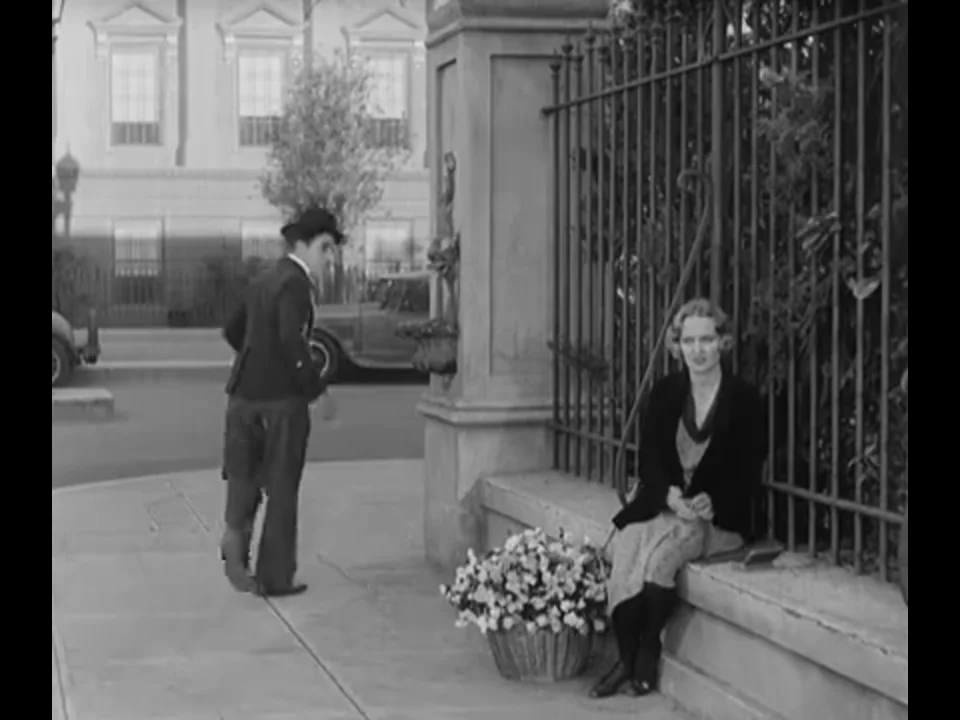
Car-door sound still requires sound-by-sound review. If review shows door sound and the Tramp's acts being joined as one subject in her perception, the passage supports the equivocal index and A–S–A′. If attribution or order does not support that chain, the specific sonic mechanism should be withdrawn, leaving only the visible identity mistake.
Open viewing position ↗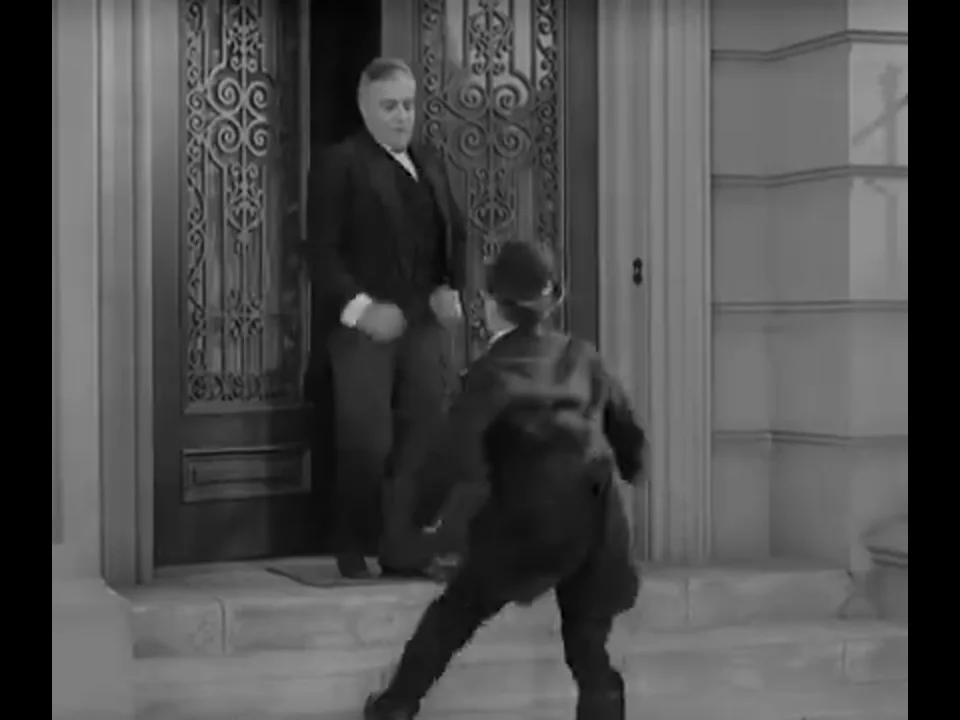
Only the pairing of drunken recognition with sober rejection can test the atlas's concrete reading of the 'personality split of a pivotal character' on p. 169. If the two passages do not establish a stable reversal of rules and show only an accidental lapse, the small-form relation should be weakened.
Open viewing position ↗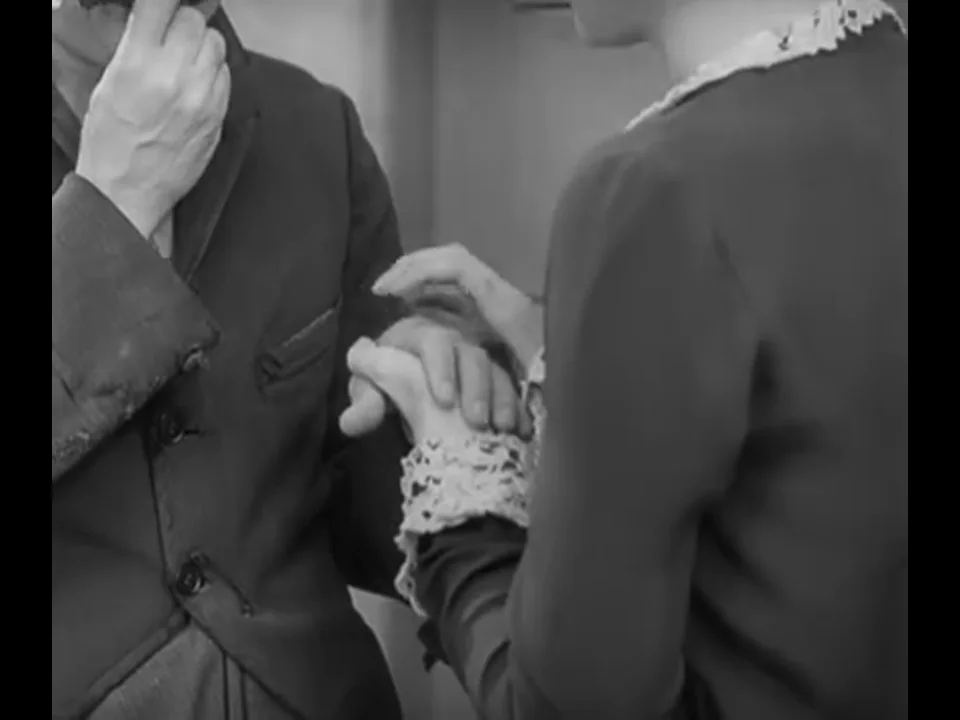
The passage can test the small form's limit where it contracts into affect before A′; it is not sufficient evidence for a time-image. If analysis cannot show how touch changes recognition and leaves only a 'moving ending,' the conceptual relation should be withdrawn.
Open viewing position ↗Primary texts, scholarship, and locators
Theory coordinate: Cinema 1, Minnesota 1986, ch. 10, pp. 160–163, 169–171
- 01Cinema 1: The Movement-Image
Standard Minnesota English translation and a principal citation edition in Anglophone scholarship.
Open the atlas source record →
Viewing gateways and editions
- Verified complete Bilibili carrier: 城市之光BD英语中字bilibili.comOpen film page ↗
- Page access
- Accessible when checked
- Version extent
- Recorded as a complete version
- Source type
- User-uploaded page
Edition note: English- and Chinese-subtitled complete single-part film · 1:26:48.
Link checked: 2026-08-14