BOOKS / EDITIONS · QUESTIONS · ROUTES

31 works: editions, guides, and research routes

Every work combines a version-specific cover and edition record with its core problem, contribution, and reading route. 8 works now expand into chapter-by-chapter deep guides with 614 exact print locators and 189 curated film/image cases.

Editions follow publisher, library, and institutional records · Deep guides include 22 verified frame placements · Titles and covers open the atlas guide
A
BOOKS AND READING GUIDES

All books and research guides

The directory records 31 works one by one, with their core questions, contributions, reading routes, originals, and translations. Book titles and covers open individual guides; search by author, edition, concept, or film.

31 works · 31 shown

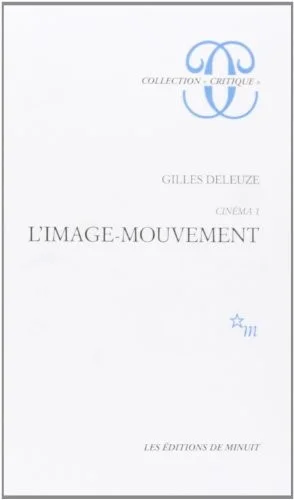
L’Image-mouvement. Cinéma 1, 1983 French edition cover
1983 French edition coverVerify cover
01
Monograph

Cinéma 1: L’image-mouvement

Gilles Deleuze

NO OA FULL BOOK

Full reading guide

Read the full guide
Reading themesMovement & action
Original edition

L’Image-mouvement. Cinéma 1

French · Les Éditions de Minuit · 1983

ISBN 9782707306593Verify edition
Published translations · 3
ATLAS READING NOTEArgument and structureFull guide →

Core question

How does cinema present movement directly? How does the interval introduced by a living centre differentiate one universe of images into perception, affection, and action?

Argument

Deleuze joins Bergson's matter-image, formal analysis, and Peircean semiotics into a genetic taxonomy. Frame, shot, and montage organize changes in an open whole, while perception-, affection-, impulse-, action-, and reflection-images together with the single mental/relation problem field specify different functions of movement. Mental-image makes relations, symbolic acts, and intellectual feelings objects of thought; relation-image then gives the field its semiotic determination through Thirdness. Time appears mainly indirectly through movement and montage, and the final crisis of action already opens the passage to Cinema 2.

Argument structure

Chapters 1–3 develop movement, mobile sections, and the open whole. The middle chapters distinguish perception, affection, impulse, action, and reflection. The closing mental/relation problem field concerns relations, symbolic acts, intellectual feelings, Thirdness, marks, and demarks. Chapter 12 examines the crisis of the action-image, connecting it to the pure optical and sound situations of Cinema 2.
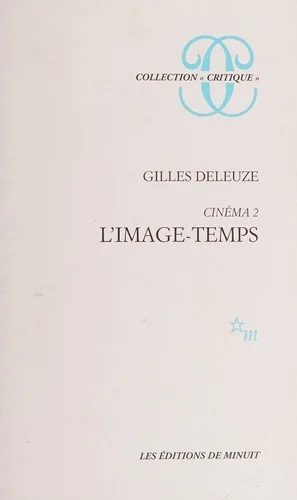
L’Image-temps. Cinéma 2, 1985 French edition cover
1985 French edition coverVerify cover
02
Monograph

Cinéma 2: L’image-temps

Gilles Deleuze

NO OA FULL BOOK

Full reading guide

Read the full guide
Reading themesTime & falsifying narrationActual, virtual & crystalThought, sound & bodies
Original edition

L’Image-temps. Cinéma 2

French · Les Éditions de Minuit · 1985

ISBN 9782707310477Verify edition
Published translations · 3
ATLAS READING NOTEArgument and structureFull guide →

Core question

When perception no longer extends naturally into effective action, how can cinema present time directly? How does time released from movement transform memory, truth, the body, thought, and audiovisual relations?

Argument

Beginning with pure optical and sound situations, the book develops recollection and dream, the crystal-image, sheets of past and peaks of present, powers of the false, irrational cuts, cinemas of body and brain, and autonomous audiovisual structures. It reverses the relation between movement and time: forks, gaps, coexisting pasts, and incompossible presents organize the image directly, while movement becomes subordinate to time. Modern cinema thereby becomes a practice in which thought encounters its own powerlessness and renews belief in the world.

Argument structure

Chapters 1–2 address broken sensory-motor links and cinematic signs. Chapters 3–6 distinguish recollection, dreams, crystals, sheets of past, peaks of present, and powers of the false. Chapters 7–10 turn to thought, bodies, brains, and audiovisual relations. Opsigns and sonsigns provide conditions for the question of direct time; they are not themselves identical to the direct time-image.

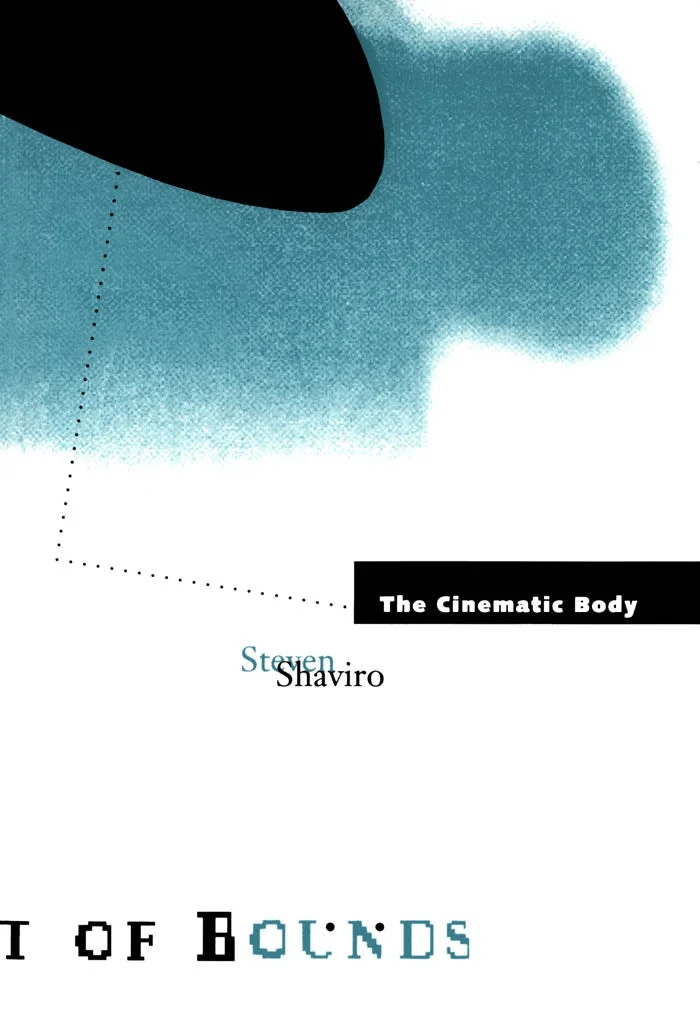
Steven Shaviro's The Cinematic Body, 1993 University of Minnesota Press English edition cover
1993 English paperback coverVerify cover
03
Monograph

The Cinematic Body

Steven Shaviro

NO OA FULL BOOK

Full reading guide

Read the full guide
Reading themesDesire, assemblage & becomingThought, sound & bodies
Original edition

The Cinematic Body

English · University of Minnesota Press · 1993

ISBN PB 9780816622948 · HB 9780816622931 · eBook 9780816685271 / 9781452902494Verify edition
Published translations · 1
Portuguese (Brazil)

O corpo cinemático

Trans. Anna Carolina Negrini Fagundes Martino · PAULUS · 2015

ISBN 9788534941365
↗
ATLAS READING NOTEArgument and structureFull guide →

Core question

Is film viewing first an act of interpretation, or a direct incursion of images into eyes, nerves, muscles, and desire? Can movement, sound, and intensity alter the spectator before meaning is mastered?

Argument

Shaviro releases the spectator from a position fully fixed by apparatus, ideology, or Lacanian lack and describes an unavoidable contact between image and body. Film becomes a material event that seduces and violates, imposes passivity, and produces desire. By joining Deleuzian image ontology to affect and postmodern culture, the book opened a major route toward studies of cinematic embodiment, politics of sensation, and intensity.

Argument structure

The introduction's dispute with psychoanalytic film theory concerns how the spectator's position is formed. The film analyses connect viewing rhythm, disgust, pleasure, and bodily persistence: images alter sensation and desire before the spectator necessarily masters their meaning. Radical passivity becomes central to the relation between image and body.

Paperback, hardcover, and two eBook ISBNs for the English original are verified; a published Portuguese translation appeared in 2015. No verifiable published full translation in Simplified or Traditional Chinese was located.

Publisher purchase / institutional subscription / library lendingFull reading guide Access / acquisition gateway
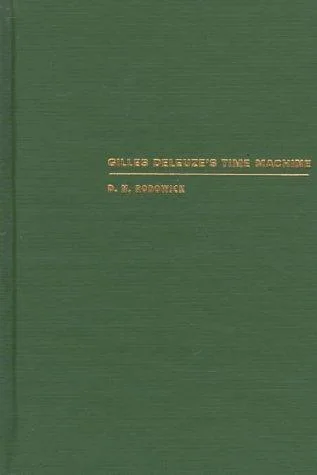
Gilles Deleuze’s Time Machine by D. N. Rodowick, 1997 edition cover
1997 English edition coverVerify cover
04
Monograph

Gilles Deleuze’s Time Machine

D. N. Rodowick

NO OA FULL BOOK

Full reading guide

Read the full guide
Reading themesTime & falsifying narrationThought, sound & bodies
Original edition

Gilles Deleuze’s Time Machine

English · Duke University Press · 1997

ISBN PB 9780822319702 · HB 9780822319627 · eBook 9780822396871Verify edition
Published translations · 1
ATLAS READING NOTEArgument and structureFull guide →

Core question

How do the two Cinema books construct a philosophical machine of time, signs, subjectivity, and truth from a vast archive of auteurs and films? What condition of thought changes in the passage from movement-image to time-image?

Argument

Rodowick folds three decades of Deleuze's philosophy of time into the Cinema books' internal architecture. Commensurable intervals sustain action and the model of truth, whereas irrational cuts place incompatible images in direct contact; the subject emerges as delayed response within the matter-image universe and is then carried into coexisting pasts, forking presents, and series of falsifiers. Taxonomy becomes a genesis of how images produce thought.

Argument structure

Commensurable intervals and irrational cuts run through the book. The genesis of movement, subject, and sign leads into transformations of time, truth, and thought; ethics and world concern how the subject lives through those transformations. This argument connects the Cinema books' taxonomy with Deleuze's philosophy of time.

The English original has paperback, hardcover, and eBook ISBNs 9780822319702, 9780822319627, and 9780822396871; a Turkish translation was published in 2018. No verifiable published full translation in Simplified or Traditional Chinese was located.

Institutional subscription / snippetsFull reading guide Access / acquisition gateway
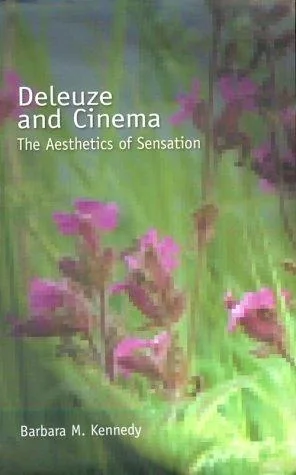
Deleuze and Cinema: The Aesthetics of Sensation by Barbara M. Kennedy, 2000 edition cover
2000 English edition coverVerify cover
05NO OA FULL BOOK

Full reading guide

Read the full guide
Reading themesDesire, assemblage & becomingDifference & sensation
Original edition

Deleuze and Cinema: The Aesthetics of Sensation

English · Edinburgh University Press · 2000

ISBN 9780748611348Verify edition
Published translations · 0

No verifiable published translation record was located.

ATLAS READING NOTEArgument and structureFull guide →

Core question

How can cinematic experience shift from a model of the spectator interpreting a text to an event of sensation composed by matter, technology, brain, and body? How do colour, movement, and rhythm pass through conscious subjectivity while also acting on the body beyond it?

Argument

Kennedy joins Deleuzian desire, affect, becoming, and becoming-woman to poststructuralist feminist film theory, replacing an Oedipalized viewing subject with an aesthetics of sensation. Cinema becomes a material rupture and molecular assemblage: rhythm, colour, and movement actively recompose bodies and identities. Readings of Orlando, The English Patient, Romeo + Juliet, Strange Days, and Léon ground the framework in distinct sensory organizations.

Argument structure

Micropolitics and the critique of psychoanalysis lead into abstract machines, becoming, bodies, and sensation. The film studies examine how colour, movement, rhythm, and bodily position carry cinematic experience beyond narrative meaning. Feminism runs through this argument: molecular becoming unsettles fixed identities while remaining answerable to concrete gendered power.

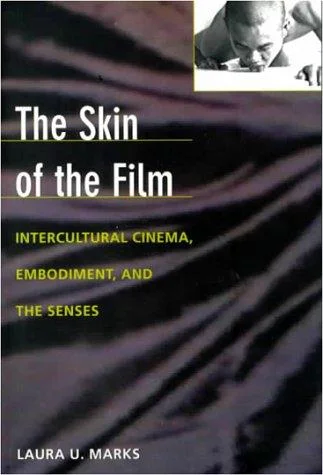
The Skin of the Film by Laura U. Marks, 2000 edition cover
2000 English edition coverVerify cover
06
Monograph

The Skin of the Film

Laura U. Marks

NO OA FULL BOOK

Full reading guide

Read the full guide
Reading themesDuration, memory & dreamsSpeech, people & world
Original edition

The Skin of the Film: Intercultural Cinema, Embodiment, and the Senses

English · Duke University Press · 2000

ISBN 9780822323914Verify edition
Published translations · 0

No verifiable published translation record was located.

ATLAS READING NOTEArgument and structureFull guide →

Core question

When colonial, migratory, and diasporic experience lacks a complete archive, how can cinema preserve history through surfaces, grain, food, fabric, sound, and bodily memory? How can viewers approach difference without immediately possessing it as knowledge?

Argument

Marks studies intercultural cinema within unequal contact zones and develops haptic visuality, sense memory, fetish/fossil, and the portable sensorium as key tools. Low definition and proximate surfaces delay recognition, mobilize tactile viewing, and carry private sensory experience into colonial history, migration, and collective memory. Form, production infrastructure, cultural location, and viewing ethics occupy one analytical plane.

Argument structure

Intercultural memory is bound to concrete positions of power. Absent archives, objects, and material surfaces preserve pasts; haptic visuality, nonvisual senses, and the portable sensorium explain how those pasts can be felt. Material facts and sensory memories remain connected without making history fully available to the spectator.

Deleuze on Cinema by Ronald Bogue, 2003 edition cover
2003 English edition coverVerify cover
07
Monograph

Deleuze on Cinema

Ronald Bogue

NO OA FULL BOOK

Full reading guide

Read the full guide
Reading themesMovement & actionActual, virtual & crystal
Original edition

Deleuze on Cinema

English · Routledge · 2003

ISBN 9780415966047Verify edition
Published translations · 1
ATLAS READING NOTEArgument and structureFull guide →

Core question

How do the compressed philosophical sources, film examples, and sign names in the two Cinema books form an operational line of reasoning? What relation composes each sign, and from what cinematic condition does it arise?

Argument

Bogue offers one of the clearest systematic reconstructions: from Bergsonian duration and matter-image through frame, shot, and montage into the signs of the movement-image, then from the sensory-motor crisis toward crystals, orders and series of time, noosigns, and lectosigns. He supplies conceptual transitions compressed by Deleuze while preserving the taxonomy's openness, enabling readers to name signs from shot relations.

Argument structure

Bergson's account of images and the relations among frame, shot, and montage form the book's foundation. Movement-images are classified through compositional relations and genetic elements. When action links break, the argument turns to new relations between actual and virtual, past and present, thought and outside, sound and the visible.

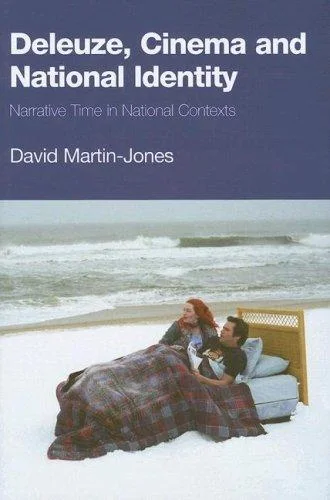
Deleuze, Cinema and National Identity by David Martin-Jones, 2006 edition cover
2006 English edition coverVerify cover
08
Monograph

Deleuze, Cinema and National Identity

David Martin-Jones

NO OA FULL BOOK

Full reading guide

Read the full guide
Reading themesSpeech, people & worldDuration, memory & dreams
Original edition

Deleuze, Cinema and National Identity: Narrative Time in National Contexts

English · Edinburgh University Press · 2006

ISBN 9780748622443Verify edition
Published translations · 0

No verifiable published translation record was located.

ATLAS READING NOTEArgument and structureFull guide →

Core question

How is national identity produced through narrative time? How do mixtures of movement-image and time-image in contemporary cinema rewrite histories of war, reunification, crisis, and the global city?

Argument

Martin-Jones relocates Deleuze's image taxonomy across national contexts including North America, Britain, Germany, Hong Kong, Japan, South Korea, Italy, and Poland, demonstrating the inseparability of form and historical politics. Within a single film, movement-image and time-image deterritorialize and reterritorialize one another. Temporal fracture may dismantle triumphalist history or be recaptured by national myth.

Argument structure

History and memory connect narrative time to national archaeology. The global-city, Gulf War, post-9/11, and Pacific Rim studies follow two changes: films disrupt historical time, while their endings reorganize action and identity. Local histories thereby help reshape the relation between movement-image and time-image.

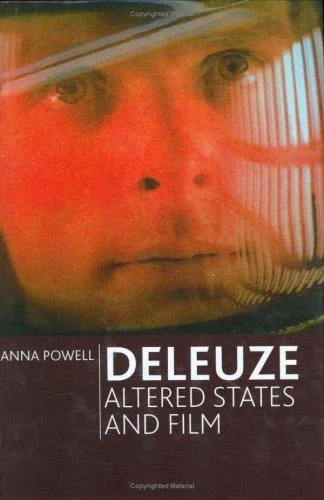
Deleuze, Altered States and Film by Anna Powell, 2007 edition cover
2007 English edition coverVerify cover
09NO OA FULL BOOK

Full reading guide

Read the full guide
Reading themesDuration, memory & dreamsDesire, assemblage & becoming
Original edition

Deleuze, Altered States and Film

English · Edinburgh University Press · 2007

ISBN 9780748632824Verify edition
Published translations · 0

No verifiable published translation record was located.

ATLAS READING NOTEArgument and structureFull guide →

Core question

How does cinema induce altered consciousness through dreams, hallucinations, drugs, trance, ecstasy, sound, colour, rhythm, and spatial distortion? How does this affective contamination reorganize the spectator's body and thought?

Argument

Powell builds a typology of altered consciousness that moves from dream machines and pharmacoanalysis through altered body maps to temporal distortion and fractal becoming. Deleuze and Guattari's assemblage, affect, haptics, and synaesthesia are applied across mainstream, art, and experimental cinema. The analysis follows how cinematic techniques derange the spectator's habitual coordinates. Digital and fractal images become new sensory directions.

Argument structure

Dreams, drugs, the sensorium, time, and fractal becoming form altered states co-composed by film and spectator. Visual distortion, sonic organization, bodily response, and narrative consequences interact. Dream signs enlarge circuits of actualization, while direct time concerns image relations that emerge when action loses its governing role.

Deleuze and the Cinemas of Performance by Elena del Río, 2008 edition cover
2008 English edition coverVerify cover
10NO OA FULL BOOK

Full reading guide

Read the full guide
Reading themesDesire, assemblage & becomingSpeech, people & world
Original edition

Deleuze and the Cinemas of Performance: Powers of Affection

English · Edinburgh University Press · 2008

ISBN 9780748635252Verify edition
Published translations · 0

No verifiable published translation record was located.

ATLAS READING NOTEArgument and structureFull guide →

Core question

Is screen performance merely the visible form of identity and narrative, or an affective force prior to meaning that can alter other bodies? How do gesture, speed, dance, and pause produce political relations?

Argument

Del Río proposes an affective-performative cinema, using the Deleuze-Spinoza body, expression, and capacity to affect in place of performance theory's priority of visual form. Across films by Sirk, Fassbinder, Sally Potter, Claire Denis, and David Lynch, she analyses bodily movement, choreography, speed, and seduction, connecting these microforces to feminist politics. The body becomes an event that redistributes capacities within a scene.

Argument structure

The distinction between representational performance and affect-producing performance organizes the argument. Animated fetishes, choreographies of affect, dancing feminisms, kinesthetic seductions, and powers of the false develop changes in posture, speed, contact, and bodily capacity. Politics concerns what bodies can do and how those capacities increase or diminish.

Gilles Deleuze : cinéma et philosophie by Paola Marrati, 2003 French edition cover
2003 French edition coverVerify cover
11NO OA FULL BOOK

Full reading guide

Read the full guide
Reading themesThought, sound & bodiesMovement & action
Original edition

Gilles Deleuze : cinéma et philosophie

French · Presses Universitaires de France · 2003

ISBN 9782130524434Verify edition
Published translations · 2
ATLAS READING NOTEArgument and structureFull guide →

Core question

How does cinema constitute an independent mode of thought for philosophy? How does Deleuze use cinema to rethink movement, perception, time, subjectivity, and our belief in the world?

Argument

Across six compressed chapters, Marrati returns the Cinema books to Deleuze's philosophy of immanence. Beginning with images in movement, perception, and montage, she shows how postwar cinema loosens the structure of action and gives time a direct form, before gathering the argument around images and world. Her decisive contribution is to reject cinema's subordination to philosophy: films create problems of thought for which philosophy must invent concepts.

Argument structure

Movement, perception, and montage establish a common plane of images; the postwar rupture and time-image change the relation between subject and world. Immanence thus connects to belief in the world. The discussion of Cavell concerns the lost everyday and the possibility of regaining it.

The French original appeared in 2003. The English hardback appeared in 2008 and the paperback in 2012. The Spanish translation is generally catalogued as 2004, with some records giving 2003.

Purchase / library / limited previewFull reading guide Access / acquisition gateway
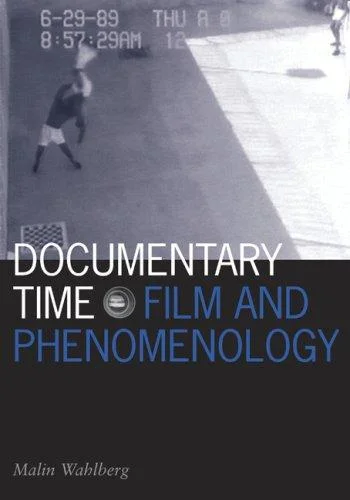
Documentary Time: Film and Phenomenology by Malin Wahlberg, 2008 edition cover
2008 English edition coverVerify cover
12NO OA FULL BOOK

Full reading guide

Read the full guide
Reading themesDuration, memory & dreamsTime & falsifying narration
Original edition

Documentary Time: Film and Phenomenology

English · University of Minnesota Press · 2008

ISBN 9780816649693Verify edition
Published translations · 0

No verifiable published translation record was located.

ATLAS READING NOTEArgument and structureFull guide →

Core question

A documentary image is both a present viewing event and a trace left by the past. How do these times meet in nonfiction cinema? How do waiting, retrospection, archival recomposition, and sound give social memory a sensible form?

Argument

Wahlberg brings phenomenology and Deleuzian temporality into documentary studies, placing Ricoeur, Bazin, and Mitry in the same conversation. The nonfiction image's trace is no longer merely proof that something existed; it is reconfigured through screening duration, the viewing body, historical figures, and the potential archival memory of representation. Documentary time expands beyond narrative order into a joint organization of sensory experience, social memory, and historical ethics.

Argument structure

Trace, experience, and archive run through the classical films, video experiments, and Warhol cases. The moment of recording, the present of viewing, the recalled social past, and the image's archival future do not coincide. Duration, sound, and recomposition bring those times into relation within documentary.

Photography, Cinema, Memory by Damian Sutton, 2009 edition cover
2009 English edition coverVerify cover
13
Monograph

Photography, Cinema, Memory

Damian Sutton

NO OA FULL BOOK

Full reading guide

Read the full guide
Reading themesDuration, memory & dreamsActual, virtual & crystal
Original edition

Photography, Cinema, Memory: The Crystal Image of Time

English · University of Minnesota Press · 2009

ISBN 9780816647392Verify edition
Published translations · 0

No verifiable published translation record was located.

ATLAS READING NOTEArgument and structureFull guide →

Core question

Must photography belong to stasis, loss, and death while cinema alone possesses moving time? How does a photograph continue to become in viewing, opening both depths of recollection and unrealized futures?

Argument

Sutton extends Deleuze's crystal-image to photography and rejects the model of the photograph as a sealed past instant. Its actual surface and virtual memory form an open circuit through which a fixed image can lead into wandering recollection and accumulate future possibility. The book develops a taxonomy of photographic time through Goldin, Atget, Warhol, and others, contrasting it with cinematic time since 1895.

Argument structure

The discussion of the crystal-image extends from cinema to photography and to becoming within stillness. Actual details, activated virtual memories, and relations opening toward a future compose the photograph's temporal problem. The comparison with cinema concerns how movement changes those relations.

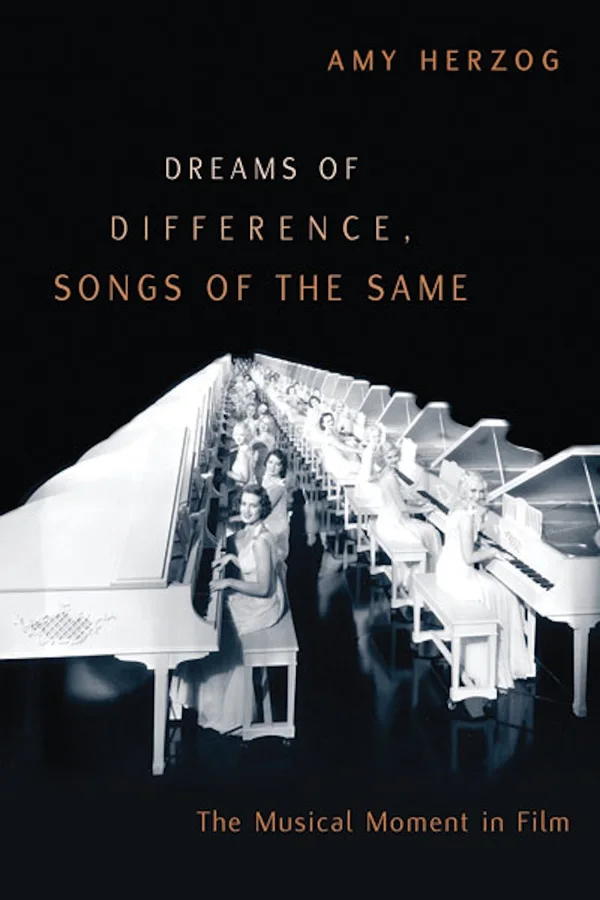
Dreams of Difference, Songs of the Same by Amy Herzog, 2010 edition cover
2010 English edition coverVerify cover
14NO OA FULL BOOK

Full reading guide

Read the full guide
Reading themesDifference & sensationDesire, assemblage & becoming
Original edition

Dreams of Difference, Songs of the Same: The Musical Moment in Film

English · University of Minnesota Press · 2010

ISBN 9780816660889Verify edition
Published translations · 0

No verifiable published translation record was located.

ATLAS READING NOTEArgument and structureFull guide →

Core question

When song and dance erupt within linear narrative, does the musical moment merely repeat familiar formulas, or can it reorganize time, space, body, and history? How does difference emerge from within repetition of cliché?

Argument

Herzog uses difference, repetition, and refrain to analyse the musical's contradictory force. Musical spectacle relies on formulas, gendered/racial/class conventions, and cultural memory, yet its excess, abstraction, and bodily movement can interrupt narrative order. Jukebox shorts, adaptations of Carmen, Jacques Demy, Esther Williams, and Tsai Ming-liang form a cross-media route showing that the musical moment's liberating force must be tested within concrete repetitions.

Argument structure

The musical moment connects impossible jukebox bodies, Carmen's dissonant refrains, musical memory in Demy, and fluid bodies in aquatic spectacle. Songs can suspend narrative time and recompose space, but can also sustain existing conventions. Difference depends on the new relations an interruption actually produces.

Deleuze and Cinema: The Film Concepts by Felicity Colman, 2011 edition cover
2011 English edition coverVerify cover
15NO OA FULL BOOK

Full reading guide

Read the full guide
Reading themesMovement & actionThought, sound & bodies
Original edition

Deleuze and Cinema: The Film Concepts

English · Berg · 2011

ISBN 9781847880536Verify edition
Published translations · 0

No verifiable published translation record was located.

ATLAS READING NOTEArgument and structureFull guide →

Core question

How can concepts from Deleuze's two Cinema books be used in screen analysis without reducing films to examples of terms? How do frame, cut, sign, time, politics, and thought compose an open cinematic system?

Argument

Colman reconstructs film philosophy as a fourteen-step method beginning with the ciné-system. Movement, frame/shot/cut, montage, perception, affect, and action establish the base; TransSemiotics and the sign-vector address the production of meaning; time, politics, topology, and thought culminate in ciné-ethics. Taxonomy becomes a system whose relations are continually changed by bodies, technologies, sound, space, and power.

Argument structure

The mechanical and sensory bases of images lead into the operation of signs across systems and the production of time. Politics, topology, thought, and ethics develop how cinema changes bodies, spaces, and relations of power. Technical relations and the functions of signs connect these problems.

Deleuze and World Cinemas by David Martin-Jones, 2011 edition cover
2011 English edition coverVerify cover
16
Monograph

Deleuze and World Cinemas

David Martin-Jones

NO OA FULL BOOK

Full reading guide

Read the full guide
Reading themesSpeech, people & worldAction in crisis & seeing
Original edition

Deleuze and World Cinemas

English · Continuum · 2011

ISBN 9780826436429Verify edition
Published translations · 0

No verifiable published translation record was located.

ATLAS READING NOTEArgument and structureFull guide →

Core question

How do movement-images and time-images form new combinations across the distinct histories and politics of cinemas from Argentina, South Korea, Hong Kong, India, and globalized Los Angeles?

Argument

The book releases Deleuze’s taxonomy from a narrowly European history, allowing national narration, colonial experience, and global circulation to modify the concepts. Its central question becomes how a film makes time within a specific world.

Argument structure

Argentine child seers, South Korean time-travel films, Hong Kong action cinema, Los Angeles blockbusters, and Indian masala cinema encounter different historical pressures. Movement-images and time-images recombine within these national and genre contexts, allowing local histories to reshape how the taxonomy applies.

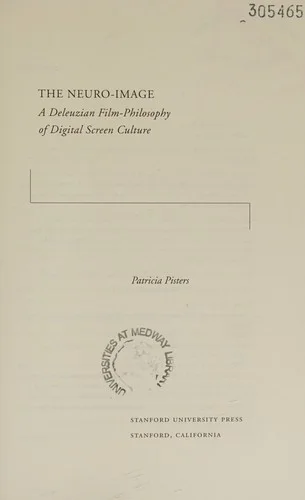
The Neuro-Image by Patricia Pisters, 2012 edition cover
2012 English edition coverVerify cover
17
Monograph

The Neuro-Image

Patricia Pisters

NO OA FULL BOOK

Full reading guide

Read the full guide
Reading themesThought, sound & bodiesTime & falsifying narration
Original edition

The Neuro-Image: A Deleuzian Film-Philosophy of Digital Screen Culture

English · Stanford University Press · 2012

ISBN 9780804781367Verify edition
Published translations · 0

No verifiable published translation record was located.

ATLAS READING NOTEArgument and structureFull guide →

Core question

How do digital screens, databases, surveillance, and network culture reorganize the image’s relation to brain, body, and action?

Argument

Pisters extends the movement-image and time-image through the neuro-image: contemporary images begin inside perception, folding pasts, possible worlds, and global information networks back into the present. Digital culture becomes a new cinema–brain circuit.

Argument structure

The relation between cinema, body, and brain extends into database narration, traumatic memory, and images of control. The neuro-image places these problems within a circuit of brain, screen, and world, examining how image technologies organize memory and perception.

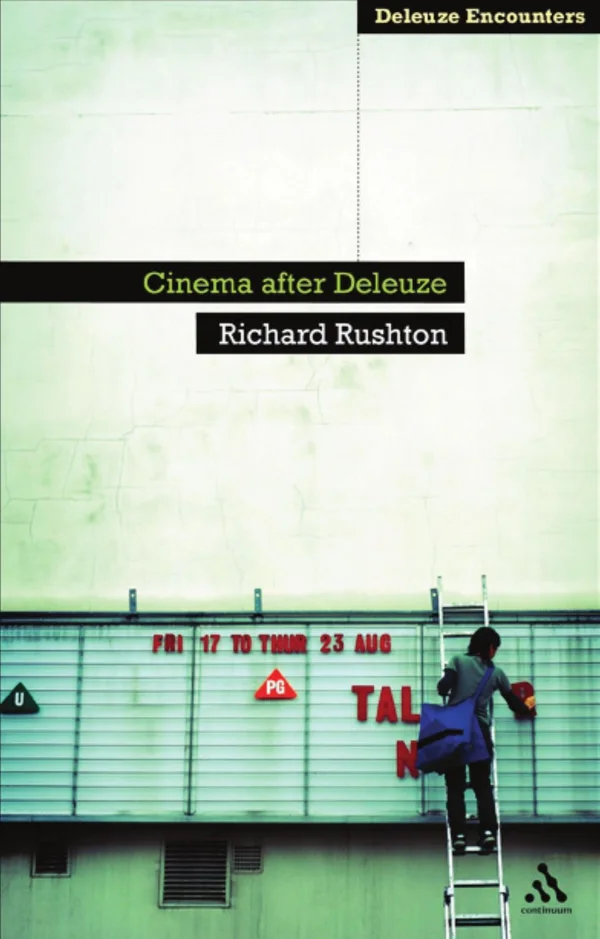
Cinema After Deleuze by Richard Rushton, 2012 edition cover
2012 English edition coverVerify cover
18
Monograph

Cinema After Deleuze

Richard Rushton

NO OA FULL BOOK

Full reading guide

Read the full guide
Reading themesAction in crisis & seeingMovement & action
Original edition

Cinema After Deleuze

English · Continuum · 2012

ISBN 9780826438928Verify edition
Published translations · 0

No verifiable published translation record was located.

ATLAS READING NOTEArgument and structureFull guide →

Core question

Did the time-image truly replace the movement-image in cinema after Deleuze?

Argument

Rushton stresses the continuing coexistence of the two regimes. A film may sustain an action-chain in one passage and release seeing, waiting, or sound from action in another, making the concrete formal transition the unit of analysis.

Argument structure

The action structure of the movement-image and the breakdown of the sensory-motor schema form the two poles of the argument. Movement and direct time coexist, mix, or shift locally within films; changes inside each film develop the relation between the two image regimes.

Deleuze e i concetti del cinema by Daniela Angelucci, 2012 Italian edition cover
2012 Italian edition coverVerify cover
19
Monograph

Deleuze e i concetti del cinema

Daniela Angelucci

NO OA FULL BOOK

Full reading guide

Read the full guide
Reading themesDifference & sensationTime & falsifying narration
Original edition

Deleuze e i concetti del cinema

Italian · Quodlibet · 2012

ISBN 9788874624744Verify edition
Published translations · 1
ATLAS READING NOTEArgument and structureFull guide →

Core question

Which concepts does cinema generate for itself? How do movement, time, the virtual, modernity, falsehood, life, repetition, simulacrum, sadism, and chance form a continuous chain of problems?

Argument

Angelucci rereads Deleuze’s film philosophy through ten concepts. The first half moves through movement, time, the virtual, and modernity via Bergson and Nietzsche; the second develops falsehood, life, repetition, simulacrum, sadism, and chance through films by Raúl Ruiz and The Most Dangerous Game. The concepts arise from cinematic practice.

Argument structure

Movement, time, the virtual, and modernity establish the philosophical framework of the Cinema books. Falsehood, life, and repetition extend that framework, while simulacrum, sadism, and chance follow the transformations of concepts within particular films.

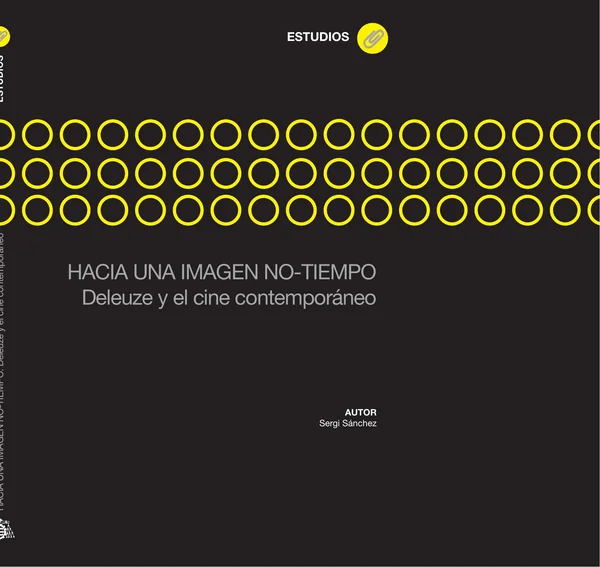
Hacia una imagen no-tiempo by Sergi Sánchez, official 2022 open edition cover
2022 Spanish open edition coverVerify cover
20
Monograph

Hacia una imagen no-tiempo

Sergi Sánchez

OA FULL BOOK

Full reading guide

Read the full guide
Reading themesTime & falsifying narrationDuration, memory & dreams
Original edition

Hacia una imagen no-tiempo: Deleuze y el cine contemporáneo

Spanish · Universidad de Oviedo · 2013

ISBN 9788483179789Verify edition
Published translations · 0

No verifiable published translation record was located.

ATLAS READING NOTEArgument and structureFull guide →

Core question

How do digital images transform cinema's organization of death, memory, and time, moving from Edmund in Germany Year Zero to David in A.I. Artificial Intelligence?

Argument

Sánchez uses the digital image as an axis for organizing postwar child seers, artificial life, death, spectrality, and temporal exhaustion into the problem of a non-time-image. The children of Germany Year Zero and A.I. Artificial Intelligence form a historical hinge between temporal fractures in film and persistence in digital cinema.

Argument structure

The child seer of Germany Year Zero and the artificial life of A.I. connect historical changes in time-images and digital images. Death, spectrality, and the persistence of figures bring the question of time into technical carriers. Non-time thus concerns how images continue to exist.

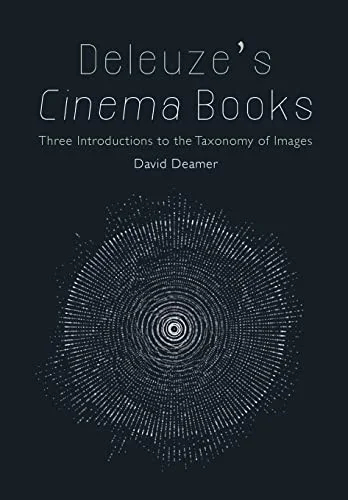
Deleuze’s Cinema Books by David Deamer, 2016 edition cover
2016 English edition coverVerify cover
21
Monograph

Deleuze’s Cinema Books

David Deamer

NO OA FULL BOOK

Full reading guide

Read the full guide
Reading themesMovement & actionTime & falsifying narration
Original edition

Deleuze’s Cinema Books: Three Introductions to the Taxonomy of Images

English · Edinburgh University Press · 2016

ISBN 9781474407687Verify edition
Published translations · 0

No verifiable published translation record was located.

ATLAS READING NOTEArgument and structureFull guide →

Core question

How do the many images and signs of the two Cinema books form a traceable and comparable taxonomy?

Argument

Deamer reconstructs the genesis of cinematic signs through cineosis, placing taxonomy, syntheses of time, and film cases on one research map. It works best as an intermediary that repeatedly returns the reader to the primary text.

Argument structure

Three introductions explain the levels of image taxonomy and distinctions among signs from different directions. Chapters and film examples from the Cinema books provide the specific contexts of those signs, bringing taxonomic relations into contact with cinematic form.

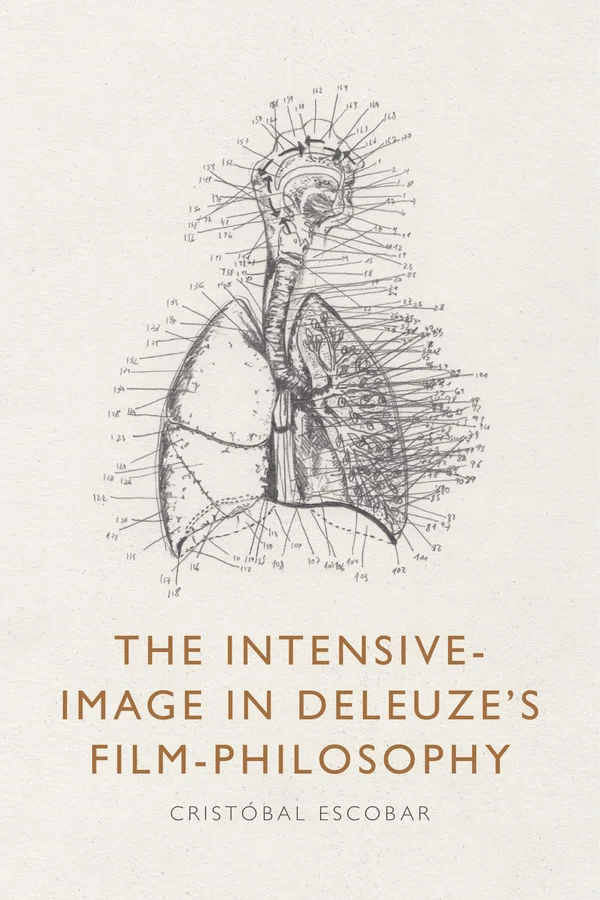
The Intensive-Image in Deleuze’s Film-Philosophy by Cristóbal Escobar, 2023 edition cover
2023 English edition coverVerify cover
22NO OA FULL BOOK

Full reading guide

Read the full guide
Reading themesDesire, assemblage & becomingDifference & sensation
Original edition

The Intensive-Image in Deleuze’s Film-Philosophy

English · Edinburgh University Press · 2023

ISBN 9781399517539Verify edition
Published translations · 0

No verifiable published translation record was located.

ATLAS READING NOTEArgument and structureFull guide →

Core question

Can intensity connect movement, time, body, sound, and space without dividing cinema into two sealed historical eras?

Argument

Escobar proposes the intensive-image as a transversal concept for variation, difference, and sensory pressure in Deleuzian film philosophy. Movement-image and time-image become tendencies that can overlap within one shot.

Argument structure

Affect, perception, and bodily intensity connect the problems of action-chains and direct time. Colour, sound, speed, and gesture jointly change relations within the shot; intensity becomes perceptible through their interaction.

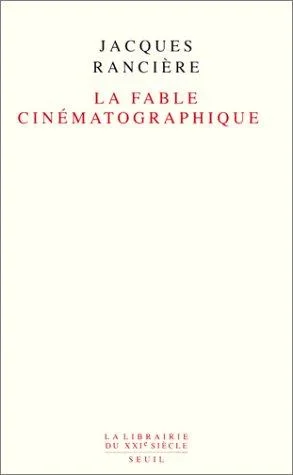
La Fable cinématographique by Jacques Rancière, 2001 French edition cover
2001 French edition coverVerify cover
23
Chapter carrier

La Fable cinématographique

Jacques Rancière

NO OA FULL BOOK

Full reading guide

Read the full guide
Reading themesAction in crisis & seeingTime & falsifying narration
Original edition

La Fable cinématographique

French · Éditions du Seuil · 2001

ISBN 9782020510530Verify edition
Published translations · 3
English

Film Fables

Trans. Emiliano Battista · Berg · 2006

ISBN 9781845201685
↗
ATLAS READING NOTEArgument and structureFull guide →

Core question

Is the break between movement-image and time-image a periodization of film history, or two powers that continually coexist within images?

Argument

Rancière uses cinematic fable and the aesthetic regime to challenge a neat 1945 divide, recasting Deleuze’s categories as tendencies, tensions, and recurring formal choices. It is a central dispute over the history implied by the time-image.

Argument structure

Rancière's challenge to Deleuze concerns the crisis of the action-image and the periodization of film history. Movement relations and temporal forms within particular films can cross both regimes, so a single historical rupture cannot fully explain the tension between narrative and image.

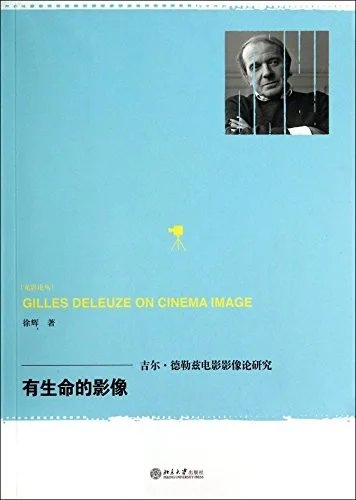
Living Images by Xu Hui, 2014 Simplified Chinese edition cover
2014 Simplified Chinese edition coverVerify cover
24NO OA FULL BOOK

Full reading guide

Read the full guide
Reading themesMovement & actionDifference & sensation
Original edition

《有生命的影像:吉尔·德勒兹电影影像论研究》

Simplified Chinese · 北京大学出版社 · 2014

ISBN 9787301243565Verify edition
Published translations · 0

No verifiable published translation record was located.

ATLAS READING NOTEArgument and structureFull guide →

Core question

How does Deleuze understand cinematic images as living powers of difference and becoming?

Argument

Xu Hui systematically connects image ontology, movement, time, difference, and life in Chinese, building a complete route from philosophical foundations into both Cinema books. It returns cinematic terminology to Deleuze’s broader thought.

Argument structure

Movement-image, time-image, and difference provide three lines of inquiry into the life of images. The genesis of movement relations, the direct appearance of time, and the production of difference connect cinematic form with Deleuze's philosophy of becoming.

The original is in Simplified Chinese. Gilles Deleuze on Cinema Image is a parallel English title, not an English translation. No published foreign-language or Traditional Chinese edition, or open full book, was located.

Purchase / preview / library loan / holdingsFull reading guide Access / acquisition gateway
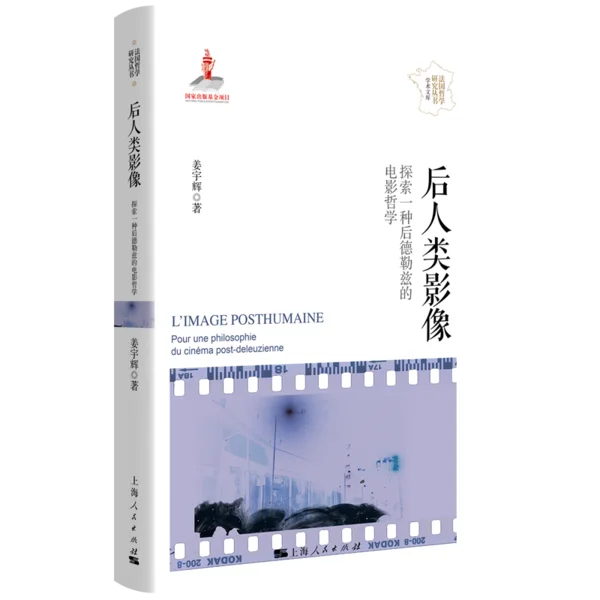
The Posthuman Image by Jiang Yuhui, 2024 Simplified Chinese edition cover
2024 Simplified Chinese edition coverVerify cover
25NO OA FULL BOOK

Full reading guide

Read the full guide
Reading themesThought, sound & bodiesSpeech, people & world
Original edition

《后人类影像:探索一种后德勒兹的电影哲学》

Simplified Chinese · 上海人民出版社 · 2024

ISBN 9787208190122Verify edition
Published translations · 0

No verifiable published translation record was located.

ATLAS READING NOTEArgument and structureFull guide →

Core question

How do ghosts, infection, war, the machine-eye, and slow time move film philosophy into a post-Deleuzian phase and reshape subjectivity?

Argument

Jiang Yuhui connects negativity, subjectivity, and contemporary technology through the posthuman image, organizing ghosts, infection, war, haptics, apocalypse, cities, ecology, and games into a field of image-problems. Film philosophy turns from vitalism toward the reconstruction of subjectivity through vulnerability, passivity, and human–machine entanglement.

Argument structure

The posthuman subject runs through images of ghosts, infection, and war, connecting delirium, haptics, and apocalypse. The machine-eye, slow time, and mind-games place the subject's vulnerability, passivity, and reconstruction within contemporary human–machine relations.

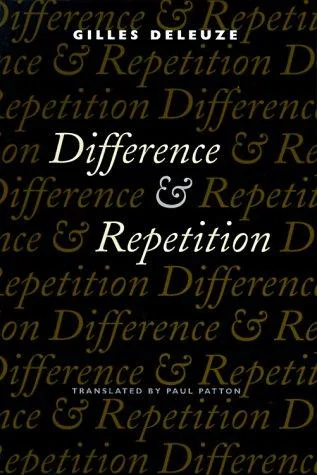
Difference and Repetition, translated by Paul Patton, English edition cover
Paul Patton English translation coverVerify cover
26
Monograph

Différence et répétition

Gilles Deleuze

NO OA FULL BOOK

Full reading guide

Read the full guide
Reading themesDifference & sensation
Original edition

Différence et répétition

French · Presses Universitaires de France · 1968

Verify edition
Published translations · 3
Simplified Chinese

《差异与重复》

Trans. 安靖;张子岳 · 华东师范大学出版社 · 2019

ISBN 9787567591363
↗
ATLAS READING NOTEArgument and structureFull guide →

Core question

How can difference escape the rule of identity, and how can repetition become a power that produces the new?

Argument

This philosophical work grounds the actual–virtual relation, syntheses of time, image of thought, and becoming. Sheets of past, peaks of present, and crystalline relations in the Cinema books acquire their deeper temporal background here.

Argument structure

The relation between difference, repetition, and the virtual connects to the three syntheses of time. How past and present coexist and differentiate is central to this account of time. It also forms a philosophical background for crystal-images and direct temporal forms in the Cinema books.

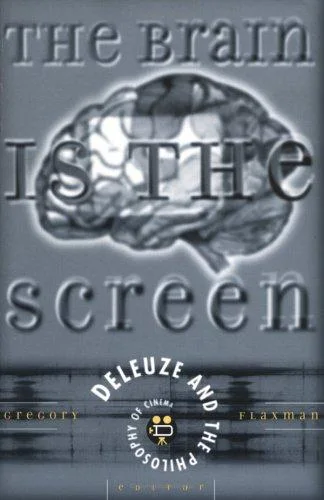
The Brain Is the Screen, edited by Gregory Flaxman, 2000 edition cover
2000 English edition coverVerify cover
27
Edited collection

The Brain Is the Screen

Gregory Flaxman (ed.)

NO OA FULL BOOK

Full reading guide

Read the full guide
Reading themesThought, sound & bodies
Original edition

The Brain Is the Screen: Deleuze and the Philosophy of Cinema

English · University of Minnesota Press · 2000

ISBN 9780816634477Verify edition
Published translations · 0

No verifiable published translation record was located.

ATLAS READING NOTEArgument and structureFull guide →

Core question

If the brain is the screen, what immanent relation joins image, thought, perception, and world?

Argument

This foundational collection established Deleuzian film philosophy in Anglophone scholarship across philosophy, film history, space, gender, and thought. It presents the Cinema books as an expanding and internally contested set of research problems.

Argument structure

The editor frames the relation between cinema, brain, and thought; individual essays develop it through philosophy, film history, space, and gender. Different authors place concepts from the Cinema books alongside their film materials, producing competing interpretations within early Anglophone scholarship.

Afterimages of Gilles Deleuze’s Film Philosophy, edited by D. N. Rodowick, 2010 edition cover
2010 English edition coverVerify cover
28
Edited collection

Afterimages of Gilles Deleuze’s Film Philosophy

D. N. Rodowick (ed.)

NO OA FULL BOOK

Full reading guide

Read the full guide
Reading themesThought, sound & bodiesSpeech, people & world
Original edition

Afterimages of Gilles Deleuze’s Film Philosophy

English · University of Minnesota Press · 2010

ISBN 9780816650071Verify edition
Published translations · 0

No verifiable published translation record was located.

ATLAS READING NOTEArgument and structureFull guide →

Core question

How do the ‘afterimages’ of Deleuze’s film philosophy continue to work across digital media, politics, aesthetics, and intermedial practice?

Argument

The collection moves from internal commentary on the Cinema books to their aftereffects, placing time, body, space, and media boundaries under new historical conditions. Its multi-author form makes conceptual disagreements directly comparable.

Argument structure

Digital media, bodies, space, and politics connect the essays. Their authors extend, modify, or contest Deleuze's image relations under new historical and media conditions, producing different subsequent interpretations of the same concepts.

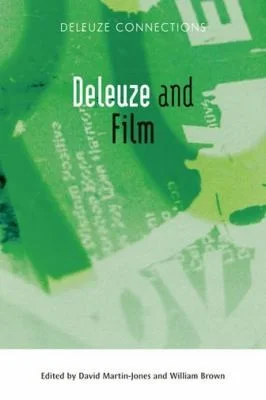
Deleuze and Film, edited by David Martin-Jones and William Brown, 2012 edition cover
2012 English edition coverVerify cover
29
Edited collection

Deleuze and Film

David Martin-Jones; William Brown (eds.)

NO OA FULL BOOK

Full reading guide

Read the full guide
Reading themesSpeech, people & worldThought, sound & bodies
Original edition

Deleuze and Film

English · Edinburgh University Press · 2012

ISBN 9780748641208Verify edition
Published translations · 0

No verifiable published translation record was located.

ATLAS READING NOTEArgument and structureFull guide →

Core question

What new methods emerge when Deleuzian film philosophy enters world cinema, digital images, gender, religion, and genre studies?

Argument

The collection presents multiple routes to the time-image and brings local aesthetics and global genres into concept production. Its value lies in disagreement: chapters offer different answers about conceptual openness, historical boundaries, and film evidence.

Argument structure

Studies of different regions and themes develop three tensions: movement/time, body/technology, and local/global. Chapters offer different answers about the reach of concepts, historical boundaries, and film evidence, presenting multiple routes to the time-image.

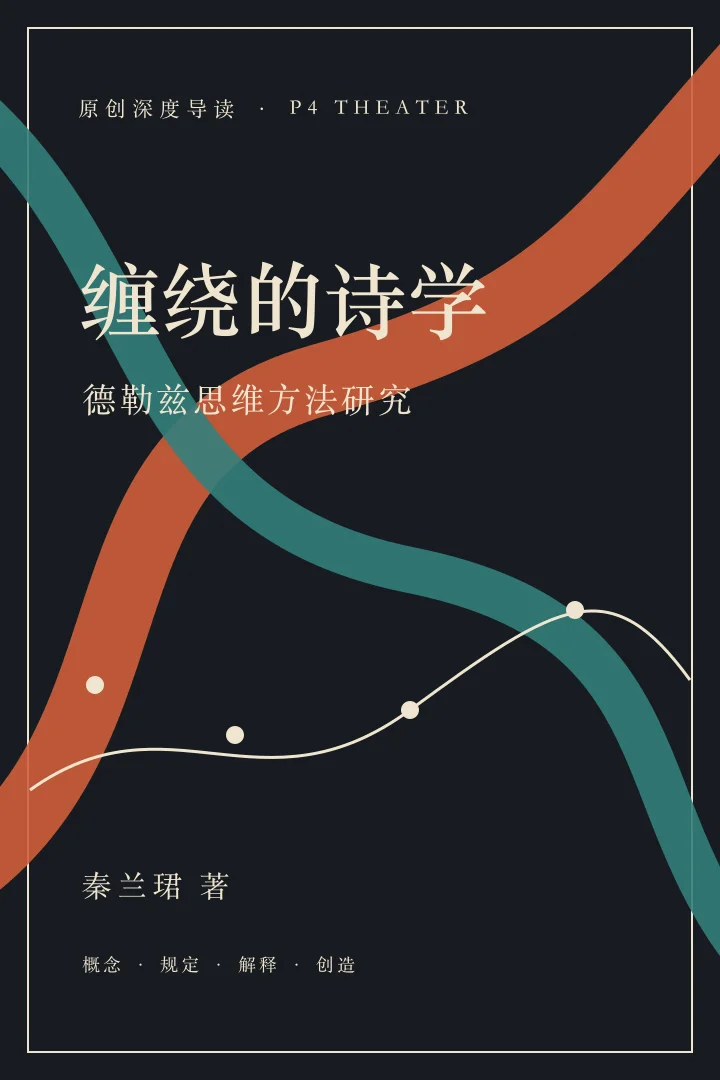
Atlas-original guide card for The Poetics of Intertwinement, with crossing paths representing concepts, texts, and interpretive methods entering one another
Atlas-original guide card · not the book coverVerify bibliography source
30NO OA FULL BOOK

Full reading guide

Read the full guide
Reading themesDifference & sensationThought, sound & bodies
Original edition

《缠绕的诗学:德勒兹思维方法研究》

Simplified Chinese · 中国文联出版社 · 2017

ISBN 9787519024956Verify edition
Published translations · 0

No verifiable published translation record was located.

ATLAS READING NOTEArgument and structureFull guide →

Core question

How does Deleuze release concepts from fixed definitions so that determination, interpretation, and creation become intertwined in reading?

Argument

Qin Lanjun reconstructs Deleuze's method as a dynamic movement from critique through interpretation to creation: dismantling eight postulates of thought, reworking method and object through Spinoza, and joining differentiation, Alice-like paradox, and becoming-life into a poetics of intertwinement.

Argument structure

Intertwinement connects method, interpretation, and concept creation. The critique of thought's postulates and the interpretation of Spinoza lead into differentiation, paradox, and language, ultimately connecting to becoming-life. Reading participates in the production of new relations throughout this argument.

The original is in Simplified Chinese. The Poetics of Intertwinement is a parallel English title, not an English translation; as of 2026-08-14, no published full foreign-language translation or authorized full-book OA was located.

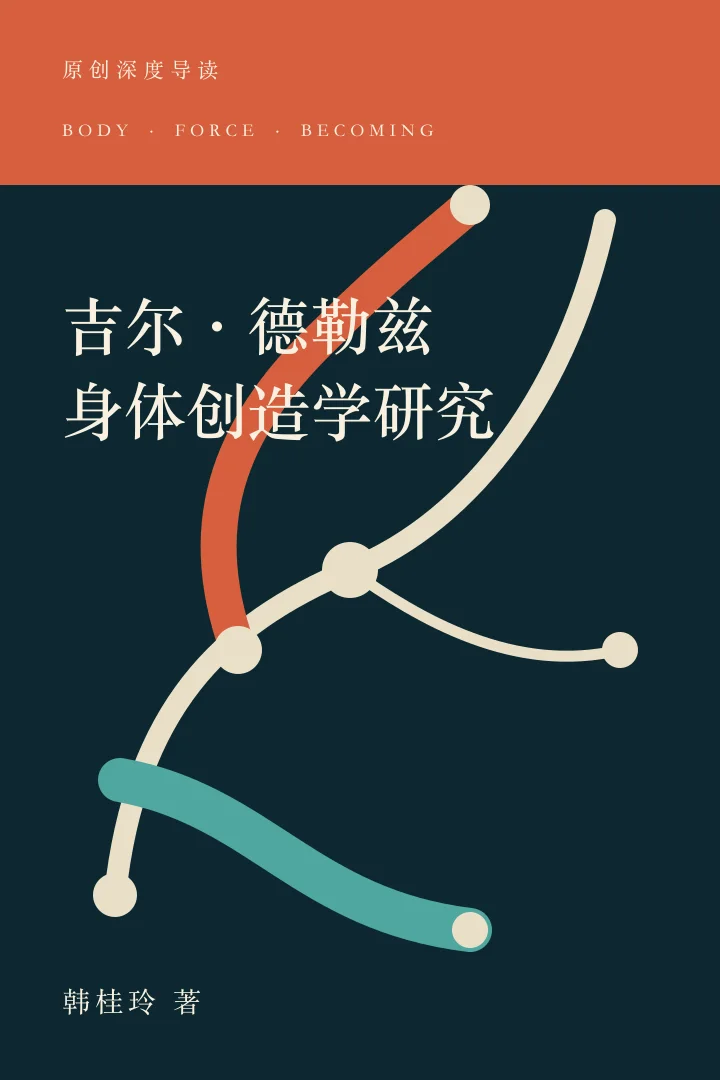
Atlas-original guide card for Gilles Deleuze and the Creation of the Body, with nodes, flows, and folded boundaries representing body and milieu co-producing capacity
Atlas-original guide card · not the book coverVerify bibliography source
31
Monograph

《吉尔·德勒兹身体创造学研究》

韩桂玲 / Han Guiling

NO OA FULL BOOK

Full reading guide

Read the full guide
Reading themesDesire, assemblage & becomingDifference & sensation
Original edition

《吉尔·德勒兹身体创造学研究》

Simplified Chinese · 南京师范大学出版社 · 2011

ISBN 9787565102110Verify edition
Published translations · 0

No verifiable published translation record was located.

ATLAS READING NOTEArgument and structureFull guide →

Core question

How can the body cease to be a finished entity and become a process in which sensation, desire, force, folds, and milieu co-produce capacities?

Argument

Han Guiling synthesizes Deleuze's dispersed work on Spinoza, Nietzsche, Bacon, desiring-machines, rhizomes, and folds into a creatology of the body: bodies are continually composed by relations and intensities, and creation includes both increased capacity and risks of exhaustion, discipline, and failure.

Argument structure

The genealogy of the body connects sensation, desire, and force with rhizomes, folds, and becoming. Bodily capacities are continually formed through these relations; increased capacity also involves exhaustion, discipline, and failure. Creation concerns what bodies can do and what those capacities cost.

The original is in Simplified Chinese. The colophon gives an August 2011 first edition and printing, while CIP data reads 2010.8. As of 2026-08-14, no published full foreign-language translation or authorized full-book OA was located.

31work-by-work research guides
5with published Chinese editions
1open full book
3edited collections
PORTABLE DATA

Download the 31-work edition list

The CSV records authors, original editions, verified published translations across languages, and separately identified access status and acquisition gateways.

B
OPEN READING

Open books, articles, and seminar materials

Books, open issues, articles, and seminar summaries state their carrier and licence separately. Links lead to publishers, repositories, journals, or author pages.

01CC BY-NC-ND 4.0

Hacia una imagen no-tiempo: Deleuze y el cine contemporáneo

Sergi Sánchez · 2022

Official OA edition from Universidad de Oviedo; 314 PDF pages. Cite the 2022 edition.

Open complete book
02Open issue

Death-Images: Revisiting Deleuze’s ‘Time-Image’ in Cinema after 1985

Revista de Comunicação e Linguagens 63 · 2025

The journal hosts the complete issue. Article pages state CC BY-NC 4.0; follow the licence shown on each article record.

Open open journal issue
03CC BY-NC

Death as Film-Philosophy’s Muse

Susana Viegas · 2023

Full text in the Universidade NOVA de Lisboa repository.

Open peer-reviewed article
04Author-hosted

德勒兹『思想—影像』或『思想=影像』之条件及问题性

杨凯麟 / Yang Kailin · 2003

Public file on the author’s website; no separate Creative Commons licence is stated.

Open author-hosted article
05Institution-hosted

Cinema, Truth and Time: The Falsifier — 22 Session Summaries

The Deleuze Seminars / Charles J. Stivale · 1983–84 / 2024 summary

Twenty-two session summaries hosted by Purdue’s Deleuze Seminars project.

Open seminar summaries
06DOAJ / archived journal page

The Time-Image: Deleuze, Cinema, and Perhaps Language

T. C. Wall · 2004

Listed as open access by DOAJ; the link opens an Internet Archive capture of the original journal page.

Open open article archive
©

Downloads and reading

The atlas compiles the bibliography CSV. Full-text links lead to publishers or institutions; each edition lists its purchase, subscription, preview, or controlled-lending conditions.