DEEP GUIDE · PRINT LOCATORS · FILM MATRIX
18Cinema After Deleuze
From films that philosophize through movement and time to reality, politics, belief in the world, and cinema after Deleuze
Cinema does not illustrate philosophical concepts; concrete films pose philosophical problems through movement, time, memory, relation, and rupture. The time-image does not replace the movement-image, and the actual is not more real than the virtual: these forms coexist and transform across history, producing distinct politics and modes of belief in the world.
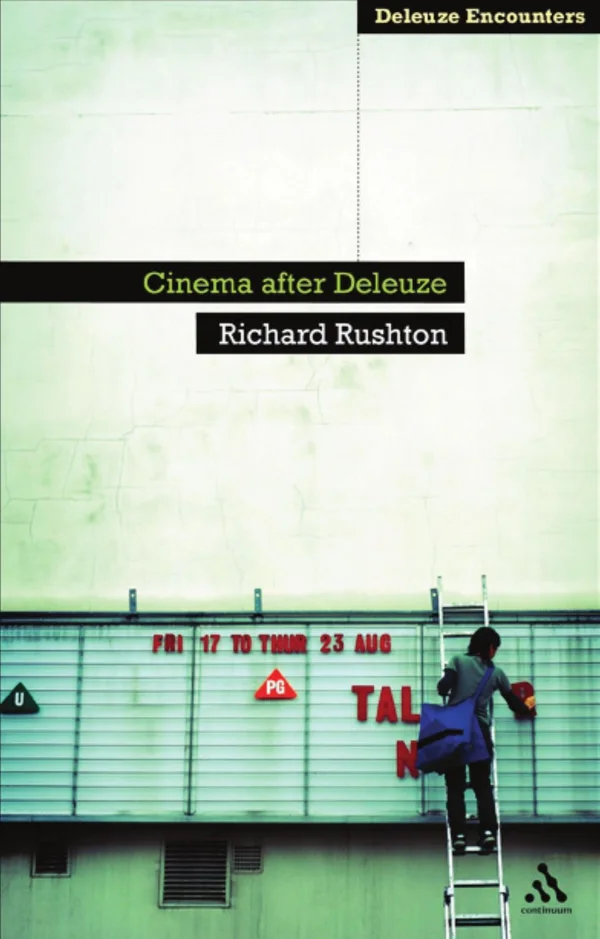
English · Continuum · 2012 · ISBN 9780826438928
- UNITS
- 10
- LOCATORS
- 77
- CURATED BOOK CASES
- 20
- EXTENSIONS
- 8
CENTRAL ARGUMENT
Central argument and scope
CONTRIBUTION
Rushton turns Deleuze's taxonomy into visible argument through directors and scenes. He reconstructs the movement-image through Griffith, Eisenstein, Gance, Lang, Ford, Hawks, and Hitchcock; moves into time, reality, and thought through neorealism, Ophüls, Fellini, Welles, Resnais, and Godard; then tests how classification continues after Deleuze through Spielberg, Scorsese, Besson, von Trier, Wong Kar-Wai, and Kiarostami.
PAGINATION
Ten chapters occupy pp.1–156; Notes pp.157–158; Works Cited pp.159–161; Filmography pp.162–167; p.168 is a transition; Index pp.169–176.
SCOPE
Ten reading units, 77 narrow print locators, eighteen concept groups, ten relation cards, twenty core book films, eight site extensions, six outward perspectives, and a five-step route. The book's Filmography on pp.162–167 contains 190 entries.
CHAPTER ARGUMENT CHAINS
10 reading units with exact print locators
Ask what cinema can do, not what it is
Film-philosophy begins from the capacities and problems of concrete films; images are material-movement relations, film history reorganizes regimes of problems, and the spiritual automaton makes thought both triggerable and capturable by power.
Chapter 1 establishes the method through four questions—what cinema can do, what an image is, what film history is, and what spiritual automata are—refusing to subordinate films to an already completed philosophy.
Capacity and image
Taxonomy tracks what films do, while images belong to matter and movement rather than mental representation.
Distinction and history
Movement/time is a formal distinction; history is not a higher form replacing a lower one.
Automaton and outside
Image-machines can produce thought and obedience; rupture admits the unthought.
EXACT PRINT LOCATORS
- pp. 1–2
Method shifts from essential definition to what cinema has done and can still do.
- pp. 2–3
Concrete films pose problems themselves rather than illustrating a philosophical system.
- pp. 3–4
The Bergsonian image is an existent within matter-movement.
- pp. 5–6
Movement-image subordinates time to movement; time-image makes temporal relations directly perceptible.
- pp. 7–8
Film history reorganizes problems and forms rather than advancing along one line.
- pp. 9–10
The spiritual automaton treats thought as a process triggered by an image-machine.
- pp. 11–12
Thought can be captured by automated power or encounter the unthought through rupture.
How four montage systems compose a whole
Griffith, Eisenstein, Gance, and Lang compose wholes through organic, dialectical, mathematical-sublime, and dynamic-sublime montage; each mode of unity, conflict, excess, and nonorganic life has political consequences.
A distinction among frame, shot, and montage establishes the analytical units, after which four directors place persons, masses, machines, and architecture within distinct regimes of the whole.
From organic whole to dialectical conflict
Griffith juxtaposes difference; Eisenstein makes difference collide and change qualitatively.
Immeasurable movement and nonorganic life
Gance drives movement toward perceptual limits; Lang gives architecture and machines a violent life.
Political consequences of the whole
All four forms compose humans and machines, but distribute unity and exclusion differently.
EXACT PRINT LOCATORS
- pp. 13–14
Frame extracts, shot synthesizes movement, and montage composes the whole.
- pp. 15–16
Griffith's parallel convergence composes class division into an organic whole.
- pp. 17–18
The close-up moves from subjective feeling toward qualitative change through dialectical collision.
- pp. 18–19
Eisenstein drives psychological event into a social-revolutionary dimension.
- pp. 20–21
Gance approaches immeasurable movement through acceleration and multiple images.
- pp. 22–23
Lang gives light-dark, architecture, and machines a nonorganic life.
- pp. 25–26
Lang's contrasts of light and darkness and his machines carry the dynamic sublime toward divinity and nonorganic life.
SAS′ and the construction or fracture of the American dream
Perception, affection, and action differentiate from one centre of indetermination; the large form SAS′ lets a situation pose a problem, action fill the gap, and order return, while inscribing exclusions and costs of community within the form.
Ford's communities and Kazan's American dream show that the large form can build a world while compressing race, displacement, and political history into solvable problems.
Centre of indetermination and three images
The subject subtracts stimuli from world-flow, while affect occupies the interval before action.
Ford's large form
Milieu, route, threat, and duel refound a community.
Kazan's symptom
The formula's victory exposes the costs of testimony, modernization, and displacement.
EXACT PRINT LOCATORS
- pp. 27–28
Images precede the subject, which is only a centre of indetermination within variation.
- pp. 29–30
Perception subtracts what is irrelevant to interest.
- pp. 31–32
The affection-image registers intensity not yet converted into action.
- p. 37
SAS′ turns a situation through action into a new situation of restored order.
- pp. 34–35
Stagecoach composes route, character difference, and threat into a milieu.
- pp. 35–36
Sergeant Rutledge rediscovers a good America through trial while leaving institutional change in question.
- pp. 36–37
Kazan makes the American dream both the formula's victory and its symptom.
- pp. 39–40
Wild River builds the good of modernization upon displacement and historical loss.
ASA′, relational networks, and the implicated spectator
Hawks develops the small form ASA′, in which action begins in medias res and keeps generating new situations. Hitchcock instead makes relations and interpretation themselves objects of the mental image. The spectator may know the facts before the characters do, yet remains implicated through inference and desire.
Hawks's local tactics, indices of lack or ambiguity, and Hitchcock's mark/demark, knowledge gaps, and complicity of desire push the movement-image toward relational thought.
Small form and local survival
Action repeatedly falls into new situations; characters survive without founding a new total order.
Relation-image and complicity
The lighter first establishes a relational series among Guy, Bruno, and Anne, and Bruno later tries to use it to remove himself from that series. The resemblance between Barbara's and Miriam's glasses unsettles Bruno and forms another demark. The film also implicates the spectator through elicited desire and shame.
Vertigo and the edge of crisis
The early disclosure of Judy's identity turns suspense from solving a mystery into witnessing control.
EXACT PRINT LOCATORS
- pp. 41–42
ASA′ begins in the midst of action and keeps generating new situations.
- pp. 42–43
The Big Sky's characters survive through local tactics without founding a new nation.
- pp. 45–46
Diamonds, love, and calculation form indices of lack and ambiguity.
- pp. 47–48
Relation is not an annotation added to two objects; it is the third term that determines how they interpret one another.
- pp. 51–52
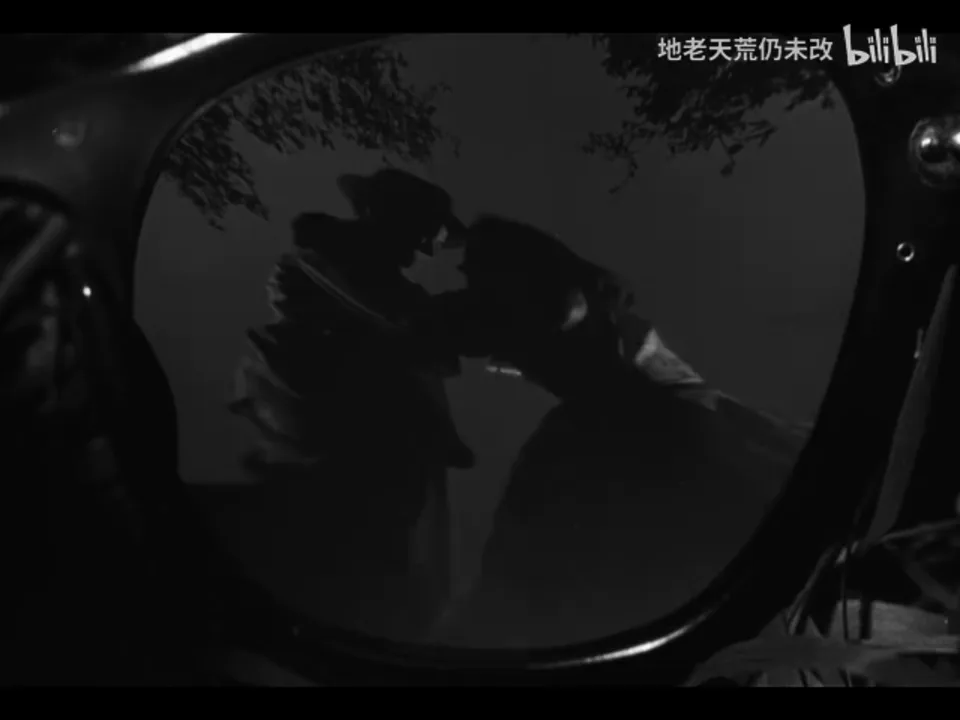
Rushton uses the lighter to show a mark turning into a demark, and the resemblance between Barbara's and Miriam's glasses to show another demark.
- pp. 52–53
Following Robin Wood, Rushton argues that desire for Miriam's death and the shame that follows implicate the spectator; the spectator's earlier knowledge of the murder is a separate film-level fact.
- pp. 54–55
Vertigo organizes desire through exchange, disguise, and the third term.
- p. 57
Vertigo shifts the problem from what characters know to how spectators become implicated through knowledge and desire.
When action fails, characters begin to see
The historical turn toward the time-image is not poorer subject matter or slower rhythm but a break in the sensory-motor chain: characters encounter a world no inherited scheme can solve.
Bicycle Thieves, Europa '51, Umberto D, and Antonioni's empty spaces distinguish failed action, pure optical-sound situations, and an open future.
Past and sensory-motor break
Entering the past no longer serves evidence gathering, and action-goals no longer guarantee a solvable world.
Seeing without habitual action
Irene, the maid, and Antonioni's characters are placed outside institutions by new perception.
Unresolved relations and open future
Empty space is not nihilism; it keeps other relations capable of emergence.
EXACT PRINT LOCATORS
- pp. 59–60
The time-image reopens the past as a field of discovery and frees the future from an action-plan.
- pp. 61–62
The past is no longer entered merely for evidence that fixes present and future.
- pp. 60–61
The goal repeatedly fails; the decisive feature is the breakdown of sensory-motor linkage.
- pp. 64–65
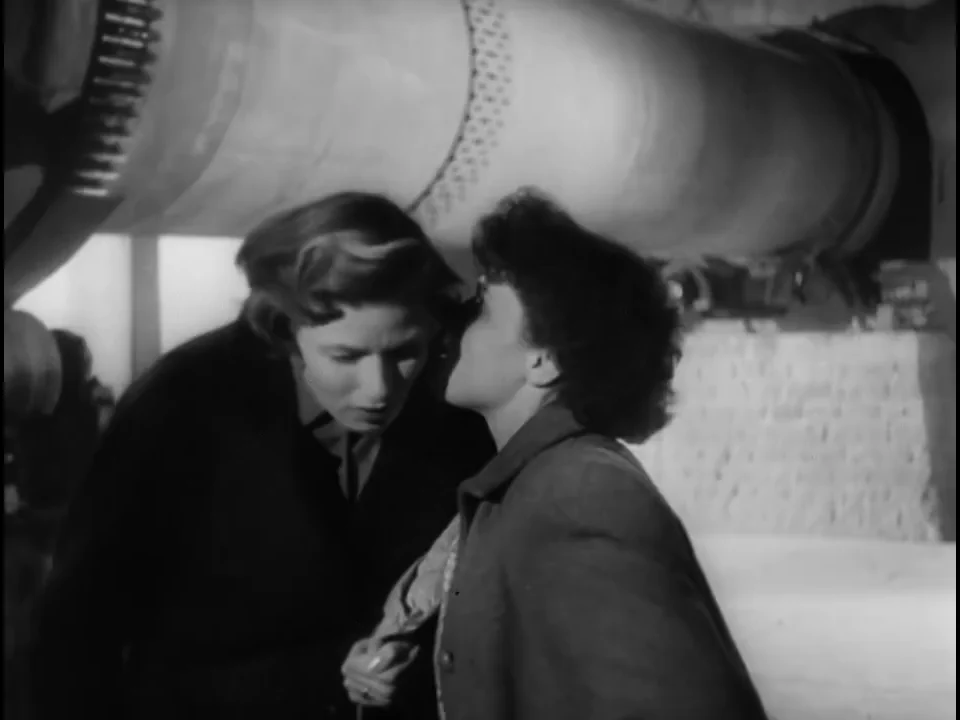
Irene leaves habitual perception and society diagnoses her new seeing as abnormal.
- pp. 65–66
The maid's minor gestures become a pure optical-sound situation.
- pp. 67–68
Empty spaces suspend action and moral judgment as characters become absent from world and self.
- pp. 69–70
The unresolved keeps new relations possible and does not equal nihilism.
- pp. 70–71
An open world awaits inhabitants who have not yet occupied it, while empty space keeps relations unresolved.
Recollection circuits and the growth of the crystal
Attentive memory lets seeing open time, while the crystal makes the actual present and virtual past bifurcate together; the differences among Ophüls, Fellini, Renoir, and Visconti cannot be unified by one mirror diagram.
Automatic versus attentive memory, a counterexample in flashback, and completed, growing, cracked, and decomposing crystals jointly establish the crystal's boundary and spectrum.
Time, attention, and counterexample
Suspended action opens time, while conclusive recollection shows why flashback is not equivalent to the time-image.
Completed and growing crystals
Ophüls's circus present actualizes multiple pasts, while Fellini lets creation, memory, and fantasy grow together.
A spectrum of crystals
Renoir and Visconti crack or decompose the crystal, showing that temporal relation is not one effect.
EXACT PRINT LOCATORS
- pp. 73–74
Time emerges through suspended action and reorganized relations among past, present, and future.
- pp. 76–77
Automatic memory repeats response; attentive memory lets seeing open time.
- pp. 77–78
Letter from an Unknown Woman closes the past as a conclusion and becomes a boundary counterexample for flashback.
- pp. 78–79
Carousel and heart-like entrances expand several faces of the past.
- pp. 80–81
The crystal makes the actual present and virtual past bifurcate together and exchange attribution.
- pp. 82–83
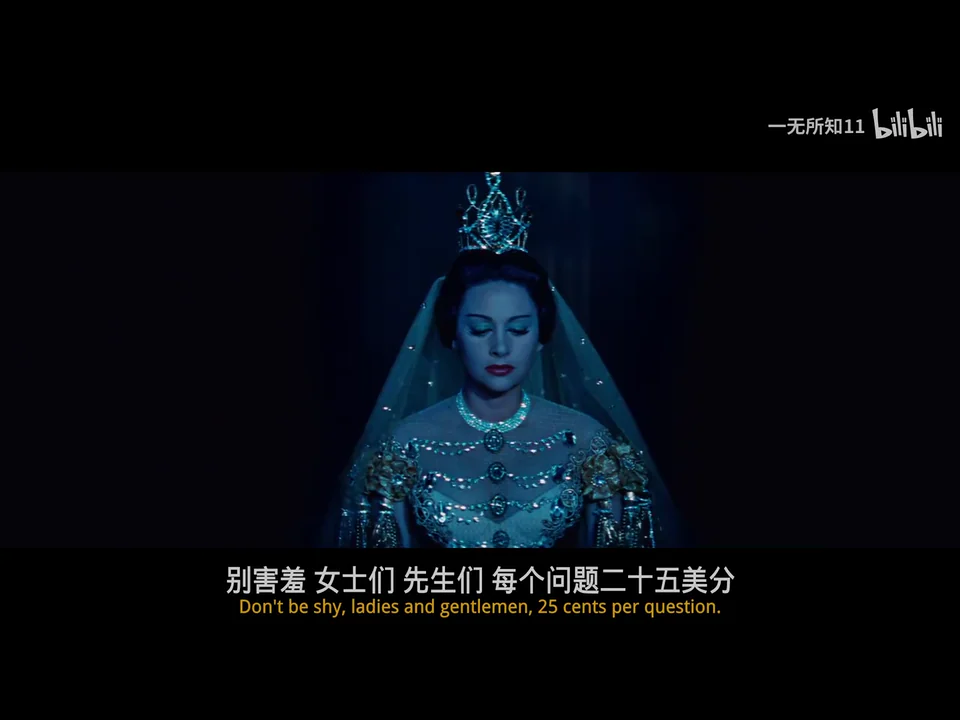
Ophüls presents a completed crystal; Fellini presents one in formation.
- p. 85
Fellini, Renoir, and Visconti establish a spectrum of growing, cracked, and decomposing crystals.
Actual and virtual presuppose one another
Actual does not equal real and virtual does not equal unreal; both are real. Welles's sheets of past and Resnais's peaks of present make memory an activity that materially reorganizes subject and future.
Citizen Kane, Mon oncle d'Amérique, and Last Year at Marienbad transform memory from retrievable evidence into a network of nonchronological strata, displacing Rosebud as a master key.
Two states of the real
Actualization emerges from virtual relations, and memory strata in turn alter the present subject.
Behaviour, sheets, and search
Layered explanation and searches through the past resist reducing characters to one causal key.
Peaks of present and making a future
Unverifiable narratives still have real effects, so memory becomes a condition for future-making.
EXACT PRINT LOCATORS
- pp. 87–88
Actual and virtual are both real and reciprocally presuppose one another in actualization.
- pp. 88–89
The time-image lets memory strata reorganize subject and present.
- pp. 91–92
Rosebud is another sheet composing Kane, not the master key.
- pp. 93–94
Character lives, behavioural explanation, and experimental images form layered pasts.
- pp. 95–96
Open or rigid attitudes toward the past alter capacities for a future.
- pp. 96–97
Welles searches sheets of past; Resnais makes memory a nonlocal network.
- pp. 98–99
The narratives of A, X, and M remain finally unassignable between peaks of present and sheets of past.
- p. 100
Memory makes conditions for the future rather than restoring a completed past.
From shocking obedience to belief in the world
Shock can move perception toward concept and can also be captured by fascist wholes or stimulus consumption; Godard's interstice exposes thought to the unthought, while belief in the world begins from a broken link between human and world.
Eisenstein's dialectical circuit, Godard's audiovisual 'and,' and the bodily events of Hail Mary move thought from grand unity toward small relations that can continue.
Automaton, shock, and capture
Formal intensity can produce revolutionary thought and can also decline into unified obedience or violent stimulation.
Interstice, outside, and rupture
Audiovisual interstices sever automatic links and confront thought with the unthought and an unguaranteed world.
Belief in small events
Love, letting go, and a relation's continuation compose belief in the world without doctrine or optimism.
EXACT PRINT LOCATORS
- pp. 101–102
The spiritual automaton can produce thought and be appropriated by a fascist whole.
- pp. 104–105
Eisenstein moves perceptual shock into concept and then returns concept toward affect.
- p. 107
When only violent representation remains, shock declines into stimulus consumption.
- pp. 109–110
Godard uses audiovisual intervals and the 'and' between images to sever the automatic whole.
- pp. 110–111
The interstice confronts thought with outside and unthought, while free indirect discourse undoes subjective-objective judgment.
- pp. 113–114
The broken human-world link is the condition for the problem of belief.
- pp. 115–116
Hail Mary locates belief in small events of body, love, and letting go.
- pp. 116–117
Belief makes new space-time after the given world has been lost.
The movement-image persists under new regimes
The time-image did not replace the movement-image after the war. Spielberg, Scorsese, and Besson make large form, small form, and spectacle-image persist through late capital, criminal networks, and control society.
The reconstruction of community in Jaws, the survival chain of Casino, and the preprogramming of identity in Nikita show that a form's political effects change under a new regime.
Late large form
Spielberg revives the ethical certainty of SAS′ through family, law, and technical expertise.
Late small form
Scorsese keeps characters one step ahead while expanding the capital-crime machine.
Spectacle and control
Besson uses speed, surface, and professional skill to turn identity into a schedulable task-unit.
EXACT PRINT LOCATORS
- pp. 119–120
Movement and time forms transform back and forth across history rather than follow linear replacement.
- pp. 121–122
Spielberg composes a late community through technical experts and family relations.
- p. 123
Jaws sacrifices old America while preserving a technology-order alliance.
- pp. 126–127
Revealing historical truth secures present and future, reviving large-form certainty.
- pp. 129–130
Scorsese makes local action continually generate new traps.
- pp. 131–132
Casino's survival chain expands the capital-crime machine.
- pp. 133–134
Rushton proposes the spectacle-image for speed, dynamic vision, and pastiche that reorganize historical depth.
- pp. 136–137
Nikita trains a rebellious body into a task-unit of control society.
Against judgment, floating image, and open image
Von Trier, Wong Kar-Wai, and Kiarostami extend the time-image after Deleuze through suspension of judgment, a present already disappearing, and endings reopened toward the world beyond the film; each new name must retain authorial provenance and counterexamples.
The power risks of cinema against judgment, Wong's defocus, slow motion and staggered stop-motion blurring, fragmentary memory, and Kiarostami's reflexive video endings jointly ask how images keep reality changeable after established truth fails.
Against judgment and its power risks
Suspending moral judgment can admit unheard stories and can also obscure asymmetrical harm.
Floating and already disappeared
Beginnings and endings in medias res, slow motion, staggered stop-motion blurring, and repetition make the present appear first as memory.
Open image and world
Long take, journey, and reflexive filming let an ending close a story and reopen it toward reality.
EXACT PRINT LOCATORS
- pp. 140–141
Von Trier places conduct within force-relations resistant to judgment.
- pp. 142–143
Institutional community is dismantled without guaranteeing the purity of its replacement.
- pp. 144–145
Suspending established judgment lets unwanted stories enter thought.
- pp. 147–148
Deleuze's floating image is carried into Wong through defocus, slow motion, staggered stop-motion blurring, and colour that loosen causal anchors.
- pp. 148–149
Déjà disparu presents the present as already disappearing and repeatedly restaged.
- pp. 150–151
The open image named by Chaudhuri and Finn combines neorealist long take, journey, and reflexive filmmaking.
- pp. 153–154
Taste of Cherry's video coda closes the narrative and restarts the film.
- pp. 155–156
The open image offers no single truth and keeps reality capable of change.
WORKING CONCEPTS
18 searchable, operational concepts
What can cinema do?
An inquiry into the problems, perceptions, and relational capacities films produce instead of an essential definition.
- OPERATION
- State the film's problem through one concrete formal effect.
- BOUNDARY
- Narrative theme or philosophical citation does not count as the film's own capacity.
Image
A relational term within matter and universal variation, of which the subject is a selective node.
- OPERATION
- Record light, sound, movement, and bodily response before interpreting representation.
- BOUNDARY
- Image is not synonymous with a mental copy or screen content.
Movement-image
An image regime in which time appears indirectly through movement and sensory-motor relations.
- OPERATION
- Identify whole, situation, action, and transformation.
- BOUNDARY
- It is not a period label for prewar cinema or a genre label for action film.
Time-image
An image regime in which temporal relations become directly perceptible after the sensory-motor break.
- OPERATION
- Demonstrate action failure and reorganization among past, present, and future.
- BOUNDARY
- Slowness, emptiness, open ending, or flashback is insufficient.
Spiritual automaton
A process by which the image-machine triggers and may automate thought.
- OPERATION
- Track how shock enters concept, affect, action, or obedience.
- BOUNDARY
- Technical automation or robot subject matter is not the concept itself.
Montage and the whole
Relations among shots compose organic, dialectical, quantitative, or intensive wholes.
- OPERATION
- State the model of the whole, temporal effect, and excluded term.
- BOUNDARY
- Editing speed or technique name is not a complete judgment.
Perception–affection–action
Three functions of a centre of indetermination: subtraction, intensive interval, and situational transformation.
- OPERATION
- Record stimulus, subtraction, intensity, act, and result in order.
- BOUNDARY
- A psychological sequence of seeing, feeling, and doing is insufficient.
Large form SAS′
A situation transformed by action into a new situation that restores or refounds order.
- OPERATION
- List S, A, S′, community, and sacrificed term.
- BOUNDARY
- Large spectacle or feature length does not define the large form.
Small form ASA′
A chain in which local action falls into a new situation and generates another act.
- OPERATION
- Track the new trap and local tactic produced by each act.
- BOUNDARY
- A minor character or low-budget production does not define the small form.
Relation-image
Perception, affection, and action are interpreted through thirdness, and the spectator enters the network.
- OPERATION
- Identify object-marks, knowledge gaps, desire, and spectator complicity.
- BOUNDARY
- Thirdness does not mean a third person appears in the frame.
Pure optical and sound situation
A situation seen or heard without being reconnectable to an inherited action-scheme.
- OPERATION
- Identify failure of the old scheme and persistence of perception.
- BOUNDARY
- Empty shot, ambient sound, or slow rhythm is only a clue.
Attentive memory
Perception expands into increasingly deep circuits of the past rather than repeating a learned response.
- OPERATION
- Track how each recollection circuit alters the present object.
- BOUNDARY
- A character remembering or a flashback insertion is insufficient.
Crystal-image
The smallest circuit in which actual present and virtual past continually exchange and resist stable attribution.
- OPERATION
- Mark both faces, exchange point, crystalline state, and real consequence.
- BOUNDARY
- Dream, mirror, flashback, or fantasy does not qualify automatically.
Actual / virtual
Two reciprocally presupposing states of the real: what is actualized and differential potential with real efficacy.
- OPERATION
- State which virtual relation actualizes and what it changes.
- BOUNDARY
- It is not a real-fictional, physical-digital, or true-false binary.
Sheets of past / peaks of present
Coexisting regions of the past and mutually divergent versions of the present.
- OPERATION
- Identify searched sheet, narrative version, and real consequence.
- BOUNDARY
- Chronological ordering or multistrand narrative does not automatically form sheets or peaks.
Interstice / unthought
A break between images or sound and image that cannot be derived from one action-chain and exposes thought to outside.
- OPERATION
- Explain why the two sides cannot connect automatically and how they act on one another anew.
- BOUNDARY
- Black frame, jump cut, or narrative ellipsis is insufficient by itself.
Belief in this world
The capacity to make concrete events, relations, and new space-times after the human-world link breaks.
- OPERATION
- Identify the failed guarantee and material bearer of a relation that can continue.
- BOUNDARY
- Optimism, religious obedience, or an uplifting ending is not the test of belief.
Spectacle / floating / open image
Three post-Deleuzian names have distinct sources: Rushton proposes spectacle-image; floating image comes from Deleuze; open image comes from Chaudhuri and Finn.
- OPERATION
- Test speed-task, floating causality, and reopened ending separately.
- BOUNDARY
- They should neither be bundled as Rushton's inventions nor treated as one fixed set in Deleuze's original taxonomy.
PRIMARY TEXTS AND COMPARATIVE STUDIES
Related arguments and textual comparisons
Films themselves philosophize
- BOOK ARGUMENT
- Concrete films pose problems and should not be reduced to examples of a pre-existing philosophy.
- RELATED PRIMARY ENTRY
- Cinema 1's preface on cinematic practice creating movement/time blocks; both volumes invent concepts through filmmakers.
- CROSS-TEXT COMPARISON
- Colman provides an operational map; Rushton requires validation in scenes; the two are complementary.
- SITE TEST
- Every concept has at least one formal proof and one possible counterexample; plot summary is not philosophical evidence.
Image is not merely representation
- BOOK ARGUMENT
- Image belongs to universal variation, and the subject is a selective node within relation.
- RELATED PRIMARY ENTRY
- Cinema 1, chapter 4, on Bergsonian images and the centre of indetermination.
- CROSS-TEXT COMPARISON
- Shaviro stresses direct action on bodies; Marks adds intercultural sensory memory.
- SITE TEST
- Record movement, light, sound, and bodily response before discussing representation.
The politics of montage wholes
- BOOK ARGUMENT
- Four filmmakers produce organic, dialectical, mathematical-sublime, and dynamic-sublime wholes.
- RELATED PRIMARY ENTRY
- Cinema 1, chapter 3, on four montage tendencies.
- CROSS-TEXT COMPARISON
- Colman frames montage as epistemic and political selection; Rushton demonstrates differences through editing.
- SITE TEST
- State what whole connects people, machines, and leader, and who is excluded.
SAS′, ASA′, and thirdness
- BOOK ARGUMENT
- Large form refounds community, small form survives locally, and Hitchcock implicates the spectator through thirdness.
- RELATED PRIMARY ENTRY
- Cinema 1, chapters 9–12, on action forms and the relation-image.
- CROSS-TEXT COMPARISON
- Colman's action/ethics tests whose capacity rises; Rushton exposes the costs of the American dream.
- SITE TEST
- Record initial situation, action, result, and residue; thirdness must be an interpreted relation.
Neorealism and circuit crisis
- BOOK ARGUMENT
- The decisive change occurs when characters see but cannot act through inherited formulas, reopening the future.
- RELATED PRIMARY ENTRY
- Cinema 2, chapter 1, on sensory-motor break, opsign, and sonsign.
- CROSS-TEXT COMPARISON
- Colman supplies the perception-affection-action mechanism; Rushton supplies concrete scenes.
- SITE TEST
- Slowness, emptiness, and open ending are clues only; show how linkage fails and leaves a new problem.
Crystal and reality
- BOOK ARGUMENT
- Actual and virtual are both real and reciprocally presupposed; the crystal destabilizes their attribution.
- RELATED PRIMARY ENTRY
- Cinema 2, chapters 3–5, on crystal, sheets of past, and peaks of present.
- CROSS-TEXT COMPARISON
- Sutton extends photographic memory; Colman adds topology; Rushton distinguishes crystalline states.
- SITE TEST
- Mark current, virtual past, exchange point, and real consequence; dream and flashback do not qualify automatically.
Thought and belief in the world
- BOOK ARGUMENT
- Shock can be revolutionary or fascist; the interstice exposes thought to outside, and belief emerges from a broken worldly link.
- RELATED PRIMARY ENTRY
- Cinema 2, chapters 7–8, on spiritual automaton, interstice, and belief in the world.
- CROSS-TEXT COMPARISON
- Marrati foregrounds the problem of world; Colman grounds belief in an ethics of capacity.
- SITE TEST
- Positive feeling is not belief; an old scheme must fail and a concrete new relation emerge.
After Deleuze
- BOOK ARGUMENT
- Movement and time do not replace one another linearly; later films sustain old forms and generate new variants.
- RELATED PRIMARY ENTRY
- The two Cinema volumes as an open taxonomy; control society via Deleuze's later essay.
- CROSS-TEXT COMPARISON
- Pisters's neuro-image is another extension into digital screens; Colman explains why an open system permits further naming.
- SITE TEST
- A new term states authorial provenance, operation, film, counterexample, and difference from inherited concepts.
Sound as an independent series
- BOOK ARGUMENT
- Figures hear before they can reduce sound to an action command; sound gains its own temporal series and places thought outside the image.
- RELATED PRIMARY ENTRY
- Rushton pp. 63–68 on pure optical/sound situations and pp. 101–118 on interstice, spiritual automaton, and belief in the world; Cinema 2, chapters 1 and 9, provide primary coordinates.
- CROSS-TEXT COMPARISON
- Colman pp. 101–146 places sound within transsemiotics, signaletic material, and crystal; Sutton pp. 50–63 connects the acoustic gap to photographic memory; the atlas sound evidence marks The Zone of Interest as a witness boundary rather than a sound crystal.
- SITE TEST
- Record source visibility, the separate times of sound and image, the cut, and responsibility effects; off-screen sound as atmosphere alone does not qualify.
Open classification and image custody
- BOOK ARGUMENT
- Films after Deleuze do not merely add genres; they bring the return of old forms, digital storage, and viewing rights into classification itself.
- RELATED PRIMARY ENTRY
- Rushton pp. 119–156 on cinema after Deleuze; Cinema 2’s conclusion on open semiotics and a people to come.
- CROSS-TEXT COMPARISON
- Sutton pp. 201–235 tracks storage, retrieval, and immemory; Jiang pp. 399–437 connects ghosts and digital ruins to responsibility; Colman pp. 147–200 places politics, topology, and ethics in one workflow.
- SITE TEST
- A new case must state film form, edition/carrier, viewing rights, and a counterexample; without a custody chain, do not turn ‘post-cinema’ into a conclusion.
FILMS AND IMAGES
Book cases and extended analyses
A Corner in Wheat
A Corner in Wheat · D. W. Griffith · 1909Parallel montage composes class division into an organic whole while exposing its pressure toward reconciliation.
Battleship Potemkin
Bronenosets Potyomkin · Sergei Eisenstein · 1925Dialectical montage and shock make sensation, concept, and collective action transform one another.
Metropolis
Metropolis · Fritz Lang · 1927Architecture and machines acquire a dynamically sublime nonorganic life.
Stagecoach
Stagecoach · John Ford · 1939Route, threat, character difference, and duel compose the SAS′ community.
The Big Sky
The Big Sky · Howard Hawks · 1952Local action lets characters survive without founding a new order, exemplifying ASA′.
Strangers on a Train
Strangers on a Train · Alfred Hitchcock · 1951Lighter and spectacles weave encounter, exchanged murder, and spectator desire into a relational network.
Vertigo
Vertigo · Alfred Hitchcock · 1958Elster's commission first scripts surveillance through the absent Carlotta, and Judy's unsent letter then lets the spectator know the deception before Scottie; remaking Judy consequently becomes a process of control under an informed gaze.
Bicycle Thieves
Ladri di biciclette · Vittorio De Sica · 1948Repeated failure of action-goals exposes the sensory-motor break.
Europa ’51
Europa ’51 · Roberto Rossellini · 1952Irene's factory vision leaves habitual perception, and institutions close it again through diagnosis.
L’eclisse
L’eclisse · Michelangelo Antonioni · 1962Unpeopled space lets relational residues continue as events and keeps the world open, not yet filled by its inhabitants.
Lola Montès
Lola Montès · Max Ophüls · 1955The circus present actualizes multiple pasts as a repeatable, chargeable completed crystal.
8½
8½ · Federico Fellini · 1963Creative crisis, set, childhood, and fantasy compose a crystal still growing.
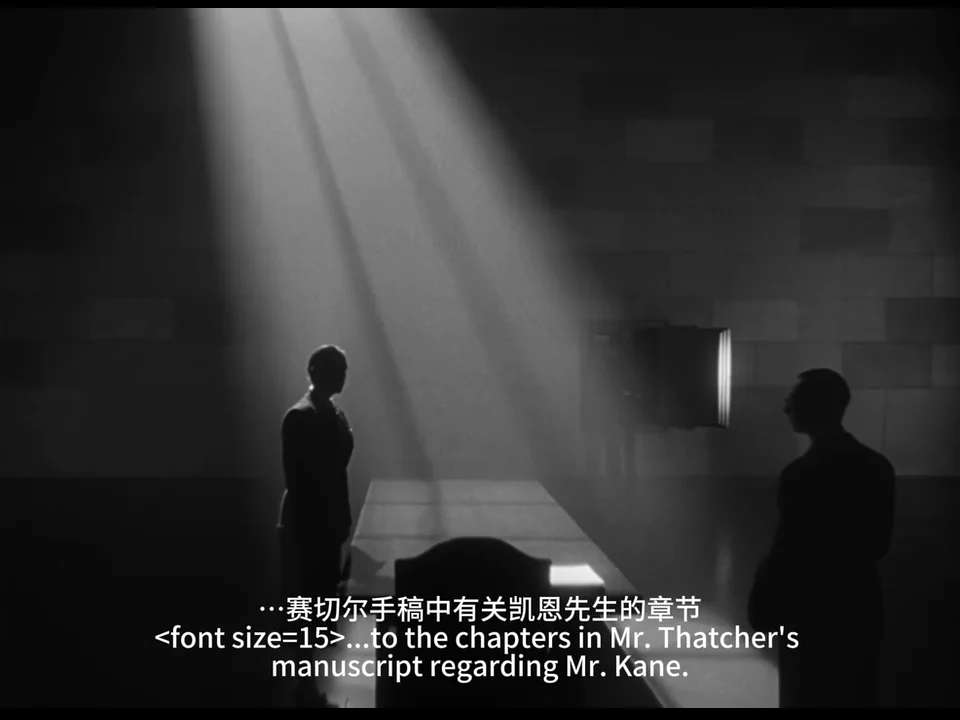
Citizen Kane
Citizen Kane · Orson Welles · 1941Testimony and archive enter different sheets of past, with Rosebud only one sheet among them.
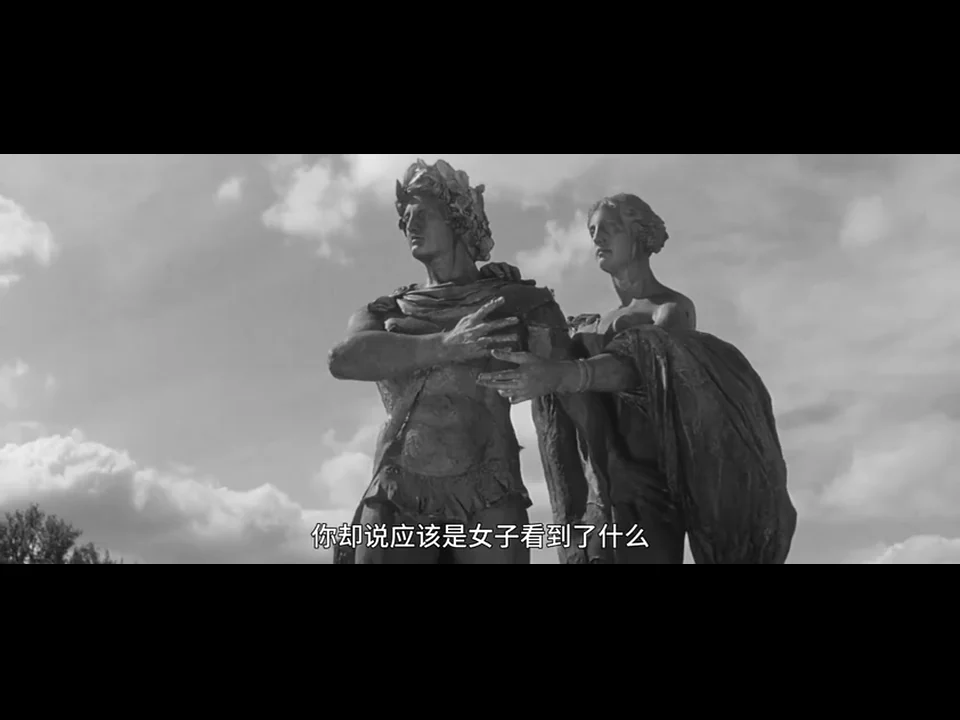
Last Year at Marienbad
L’Année dernière à Marienbad · Alain Resnais · 1961The versions of A, X, and M remain unassignable between peaks of present and sheets of past.
Hail Mary
Je vous salue, Marie · Jean-Luc Godard · 1985Body, love, and letting go materialize belief in the world as a small relation.
Jaws
Jaws · Steven Spielberg · 1975The late large form sacrifices old America while preserving an alliance of technical expertise and order.
Casino
Casino · Martin Scorsese · 1995The small-form action chain solves no problem and only expands machines of capital, crime, and surveillance.
Nikita
Nikita · Luc Besson · 1990Training montage turns a rebellious body into a task-unit of control society.
In the Mood for Love
Fa yeung nin wa · Wong Kar-Wai · 2000Slow motion, staggered stop-motion blurring, corridors, repeated music, and in-medias-res form make the present appear first as memory.
Taste of Cherry
Ta’m e guilass · Abbas Kiarostami · 1997The video coda closes the death narrative while reopening toward the shoot and the world.
Mad Max: Fury Road
George Miller · 2015A return along the same route tests persistence of the movement-image and redistribution of community.
Arrival
Denis Villeneuve · 2016Future memory tests virtual actualization and ethical responsibility.
Moonlight
Barry Jenkins · 2016Three ages make identity appear as mutually actualizing temporal strata rather than linear development.
Burning
Lee Chang-dong · 2018Greenhouse, cat, and disappearance evidence separate real effects from factual attribution.
Drive My Car
Ryusuke Hamaguchi · 2021Rehearsal, driving, and recording make a dead voice a virtual co-author of the present.
Memoria
Apichatpong Weerasethakul · 2021A source-less sound carries belief in the world beyond the human centre toward geological memory.
Aftersun
Charlotte Wells · 2022Home video makes present viewing and the virtual father actualize one another.
The Zone of Interest
Jonathan Glazer · 2023The interstice between everyday image and off-screen sound tests suspension of judgment against material harm.
OUTWARD PERSPECTIVES
Further questions and research directions
Platform images and control circuits
- QUESTION
- Do autoplay, recommendation, and short-video task chains extend ASA′ or the spectacle-image?
- EXTENSION
- Extend Besson's trained task-body into interface, data profile, creator metrics, and real-time feedback.
- TENSION
- Rushton wrote in 2012; current platform scale and generative distribution are later site research.
- TEST
- Record user action, system response, ranking objective, beneficiary, exit condition, and contestability.
Race, nation, and the large action form
- QUESTION
- When community is refounded, who becomes citizen, exception, or external threat?
- EXTENSION
- Connect SAS′ in Ford, Kazan, and Spielberg to colonial frontier, racialized law, and national myth.
- TENSION
- Truth rescuing one exceptional person does not mean the institution has changed.
- TEST
- Record the legal-racial order of S, authorization of A, beneficiaries of S′, and unresolved loss.
Gender, harm, and suspension of judgment
- QUESTION
- When institutional moral judgment is suspended, does the film also suspend analysis of harmful power?
- EXTENSION
- Audit von Trier's cinema against ethics through feminist care ethics and trauma studies.
- TENSION
- Suspension of judgment is a formal operation, not an exemption from analysing coercion, harm, or production relations.
- TEST
- Record who acts, who agrees, who bears cost, and whom camera and narrative grant credibility.
Ecological crisis and nonhuman world-belief
- QUESTION
- When climate crisis, extinction, and infrastructural failure break the human-world link, who bears belief?
- EXTENSION
- Connect belief in the world to geological time, multispecies relations, and irreversible material consequences.
- TENSION
- An open future does not deny irreversible losses already incurred.
- TEST
- Identify nonhuman actors, temporal scale, bearers of damage, relations that can continue, and irrecoverable loss.
Disability, perceptual circuits, and access
- QUESTION
- Which body is assumed able to move immediately from perception to action?
- EXTENSION
- Connect the sensory-motor scheme to crip time, neurodiversity, captions, audio description, and operable interfaces.
- TENSION
- A philosophical circuit crisis cannot substitute for disability experience or turn disability into a metaphor for the time-image.
- TEST
- Check sensory channel, action assumption, waiting time, assistive information, user control, and participation outcome separately.
Archive listening and off-screen responsibility
- QUESTION
- When an archive supplies the image but sound enters from elsewhere, who is responsible for putting the two evidentiary series back together?
- EXTENSION
- Connect sonsign, crystal, and the open image to edition, mix, archival access, and the speech of affected people.
- TENSION
- Ethical pressure produced by off-screen sound cannot replace historical archives, survivor testimony, or production interviews.
- TEST
- Record source, edition, edit relation, absent party, authorizer, and falsifying evidence separately.
READING ROUTE
Chapter sequence and reading questions
- 01Ch. 1, pp. 1–12
Begin with four questions
Keep only cinema's capacity, image, history, and automaton, pairing each with one formal proof.
- 02Chs. 2–4, pp. 13–58
Compare wholes and actions
Compare a Griffith/Eisenstein passage with Ford/Hawks/Hitchcock to distinguish montage, SAS′, ASA′, and thirdness.
- 03Ch. 5, pp. 59–72
Locate the sensory-motor break
Use Bicycle Thieves and Antonioni to compare failed goals with a world appearing before any goal.
- 04Chs. 6–7, pp. 73–100
Enter time and reality by stages
Distinguish flashback counterexample, attentive memory, crystal, actual/virtual, and sheets/peaks in sequence.
- 05Chs. 8–10, pp. 101–156
Place thought, politics, and the present in one table
Compare shock/belief, large/small/spectacle, and against-judgment/floating/open, then test one contemporary film.
EDITIONS, SOURCES, AND RIGHTS
Return from the guide to editions, catalogues, and research
Copyright remains with Richard Rushton, Bloomsbury, and relevant rightsholders.
Covers identify editions. Film images are low-resolution stills for commentary, with a source and timecode. Third-party images carry no open-licence designation.
Cinema after Deleuze ↗
Richard Rushton, Cinema after Deleuze, 1st ed. (Continuum/Bloomsbury, 2012), paperback ISBN 9780826438928, 184 pp.
Official Bloomsbury edition, publication date, extent, and ISBN record; checked 2026-08-14.DOI record: Cinema after Deleuze ↗
DOI 10.5040/9781350251779.
DOI and publisher ebook entry; no open-license field was identified.WorldCat record: Cinema after Deleuze ↗
OCLC 746154090.
Union-catalogue record used to verify edition and library holdings.Richard Rushton — Lancaster University ↗
Lancaster University, Richard Rushton profile.
Institutional author profile; checked 2026-08-14.Google Books record and preview ↗
Bibliographic record for Cinema after Deleuze, print ISBN 9780826438928.
Legitimate bibliographic and limited-preview access; not an open-access full book.Deleuze’den Sonra Sinema ↗
Richard Rushton, Deleuze’den Sonra Sinema, trans. Yasin Aydınlık (VakıfBank Kültür Yayınları, 2024), ISBN 9786256385870.
Official publisher page for the Turkish translation, published 2024-04-25. No authorized Chinese translation was identified.Cinema 1: The Movement-Image ↗
Gilles Deleuze, Cinema 1: The Movement-Image, trans. Hugh Tomlinson and Barbara Habberjam (University of Minnesota Press, 1986), ISBN 9780816614004.
Official University of Minnesota Press primary-text record and purchase access.Cinema 2: The Time-Image ↗
Gilles Deleuze, Cinema 2: The Time-Image, trans. Hugh Tomlinson and Robert Galeta (University of Minnesota Press, 1989), ISBN 9780816616770.
Official University of Minnesota Press primary-text record and purchase access.