DEEP GUIDE · PRINT LOCATORS · FILM MATRIX
14Dreams of Difference, Songs of the Same
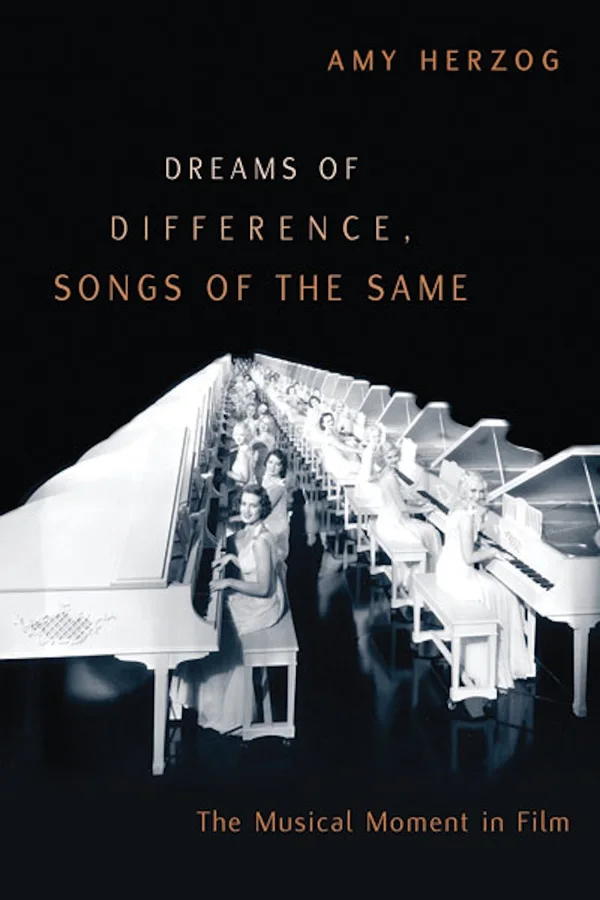
From jukebox films, Carmen, and Jacques Demy to Esther Williams, Tsai Ming-liang, and Mulholland Drive
A musical interruption is not liberating by itself. The real question is whether another iteration of the same song or genre formula reorganizes bodies, spaces, histories, and power.
English · University of Minnesota Press · 2010 · ISBN 9780816660889
- UNITS
- 6
- LOCATORS
- 38
- CURATED BOOK CASES
- 9
- EXTENSIONS
- 5
CENTRAL ARGUMENT
Central argument and scope
CONTRIBUTION
Herzog rewrites musical-film studies through difference, repetition, and refrain. She treats neither genre formula as pure domination nor spectacular excess as automatic resistance, tracing instead how difference emerges from within cliché across jukebox shorts, Carmen adaptations, Demy, and aquatic spectacle.
PAGINATION
The numbered sequence runs pp.1–236; the publisher catalogues 296 pages.
SCOPE
Six reading units, 38 narrow print locators, 18 concept groups, eight relation cards, fourteen core or extended film cases, four outward perspectives, and a five-step route.
CHAPTER ARGUMENT CHAINS
6 reading units with exact print locators
The contradictory structure of the musical moment
Repetition sustains genre and can also make it stutter; difference must be identified through the effects of a concrete repetition.
The introduction removes musical interruption from the romance of escape from narrative and returns it to history and media. Recorded sound, performing bodies, genre memory, and viewing technologies jointly make the musical moment.
The skip and the traitorous by-product
A skipping record makes repetition perceptible; commodity culture can also generate temporal fissures it does not fully control.
Difference and rhythm
Difference occurs within repetition, while pulsed and nonpulsed time distinguish mechanisms of interruption.
No hay banda
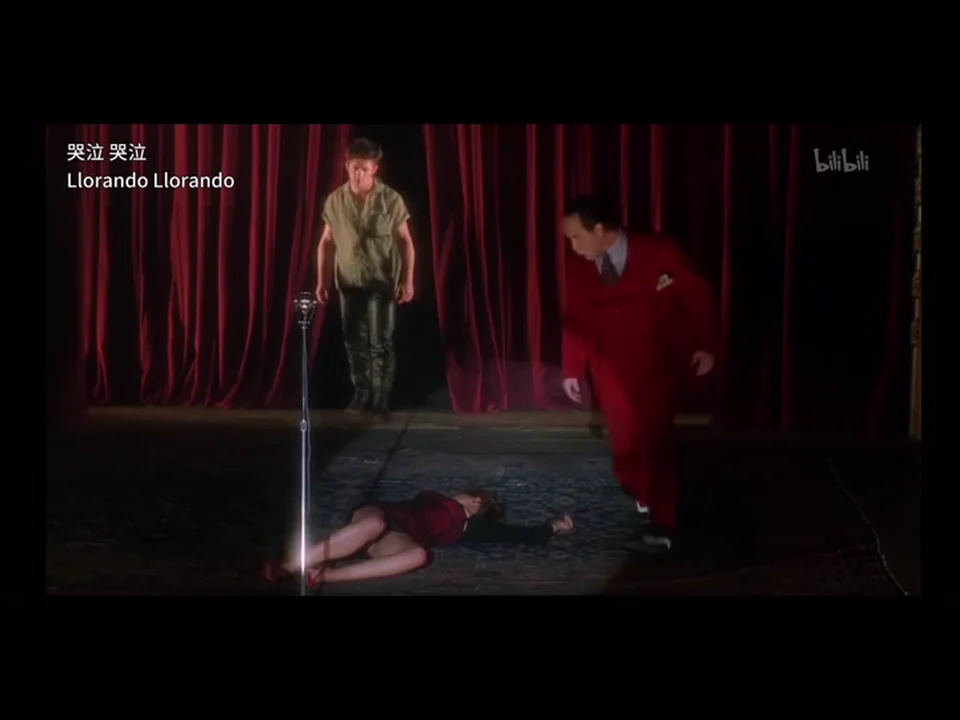
Club Silencio separates recorded voice, performing body, and spectator affect, making liveness a problem.
EXACT PRINT LOCATORS
- p. 1
A skipping record exposes repetition as a temporal fault rather than transparent reproduction.
- pp. 5–6
The corpus exceeds the conventional musical; noise, fissure, and excess are candidate sites of difference.
- pp. 11–12
The Hole shows popular music as both a commodity product and a possible traitorous by-product.
- pp. 18–19
Difference is not added from outside the same; it is generated through repetition.
- pp. 28–29
Pulsed and nonpulsed time describe musical passages more precisely than saying narrative stops.
- pp. 37–38
Mulholland Drive separates recorded voice, performing body, and weeping spectators from any natural audiovisual unity.
Jukebox film: impossible bodies
Recording, performance, and exhibition can never fully coincide; that noncoincidence can expose the medium and can also be consumed as spectacle.
Soundies and Scopitones compress performing bodies into machine formats. Herzog tracks how technology, viewing distance, adult markets, and racialized performance jointly produce embodiment.
Audiovisual contract
Audiovisual relations are not given in advance; apparatus and spectatorship organize them provisionally.
Cliché begins to stutter
Genre habits sustain recognition yet stutter through recording, editing, and bodily excess.
Spectators beside the machine
Market positioning and viewing location make the impossible body a concrete institutional relation.
EXACT PRINT LOCATORS
- pp. 39–40
Chion's audiovisual hierarchy provides a starting point for asking what governs what.
- pp. 42–43
Audiovisual technology produces social and spatiotemporal relations rather than neutrally containing them.
- pp. 49–50
Habit, cliché, and phantasm explain how formulas stabilize and can also stutter.
- pp. 57–58
The Soundie's systemic stutter produces excess among body, recording, and exhibition site.
- pp. 64–65
The Scopitone's adult market connects colour spectacle to an economy of desire.
- pp. 70–71
Machine placement, bodily proximity, and sonic intimacy place the individual viewer within a presence that cannot be fully realized.
Carmen: dissonant refrains
Adaptation is not a derivative copy but a reconfiguration of the refrain across racial, gendered, classed, and medial territories.
The repeated Carmen material makes difference comparable: which rhythms release bodies, and which vocal substitutions or performance codes fix them again.
Adaptation as territory
The refrain establishes, loosens, and recomposes the territory of a familiar story.
Substituting voices and bodies
Godard and Hammerstein make politics, race, and vocal ownership conflict.
Rhythmic release or recoding
Difference can only be extracted from concrete performance, editing, and historical position.
EXACT PRINT LOCATORS
- pp. 73–74
The adaptation series turns the same story into a laboratory for comparing difference.
- pp. 81–82
The refrain delimits territory while carrying risks of deterritorialization and reterritorialization.
- pp. 88–89
First Name: Carmen makes musical, gendered, and political refrains interrupt one another.
- pp. 93–94
Carmen Jones exposes revision and racialized refixation at once.
- pp. 100–101
Substitution between voice and body makes who sings a question of power.
- pp. 108–109
Rhythmic release must be analysed together with its racial coding.
- pp. 113–114
Difference does not leave the refrain; it is extracted from within it.
Demy: music, memory, and surface
Demy's coloured surfaces are not the opposite of historical depth; they let war, desire, and civilizational prohibition persist through musical return.
Bergsonian memory, Demy's urban surfaces, and uncomfortable fables jointly oppose a simple divide between pretty surfaces and serious depth.
Body as memory circuit
Perception, memory, and action connect through the body's zone of indetermination.
Violence on the surface
Bright colour and decoration carry urban, wartime, and familial prohibitions.
Deviating from habit
Degrees of repetition and artistic deviation make music reciprocal transformation rather than nostalgic return.
EXACT PRINT LOCATORS
- pp. 115–116
The perception-memory relation connects musical return to time, not nostalgia alone.
- pp. 122–123
The body is a zone of indetermination for action and an exchange point for history and sensation.
- pp. 130–131
The Young Girls of Rochefort's coloured surfaces cannot be separated from urban violence and absent war.
- pp. 137–138
Donkey Skin's decoration and incest fable make surface carry discomfort.
- pp. 145–146
Superficial and deep repetition are generative mechanisms, not a decoration-truth binary.
- pp. 152–153
Music makes differentiated elements resonate, bringing body, memory, space, and multiple temporal layers into reciprocal transformation.
Fluid bodies: spectacle, history, and contamination
Water and movement can loosen figure-ground boundaries while carrying commodification, illness, and historical violence; fluidity is not pure escape.
Esther Williams and Tsai Ming-liang enter one comparative field without being flattened into the same style. Mass ornament, star body, epidemic, and urban housing exert different historical pressures.
Choreography and dream
Mass bodies are abstracted into patterns while dream-images return history nonchronologically.
Star surface and liquid perception
Water changes body, environment, and camera centre while intensifying commodity visibility.
Contagious musical
Illness, residential isolation, and song produce a field of contamination and connection.
EXACT PRINT LOCATORS
- pp. 154–155
The mass ornament links choreography to bodily abstraction and capitalist organization.
- pp. 159–160
The waters of Esther Williams and Tsai Ming-liang form a transhistorical comparative field.
- pp. 166–167
The dream-image returns history nonchronologically, but dream alone is not automatically a time-image.
- pp. 175–176
Commodity and star body circulate through surface without reducing the body to a consumer sign.
- pp. 181–182
Liquid perception alters stable boundaries among figure, environment, and camera.
- pp. 189–190
The Hole's Taiwan Fever overlays epidemic, housing, musical performance, and communal desire.
- pp. 199–200
Popular music carries commodity culture's formulas and identity markings yet also produces excesses and differences not wholly faithful to their origin.
Do not treat interruption as the answer
The minimum evidence for difference is relational transformation, not a mere increase in volume, colour, speed, or spectacle.
The conclusion rejects linear genre history and a preset direction of liberation, returning comparison to contradictory tendencies within concrete works.
Conflicting tendencies
One form can stabilize and disturb simultaneously; marginal works often expose that conflict more clearly.
Separate political variables
Subject, object, body, history, and everyday time must be recorded separately.
Refrain without telos
The refrain works through relational change and leads to no guaranteed endpoint.
EXACT PRINT LOCATORS
- p. 202
Musical form contains conflicting tendencies toward stabilization and disturbance.
- p. 203
Marginal and hybrid works more readily expose how interruption works.
- p. 204
Subject, object, body, and politics cannot be collapsed into the single word excess.
- p. 205
Everyday time out of joint makes repetition newly perceptible.
- p. 206
The refrain works through relational transformation, not progress toward a preset liberation.
- pp. 202–203
The book's cases demand historically situated comparison rather than a single genre history.
WORKING CONCEPTS
18 searchable, operational concepts
Musical moment
A local event in which music or sound recomposes narrative, spatial, or bodily relations.
- OPERATION
- Record what changes at entry, duration, and exit.
- BOUNDARY
- Not every song passage, and not automatically liberating.
Repetition
The condition through which difference is actually produced.
- OPERATION
- Compare relational changes each time the same material returns.
- BOUNDARY
- Not mechanical copying or a count of occurrences.
Difference
A transformation of relations within repetition.
- OPERATION
- Demonstrate it through observable changes in body, space, history, and power.
- BOUNDARY
- Not mere novelty or stronger style.
Refrain
A rhythmic component that establishes, loosens, and recomposes territory.
- OPERATION
- Record territorialization, deterritorialization, and reterritorialization in sequence.
- BOUNDARY
- Not simply a motif or repeated chorus.
Cliché
An inherited shortcut linking perception to action.
- OPERATION
- Check whether the path of action actually changes after interruption.
- BOUNDARY
- Familiarity does not mean ineffectiveness.
Musical spectacle
A field of viewing jointly made by choreography, colour, camera, body, and commodity form.
- OPERATION
- Record aesthetic force and production or market relations together.
- BOUNDARY
- Not inherently opposed to narrative or politics.
Impossible embodiment
The failure of recorded voice, performing body, and exhibition machine to coincide fully.
- OPERATION
- Annotate sound source, visible body, and viewing site separately.
- BOUNDARY
- Not bodily absence but a relation among multiple bodies.
Audiovisual contract
The spectator's provisional organization of sound and image into a whole.
- OPERATION
- Test how the whole changes through dubbing, muting, or offscreen sound.
- BOUNDARY
- Not natural synchronization.
Pulsed time
Time organized by beat, gesture, or measure.
- OPERATION
- Mark whether beat aligns with editing and bodily movement.
- BOUNDARY
- Not identical to clock time.
Nonpulsed time
Duration and variation loosened from fixed measure.
- OPERATION
- Observe where the passage leaves countable beats.
- BOUNDARY
- Not rhythmlessness or arbitrary slow motion.
Deterritorialization
The loosening of an established rhythmic-spatial relation.
- OPERATION
- Specify the boundary being loosened.
- BOUNDARY
- Loosening does not guarantee escape from refixation.
Reterritorialization
The reorganization of loosened forces into a new order.
- OPERATION
- Track institution, identity, and action after the song ends.
- BOUNDARY
- It need not restore the old and may intensify control.
Surface
The material interface where colour, costume, set, skin, and medium act.
- OPERATION
- Analyse how surfaces transmit history and prohibition.
- BOUNDARY
- Not a synonym for false appearance.
Perversity
An aesthetic deviation from civilizational habit in the Demy case.
- OPERATION
- Specify how it changes habitual paths of viewing or desire.
- BOUNDARY
- Not a clinical or identity label applied to a film.
Liquid perception
Audiovisual organization in which boundaries between figure and milieu change through a fluid medium.
- OPERATION
- Record centre of movement, medium, and camera position.
- BOUNDARY
- The mere presence of water does not constitute liquid perception.
Mass ornament
A modern form in which bodies are mass-arranged into exchangeable patterns.
- OPERATION
- Observe geometry, labour, and individual visibility together.
- BOUNDARY
- Not every ensemble dance.
Contamination
An ambivalent process through which bodies, histories, commodities, and media enter one another.
- OPERATION
- Record transmission path, affected bodies, and new connections.
- BOUNDARY
- Neither pure danger nor pure community.
Time out of joint
A dislocation of everyday order that makes another relation perceptible.
- OPERATION
- Specify how time organizes action before and after dislocation.
- BOUNDARY
- Not every flashback, dream, or nonlinear narrative.
PRIMARY TEXTS AND COMPARATIVE STUDIES
Related arguments and textual comparisons
How repetition produces difference
- BOOK ARGUMENT
- Repetition in the musical sustains recognizability and can also make habit stutter.
- RELATED PRIMARY ENTRY
- Difference and Repetition provides an entry to difference immanent to repetition; Herzog's film argument is not presented as wording from the primary text.
- CROSS-TEXT COMPARISON
- Comparison with genre formula and remake studies distinguishes semantic variation from relational transformation.
- SITE TEST
- List changes in body, space, history, and power before and after repetition; claim no difference without change.
The refrain's three movements
- BOOK ARGUMENT
- The Carmen refrain establishes, loosens, and recomposes territories across adaptations.
- RELATED PRIMARY ENTRY
- A Thousand Plateaus provides the territorial entry for the refrain.
- CROSS-TEXT COMPARISON
- Musicological motif stresses recognizable material; the Deleuze-Guattari route stresses how material organizes space and action.
- SITE TEST
- Mark territory, loosening mechanism, and new fixation in sequence; without all three, call it repeated melody only.
Which body owns the voice
- BOOK ARGUMENT
- Prerecording, vocal substitution, and exhibition keep vocal ownership unstable.
- RELATED PRIMARY ENTRY
- Cinema 2's audiovisual fracture offers a related entry, while Herzog's jukebox history has its own media genealogy.
- CROSS-TEXT COMPARISON
- Chion's audiovisual contract and star or dubbing studies add institutional and labour dimensions.
- SITE TEST
- Record audible source, visible performer, credited subject, and affected spectator separately.
Does cliché fail
- BOOK ARGUMENT
- Genre formula can expose its habitual structure through medial excess.
- RELATED PRIMARY ENTRY
- The crisis of cliché and the sensory-motor schema in the Cinema books provides an entry.
- CROSS-TEXT COMPARISON
- Genre studies explains how industry, market, and audience expectation sustain formula.
- SITE TEST
- If action, role allocation, and viewing position remain unchanged after interruption, cliché is still operating.
Musical return is not nostalgia
- BOOK ARGUMENT
- Demy's musical returns connect perception, memory, and history through the body.
- RELATED PRIMARY ENTRY
- Matter and Memory provides a related primary entry to perception, recollection, and action.
- CROSS-TEXT COMPARISON
- Nostalgia studies emphasizes the lost object; the book also asks how surfaces continue to act in the present.
- SITE TEST
- Distinguish the recalled past, its material trigger, and its alteration of present action.
How surface carries history
- BOOK ARGUMENT
- Colour, set, and costume do not flee war and prohibition but form interfaces through which they continue to act.
- RELATED PRIMARY ENTRY
- Deleuze's surface, event, and critique of depth provide a cross-textual entry.
- CROSS-TEXT COMPARISON
- Camp, decoration, and melodrama studies add histories of taste, gender, and spectatorship.
- SITE TEST
- Describe relations materially transmitted across the surface without automatically translating colour into psychological symbol.
Fluidity as escape or exposure
- BOOK ARGUMENT
- Water can loosen figure-ground boundaries and also circulate commodity, disease, and historical pressure.
- RELATED PRIMARY ENTRY
- Cinema 1's liquid perception provides a classificatory entry.
- CROSS-TEXT COMPARISON
- Ecological media, infrastructure, and contagion studies make water's material politics more concrete.
- SITE TEST
- Mark centre of movement, fluid medium, benefiting bodies, harmed bodies, and governing apparatus.
Surplus within commodification
- BOOK ARGUMENT
- Popular music depends on commodity circulation yet can produce a surplus not exhausted by its present use.
- RELATED PRIMARY ENTRY
- Deleuze and Guattari's analyses of desiring-production and capitalism provide related entries.
- CROSS-TEXT COMPARISON
- Platformized music studies extends record and cinema into recommendation, rights, and data.
- SITE TEST
- Track whether excess leaves a reusable relation or is immediately recaptured by the same exchange logic.
FILMS AND IMAGES
Book cases and extended analyses
Mulholland Drive
Mulholland Drive · David Lynch · 2001Club Silencio separates voice, performing body, mechanical playback, and spectator affect.
Soundies jukebox shorts
1940sMachine format, recording, and performing body compose impossible embodiment.
Scopitone colour shorts
1960sThe adult market binds colour, sexual display, and jukebox economy.
First Name: Carmen
Prénom Carmen · Jean-Luc Godard · 1983The classical refrain interferes with modern politics, bodily violence, and audiovisual conflict.
Carmen Jones
Otto Preminger · 1954All-Black casting, dubbing, and Broadway adaptation revise and refix Carmen simultaneously.
The Young Girls of Rochefort
Les Demoiselles de Rochefort · Jacques Demy · 1967Bright urban surfaces remain adjacent to war, violence, and missed connection.
Donkey Skin
Peau d’âne · Jacques Demy · 1970Fairy-tale decoration, prohibited desire, and musical deviation make surface an interface of conflict.
The Hole
洞 · Tsai Ming-liang · 1998Epidemic housing, leakage, and musical numbers overlay isolation with a desire for community.
The Wayward Cloud
天邊一朵雲 · Tsai Ming-liang · 2005Drought, pornography production, and musical spectacle sharpen the politics of fluidity.
Singin’ in the Rain
Gene Kelly & Stanley Donen · 1952Connects dubbing, star bodies, and media transition to impossible embodiment.
An American in Paris
Vincente Minnelli · 1951The final ballet expands the musical moment into a total recomposition of space and painterly style.
Annette
Leos Carax · 2021Puppet body, live performance, media exposure, and song extend audiovisual ownership into platform celebrity.
Joyland
Saim Sadiq · 2022Stage music, trans performance, and family territory make the refrain's political boundaries visible.
The Ballroom
Le Bal · Ettore Scola · 1983One ballroom and repeated dances let history accumulate through music, gesture, and costume.
OUTWARD PERSPECTIVES
Further questions and research directions
Platform music and recommender refrains
- QUESTION
- How does repetition change when a chorus becomes a fifteen-second loop distributed by recommendation systems?
- EXTENSION
- Extend the jukebox's machine placement into interface, metrics, rights, and recommender feedback.
- TENSION
- Herzog studies twentieth-century cinema and jukeboxes; algorithmic distribution is a later site comparison, not her prediction.
- TEST
- Record clipping, looping, recommendation, creator revenue, and reuse across five layers.
Racialized voice and dubbing labour
- QUESTION
- Whose body is visible, whose voice is heard, and who is credited?
- EXTENSION
- Connect Carmen and jukebox cases to Black female spectatorship, dubbing history, and musical labour.
- TENSION
- Rhythmic contagion does not erase racialized production relations.
- TEST
- Record performer, singer, character, rightsholder, and spectator position in separate columns.
Queer and trans musical bodies
- QUESTION
- How does the musical moment open identity rehearsal and how is it refixed by genre or family?
- EXTENSION
- Use Joyland and Annette to test performing bodies, vocal ownership, and kinship structures.
- TENSION
- Perversity is Herzog's aesthetic analysis of Demy and cannot be equated directly with contemporary identity categories.
- TEST
- Separate screen representation, production labour, character agency, and material spectator conditions.
Fluidity, climate, and infrastructure
- QUESTION
- Is water in the musical a visual metaphor, or matter distributed through pipes, housing, drought, and labour?
- EXTENSION
- Extend the Williams/Tsai comparison into water infrastructure and climate inequality.
- TENSION
- Liquid perception describes image relations and cannot replace material analysis of water and housing systems.
- TEST
- Record source, flow, controller, cost, affected body, and camera centre shot by shot.
READING ROUTE
Chapter sequence and reading questions
- 01pp. 1–38
Suspend automatic liberation
List action, space, body, and audiovisual ownership before and after musical interruption.
- 02pp. 39–72
Separate machine and body
Annotate source, performer, machine, site, and spectator in one Soundie or Scopitone.
- 03pp. 73–114
Compare Carmens
Compare the same musical material across two versions for vocal ownership, racial coding, action, and ending.
- 04pp. 115–201
Surface and fluidity
Choose one Demy and one Tsai passage; record how surface carries history and water recomposes boundaries.
- 05pp. 202–206
Conclude through relation
Remove abstract praise and write only visible, audible, sustainable relational changes.
EDITIONS, SOURCES, AND RIGHTS
Return from the guide to editions, catalogues, and research
Copyright remains with the University of Minnesota Press and relevant rightsholders.
Covers identify editions. Film images are low-resolution stills for commentary, with a source and timecode. Third-party images carry no open-licence designation.
University of Minnesota Press ↗
Amy Herzog, Dreams of Difference, Songs of the Same, 2009/2010, PB 9780816660889.
Publisher metadata, contents, purchase, and cover verification.JSTOR institutional edition ↗
Stable record 10.5749/j.ctttsf3n; eISBN 9780816670581.
Institutional access; not labelled authorized full-book open access.CiNii Books catalogue record ↗
NCID BB16118441; used to verify print and catalogue pagination.
Bibliographic and holdings discovery.Queens College faculty page ↗
Institutional faculty entry for Amy Herzog.
Author affiliation and research-profile verification.Difference and Repetition ↗
Related primary entry for difference immanent to repetition.
Publisher metadata and published-edition access.A Thousand Plateaus ↗
Related primary entry for refrain, territorialization, and deterritorialization.
Publisher edition entry.