Concept definition
Everyday attitudes and gestus sediment time in the body; cinema of the brain turns space, light, colour, and connection into a map of thought. Body and brain form two distinct cinematic mechanisms of thought.
What the concept explains
Cinema of the body and cinema of the brain are distinct routes. The former lets fatigue, waiting, attitude, and ceremony bear time before story; the latter makes space, probability, disjunction, and cinematic connection into a topology of thought. Every use of this composite record must declare its branch.
The Crystal-Image: How Actual and Virtual ExchangeDiagrams and film passages
Tropical Malady
สัตว์ประหลาด! (2004)
Candidate reading (body)
A hand brought to the mouth
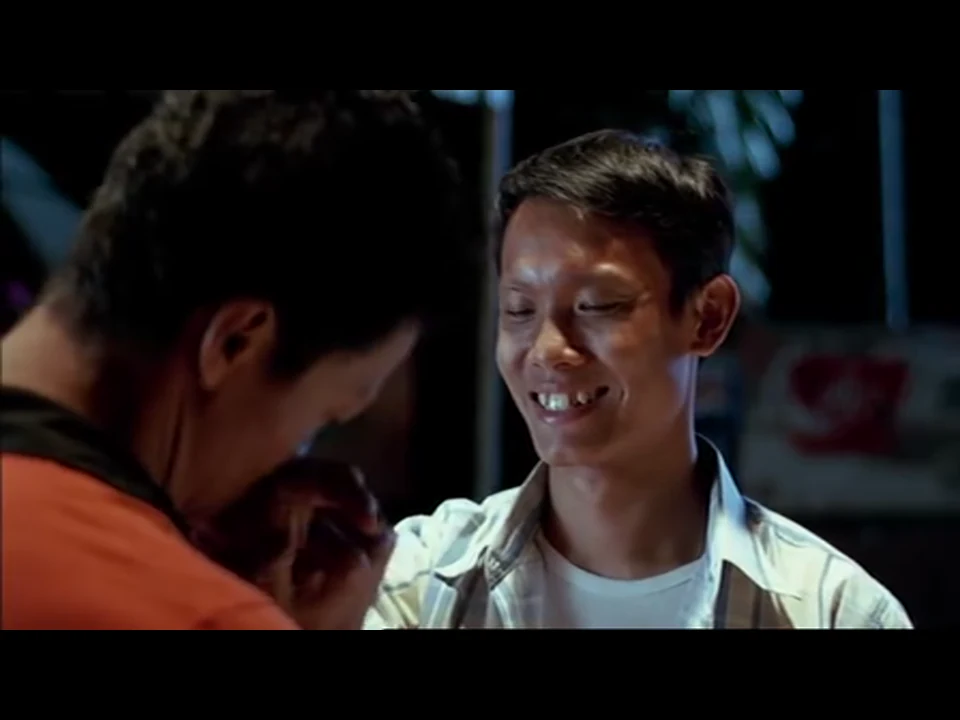
The everyday half organizes intimacy through touch, hesitation, and a smile. Bilibili timecode 00:52:02.
Open full-size still- Displayed still
- 00:52:02
- Discussion passage
- 00:51:38 - 00:52:16
Frame-checked against the single-part Bilibili repost stream BV12QcAzME5g: the page API reports 6,867 seconds and the retrieved qn16 media runs 6,866.48 seconds. Bilibili supplies no subtitle track; dialogue sense was cross-checked against a third-party English SRT bearing the same DVDRip release name.
Single-part user repost on Bilibili; the page and anonymous Player API were verified as playable. No platform subtitle track is present.
Still checked: 2026-08-13 · Carrier access checked: 2026-08-13
Image
The men first stand facing one another in a medium shot; the film cuts to close views of a face and hands.
One holds the other's hand and brings the fingers to his mouth; the other first smiles and then watches the gesture.
Sound
Brief dialogue mentions 'tomorrow' and an unwashed hand, with pauses between the lines.
Outdoor ambience continues without music assigning the gesture a fixed emotion or outcome.
Relation to the concept
Body-axis candidate: pauses, touch, and minute responses provisionally let attitude precede plot-task. If the full passage uses the gesture only to advance romantic information, the cinema-of-the-body label should be withdrawn.
Sources and further reading
- Bilibili · 冰山阴影_ · public repost page
00:52:02 · The everyday half organizes intimacy through touch, hesitation, and a smile. Bilibili timecode 00:52:02.
Tropical Malady
สัตว์ประหลาด! (2004)
Adjacent question (body)
The body lowers into mud
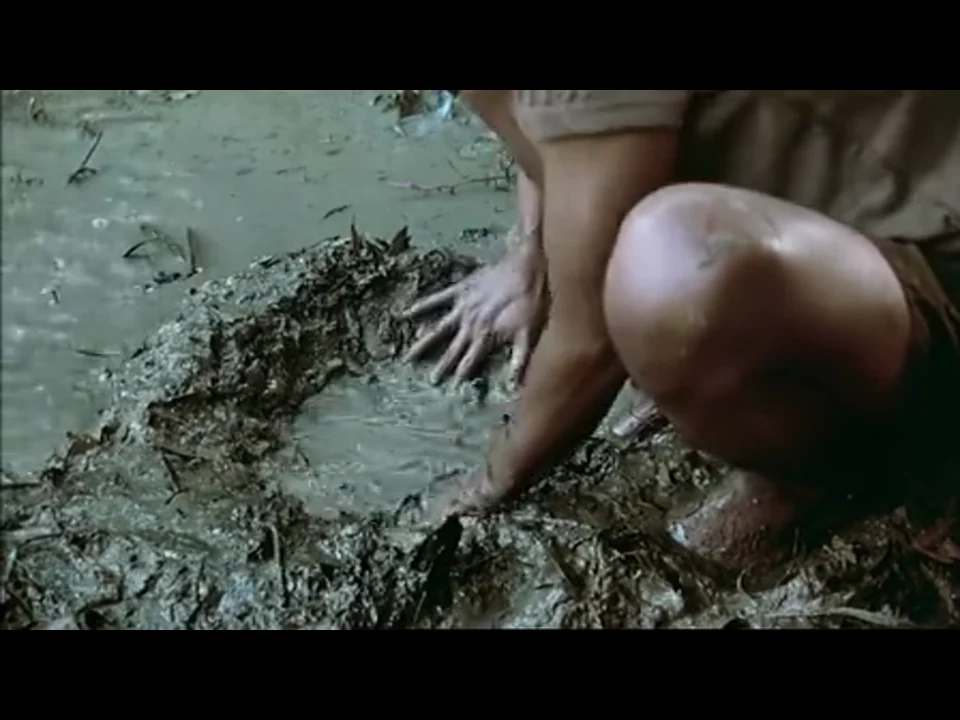
Upright walking gives way to a posture in which hands, feet, and knees share contact with the ground. Bilibili timecode 01:30:38.
Open full-size still- Displayed still
- 01:30:38
- Discussion passage
- 01:30:16 - 01:31:35
Frame-checked against the single-part Bilibili repost stream BV12QcAzME5g: the page API reports 6,867 seconds and the retrieved qn16 media runs 6,866.48 seconds. Bilibili supplies no subtitle track; dialogue sense was cross-checked against a third-party English SRT bearing the same DVDRip release name.
Single-part user repost on Bilibili; the page and anonymous Player API were verified as playable. No platform subtitle track is present.
Still checked: 2026-08-13 · Carrier access checked: 2026-08-13
Image
The soldier crouches barefoot in muddy water, repeatedly smears mud, and touches the ground with both hands.
He moves low through the undergrowth; the camera stresses back, hands, feet, and mud rather than a complete upright figure.
Sound
Stirred mud, the body brushing vegetation, and continuous forest sound occupy the track; there is no dialogue.
Relation to the concept
Adjacent to the body axis: crouching, touching the ground, and smearing mud redistribute perception and action, but the scene first establishes bodily becoming. Cinema of the body requires attitude itself to bear a time irreducible to the hunting task.
Sources and further reading
- Bilibili · 冰山阴影_ · public repost page
01:30:38 · Upright walking gives way to a posture in which hands, feet, and knees share contact with the ground. Bilibili timecode 01:30:38.
Tropical Malady
สัตว์ประหลาด! (2004)
Adjacent question (body)
Giving over body and memory
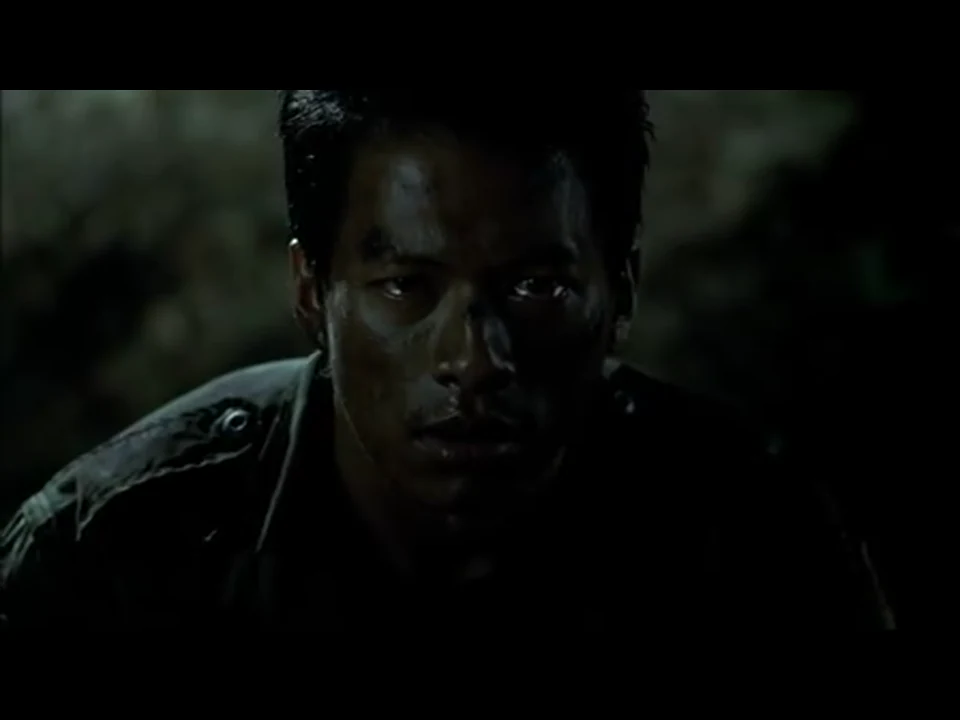
The soldier's close-up, an image of a tiger extending a long tongue toward a kneeling human figure, and forest sound join body, memory, and 'our song.' Bilibili timecode 01:48:40.
Open full-size still- Displayed still
- 01:48:40
- Discussion passage
- 01:47:52 - 01:49:17
Frame-checked against the single-part Bilibili repost stream BV12QcAzME5g: the page API reports 6,867 seconds and the retrieved qn16 media runs 6,866.48 seconds. Bilibili supplies no subtitle track; dialogue sense was cross-checked against a third-party English SRT bearing the same DVDRip release name.
Single-part user repost on Bilibili; the page and anonymous Player API were verified as playable. No platform subtitle track is present.
Still checked: 2026-08-13 · Carrier access checked: 2026-08-13
Image
The film alternates between the soldier's frontal close-up and an image of a tiger extending a long tongue toward a kneeling human figure; the soldier keeps staring.
At the segment's end, the film leaves the face for the dark canopy.
Sound
A voice addresses the 'monster' and gives over spirit, flesh, and memories.
The speech says that every drop of blood sings 'our song' and ends by asking, 'Do you hear it?' Forest sound continues.
Relation to the concept
Adjacent to the body axis: body, blood, and memory cross the human-animal boundary, but this first supports a relation of becoming. Without attitude and ceremony directly bearing time before story, the scene does not independently establish cinema of the body.
Sources and further reading
- Bilibili · 冰山阴影_ · public repost page
01:48:40 · The soldier's close-up, an image of a tiger extending a long tongue toward a kneeling human figure, and forest sound join body, memory, and 'our song.' Bilibili timecode 01:48:40.
Black Swan
Black Swan (2010)
Atlas shot reading
‘Letting go’ is assigned to another body
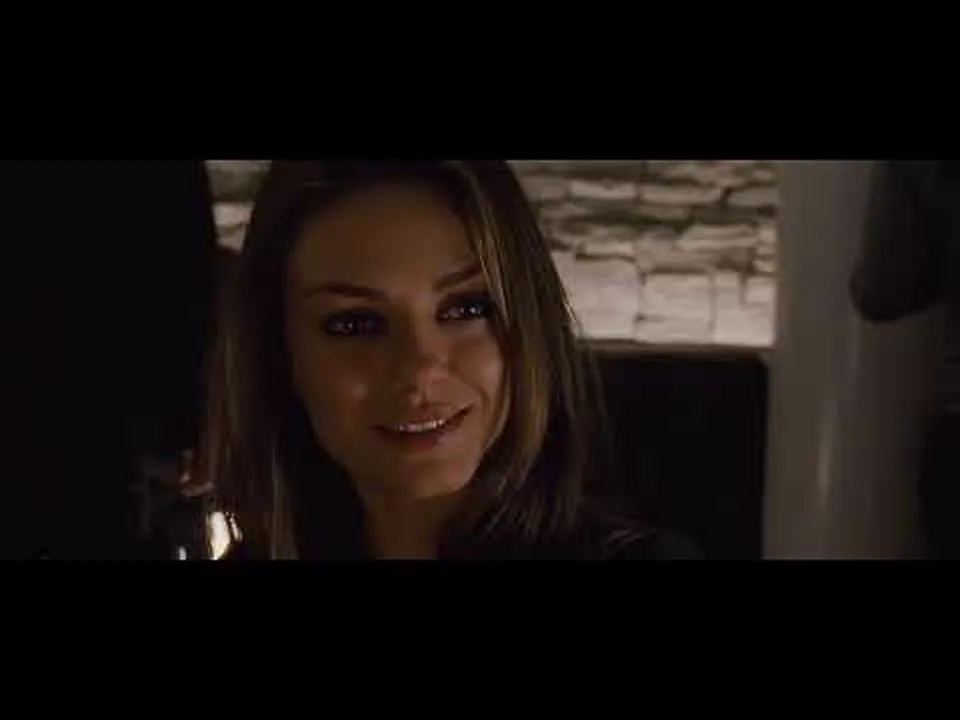
Thomas assigns control to Nina and defines letting go as her lack; framing and rehearsal then form Lily as the external body of that lack.
Open full-size still- Displayed still
- 常见 108 分钟版约 00:20:45—00:21:45
- Feature time
- 常见 108 分钟版约 00:20:45—00:21:45
The three images come from Searchlight's official trailer. Feature locators follow the common 108-minute edition; trailer stills are not presented as frames from the same feature seconds.
Open the named edition and locate the moment using the still and timecode.
Image
Thomas assigns control to Nina and defines letting go as her lack; framing and rehearsal then form Lily as the external body of that lack.
Relation to the concept
The double does not begin with resemblance and then become rivalry. The institution distributes incompatible capacities across two bodies. Body/brain cinema asks how that command enters posture and sensation.
Sources and further reading
- The Cinematic Body guide
Reconnect role production to performing bodies, gaze, and harm
- Cinema 2, Chapter 4
The crystal-image and its criteria
- Official Searchlight film page
Official trailer, credits, and release gateways
- Compare Mulholland Drive
Compare doubles, role allocation, and attribution of reality
Passion
Passion (1982)
Atlas shot reading
The Night Watch and the drill press share one workbench
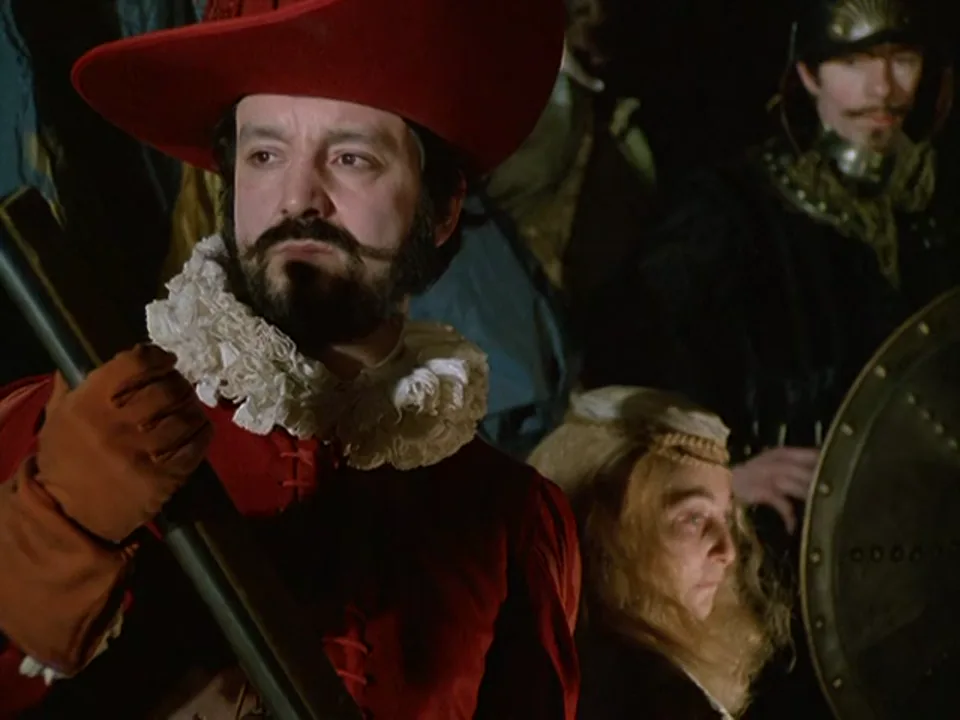
The film alternates factory drill press and a living tableau of Rembrandt’s Night Watch. Captain, group arrangement, lamps, machinery, and Isabelle’s posture form correspondences without being translated into one-to-one allegory.
Open full-size still- Displayed still
- PAL 00:04:05
- Feature time
- PAL 00:04:05
Frame research uses the public Internet Archive reference copy (01:24:18, 25fps PAL speed-up). Its three images are checked frames, while watch links are marked as edition locators rather than direct Bilibili shots. In 87–88-minute editions these events usually occur about 4% later; align by visual and spoken checkpoints. User-supplied BV1gPKPzZEfZ is Ryusuke Hamaguchi’s 2008 namesake and remains excluded from Godard’s record.
Open the named edition and locate the moment using the still and timecode.
Image
The film alternates factory drill press and a living tableau of Rembrandt’s Night Watch. Captain, group arrangement, lamps, machinery, and Isabelle’s posture form correspondences without being translated into one-to-one allegory.
Sound
Voices ask ‘what is this story?’ as cinematographic discussion turns to mouths, eyes, and light; commands requiring Jerzy and Isabelle to work enter from different places.
Relation to the concept
Cinema of the body produces thought through posture: bodies waiting and adjusting for composition face bodies timed by machinery. Painting does not explain labour; it makes two forms of labour expose one another.
Sources and further reading
- Cinema 2, Chapter 7
Category, thought, and connection no longer guaranteed by a whole
- Cinema 2, Chapter 8
Bodily attitudes, work, and belief in this world
- Cinema 2, Chapter 10
Conclusion on open image, information, and outside
- Ilse Lafer: Passion in Work
Trace Goya, factory, strike, and unfinished production page by page
- Deleuze seminar: pictorial category
Primary account of tableaux as vertically developing categories
- Cinémathèque française edition record
Verify the 87-minute edition, production, and music
Films and scenes
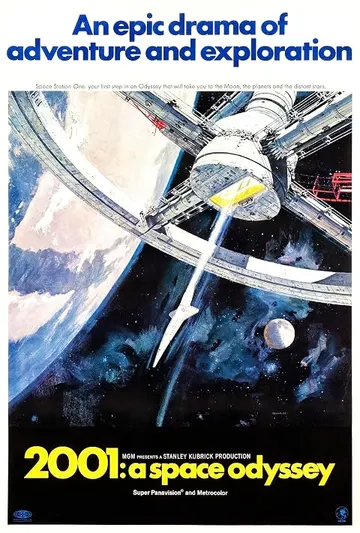
Brain axis: HAL's red point of view, the rotating spacecraft, cabin monitors, and severable communication circuits organize seeing, calculation, movement, and death as spatial connections. During HAL's disconnection, the topology of thought changes directly as each circuit is removed.
IMDb identification poster ↗Related film readings · 19 films
Teorema · 1968 — The visitor’s arrival distributes consequences like a theorem, yet his departure leaves an unsolved problem. Bodies, desert, and scream force thought toward an outside.
Passion · 1982 — Tableaux vivants, factory labour, and failed production remain unresolved. The film turns theorem into problem and relinks bodies, images, and sounds across intervals.
2001: A Space Odyssey · 1968 · Candidate reading · Thought side — Brain axis: HAL's red point of view, the rotating spacecraft, cabin monitors, and severable communication circuits organize seeing, calculation, movement, and death as spatial connections. During HAL's disconnection, the topology of thought changes directly as each circuit is removed.
Gertrud · 1964 — Choice exceeds calculable consequences and becomes a mode of existence. Bodily attitudes and disconnected planar relations let belief replace knowledge.
Faces · 1968 — Laughter, fatigue, drunkenness, and suddenly frozen faces unsettle stable psychology. The linkage of bodily attitudes directly reveals time wearing relations down.
A Woman Under the Influence · 1974 — Hesitation, excess, and waiting exceed family norms and retain their own bodily time. Deleuze mentions the film only briefly in Cinema 2, so the specific reading of gesture remains the responsibility of this atlas.
Jeanne Dielman, 23 quai du Commerce, 1080 Bruxelles · 1975 — Cooking, cleaning, waiting, and counting appear in their full duration. Minute disorder first develops in body and ceremony.
Black God, White Devil · 1964 — Popular myth, trance, violence, and shifting allegiance reveal a missing people and the task of creating them.
Black Swan · 2010 — The rehearsal mirror first corrects Nina's body, then reflections hesitate, slip out of phase, and even move before she does. The mirror no longer confirms a whole self; it compresses Nina and Lily, White Swan and Black Swan, into one body. Scratches, feathers, toes, and stage transformation are therefore more than illustrations of subjective hallucination: actual and reflected bodies rewrite one another, filming 'becoming the role' as a circuit that produces the performer in return.
Tropical Malady · 2004 — The film’s rupture produces a new perceptual regime among love, legend, human-animal becoming, and forest, testing the postwar European model in return.
Providence · 1977 — The sick writer’s coughs, thunder, gunshots, and fictional characters translate into one another through montage; body, history, and weather become sheets of one brain-world. The morning gathering does not debunk the night’s fiction but composes a transverse sheet across it.
Readings in the same thematic group
Late Spring · 1949 — The vase still life intervenes between the daughter’s smile and tears, placing change within time’s unchanging form.
The Lady from Shanghai · 1947 — In the hall of mirrors, bodies, doubles, deception, and destruction reflect one another, dissolving stable ontological priority and forming a crystal.
8½ · 1963 — Reality, memory, fantasy, rehearsal, and the film project crystallize together; the unfinished work is both seed and environment absorbing life.
Lola Montès · 1955 — The circus present rolls a series of virtual pasts inside itself. Flashback becomes a route through the crystal; actual/virtual exchange is the criterion.
Mirror · 1974 — Deleuze explicitly calls it a turning crystal: mother and wife, childhood and present, memory and perception exchange actual and virtual positions.
Solaris · 1972 — Memory acquires an actual body on Solaris, forming a circuit with the virtual past. Evidence: a brief adjacent example in Cinema 2.
Synecdoche, New York · 2008 — Caden copies New York inside a warehouse and assigns actors to copy friends, strangers, and himself. Each double demands more rooms, rehearsals, and doubles of doubles. The stage no longer abbreviates life; it expands like a crystalline seed into an environment that reabsorbs marriage, ageing, and death. Sammy first makes a profession of watching Caden and later assumes his role, showing that a copy is not a static image: it changes how the original can next live until neither person nor set retains an outside to which it can return.
Enter the Void · 2009 — City, memory, body, and possible futures interweave; viewing proceeds by reading relations among image strata.
Criteria
First state whether the analysis concerns body or brain: how does an attitude bear time before story, or how do cinematic connections organize space, probability, and disjunction into a map of thought?
Distinctions and counterexamples
Expressive gesture or bodily subject matter does not establish cinema of the body, while neurological illness, subjective camera, or labyrinthine space does not establish cinema of the brain. The material must bear time or organize connections of thought.
Common confusion: Term scope: cinema of the body and cinema of the brain are two mechanisms. Expressive gesture, neurological subject matter, subjective camera, or labyrinthine décor cannot substitute for the branch-specific test.
Texts and sources
Cinema 2, ch. 8
- 01Cinema 2: The Time-Image
Authoritative source for the standard translation, translators, ISBN, and publication date.
View source and edition →
Research disagreements
Replacement or coexistence?
The time-image reverses the subordination of time to movement; both regimes persist and can shift locally within one film.
Taxonomy or generator?
Fixed labels invite mere example-hunting; an open taxonomy requires new concepts to transform existing relations and explain across cases.
How do we use Deleuze precisely?
Test four layers: sensory-motor relation, actual/virtual circuit, audio-visual connection, and regime of truth.
Where contemporary images push this concept
Extending the concept into contemporary conditionsCandidate reading · versioned passage review pending
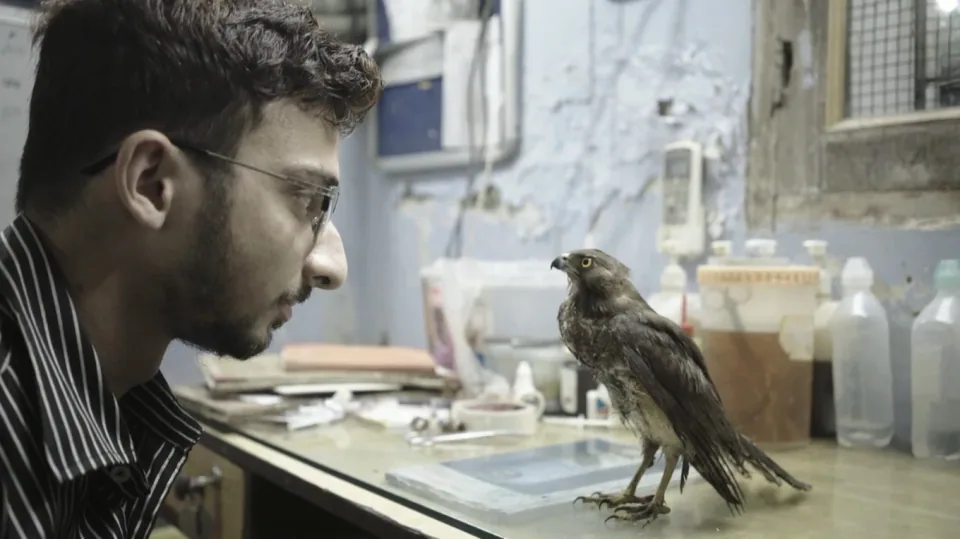
All That Breathes: the city changes first in the air
This relation belongs to the cinema-of-the-body side: bending to collect birds, bandaging, feeding, breathing, and waiting bear time before plot explanation. Polluted air and wounds are not a brain metaphor but conditions that expose repetition, fatigue, and the limited reparative capacity of bodily attitudes.
Scope and limits If gestures of care only advance rescue tasks or symbolise family and religious conflict, without letting the body sediment time before story, the cinema-of-the-body claim should be withdrawn; ecological interdependence alone is not a body/brain criterion.
- Cannes: All That Breathes official film pageFestival institutional page · ecological film factsA synopsis does not replace multispecies shot analysis; social context needs additional sources.
- Sreyashi Ray: Airborne HospitalityPeer-reviewed article · air as a multispecies mediumThis is an ecology/cultural-theory bridge; shared air is not a conflict-free commons and does not replace shot evidence.
Concepts to distinguish
Compare them
- Irrational cut / intersticecoupure irrationnelle / interstice
Deducible continuity among shots, sounds, and images gives way to an irreducible interval between series. Thought is forced to happen within it.
→ - Noosignnoosigne
The noosign marks a crisis in the relation between image and thought. Classical cinema's promise that an organic whole and shock would automatically reach thought fails; the image instead confronts thought with the Outside, the unthought, and its own powerlessness, reopening the problem of belief in the world.
→ - Lectosignlectosigne
The time-image tends toward an image that must be read: picture, sound, text, data, and invisible relations form strata. Viewing becomes an ongoing work of comparison, recomposition, and concept formation.
→ - Fabulationfabulation
Characters and filmmakers jointly remake reality through narration, performance, and re-enactment. Story no longer serves a prior truth; it creates a speaking position for a collective still in formation.
→ - Speech act and a people to comeacte de parole / peuple à venir
The storytelling speech-act crosses private affairs and politics, produces collective utterances, and prefigures the people who are missing.
→