
David Lynch / 大卫·林奇 · 2001
Mulholland Drive
Mulholland Drive
Identity, performance, and memory rewrite one another. Criterion: an actual/virtual circuit.
Film details
- Original title
- Mulholland Drive
- Director
- David Lynch / 大卫·林奇
- Year
- 2001
- Region
- United States
Film analysis: how shots organize concepts
Why does Mulholland Drive not wait for the viewer to identify which half is true, but repeatedly change what can count as reality through performance?
Betty’s audition first shows performance producing a new actual intensity on the same body; Club Silencio then separates voice, sounding body, and spectator affect; the blue box finally redistributes names, rooms, objects, and causes. Rather than placing a secure boundary between two worlds, each new relation retrospectively changes earlier evidence.
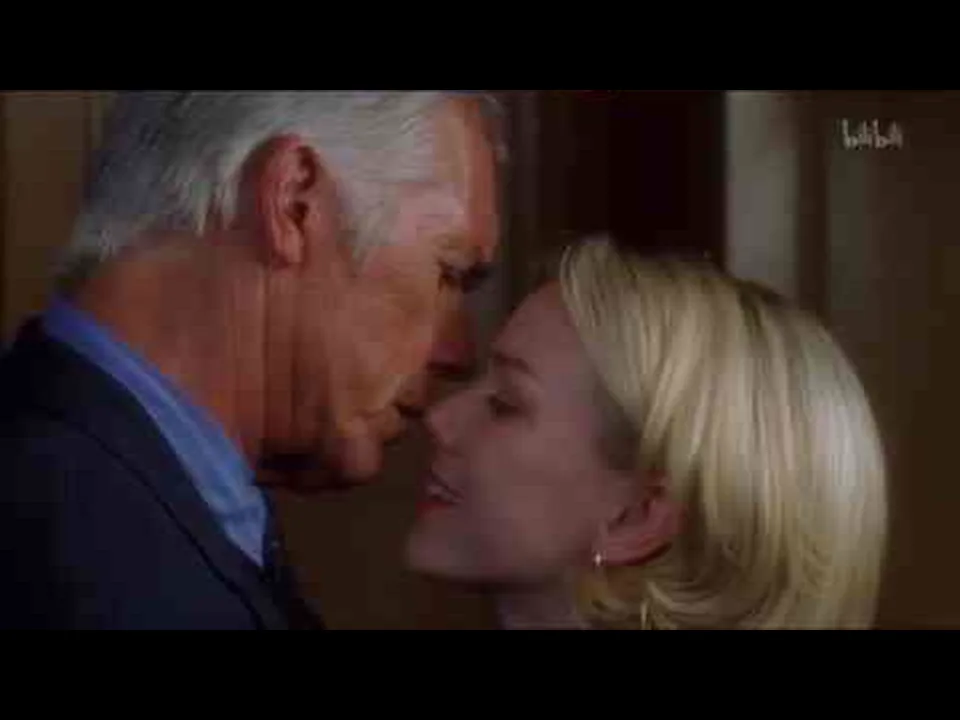
Dialogue that sounded stale in rehearsal is reorganized by proximity, threat, pause, and kiss; a room of observers contracts into a dangerous distance between two bodies.
Projected recitation drops into whisper, breath, and gaps between phrases. The same text carries no fixed meaning; volume and rhythm directly alter who both performers can become.
The power of the false is not skill at lying. Performance escapes rule by an original true self and actually produces a person and relation that did not exist before.
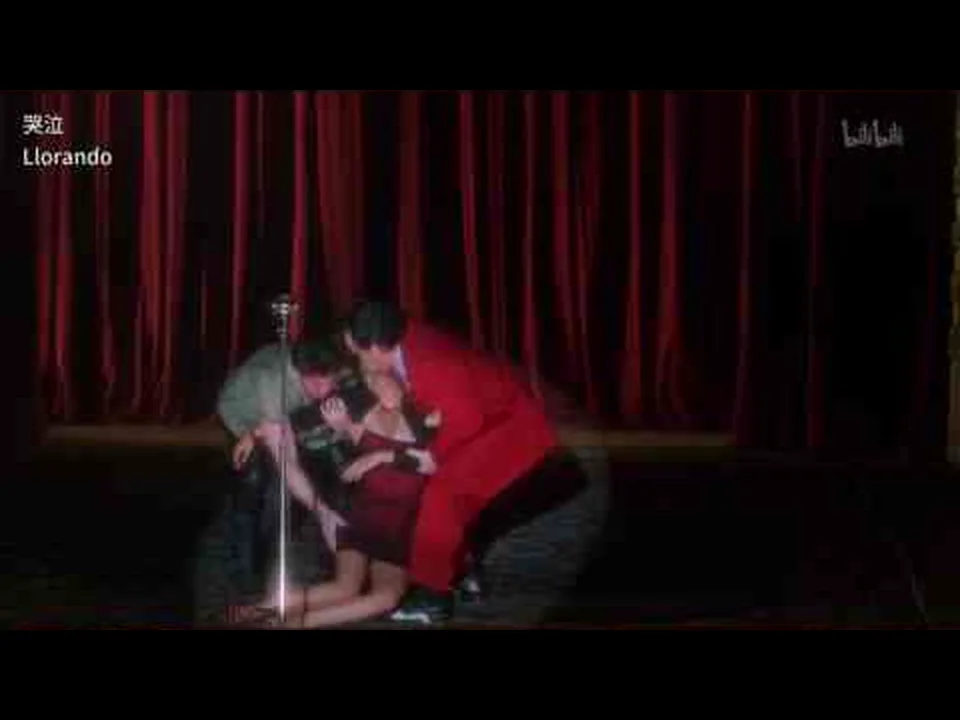
Rebekah Del Rio collapses and is carried away while microphone, red curtain, and audience remain. Betty and Rita already know ‘there is no band,’ yet their bodies continue to bear the performance.
The recording of ‘Llorando’ continues for about twenty seconds after the visible body falls. Voice loses its present source but not its intensity; exposing synchronization does not cancel the tears.
Voice and body become relatively autonomous series. The sonsign asks how sound moves, attaches, and acts instead of ending judgment with ‘real voice / false voice.’
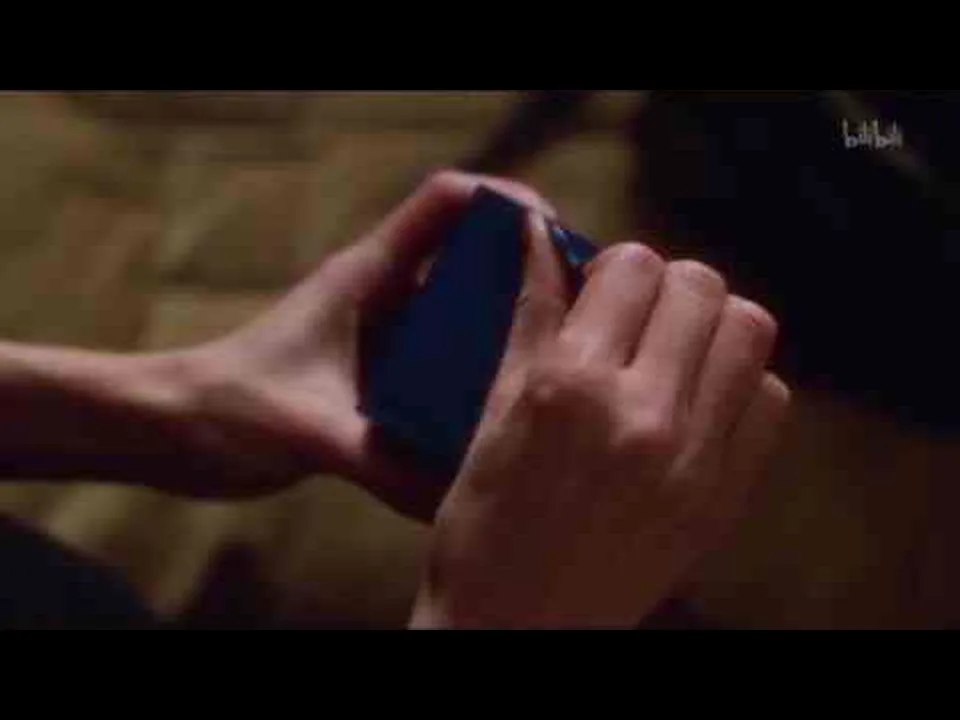
The blue key enters the lock, the lid opens, and Betty disappears from the room’s continuity; names, dwelling, intimacy, and murder clues subsequently exchange positions.
A marked near-silence follows the box’s fall, with footsteps and room sound returning later. The soundtrack first withdraws the old world’s continuity before the image redistributes its figures.
The crystal is not a blurred border between two ready-made worlds. Actual and virtual exchange evidentiary value after the opening, forcing every earlier name, room, and sound to be read again.
EDITION NOTE All three stills and feature times use Bilibili’s official PGC ep378235 (02:27:00; internal BVID BV1g5411V7eS). Continuous audio facts for Club Silencio and the blue box were checked second by second against playable excerpts; excerpt time axes are not presented as the official feature axis.
Lynch does not first give us a dream and then solve it with reality. Audition, Club Silencio, and blue box successively alter the evidentiary force of bodies, voices, names, and objects, making two lives actual and virtual to one another.
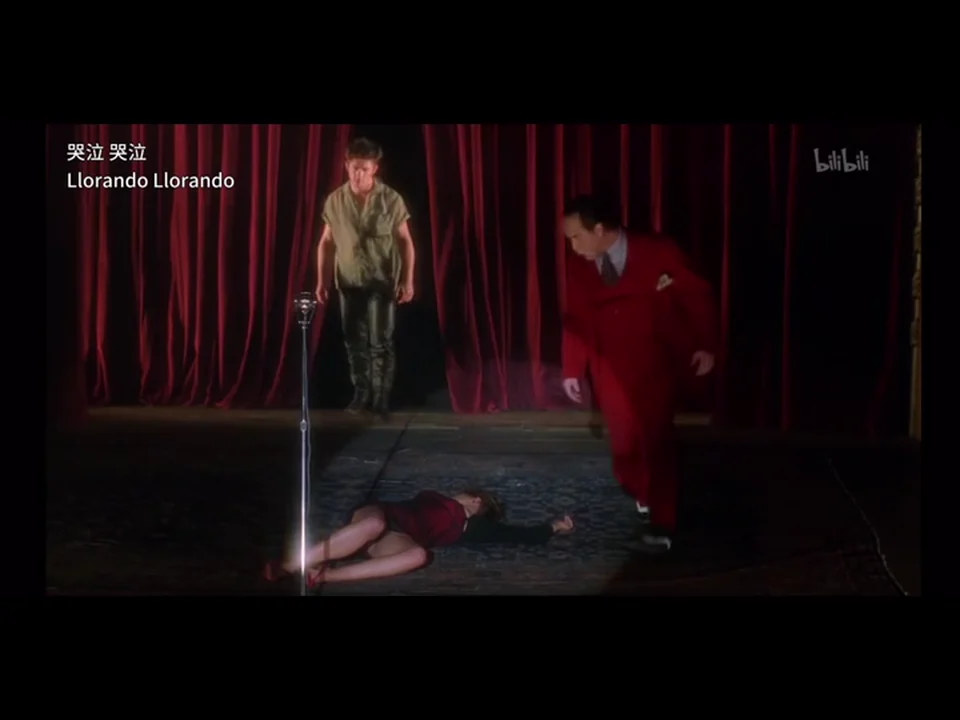 00:07:07
- 01Performance first produces reality
When Betty reaches Hollywood, the innocent newcomer, amnesiac Rita, star's apartment, and audition opportunity resemble the clichés of a wish-world. Yet the audition abruptly shifts from broad rehearsal to proximity, whispers, and threat, rewriting the relations in the room through performance itself.
Performance no longer copies a pre-existing character; the image produces an intensity of reality that in turn determines who the figure can be. - 02Sound revokes the body's monopoly on evidence
Club Silencio repeats that there is no band and everything is recorded. During Rebekah Del Rio's Llorando, spectators still synthesize voice and body as one live event, until she collapses and is carried away while the song continues.
Visible body and recording are both actual materials. The collapse first breaks the attribution of source, then lets virtual layers of unseen event, memory, and performed identity enter the current situation and alter what counts as credible. - 03The blue box redistributes two lives
After the blue box opens, Betty/Diane, Rita/Camilla, successful audition/failed actor, love/hired murder, and blue key change places; objects and encounters from the first half acquire new debts and causes in the second.
The second half does not cancel the first as false. Each side keeps rewriting the other, turning truth from adjudication of one version into the tracing of transformations between versions.
After the singer collapses, Llorando does not stop. The visible body loses its claim as source and the recording takes over the event.
The singer collapses beside the microphone; stagehands enter and carry her away while curtain and microphone remain.
Betty and Rita cry in the audience as the image alternates between stage and spectators.
The Spanish vocal continues for roughly twenty seconds after the singer collapses and is carried away, without breaking with her bodily action.
SITE ANALYSISLive performance and prerecorded voice first appear as one event; the collapse separates them. Their exchange removes the visible body's monopoly on reality and resets the evidentiary rules for the later identity shift.
Cinema 2, chapters 4 and 6; atlas shot analysis of the Club Silencio passage.Bilibili at 00:07:07 Open original still ↗Excerpt-upload timeline, frame- and audio-verified to within one second.A continuous 7:58 Club Silencio excerpt, not the complete feature; film identity, continuity, and anonymous playback were frame-verified. Bilibili submission label: repost.
Bilibili continuous original-film excerpt · MC天轩 · verified 2026-08-14Close-reading questions
- 01In the audition Betty shifts from exaggerated rehearsal to proximity, pause, and threat. Why does performance not reveal her true character but produce another intensity of reality on the spot? How does the scene anticipate the later redistribution of identities?
- 02Club Silencio announces that everything is recorded, and the voice continues after the singer falls. Log visible body, sound system, recording, and spectators' tears separately: how is the causal attribution of body and voice broken, and how do these equally actual materials activate virtual layers of an unseen event, memory, and performed identity?
- 03After the blue box opens, names, rooms, lovers, director, and blue key all take new positions. Does the second half explain the first, or do both sides keep rewriting one another's evidentiary force? Find one earlier detail whose meaning changes without being cancelled.
Analysis and scene sources
Shots and scenes
Primary texts, scholarship, and locators
Theory coordinate: Editorial research proposition outside Cinema 2’s named cases
Consult the primary-text locator above.This film in books and research
Dreams of Difference, Songs of the Same · Book case
Mulholland Drive
pp. 37–38
Film relation: Club Silencio separates voice, performing body, mechanical playback, and spectator affect.
Shot question: Why does the voice continue to act after Rebekah collapses?
《缠绕的诗学:德勒兹思维方法研究》 · Atlas extension
Mulholland Drive
Film relation: Site extension: the blue box, exchanged names, and Club Silencio test empty-place object, nonsense, and audiovisual separation together.
Shot question: After the performing body falls, how does the continuing voice rearrange actual and virtual?
《后人类影像:探索一种后德勒兹的电影哲学》 · Atlas extension
Mulholland Drive
Film relation: SITE EXTENSION: Club Silencio separates voice, body, mechanical playback, and spectator affect, extending the delirious machine.
Shot question: Why does sound continue to act as real after leaving the performing body?
The Neuro-Image · Book case
Mulholland Drive
pp. 59–65
Film relation: Identity, sound, performance, and memory rewrite one another, placing viewers inside a brain world without a stable owner.
Shot question: At Club Silencio, how do mechanical playback, performing body, and viewer affect separate yet keep acting on one another?
Deleuze and the Cinemas of Performance
Mulholland Drive
Reading relation: Verify the Lynch route through performance, doubling, and identity metamorphosis.
The Neuro-Image
Mulholland Drive
Reading relation: Memory, identity, and worlds within the brain
《后人类影像:探索一种后德勒兹的电影哲学》
Mulholland Drive
Reading relation: Mind-games, identity, and synthetic truth
The Crystal-Image: How Actual and Virtual Exchange
Crystalline states determine how the circuit continues
Claim: Shattering, enclosure, turning, and decomposition are formal states of the circuit that determine temporal direction, not mood labels.
Conclusion: Record how the circuit terminates, shatters, grows, turns, or decomposes; the change of state gives its temporal direction.
The Crystal-Image: How Actual and Virtual Exchange
Identity-circuit test
Film comparison: Reciprocal rewriting of figure, performance, and memory tests a contemporary crystal.
Powers of the False: How Falsifying Narration Creates Truth
Creation supplies the affirmative criterion
Claim: Falsifying narration reaches its highest power by generating new relations and changing the conditions of subsequent telling.
Conclusion: The affirmative test has three parts: versions change characters and world, authenticators enter the series, and later narration gains new possibilities.
Cinema 2: The Time-Image · p. 76Cinema 2: The Time-Image · p. 149Deleuze on Cinema · pp. 147–163
Powers of the False: How Falsifying Narration Creates Truth
Two worlds rewrite evidence
Film comparison: Identity, desire, and causality on both sides of the blue box change one another's status.
Viewing gateways and editions
- Official Bilibili feature page: 穆赫兰道bilibili.comOpen film page ↗
- Page access
- Login required
- Version extent
- Recorded as a complete version
- Source type
- Distributor or streaming platform
Edition note: Official Bilibili feature · 2:27:00; membership and regional conditions apply. Club Silencio also has a public excerpt, timecode, and still-led analysis.
Link checked: 2026-08-25