Concept definition
Narration abandons a recoverable model of truth and lets characters, testimonies, memories, and worlds mutate through a series of falsifiers. The false gains creative power by freeing itself from a model of truth.
What the concept explains
The power of the false does not affirm lying; it removes the final jurisdiction of an external truthful model so that differences of power among falsifiers and versions transform figures, relations, and worlds. Judgement shifts from restoring facts to creating possibilities of life.
Powers of the False: How Falsifying Narration Creates TruthDiagrams and film passages
What does the power of the false transform?
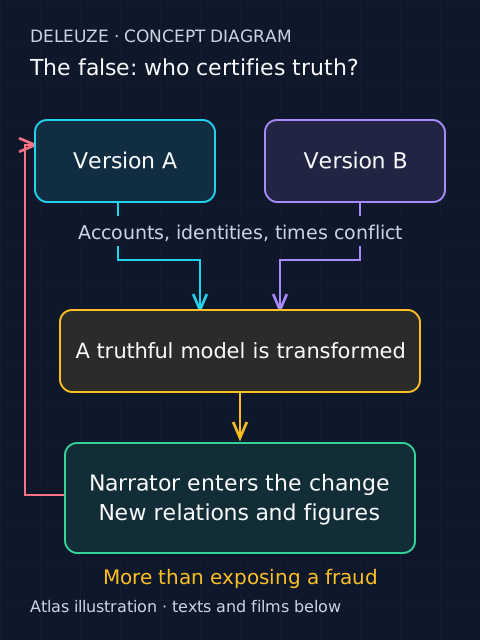
Diagram of narrative relations. The power of the false, fabulation, and factual error pose different problems; the clips below retain those distinctions.
Open full-size diagramHow does a truthful model organize judgment?
An ordinary investigative narrative relates competing accounts to one confirmable world: accumulating evidence makes the truth more complete. Begin by asking whether the film maintains that shared standard of judgment.
Conflicting versions affect the conditions of narration
The power of the false lets incompatible accounts, changing identities, and temporal relations unsettle a unified truthful model. Its operation exceeds one person’s lie or a temporary deception of the viewer; narrator and narrated figure also change.
Distinguish exposing a fraud from creating new relations
If an ending merely eliminates false versions and restores one final answer, judgment remains with the earlier model. The further question is how narration produces new relations, figures, and possibilities of life, rather than declaring everything equally false.
Diagram references
The Immortal Story
Histoire immortelle (1968)
Atlas discussion reading
Clay's arranged story has occurred, yet the two hired performers form a relation beyond the commission.
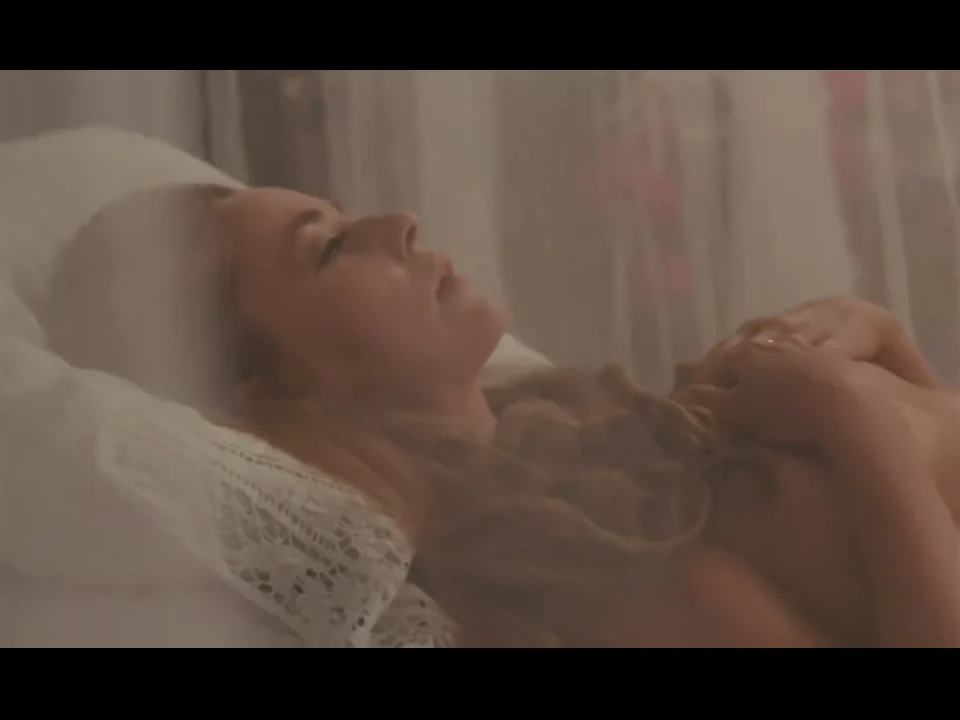
Clay's arranged story has occurred, yet the two hired performers form a relation beyond the commission.
Open full-size still- Displayed still
- 00:40:00
- Discussion passage
- 00:39:35–00:40:25
Frame-checked within the canopied-bed passage in which the hired performers enact the tale.
Complete Bilibili carrier; the shot at 单片 00:40:00 was checked frame by frame, and the still and timestamp come from the same public upload.
Still checked: 2026-08-14
Image
The sailor and Virginie lie side by side beneath the canopy; neither Clay nor his secretary is in the frame.
The translucent fabric isolates the commissioned enactment as an autonomous enclosed space.
Sound
Clay's immediate instructions have left the sound field; quiet voices and pauses remain between the two hired performers.
Relation to the concept
Clay tries to make the legend obey a prior model, but the hired performers produce a new relation in carrying it out; fiction shifts from copying an old story to making a consequence its arranger cannot reclaim.
Sources and further reading
- Bilibili · The Immortal Story complete film
00:40:00 · Complete Bilibili carrier; the shot at 单片 00:40:00 was checked frame by frame, and the still and timestamp come from the same public upload.
- Cinema 2: The Time-Image
Cinema 2, chapter 4, p. 76; chapter 6, pp. 126–155.
24 City
二十四城记 (2008)
Atlas shot reading
Memory speaks inside a moving city
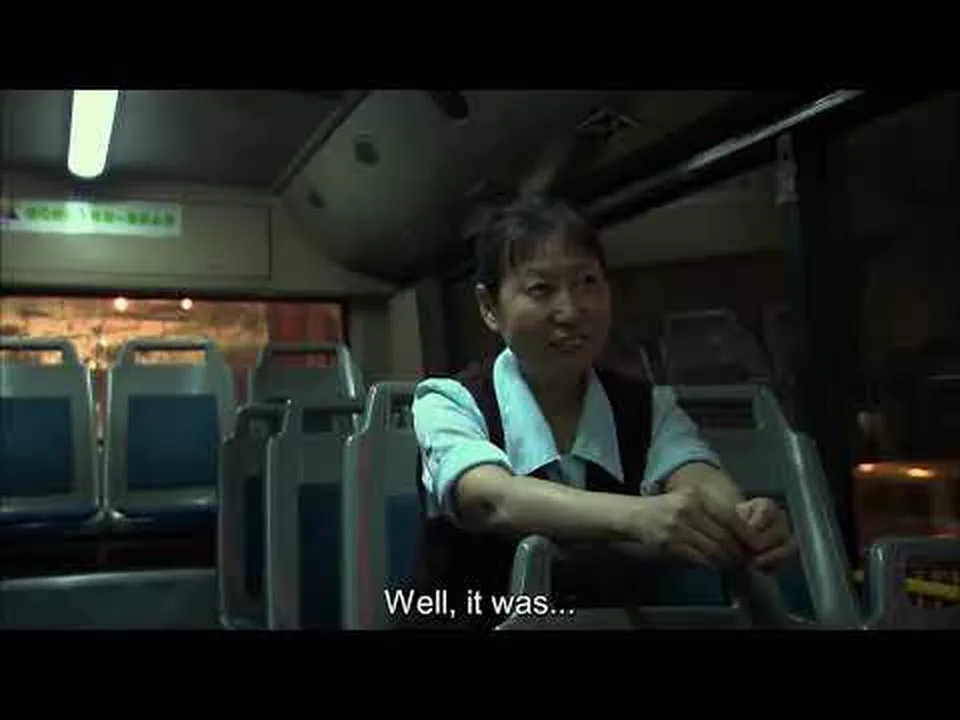
The speaker sits inside a bus; empty seats, windows, and moving light place testimony in transit rather than inside an intact preserved factory.
Open full-size still- Displayed still
- 约 01:23:57
- Feature time
- 约 01:23:57
The three images are automatically sampled frames from the user-supplied 1:51:56 YouTube page; jump positions follow that page. Playback may be affected by Google's sign-in check.
The film gateway is recorded; this clock retains the guide's approximate locator.
Image
The speaker sits inside a bus; empty seats, windows, and moving light place testimony in transit rather than inside an intact preserved factory.
Relation to the concept
Here the power of the false does not erase facts. It gives memory a route for continued action: as the city changes, testimony changes how the city can be understood.
Sources and further reading
- Deamer research entry
Taxonomic discussion on pp. 325–327
- Compare Still Life
How the same transformation moves from testimony to demolition space
- Jonathan Rosenbaum essay
Close reading of actors, nonactors, and historical displacement
- Film Comment interview with Jia Zhangke
The director on cinema recording and becoming memory
Films and scenes
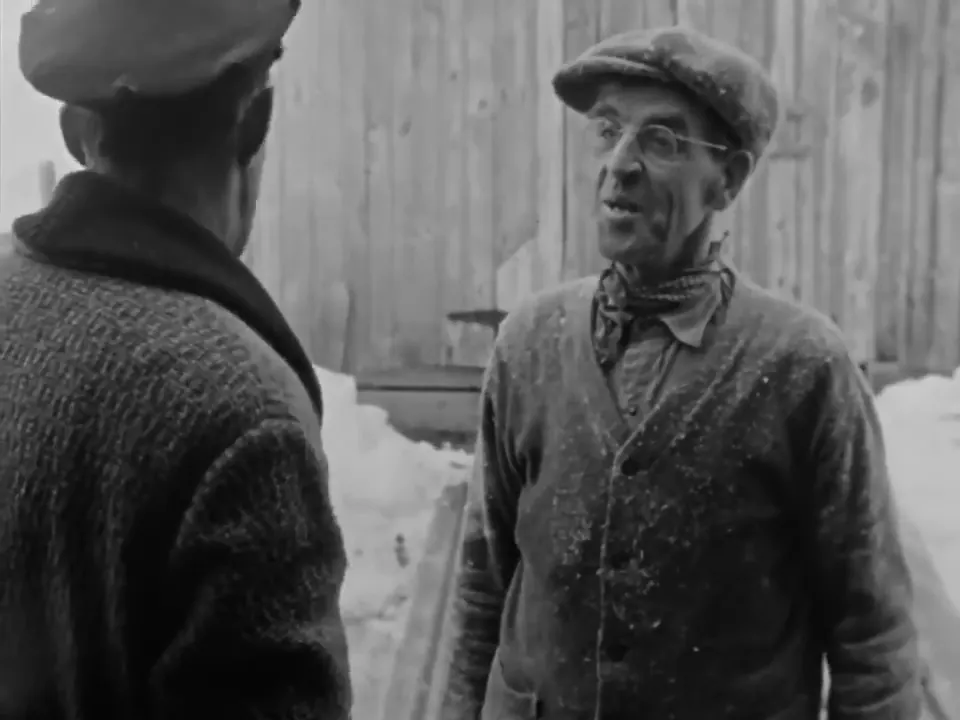
This collective declaration belongs first to fabulation, not automatically to the power of the false. It tests the difference between creating a we and suspending the truthful model.
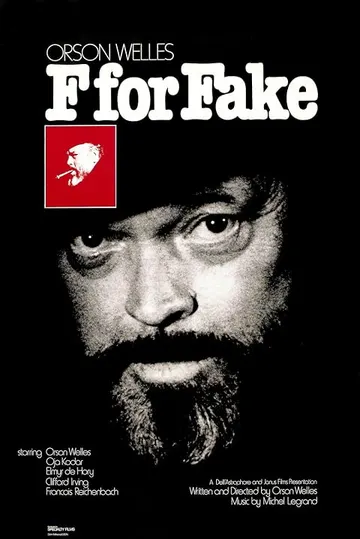
Forger, biographer, market, filmmaker, and camera alternately acquire authority, while the film itself enters the series it presents.
IMDb identification poster ↗Related film readings · 9 films
F for Fake · 1973 · Candidate reading — Forger, biographer, market, filmmaker, and camera alternately acquire authority, while the film itself enters the series it presents.
The Man Who Lies · 1968 — Each telling transforms narrator, characters, and world. Falsification becomes a power of becoming.
The Immortal Story · 1968 — Mr Clay stages a legend as reality, making the film both the legend's mirror and the seed from which it germinates again. Once enacted, the story escapes its arranger and returns to the sea and to another telling.
24 City · 2008 — Factory 420 is being demolished, so the place named by testimony disappears from the image while it is being narrated. Workers and performers including Joan Chen, Lü Liping, and Zhao Tao share the same frontal interview form. The film neither lets professional identity settle truth nor equates performance with deceit; dialect, pause, facial detail, old photographs, popular songs, and demolition dust test one another. Here the power of the false does not abolish history. It forces history to acknowledge that urban memory can only be produced among heterogeneous tellings.
Mulholland Drive · 2001 — Identity, performance, and memory rewrite one another. Criterion: an actual/virtual circuit.
Close-Up · 1990 — Sabzian enters a family as ‘Makhmalbaf,’ and trial footage plus reenactment asks the actual participants to perform themselves. No single judge settles identity as true or false; the camera follows how a lie produces relations, shame, and creative desire.
Readings in the same thematic group
Citizen Kane · 1941 — Witnesses search different sheets of the past for Kane; a complete truth remains unactualized.
The Trial · 1962 — The opening low angle starts Josef K.'s search for an accusation. Women, books, childhood, art, and religion become adjacent sheets of past. The trial has no terminus; a changing series of falsifiers keeps it in motion.
Pour la suite du monde · 1963 — Reviving the beluga hunt is both action and storytelling. Filming reorganizes communal memory and produces collective utterances that prefigure a people to come.
Criteria
Does the film expose a lie to restore truth, or alter the rules by which truth and falsity are produced?
Distinctions and counterexamples
A liar, unreliable narration, twist, or multiplicity of versions is insufficient. If an external tribunal finally restores stable facts, the film remains governed by the truthful model.
Common confusion: Scope: powers of the false transform the production and creative force of truth and falsity.
Texts and sources
Cinema 2, ch. 6; Cinema seminar 1983–84
- 01Cinema, Truth and Time: The Falsifier, 1983–1984
Primary background for powers of the false, temporal crisis, Leibniz, Nietzsche, Welles, and the series of falsifiers.
View source and edition → - 02Cinema 2: The Time-Image
Authoritative source for the standard translation, translators, ISBN, and publication date.
View source and edition →
Research disagreements
Taxonomy or generator?
Fixed labels invite mere example-hunting; an open taxonomy requires new concepts to transform existing relations and explain across cases.
How does temporal rupture become political?
Test non-linearity through rights to see, the distribution of waiting, and ownership of the past; its effects can include nostalgia, trauma markets, control, or paralysis.
How do we use Deleuze precisely?
Test four layers: sensory-motor relation, actual/virtual circuit, audio-visual connection, and regime of truth.
Where contemporary images push this concept
Counterexample against conceptual overreachCandidate reading · versioned passage review pending
All Light, Everywhere: who interprets the body camera's blind spots?
A body camera does not enter the powers of the false merely because it can distort. The sharper countertest is an institution pre-certifying a limited viewpoint as neutral testimony. If the film makes the authority to authenticate contestable, truth versus falsity begins to become a question of how truth is produced.
Scope and limits If camera politics collapses into the claim that every camera is biased, without distinguishing police authority, corporate design, and the filmed subject's risk, no new truth relation is produced; only a relativist slogan remains.
- Neon: All Light, Everywhere official film pageDistributor film page · film factsA synopsis does not replace shot analysis; the full institutional scope of policing cannot be proven by the film alone.
- Pisters: The Neuro-Image guide and author pageScholarly monograph · author page and local PDFAuthor description and book synopsis are not independent film facts; concept pages must be checked against the published edition.
A concept relation that remains contestedCandidate reading · versioned passage review pending
Welcome to Chechnya: how does a digital face double protect a witness?
The digital face double is first a documentary technique protecting witness identifiability while preserving the testimony's factual claim. Powers of the false remains a contested candidate only if passage analysis shows that substitution changes who may testify, who bears exposure, and how the image is authenticated.
Scope and limits If participants lack informed consent, withdrawal, or control over disclosure, the technical proxy merely manages risk for the production; formal protection alone cannot establish a more truthful relation.
- HBO: Welcome to Chechnya release materialDistributor official material · digital-double factsDistributor material establishes the disclosed production mechanism but is not an independent audit of consent, withdrawal rights, or long-term risk.
- International Documentary Association: the digital veil in Welcome to ChechnyaProduction interview · face-replacement R&D and disclosureThe report establishes technique and production decisions but cannot independently prove each participant's consent scope; specific claims still return to the release edition.
- Pisters: The Neuro-Image guide and author pageScholarly monograph · author page and local PDFAuthor description and book synopsis are not independent film facts; concept pages must be checked against the published edition.
Counterexample against conceptual overreachCandidate reading · versioned passage review pending
Flee: how can animation conceal identity while carrying testimony?
Animation first provides identity protection, memory representation, and interview organisation while preserving the factual authentication of Amin's testimony. It therefore sets a counter-boundary for powers of the false: formal deformation neither suspends the truthful model nor automatically produces a new truth relation.
Scope and limits If animation only anonymises testimony or makes experience more poetic without changing the truth relation among teller, authenticator, and viewer, the precise description is protective animated documentary and the powers-of-the-false claim should be withdrawn.
- New York Film Festival: Flee film pageFestival official page · animated-documentary factsThe synopsis does not replace consent, voice provenance, or edition-level checking of animated passages.
- Neon: Flee official film pageDistributor film page · film factsDistributor self-description is not a complete ethical audit; return to the film and production interviews.
- Flee: Sounds of Fright and FlightPeer-reviewed article · animation, sound, and anonymityThe article is an animated-documentary bridge, not a substitute for Amin’s consent trail or edition-level checking of every animated passage.
Concepts to distinguish
Compare them
- Sheets of the pastnappes de passé
Sheets of the past are not former presents stacked in chronological order but virtual regions in which the pure past exists at different degrees of contraction; the whole past coexists virtually with every present. Recollection does not retrieve a ready-made copy from storage. Starting from a present problem, it leaps into a region, searches along a sheet, and actualizes a recollection-image; the search may also change sheets, misrecognize, or fail.
→ - Peaks of the presentpointes de présent
Peaks of the present make several mutually incompossible presents persist as present and thereby deactualize the single continuous and decidable 'real present.' This is not a set of viewpoints upon an already settled event. The image sustains mutually exclusive present worlds without an external master version that can reduce the others to errors.
→ - Chronosignchronosigne
Chronosign is the superordinate classification used when temporal relations directly organize the connection of images rather than merely measuring or resulting from action. Chapter 5 distinguishes two branches that are distinct and non-interchangeable: sheets of past make the virtual past coexisting with the present into regions of recollection-search, while peaks of present sustain incompossible presents and deactualize the single present. Both are signs of direct time, but they answer different problems.
→ - Falsifying narrationnarration falsifiante
Characters and narrative positions escape calibration by an omniscient centre. Each falsifier refers to another, while identity and past mutate according to degrees of power.
→