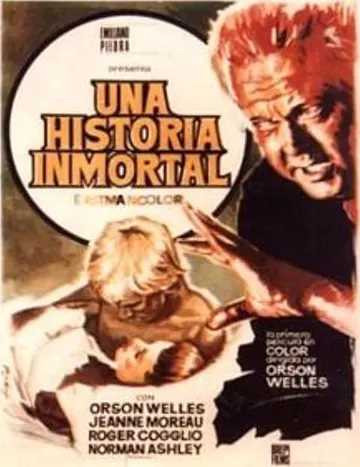
Orson Welles / 奥逊·威尔斯 · 1968
The Immortal Story
Histoire immortelle
Mr Clay stages a legend as reality, making the film both the legend's mirror and the seed from which it germinates again. Once enacted, the story escapes its arranger and returns to the sea and to another telling.
Film details
- Original title
- Histoire immortelle
- Director
- Orson Welles / 奥逊·威尔斯
- Year
- 1968
- Region
- France
Film analysis: how shots organize concepts
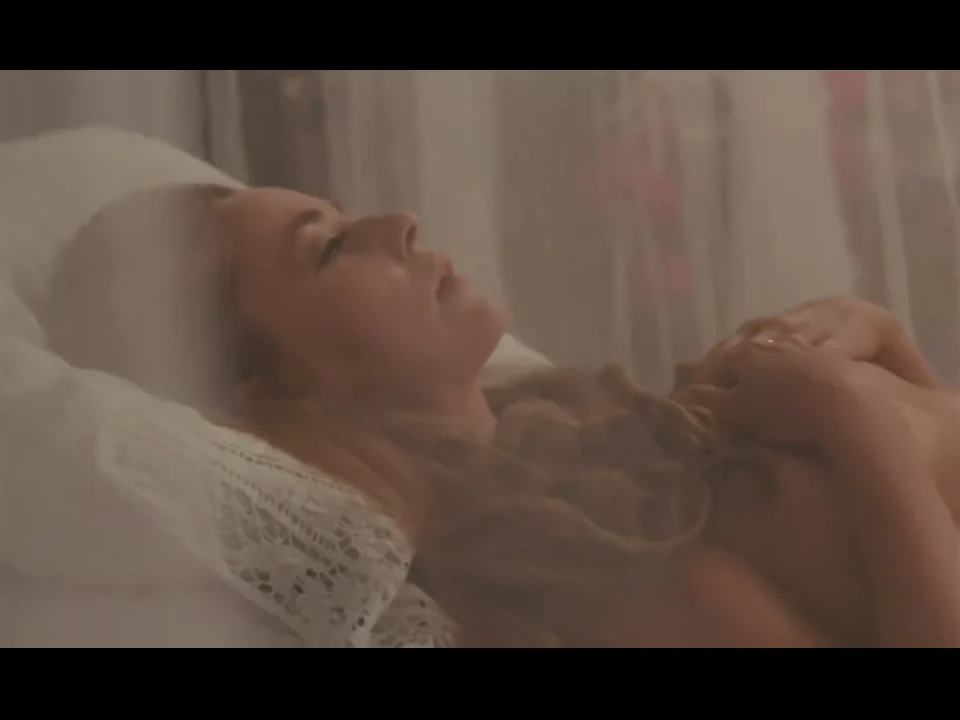 00:40:00
Clay's arranged story has occurred, yet the two hired performers form a relation beyond the commission.
The sailor and Virginie lie side by side beneath the canopy; neither Clay nor his secretary is in the frame.
The translucent fabric isolates the commissioned enactment as an autonomous enclosed space.
Clay's immediate instructions have left the sound field; quiet voices and pauses remain between the two hired performers.
SITE ANALYSISClay tries to make the legend obey a prior model, but the hired performers produce a new relation in carrying it out; fiction shifts from copying an old story to making a consequence its arranger cannot reclaim.
Cinema 2, chapter 4, p. 76; chapter 6, pp. 126–155.Bilibili at 00:40:00 Open original still ↗Frame-checked within the canopied-bed passage in which the hired performers enact the tale.Complete Bilibili carrier; the shot at 单片 00:40:00 was checked frame by frame, and the still and timestamp come from the same public upload.
Bilibili · The Immortal Story complete film · verified 2026-08-14Close-reading questions
- 01How does each step by which Mr Clay makes the legend real produce both a mirror and a new crystalline seed?
- 02After the story is enacted, which sounds, objects, and acts show that it has escaped its arranger and begun to circulate again?
Analysis and scene sources
Shots and scenes
Primary texts, scholarship, and locators
Theory coordinate: Cinema 2, Minnesota 1989, ch. 4, p. 76; ch. 6, p. 149
- 01Cinema 2: The Time-Image
Authoritative source for the standard translation, translators, ISBN, and publication date.
Open the atlas source record →
This film in books and research
Gilles Deleuze : cinéma et philosophie · Atlas analysis
The Immortal Story
Marrati pp. 95–101 · site test
Film relation: This site rereads the paid reenactment through Marrati's criterion of actualization, with Cinema 2, chapter 4, p. 76 as a primary return point: once the legend is arranged as reality, its performers do not remain instruments outside the story.
Shot question: A merchant pays to purchase a story he has already heard. Once sailor and woman actually inhabit their roles, who still controls the legend's outcome?
Conclusion: Actualization does not add an exterior shell to a virtual script; it changes participants' capacities, desires, and relations so that the original plan cannot simply reclaim the event.
Powers of the False: How Falsifying Narration Creates Truth
Creation supplies the affirmative criterion
Claim: Falsifying narration reaches its highest power by generating new relations and changing the conditions of subsequent telling.
Conclusion: The affirmative test has three parts: versions change characters and world, authenticators enter the series, and later narration gains new possibilities.
Cinema 2: The Time-Image · p. 76Cinema 2: The Time-Image · p. 149Deleuze on Cinema · pp. 147–163
Powers of the False: How Falsifying Narration Creates Truth
The story escapes its arranger
Film comparison: The atlas reads together two primary coordinates of different weight: page 76 closely analyzes the legend's mirror/seed operation, while page 149 only briefly includes the film in the transformation of truthful narration. That the staged legend produces a new relation and re-enters circulation is the atlas's bridge between them.
Cinema 2: The Time-Image · p. 149Cinema 2: The Time-Image · p. 76
Viewing gateways and editions
- Verified complete Bilibili carrier: 【奥逊·威尔斯】不朽故事 Histoire immortelle (1968)bilibili.comOpen film page ↗
- Page access
- Accessible when checked
- Version extent
- Recorded as a complete version
- Source type
- User-uploaded page
Edition note: Complete single-part film, runtime 58:01.
Link checked: 2026-08-13