Concept definition
Characters and narrative positions escape calibration by an omniscient centre. Each falsifier refers to another, while identity and past mutate according to degrees of power.
What the concept explains
Falsifying narration is the narrative mechanism of the power of the false: each version relays authority to another position, drawing narrator, camera, and tribunal into the series, while identity, past, and world-state accumulate transformations across the relay.
Powers of the False: How Falsifying Narration Creates TruthDiagrams and film passages
The Immortal Story
Histoire immortelle (1968)
Atlas discussion reading
Clay's arranged story has occurred, yet the two hired performers form a relation beyond the commission.
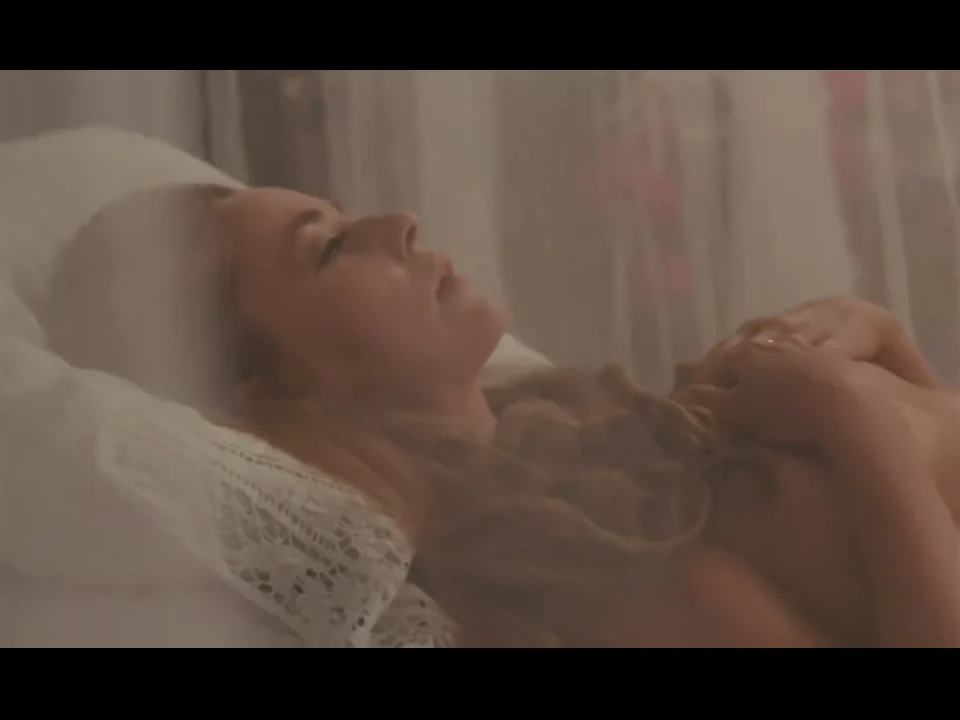
Clay's arranged story has occurred, yet the two hired performers form a relation beyond the commission.
Open full-size still- Displayed still
- 00:40:00
- Discussion passage
- 00:39:35–00:40:25
Frame-checked within the canopied-bed passage in which the hired performers enact the tale.
Complete Bilibili carrier; the shot at 单片 00:40:00 was checked frame by frame, and the still and timestamp come from the same public upload.
Still checked: 2026-08-14
Image
The sailor and Virginie lie side by side beneath the canopy; neither Clay nor his secretary is in the frame.
The translucent fabric isolates the commissioned enactment as an autonomous enclosed space.
Sound
Clay's immediate instructions have left the sound field; quiet voices and pauses remain between the two hired performers.
Relation to the concept
Clay tries to make the legend obey a prior model, but the hired performers produce a new relation in carrying it out; fiction shifts from copying an old story to making a consequence its arranger cannot reclaim.
Sources and further reading
- Bilibili · The Immortal Story complete film
00:40:00 · Complete Bilibili carrier; the shot at 单片 00:40:00 was checked frame by frame, and the still and timestamp come from the same public upload.
- Cinema 2: The Time-Image
Cinema 2, chapter 4, p. 76; chapter 6, pp. 126–155.
24 City
二十四城记 (2008)
Atlas shot reading
Care enters testimony
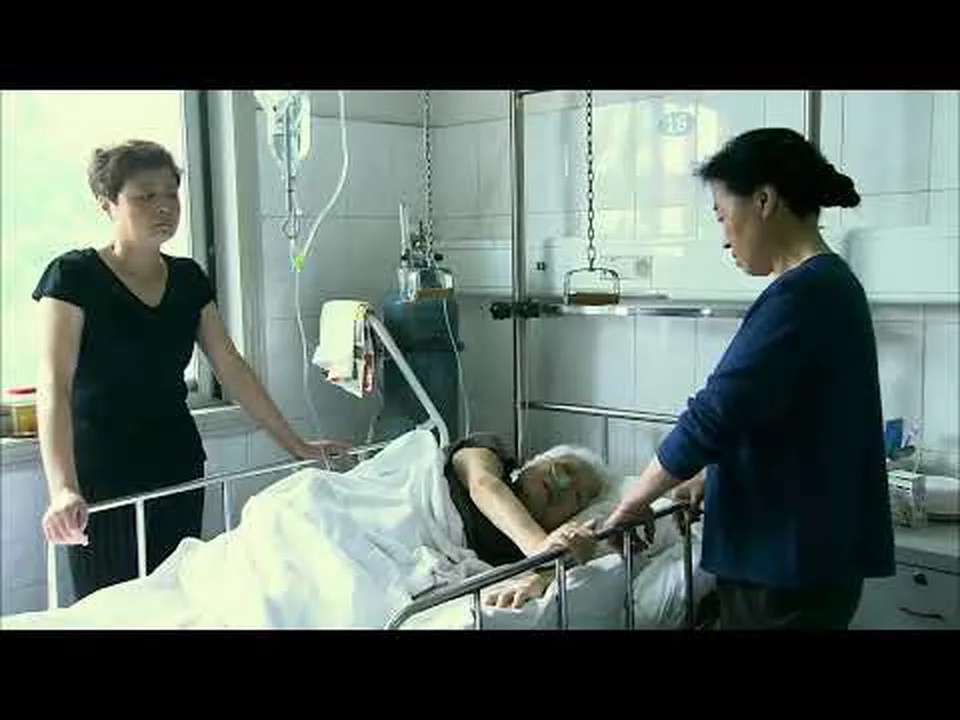
Drip, bed, and touch return narration to intergenerational bodies rather than leaving history in a factory chronology. Performed and lived materials enter one testimonial series.
Open full-size still- Displayed still
- 约 00:55:58
- Feature time
- 约 00:55:58
The three images are automatically sampled frames from the user-supplied 1:51:56 YouTube page; jump positions follow that page. Playback may be affected by Google's sign-in check.
The film gateway is recorded; this clock retains the guide's approximate locator.
Image
Drip, bed, and touch return narration to intergenerational bodies rather than leaving history in a factory chronology. Performed and lived materials enter one testimonial series.
Relation to the concept
Judgment moves from ‘who is she?’ to ‘what historical relation do these bodies, places, and words produce?’ Narration becomes an operation that changes truth-status.
Sources and further reading
- Deamer research entry
Taxonomic discussion on pp. 325–327
- Compare Still Life
How the same transformation moves from testimony to demolition space
- Jonathan Rosenbaum essay
Close reading of actors, nonactors, and historical displacement
- Film Comment interview with Jia Zhangke
The director on cinema recording and becoming memory
Mulholland Drive
Mulholland Drive (2001)
Atlas shot reading
The audition produces a person rather than revealing one
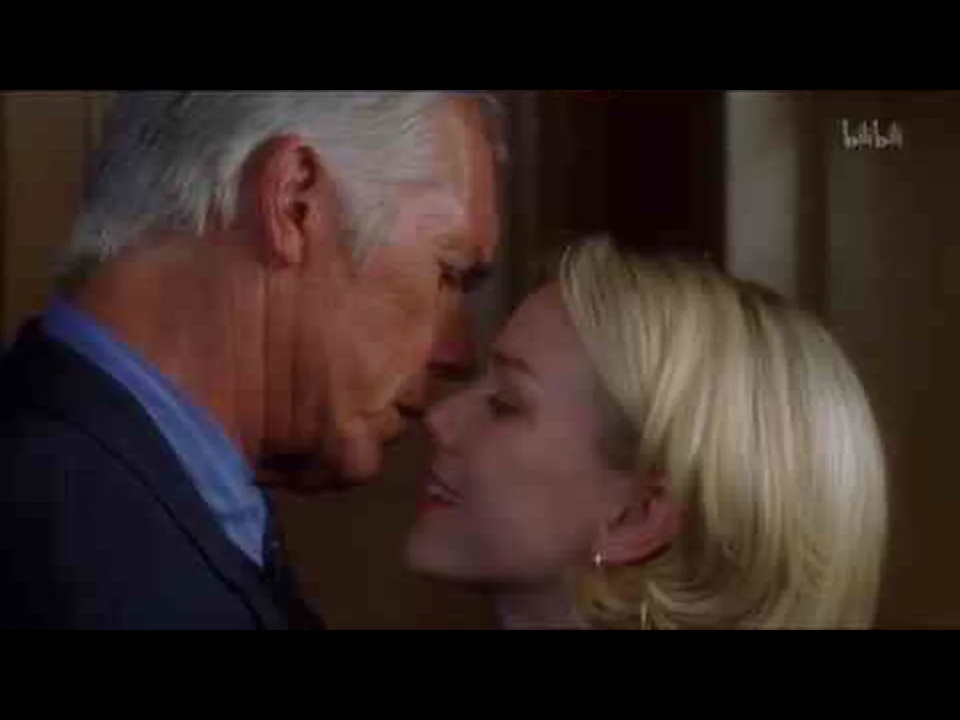
Dialogue that sounded stale in rehearsal is reorganized by proximity, threat, pause, and kiss; a room of observers contracts into a dangerous distance between two bodies.
Open full-size still- Displayed still
- 01:18:00
- Feature time
- 01:18:00
All three stills and feature times use Bilibili’s official PGC ep378235 (02:27:00; internal BVID BV1g5411V7eS). Continuous audio facts for Club Silencio and the blue box were checked second by second against playable excerpts; excerpt time axes are not presented as the official feature axis.
The still and link retain the film guide's recorded shot locator.
Image
Dialogue that sounded stale in rehearsal is reorganized by proximity, threat, pause, and kiss; a room of observers contracts into a dangerous distance between two bodies.
Sound
Projected recitation drops into whisper, breath, and gaps between phrases. The same text carries no fixed meaning; volume and rhythm directly alter who both performers can become.
Relation to the concept
The power of the false is not skill at lying. Performance escapes rule by an original true self and actually produces a person and relation that did not exist before.
Sources and further reading
- Crystal essay: move beyond dream / reality
Check actual face, virtual face, exchange point, and consequence
- Pisters: The Neuro-Image guide
Connect identity change to brain, screen, and powers of the false
- Criterion: Lynch on audition and Silencio
Verify two treatments of the same material and the recording’s source
- Mactaggart: hearing loss and Club Silencio
Peer-reviewed study of audition, synchronization, and voice after collapse
- BFI: a cosmology beyond dream / reality
Keep the two-part solution as one reading rather than the final word
Films and scenes
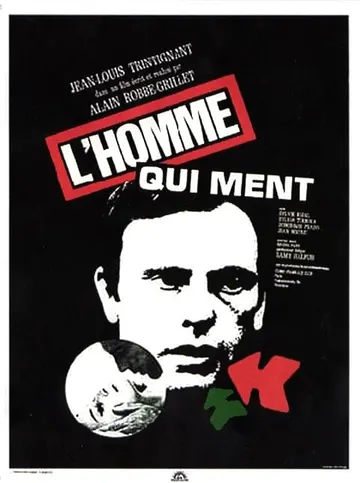
Hero, traitor, witness, and impostor positions change with every telling, while the film supplies no narrative centre capable of fixing them all.
IMDb identification poster ↗Related film readings · 10 films
The Lady from Shanghai · 1947 — In the hall of mirrors, bodies, doubles, deception, and destruction reflect one another, dissolving stable ontological priority and forming a crystal.
F for Fake · 1973 — Each expert, forger, director, and narrator passes the tribunal to another. The question becomes whose power can create.
L’Immortelle · 1963 — Differences among repeated scenes exceed a single true version. Each present holds in its own right, forming inexplicable peaks of the present.
The Man Who Lies · 1968 · Candidate reading — Hero, traitor, witness, and impostor positions change with every telling, while the film supplies no narrative centre capable of fixing them all.
The Immortal Story · 1968 — Mr Clay stages a legend as reality, making the film both the legend's mirror and the seed from which it germinates again. Once enacted, the story escapes its arranger and returns to the sea and to another telling.
24 City · 2008 — Factory 420 is being demolished, so the place named by testimony disappears from the image while it is being narrated. Workers and performers including Joan Chen, Lü Liping, and Zhao Tao share the same frontal interview form. The film neither lets professional identity settle truth nor equates performance with deceit; dialect, pause, facial detail, old photographs, popular songs, and demolition dust test one another. Here the power of the false does not abolish history. It forces history to acknowledge that urban memory can only be produced among heterogeneous tellings.
Mulholland Drive · 2001 — Identity, performance, and memory rewrite one another. Criterion: an actual/virtual circuit.
Close-Up · 1990 — Sabzian enters a family as ‘Makhmalbaf,’ and trial footage plus reenactment asks the actual participants to perform themselves. No single judge settles identity as true or false; the camera follows how a lie produces relations, shame, and creative desire.
Readings in the same thematic group
Citizen Kane · 1941 — Witnesses search different sheets of the past for Kane; a complete truth remains unactualized.
The Trial · 1962 — The opening low angle starts Josef K.'s search for an accusation. Women, books, childhood, art, and religion become adjacent sheets of past. The trial has no terminus; a changing series of falsifiers keeps it in motion.
Criteria
Who can adjudicate among versions, and is that position itself drawn into the series of falsifiers?
Distinctions and counterexamples
Restricted viewpoint, withheld information, or conflicting testimony remains an information game when an unaffected objective camera finally calibrates all versions.
Common confusion: A twist ending may still serve a final truth.
Texts and sources
Cinema 2, ch. 6
- 01Cinema 2: The Time-Image
Authoritative source for the standard translation, translators, ISBN, and publication date.
View source and edition →
Research disagreements
Replacement or coexistence?
The time-image reverses the subordination of time to movement; both regimes persist and can shift locally within one film.
Taxonomy or generator?
Fixed labels invite mere example-hunting; an open taxonomy requires new concepts to transform existing relations and explain across cases.
How do we use Deleuze precisely?
Test four layers: sensory-motor relation, actual/virtual circuit, audio-visual connection, and regime of truth.
Where contemporary images push this concept
Counterexample against conceptual overreachCandidate reading · versioned passage review pending
Welcome to Chechnya: how does a digital face double protect a witness?
Synthesis does not automatically create falsifying narration: face replacement may preserve the testimonial event without producing competing narrative versions. The case instead forces a distinction between protective deformation and narration that genuinely changes the position of the authenticator.
Scope and limits If shots do not set multiple tellers, versions, or regimes of authentication into competition, the precise description is protective synthesis; technical processing should not be elevated into falsifying narration.
- HBO: Welcome to Chechnya release materialDistributor official material · digital-double factsDistributor material establishes the disclosed production mechanism but is not an independent audit of consent, withdrawal rights, or long-term risk.
- International Documentary Association: the digital veil in Welcome to ChechnyaProduction interview · face-replacement R&D and disclosureThe report establishes technique and production decisions but cannot independently prove each participant's consent scope; specific claims still return to the release edition.
- Pisters: The Neuro-Image guide and author pageScholarly monograph · author page and local PDFAuthor description and book synopsis are not independent film facts; concept pages must be checked against the published edition.
Counterexample against conceptual overreachCandidate reading · same-session trace pending
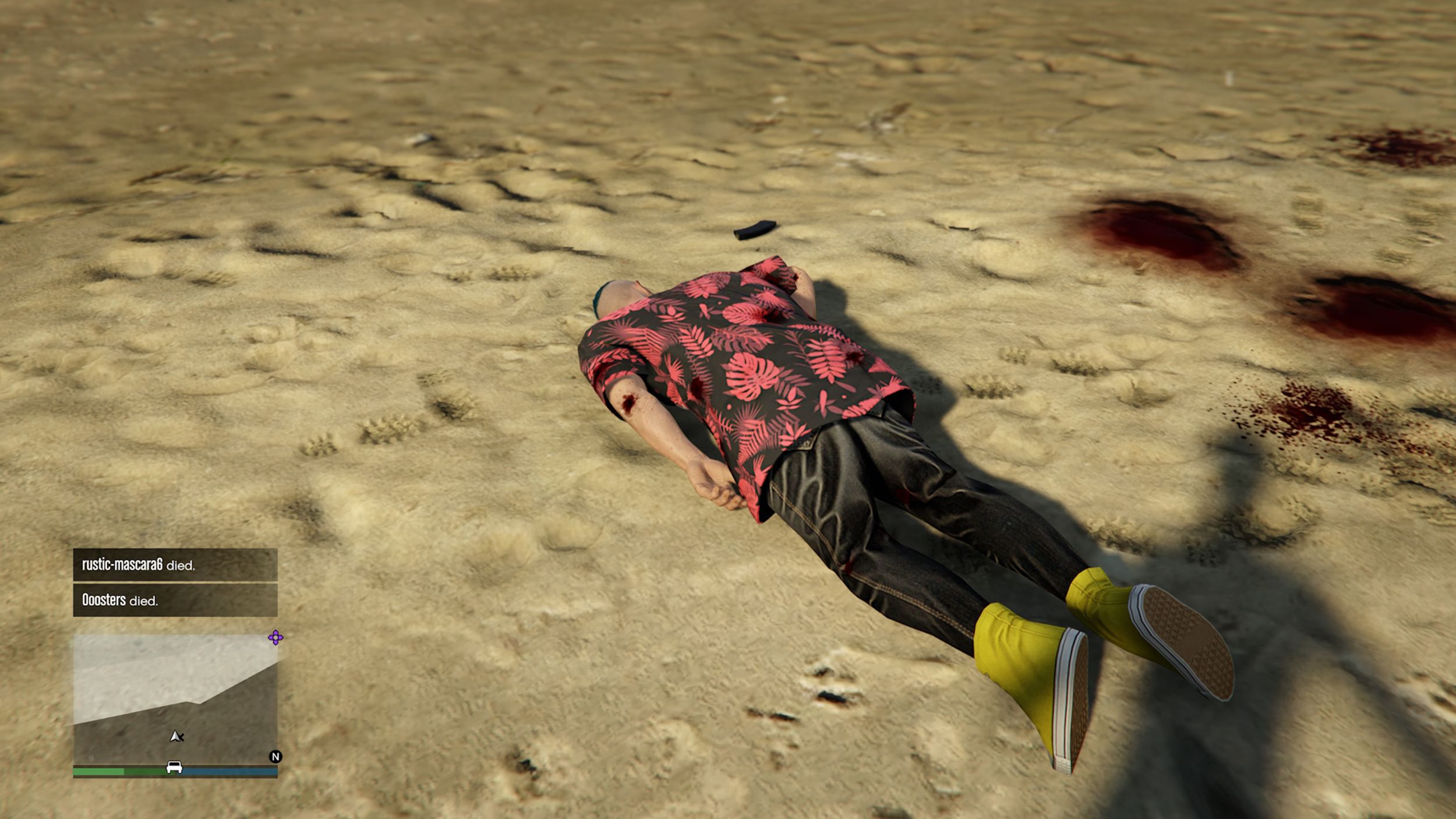
Grand Theft Hamlet: game accidents interrupt Shakespeare
Role-play, lockdown reality, and GTA accidents create version conflicts, but production mishaps and improvisation are not falsifying narration. To pass the countertest, the film must keep transferring speaking positions and criteria of truth rather than editing accidents into a successful making-of line.
Scope and limits If a linear making-of story finally absorbs every accident as an obstacle to a successful performance, multiple versions serve an inspirational ending and there is no relay of falsifiers, only conventional production narrative.
- IDFA: Grand Theft Hamlet film pageFestival official page · machinima factsFestival catalogues also list 2023/91 minutes; editions must be logged separately rather than merged.
- Machinima as a Production Technique: Grand Theft HamletScholarly article · game engine and documentary structureThe article does not replace sequence-level logging of in-game accidents, lag, and camera movement; virtual space is not directly the virtual.
Concepts to distinguish
Compare them
- Sheets of the pastnappes de passé
Sheets of the past are not former presents stacked in chronological order but virtual regions in which the pure past exists at different degrees of contraction; the whole past coexists virtually with every present. Recollection does not retrieve a ready-made copy from storage. Starting from a present problem, it leaps into a region, searches along a sheet, and actualizes a recollection-image; the search may also change sheets, misrecognize, or fail.
→ - Peaks of the presentpointes de présent
Peaks of the present make several mutually incompossible presents persist as present and thereby deactualize the single continuous and decidable 'real present.' This is not a set of viewpoints upon an already settled event. The image sustains mutually exclusive present worlds without an external master version that can reduce the others to errors.
→ - Chronosignchronosigne
Chronosign is the superordinate classification used when temporal relations directly organize the connection of images rather than merely measuring or resulting from action. Chapter 5 distinguishes two branches that are distinct and non-interchangeable: sheets of past make the virtual past coexisting with the present into regions of recollection-search, while peaks of present sustain incompossible presents and deactualize the single present. Both are signs of direct time, but they answer different problems.
→ - Powers of the falsepuissances du faux
Narration abandons a recoverable model of truth and lets characters, testimonies, memories, and worlds mutate through a series of falsifiers. The false gains creative power by freeing itself from a model of truth.
→