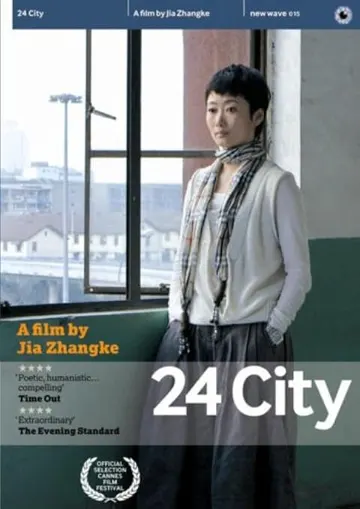
Jia Zhangke / 贾樟柯 · 2008
24 City
二十四城记
Factory 420 is being demolished, so the place named by testimony disappears from the image while it is being narrated. Workers and performers including Joan Chen, Lü Liping, and Zhao Tao share the same frontal interview form. The film neither lets professional identity settle truth nor equates performance with deceit; dialect, pause, facial detail, old photographs, popular songs, and demolition dust test one another. Here the power of the false does not abolish history. It forces history to acknowledge that urban memory can only be produced among heterogeneous tellings.
Film details
- Original title
- 二十四城记
- Director
- Jia Zhangke / 贾樟柯
- Year
- 2008
- Region
- China
Film analysis: how shots organize concepts
When actors and workers speak in the same interview form, is the film confusing truth and fiction or reorganizing how testimony is judged?
24 City removes the shortcut by which professional identity automatically guarantees truth, without abolishing history. Faces, pauses, hospital beds, bus windows, factory spaces, and editing jointly determine how an utterance becomes credible; truth becomes a relation produced and checked claim by claim.
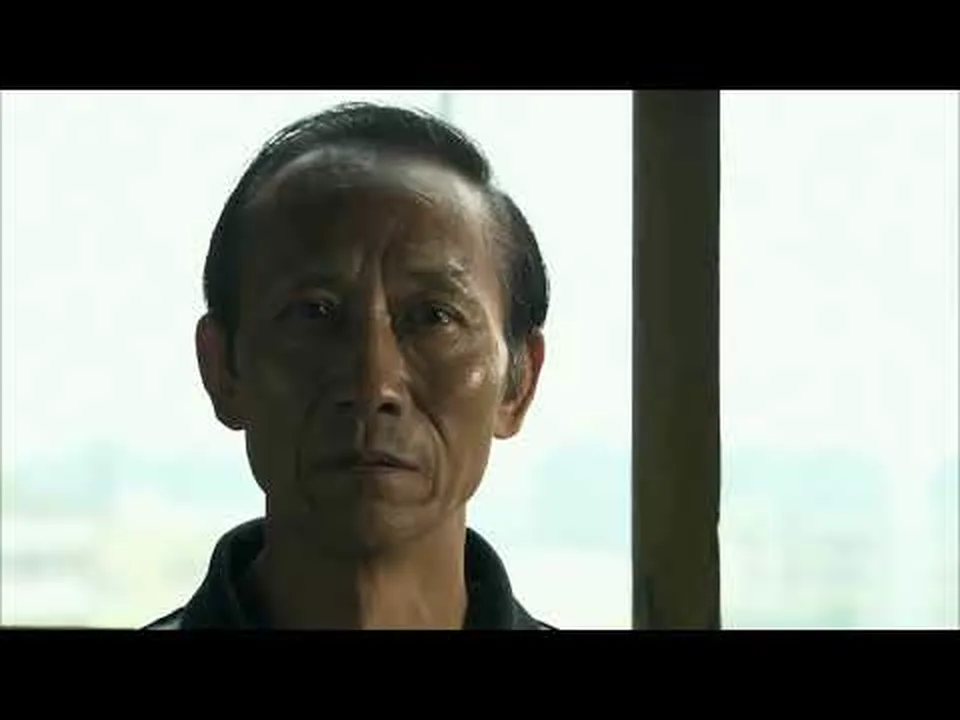
The speaker faces the camera as the background compresses into a few lines. Pauses and gaze perform work usually assigned to narration and captions in an archive.
The past no longer appears as one completed total story. It is actualized from a particular sheet of past accessible to one body.
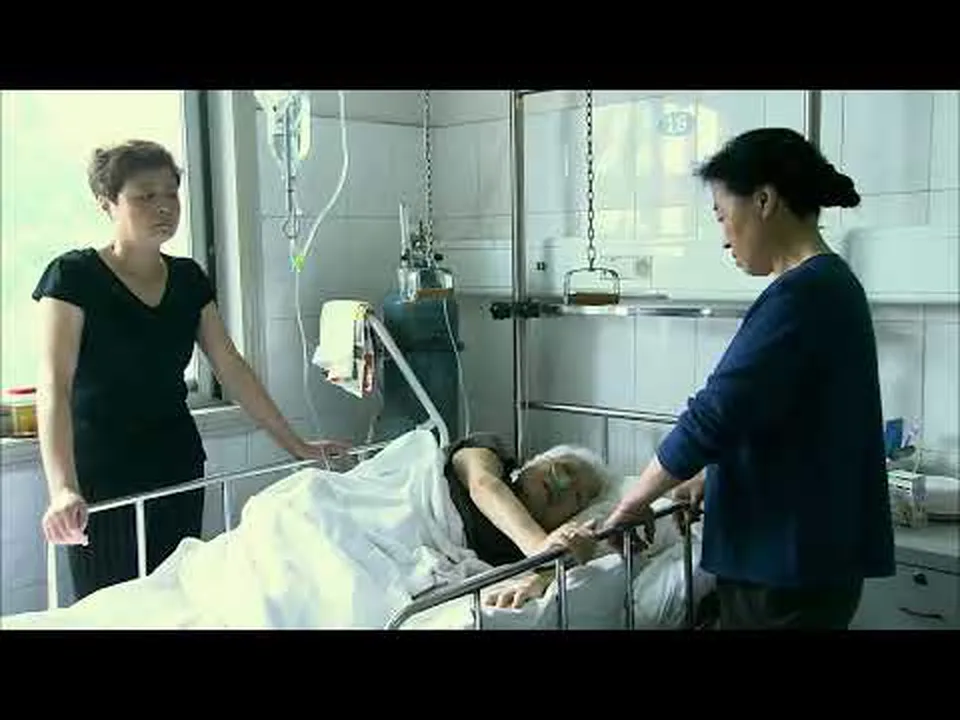
Drip, bed, and touch return narration to intergenerational bodies rather than leaving history in a factory chronology. Performed and lived materials enter one testimonial series.
Judgment moves from ‘who is she?’ to ‘what historical relation do these bodies, places, and words produce?’ Narration becomes an operation that changes truth-status.
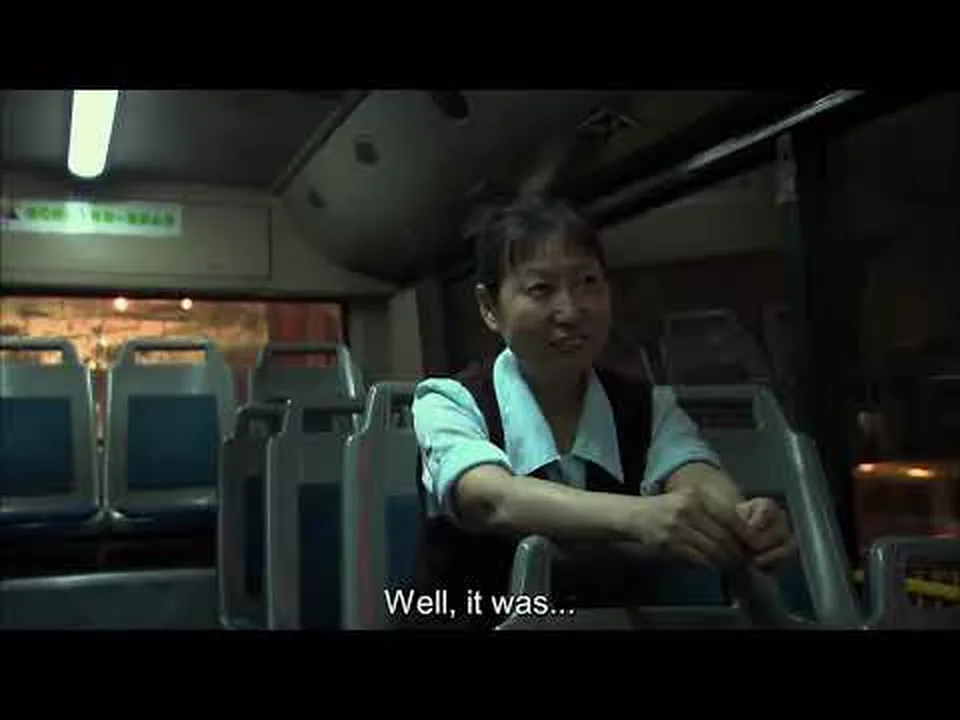
The speaker sits inside a bus; empty seats, windows, and moving light place testimony in transit rather than inside an intact preserved factory.
Here the power of the false does not erase facts. It gives memory a route for continued action: as the city changes, testimony changes how the city can be understood.
EDITION NOTE The three images are automatically sampled frames from the user-supplied 1:51:56 YouTube page; jump positions follow that page. Playback may be affected by Google's sign-in check.
Demolition, oral testimony, and performed witness rewrite one another's truth-status, making a factory past a memory produced by many and owned by none.
- 01The site erases itself
Workshops, machines, moving crews, and demolition dust at Factory 420 are juxtaposed with images of the new development.
As testimony occurs, its material referent is disappearing; place cannot preserve the past intact. - 02Actors enter the testimonial series
Workers and performers including Joan Chen, Lü Liping, and Zhao Tao recount migration, love, and work in the same frontal interview form.
Professional identity cannot serve as final judge of authenticity; performance and witness must be tested through concrete detail rather than labels. - 03Memory circulates across materials
Old photographs, popular songs, dialects, silent faces, and new housing answer one another across decades.
The power of the false does not cancel history; it lets incompatible materials produce the city's sheets of past together.
Close-reading questions
- 01Compare one former worker's frontal testimony with one performed testimony. When camera position, scale, and interview form are nearly identical, how do dialect, pause, gaze, and concrete objects produce different truth-effects? Why can professional identity not decide truth for the shot?
- 02Compare a testimony cut by cut with adjacent demolition, removal, or new-development images. Does place corroborate memory, or is it withdrawing the actual coordinate on which testimony depends?
- 03When old photographs, popular songs, or factory noise cross between two speakers, do sound and archive unify the period, or keep incompatible pasts together inside a city being renamed?
Analysis and scene sources
Shots and scenes
Primary texts, scholarship, and locators
Theory coordinate: Deamer, 2016, pp. 325–327
- 01Deleuze’s Cinema Books: Three Introductions to the Taxonomy of Images
Detailed reconstruction with a film index; the nine-cell grid and eleven film cases carry the evidence status of Deamer’s later interpretation.
Open the atlas source record →
This film in books and research
The Cinematic Body · Further discussion
When does a work become a variable screen event?
pp. 263–264
Claim: Post-cinema does not mean merely shot digitally. Version, device, network, and political economy must jointly change how images reach bodies.
Extension: Shaviro's 2010 work moves the problem into digital technology, globalization, and financialization; Denson's discorrelated image addresses image operations beyond human perceptual scales.
Tension: The 1993 book did not predict streaming, smartphones, or generative images. Keeping the body as the sole center also cannot describe computation that first occurs among machines.
Deleuze, Cinema and National Identity
24 City
Reading relation: Test the layered production of national history through factory memory, testimony, and performance.
Deleuze and World Cinemas
24 City
Reading relation: Testimony, performance, and national memory
Viewing gateways and editions
- Identified YouTube feature page: Watch 24 City Episode 1youtube.comOpen film page ↗
- Page access
- Login required
- Version extent
- Recorded as a complete version
- Source type
- User-uploaded page
Edition note: Jia Zhangke’s 24 City, runtime 1:51:56 (about 112 minutes). The title, thumbnail and interview images identify the film. Anonymous playback triggers a Google sign-in or bot check.
Link checked: 2026-08-25
- Cinema Guildcinemaguild.comOpen film page ↗
- Source type
- Distributor or streaming platform