Concept definition
Sheets of the past are not former presents stacked in chronological order but virtual regions in which the pure past exists at different degrees of contraction; the whole past coexists virtually with every present. Recollection does not retrieve a ready-made copy from storage. Starting from a present problem, it leaps into a region, searches along a sheet, and actualizes a recollection-image; the search may also change sheets, misrecognize, or fail.
What the concept explains
Sheets of the past treat the past as coexisting virtual regions at different degrees of contraction, not a row of former presents that have disappeared. Recollection leaps from the present into a sheet to search for an image; shifts of sheet, failed searches, and coexistence matter more than chronology.
Sheets of Past and Peaks of Present: How the Order of Time Enters the ImageDiagrams and film passages
Where does recollection look for the past?
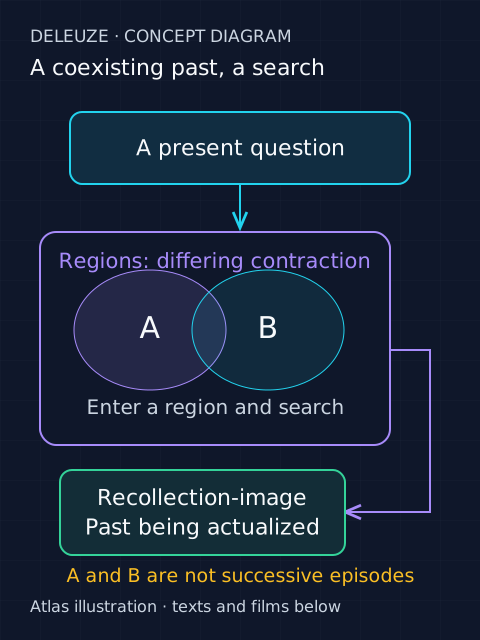
A spatial metaphor for recollection, not literal drawers stored in a brain. Arrows indicate entry and actualization, not the passage of historical dates.
Open full-size diagramThe past is preserved rather than waiting in a queue
Sheets of past are coexisting virtual regions in which the whole past is preserved at different degrees of contraction, not separate containers for historical periods. The diagram keeps the regions present together; one memory does not have to finish playing before another becomes available. Chronology and flashback order are distinct questions.
Leap from the present into a region
Recollection places itself in a region of the past and searches within it. The region may be appropriate or mistaken; the search may fail or change direction, allowing the past to bear differently upon the present.
Recollection-image: the virtual past being actualized
Distinguish the recollection-image that emerges from the virtual region that is preserved. A ruin, old object, or historical stratum alone does not identify sheets of past; examine how the film organizes search, selection, and actualization.
Diagram references
Mirror
Зеркало (1974)
Atlas discussion reading
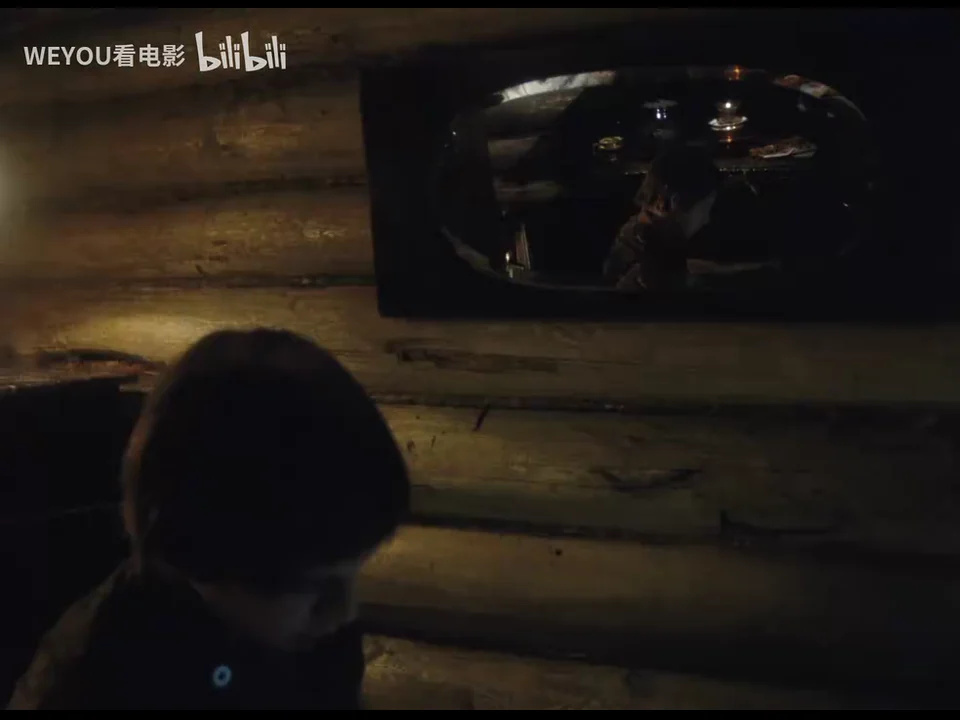
The boy outside the mirror and the reflected figures share one composition without reducing to one viewing position.
The boy outside the mirror and the reflected figures share one composition without reducing to one viewing position.
Open full-size still- Displayed still
- 01:25:00
- Discussion passage
- 01:24:40–01:25:20
Frame-checked within the interior mirror passage.
Complete Bilibili carrier; the shot at 单片 01:25:00 was checked frame by frame, and the still and timestamp come from the same public upload.
Still checked: 2026-08-14
Image
The boy's head remains below and outside the mirror; the oval glass inserts another group into the same timber-wall composition.
The bright mirror interior and darker exterior remain visible together without a cut to a separate memory shot.
Sound
Inside and outside the mirror share one continuous interior sound field; the reflected image receives no separate source of sound.
Relation to the concept
This mirror shot establishes only two visible zones within one composition; it does not by itself prove actual–virtual exchange. A crystalline reading still requires the returns of mother/wife, shifts between childhood and adulthood, and the archival passages.
Sources and further reading
- Bilibili · Mirror complete film
01:25:00 · Complete Bilibili carrier; the shot at 单片 01:25:00 was checked frame by frame, and the still and timestamp come from the same public upload.
- Cinema 2: The Time-Image
Cinema 2, chapter 4, pp. 68–87.
Citizen Kane
Citizen Kane (1941)
Atlas discussion reading
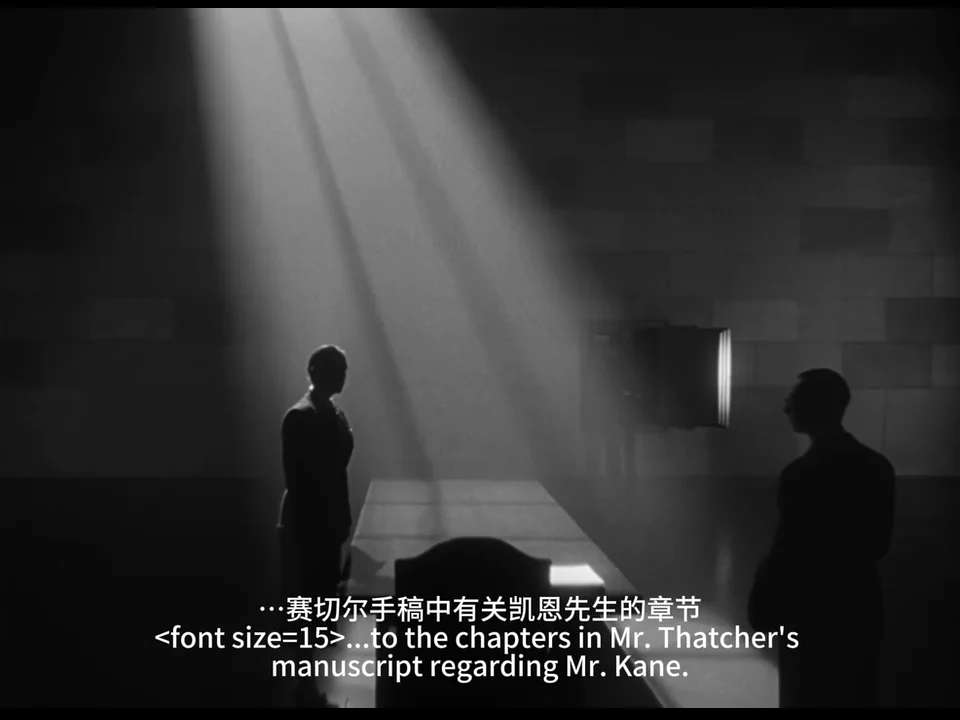
The investigation does not return to one past; it enters one sheet through a witness document.
The investigation does not return to one past; it enters one sheet through a witness document.
Open full-size still- Displayed still
- 第3分段 00:00:15 / Part 3 00:00:15
- Discussion passage
- 第3分段 00:00:00–00:00:40 / Part 3 00:00:00–00:00:40
- Carrier part
- 3
Part 3 was frame-checked; the anchor is the entrance into Thatcher's manuscript.
Complete Bilibili carrier; the shot at 第3分段 00:00:15 was checked frame by frame, and the still and timestamp come from the same public upload.
Still checked: 2026-08-14
Image
A single overhead beam cuts out the large reading table and manuscript while the figures recede into silhouettes.
The archive material lies between the two figures as a material entrance into Kane's past.
Sound
The attendant directs Thompson to the chapters of Thatcher's manuscript concerning Kane.
Relation to the concept
The manuscript is not a key that solves a life but one sheet opened by witness, document, and image; later testimonies enter other sheets.
Sources and further reading
- Bilibili · Citizen Kane, part 3
第3分段 00:00:15 / Part 3 00:00:15 · Complete Bilibili carrier; the shot at 第3分段 00:00:15 was checked frame by frame, and the still and timestamp come from the same public upload.
- Cinema 2: The Time-Image
Cinema 2, chapter 5, pp. 105, 110–111, 115–119.
Muriel
Muriel ou Le Temps d’un retour (1963)
Atlas discussion reading
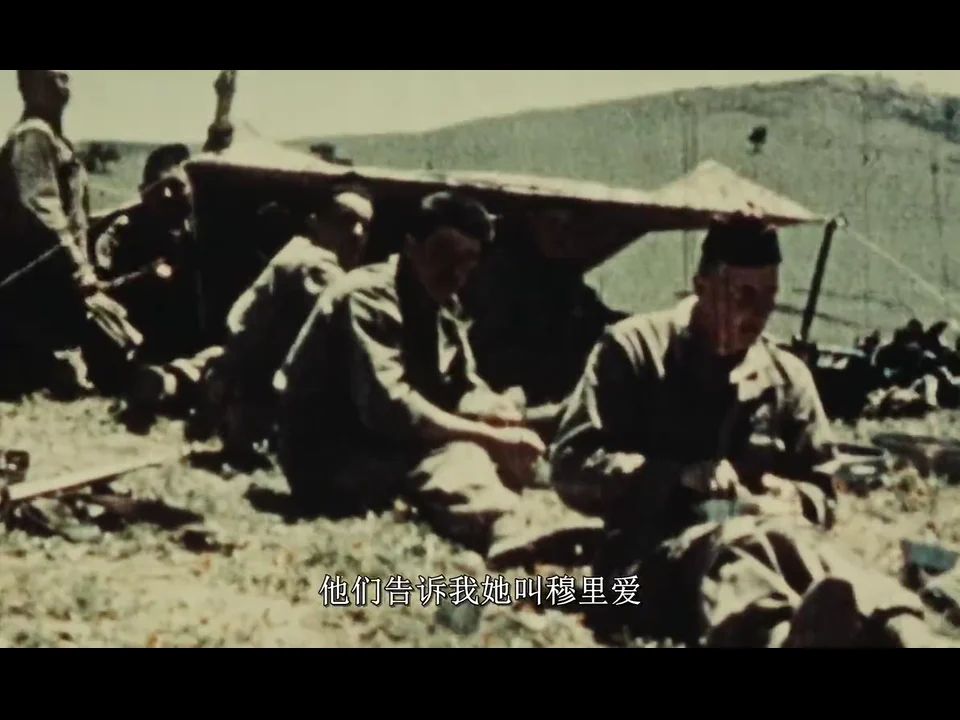
The routine soldiers' footage does not show torture; Bernard's present voice presses the absent event into the image.
The routine soldiers' footage does not show torture; Bernard's present voice presses the absent event into the image.
Open full-size still- Displayed still
- 第11分段 00:00:25 / Part 11 00:00:25
- Discussion passage
- 第11分段 00:00:00–00:01:25 / Part 11 00:00:00–00:01:25
- Carrier part
- 11
Part 11 was frame-checked; the anchor lies in the disjunction between silent 8mm footage and Bernard's narration.
Complete Bilibili carrier; the shot at 第11分段 00:00:25 was checked frame by frame, and the still and timestamp come from the same public upload.
Still checked: 2026-08-14
Image
The 8mm footage shows soldiers sitting and resting in the hills; it does not show the torture Bernard describes.
Grain, faded colour, and projected-film texture mark the footage as another layer of record.
Sound
Over 8mm images without synchronized location sound, Bernard's present voice names Muriel and continues his account.
Relation to the concept
The wartime past is neither fully restored by the footage nor contained in speech; the split between routine images and torture testimony makes the past act in the present as an untotalizable sheet.
Sources and further reading
- Bilibili · Muriel, part 11
第11分段 00:00:25 / Part 11 00:00:25 · Complete Bilibili carrier; the shot at 第11分段 00:00:25 was checked frame by frame, and the still and timestamp come from the same public upload.
- Cinema 2: The Time-Image
Cinema 2, chapter 5, pp. 116, 118, 120, 122–123; these are film-level primary-text coordinates, while the present shot relation is this site's analysis.
24 City
二十四城记 (2008)
Atlas shot reading
One face cannot own a factory's history
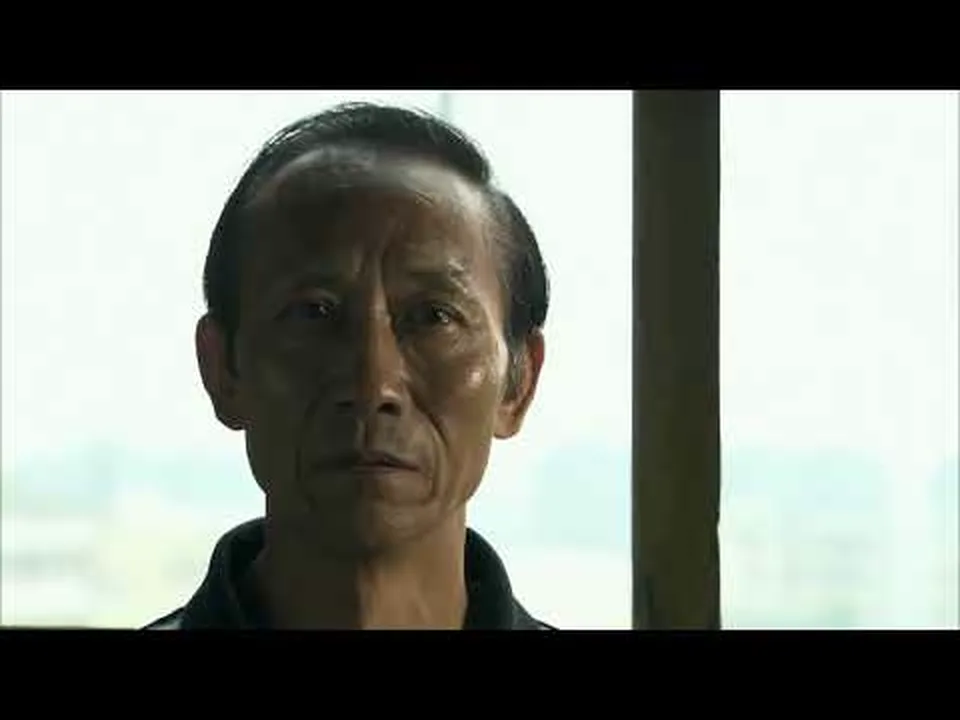
The speaker faces the camera as the background compresses into a few lines. Pauses and gaze perform work usually assigned to narration and captions in an archive.
Open full-size still- Displayed still
- 约 00:27:59
- Feature time
- 约 00:27:59
The three images are automatically sampled frames from the user-supplied 1:51:56 YouTube page; jump positions follow that page. Playback may be affected by Google's sign-in check.
The film gateway is recorded; this clock retains the guide's approximate locator.
Image
The speaker faces the camera as the background compresses into a few lines. Pauses and gaze perform work usually assigned to narration and captions in an archive.
Relation to the concept
The past no longer appears as one completed total story. It is actualized from a particular sheet of past accessible to one body.
Sources and further reading
- Deamer research entry
Taxonomic discussion on pp. 325–327
- Compare Still Life
How the same transformation moves from testimony to demolition space
- Jonathan Rosenbaum essay
Close reading of actors, nonactors, and historical displacement
- Film Comment interview with Jia Zhangke
The director on cinema recording and becoming memory
In the Mood for Love
花樣年華 (2000)
Atlas shot reading
The secret leaves the person and remains in a place
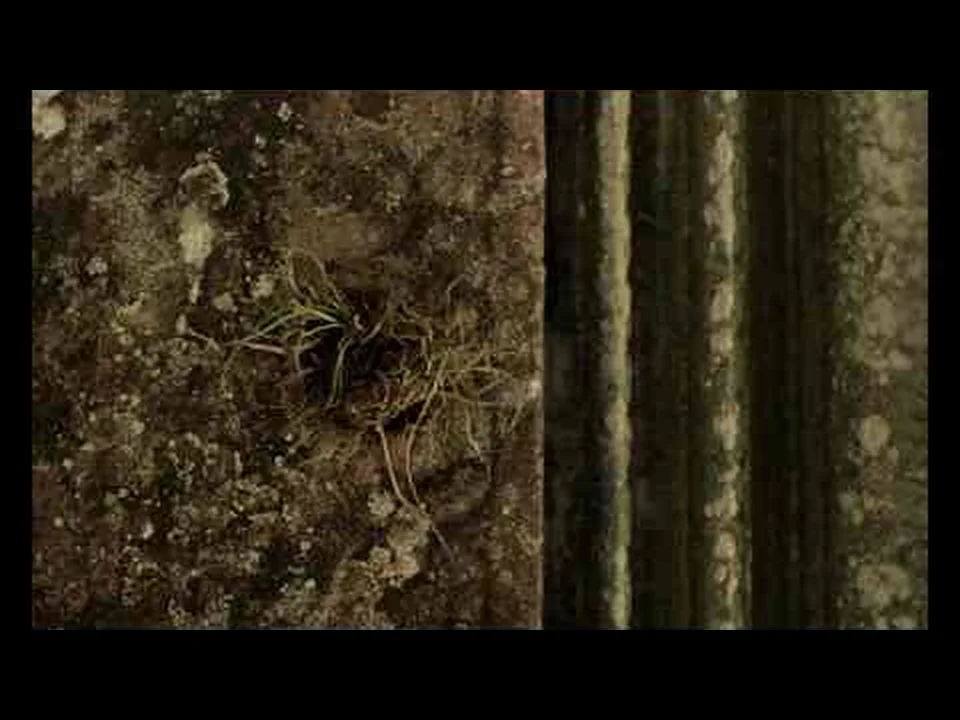
Chow speaks his secret into a wall-hole and seals it with grass and mud. After he leaves, the camera remains with stone, fissure, and vegetation.
Open full-size still- Displayed still
- 04:31:20
- Feature time
- 01:31:15
The feature occupies 03:00:05–04:38:40 of the Bilibili page. Cards show both feature time after subtracting the three-hour lead-in and carrier-page time.
The still and link retain the film guide's recorded shot locator.
Image
Chow speaks his secret into a wall-hole and seals it with grass and mud. After he leaves, the camera remains with stone, fissure, and vegetation.
Relation to the concept
The past no longer belongs only to private memory. It remains as a virtual face borne by an actual site, where preservation is also an irreversible alteration.
Sources and further reading
- Rushton guide, pp. 145–149
Close reading of slow motion, corridors, and déjà disparu
- Actual, virtual, and crystal dossier
Carry the three scenes into the full argument
- Criterion essay by Charles Yu
Another reading of time, missed relation, and repetition
- Compare Kaili Blues
Move from repeated routes to temporal exchange in a continuous take
Long Day’s Journey into Night
地球最后的夜晚 (2018)
Atlas shot reading
The glasses change a viewing regime, not clarity

Luo puts on glasses in a cinema and only then does the title appear; the camera subsequently descends through a tunnel into a continuous space linking mine, pool hall, motorcycle, and cable ride.
Open full-size still- Displayed still
- 01:40:00
- Feature time
- 01:09:52
The user-supplied carrier runs 02:46:55. Unrelated nature/travel padding occupies its first 00:30:08; the target feature is approximately 00:30:08–02:46:55 on the carrier. Carrier time equals feature time plus 00:30:08, and all three jumps are checked on the carrier axis.
The still and link retain the film guide's recorded shot locator.
Image
Luo puts on glasses in a cinema and only then does the title appear; the camera subsequently descends through a tunnel into a continuous space linking mine, pool hall, motorcycle, and cable ride.
Sound
Narrative dialogue yields to footsteps, engine, billiard impacts, song, and spatial reverberation. Sound begins to measure a route instead of dating a recollection.
Relation to the concept
Continuous movement does not prove ‘real time.’ It compresses incompatible ages, identities, and places into one present and makes the spectator’s body part of the temporal circuit.
Sources and further reading
- Actual / virtual / crystal essay
Recheck the film through two faces, exchange point, and actual consequence
- Cinema 2, Chapter 4
Crystal, limpid/opaque exchange, and differentiation of time
- Criterion: viewing regime and long take
Verify the glasses, delayed title, and fifty-plus-minute take
- Film Comment: Bi Gan’s movement through time
Compare its account of routes, memory strata, and camera movement
- Compare Kaili Blues
How the same director redistributes time through another continuous route
Kaili Blues
路边野餐 (2015)
Atlas shot reading
A clock places contrary directions in one image
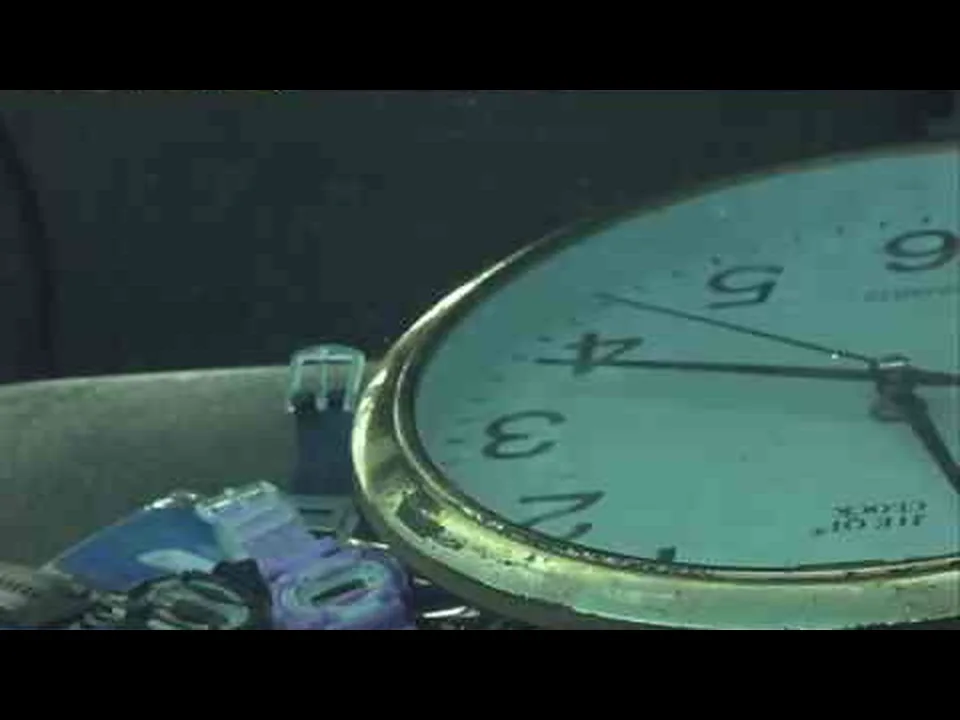
Clock face, glass reflection, moving vehicle, and the backs of figures overlap; the image does not allocate past, present, and future to three separate shots.
Open full-size still- Displayed still
- 03:41:25
- Feature time
- 01:41:30
The user carrier runs 04:50:33. The target film occupies approximately 01:59:55–03:50:00, with unrelated padding on both sides; its first narrative shot appears around 02:00:25. Storyboard review places the celebrated Dangmai take at roughly 02:55:35–03:36:40 on the carrier (about 41:05). The atlas displays both feature and carrier axes.
The still and link retain the film guide's recorded shot locator.
Image
Clock face, glass reflection, moving vehicle, and the backs of figures overlap; the image does not allocate past, present, and future to three separate shots.
Sound
Continuous vehicle and ambient sound carry the fixed clock into motion. The soundtrack does not announce ‘time reversing’; it lets two directions rub against each other in one present.
Relation to the concept
The reversed clock is not a self-sufficient symbol. Together with route, reflection, and exchanged watches it forms a contact surface between sheets of past and peaks of present, from which the future is reimagined.
Sources and further reading
- From temporal directions to actual / virtual
Test exchange instead of treating the reversed clock as a single symbol
- Cinema 2, Chapter 5
Sheets of past, peaks of present, and searches through memory
- MCLC review of Kaili Blues
Verify the continuous route through motorcycle, pickup, ferry, barbershop, and concert
- Minnesota: distinguishing the two long takes
Avoid confusing the title passage near minute 29 with the forty-one-minute Dangmai take
- Compare Long Day’s Journey into Night
Move from relayed transport to a 3D viewing regime and continuous dream-space
Films and scenes
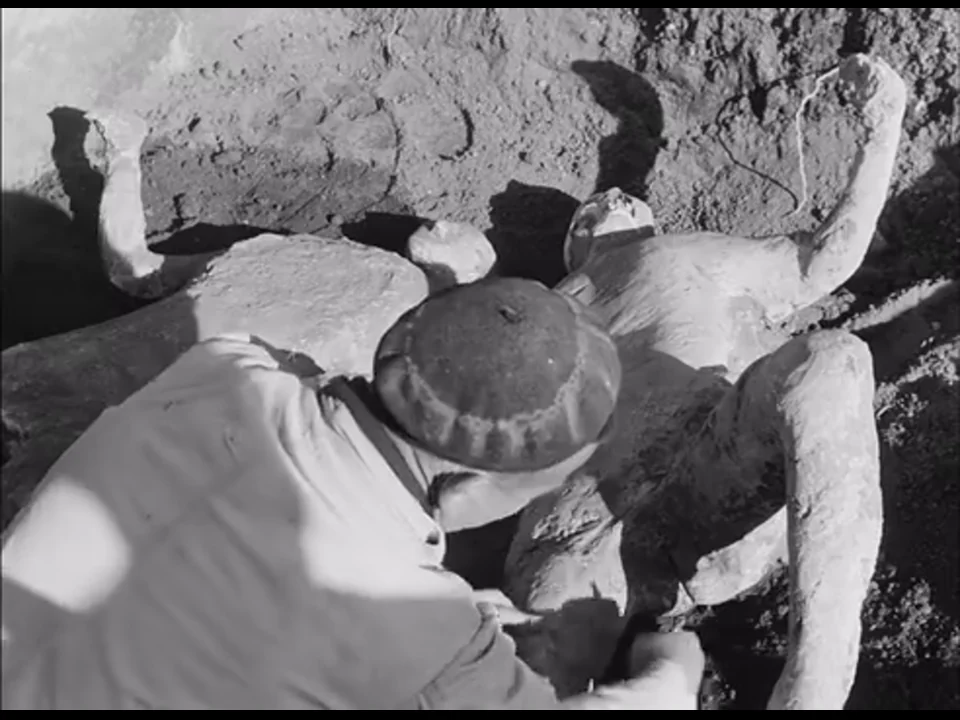
Countertest: the casts bring the historical pressure of death into the present, but archaeological reconstruction and affective shock do not yet constitute Bergsonian sheets of past. Recollection would also need to enter coexisting virtual regions and search, change sheets, or fail within them.
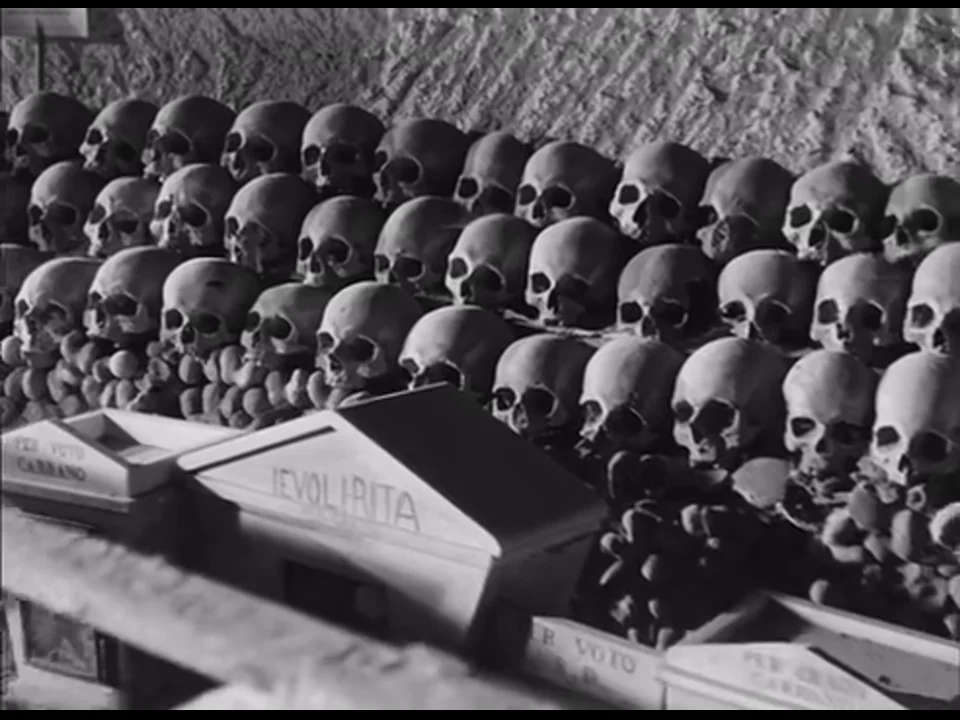
Adjacent reference: war dead, anonymous remains, and an unborn child bring several historical times into one site, but a site's stratification is not the coexistence of virtual pasts. Unless recollection is shown searching among different virtual regions, the scene supplies historical pressure only.
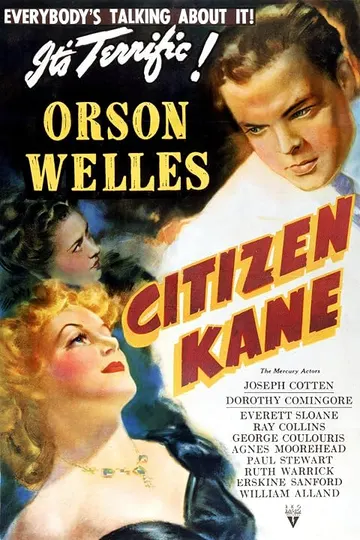
The testimonies do not reconstruct one complete biography; they repeatedly search for Kane from non-equivalent regions of the past.
IMDb identification poster ↗Related film readings · 19 films
Citizen Kane · 1941 · Candidate reading — The testimonies do not reconstruct one complete biography; they repeatedly search for Kane from non-equivalent regions of the past.
Last Year at Marienbad · 1961 — Bifocal structure: Robbe-Grillet organizes incompatible peaks of the present, while Resnais places characters in coexisting sheets of the past.
Hiroshima mon amour · 1959 — Private memory and historical catastrophe remain incommensurable; sound and image place both experiences within one interval, making forgetting temporal structure.
Je t’aime, je t’aime · 1968 — The time machine throws the protagonist among repeatedly contracting sheets of the past; the former present remains irretrievable.
All About Eve · 1950 — Multiple recollections return to conditional points where time might have taken another course, exposing its forks.
A Letter to Three Wives · 1949 — The absent woman’s voice hangs over three marriages at once. Its displaced source and three possible consequences make time fork around one threat.
Mirror · 1974 — Deleuze explicitly calls it a turning crystal: mother and wife, childhood and present, memory and perception exchange actual and virtual positions.
Muriel · 1963 — The Algerian War past remains fragmentary as short montage, rooms, and speech continually transform it across different sheets.
The Magnificent Ambersons · 1942 — Sheets of past remain recallable, but a present transformed by city and automobile makes recollection-images useless for action. Family history can no longer re-enter the present.
The Trial · 1962 — The opening low angle starts Josef K.'s search for an accusation. Women, books, childhood, art, and religion become adjacent sheets of past. The trial has no terminus; a changing series of falsifiers keeps it in motion.
Othello · 1951 — Death supplies a fixed point around which jealousy, testimony, deceit, and memory coexist non-chronologically; Iago turns truth-seeking and judgement into a changing series of falsifiers. Montage organizes both sheets of past and relations of force.
Russian Ark · 2002 — The single take turns the Hermitage into traversable sheets of the past, carrying history beyond a linear present.
24 City · 2008 — Factory 420 is being demolished, so the place named by testimony disappears from the image while it is being narrated. Workers and performers including Joan Chen, Lü Liping, and Zhao Tao share the same frontal interview form. The film neither lets professional identity settle truth nor equates performance with deceit; dialect, pause, facial detail, old photographs, popular songs, and demolition dust test one another. Here the power of the false does not abolish history. It forces history to acknowledge that urban memory can only be produced among heterogeneous tellings.
In the Mood for Love · 2000 — Su goes for noodles and Chow waits on stairs and corridors; the same music returns similar routes while distance, glance, and hesitation quietly change. When they act out how their spouses began the affair or how a confrontation might unfold, a scene often reveals only midway that it is rehearsal. The unactualized conversation thus determines what they can still say in actual life. The cavity at Angkor Wat preserves not a completed romance but a relation already becoming memory as it occurs and still continuing to act.
Kaili Blues · 2015 — Criterion: the Dangmai sequence lets search, past, future premonition, and spatial traversal coexist within one present.
Long Day’s Journey into Night · 2018 — Criterion: whether dream repairs action or opens an indiscernible actual/virtual circuit.
Providence · 1977 — The sick writer’s coughs, thunder, gunshots, and fictional characters translate into one another through montage; body, history, and weather become sheets of one brain-world. The morning gathering does not debunk the night’s fiction but composes a transverse sheet across it.
Readings in the same thematic group
Late Spring · 1949 — The vase still life intervenes between the daughter’s smile and tears, placing change within time’s unchanging form.
Journey to Italy · 1954 — Katherine is struck by unfolding landscapes and visual clichés, discovering something beyond what she can personally bear. She no longer resolves what she sees through action but becomes a seer.
Criteria
Identify the present problem that triggers recollection, then trace how the figure enters, changes, or fails to reach a region of the past. If a flashback merely supplies causal information and returns to one timeline, it remains a causal flashback.
Distinctions and counterexamples
A chronological flashback that supplies a cause and restores one timeline is not a sheet of the past. Mutual incompossibility is not the test here either; it belongs to peaks of the present.
Common confusion: An archive, old footage, childhood scene, or nonlinear order is not by itself a sheet of the past. Analysis must show how the past as a whole coexists with the present and why recollection enters this region rather than another. Ordinary information retrieval can still serve action.
Texts and sources
Cinema 2, ch. 5, pp. 98–125 (Minnesota 1989); Bergson, Matter and Memory, ch. 3
- 01Matter and Memory
Foundational for the universe of images, perception, bodily interval, pure past, memory cone, and actual/virtual relations.
View source and edition → - 02Cinema 2: The Time-Image
Authoritative source for the standard translation, translators, ISBN, and publication date.
View source and edition →
Research disagreements
Replacement or coexistence?
The time-image reverses the subordination of time to movement; both regimes persist and can shift locally within one film.
How does temporal rupture become political?
Test non-linearity through rights to see, the distribution of waiting, and ownership of the past; its effects can include nostalgia, trauma markets, control, or paralysis.
How do we use Deleuze precisely?
Test four layers: sensory-motor relation, actual/virtual circuit, audio-visual connection, and regime of truth.
Where contemporary images push this concept

Counterexample against conceptual overreachCandidate reading · versioned passage review pending
After Yang: memory is not one life-line
Yang's memory bank is first an actualised technical archive, not a Bergsonian sheet coexisting in the virtual past. The countertest requires sequence-level distinction among stored clips, Jake's act of recollection, and any past regions that genuinely act upon one another in the present.
Scope and limits If the fragments fill a character secret in causal order and finally serve family reconciliation, the database is only a technical shell for flashback; the relation holds only when past layers retain difference and alter present relations.
- A24: After Yang official film pageDistributor film page · film factsThe official synopsis does not state every memory-bank detail; scene analysis requires a specific edition.
- Sukchang Lee: Memory embodiment in After YangPeer-reviewed article · AI, memory, and humanityThe abstract supports a research direction; full text and film edition still need checking, and it does not prove machine consciousness.
A concept relation that remains contestedCandidate reading · versioned passage review pending
With Hasan in Gaza: the future-perfect old recording
The three MiniDV tapes are actual archival carriers, not sheets of past. The contested relation concerns whether reviewing and recutting make the moment of filming, the period of dormancy, and viewing in 2025 into past regions that act upon one another, rather than converting tape count into sheet count.
Scope and limits If later captions retroactively make catastrophe a prophecy already contained at filming, coexistence of sheets is flattened into one hindsight narrative; contemporaneous fact, later event, and present edit must remain distinct.
- Marrakech International Film Festival: With Hasan in GazaFestival official page · edition and footage factsThe festival synopsis establishes the work and footage trail, not any Deleuzian concept; shot relations still require a specific release edition.
- International Documentary Association: Aljafari on With Hasan in GazaDirector interview · tape discovery and editing processThe edited interview is the director's first-person account of the footage history; it does not replace a tape inventory, release copy, or timecode verification.
- Pisters: The Neuro-Image guide and author pageScholarly monograph · author page and local PDFAuthor description and book synopsis are not independent film facts; concept pages must be checked against the published edition.
Counterexample against conceptual overreachCandidate reading · versioned passage review pending
Dahomey: restitution is not a return to the origin
Colonial possession, museum conservation, and restitution debate are traceable institutional histories and should not be renamed Bergsonian sheets of past. For the film to enter this concept, recollection must be shown searching, changing sheets, or failing among coexisting virtual regions.
Scope and limits If restitution is narrated as return to a pure origin, erasing debate, institutions, and redisplay after transport, layered past becomes a myth of linear repair and the conceptual relation should be withdrawn.
- Unifrance: Dahomey film page and press kitOfficial material · restitution and edition factsThe press kit is production material; object voice and community response must remain distinct from independent historical sources.
- Rita Keresztesi: Reinventing the archive in AfricaPeer-reviewed article · restitution and archival lifeThe article is a theoretical and historical bridge, not a substitute for shot records of objects, sound channels, and debate.
Concepts to distinguish
Compare them
- Peaks of the presentpointes de présent
Peaks of the present make several mutually incompossible presents persist as present and thereby deactualize the single continuous and decidable 'real present.' This is not a set of viewpoints upon an already settled event. The image sustains mutually exclusive present worlds without an external master version that can reduce the others to errors.
→ - Chronosignchronosigne
Chronosign is the superordinate classification used when temporal relations directly organize the connection of images rather than merely measuring or resulting from action. Chapter 5 distinguishes two branches that are distinct and non-interchangeable: sheets of past make the virtual past coexisting with the present into regions of recollection-search, while peaks of present sustain incompossible presents and deactualize the single present. Both are signs of direct time, but they answer different problems.
→ - Powers of the falsepuissances du faux
Narration abandons a recoverable model of truth and lets characters, testimonies, memories, and worlds mutate through a series of falsifiers. The false gains creative power by freeing itself from a model of truth.
→ - Falsifying narrationnarration falsifiante
Characters and narrative positions escape calibration by an omniscient centre. Each falsifier refers to another, while identity and past mutate according to degrees of power.
→