
Roberto Rossellini / 罗伯托·罗西里尼 · 1954
Journey to Italy
Viaggio in Italia
Katherine is struck by unfolding landscapes and visual clichés, discovering something beyond what she can personally bear. She no longer resolves what she sees through action but becomes a seer.
Film details
- Original title
- Viaggio in Italia
- Director
- Roberto Rossellini / 罗伯托·罗西里尼
- Year
- 1954
- Region
- Italy / France
Film analysis: how shots organize concepts
The technical operation successfully restores bodily contours while depriving the watching couple of their capacity to keep bearing the sight. Bilibili timecode 01:15:10.
Workers use trowels, brushes, and hands to remove volcanic material; pale plaster gradually exposes a head, teeth, arms, and legs against dark soil.
Two adjacent bodies are identified as a man and a woman; the film alternates among the remains and Alex's and Katherine's responses.
The on-site commentary explains how plaster fills the cavity left after a body disintegrates and successively identifies legs, arms, skull, and teeth.
Tools continue scraping soil; after the observers suggest the two may have been husband and wife, Katherine says she cannot bear it and asks to leave.
SITE ANALYSISTechnical reconstruction's success and sensory-motor response's failure must both remain visible; neither the bodies nor the couple alone is sufficient.
Bilibili at 01:15:10 Open original still ↗Frame-checked against the single-part Bilibili repost stream BV1h5MVzfEdW: the page API reports 5,141 seconds, while the retrieved qn16 media runs 5,140.78 seconds at 492×360. Player v2 supplies no usable subtitle track; English dialogue sense was aligned by scene content with an English SDH subtitle file from the Criterion Blu-ray. Every timecode follows the Bilibili carrier.Complete single-part film on Bilibili; the page, anonymous Player API, media bytes, and full 5,140.78-second duration were verified. Submission label: repost.
Bilibili · Steppenwolffff · public repost page · verified 2026-08-13Close-reading questions
As Katherine encounters caves, lava, museums, and the remains at Pompeii, how does landscape cease to be tourist background and become a temporal pressure of death, pastness, and marital crisis that action cannot dispel?
- 01At which moments do museum statues, volcanic landscape, and the bodies at Pompeii prevent Katherine from converting sight into marital action?
- 02When does the couple's movement cease to compose a travel-goal and become a seer's route compelled by places?
Shots, relations, and concepts
- 1Record
Katherine follows a guide through the galleries as dancers, a satyr, the drunken faun, imperial heads, and monumental nudes successively occupy the image. The guide continuously names works, excavation sites, and biographical anecdotes in English; his voice repeatedly carries over close views of the statues.
Open the scene currently used to ground this chain: Monumental bodies reduce the tourist to a seer - 2Judge the relation
The tour keeps moving, but no body is used up by the next item of information; Katherine can only continue seeing. Herculaneum, Pompeii, and imperial Rome return without flashback, pressing directly into her present through preserved bodies.
- 3Name the concept last
The seer、Pure optical / sound situation. Only concepts whose scene relation resolves to “supports” under the current record are named here; candidates, adjacent terms, and countertests are not merged into the conclusion.
- 4Countertest
Statue and viewer must form a repeated alternation, and Katherine's response must fail to extend naturally into action that changes the situation.
Shots and scenes
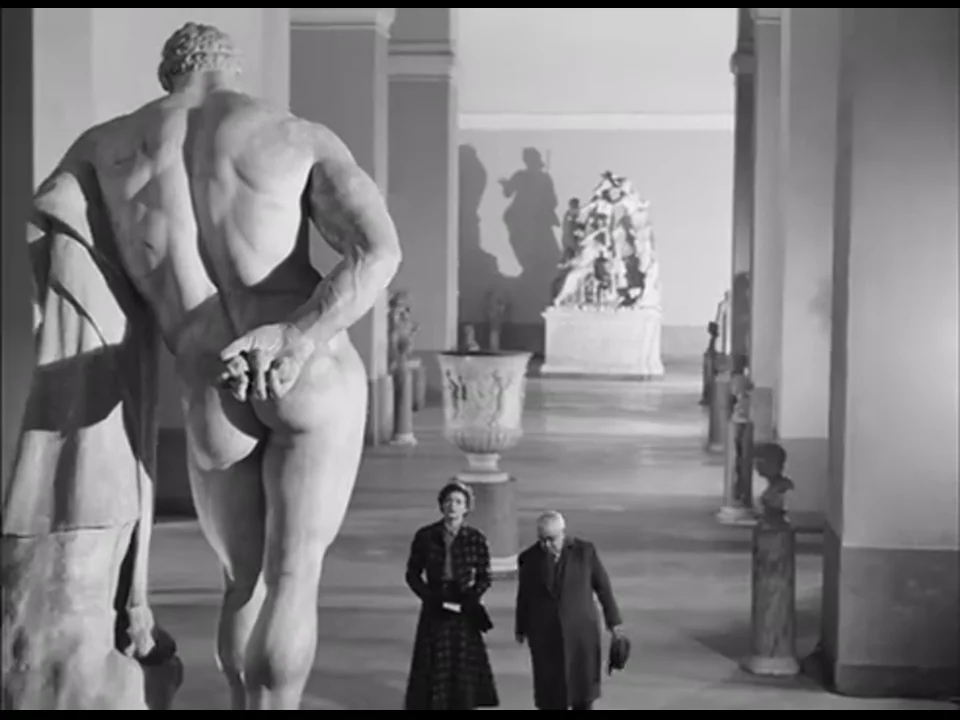
Statue and viewer must form a repeated alternation, and Katherine's response must fail to extend naturally into action that changes the situation.
Open viewing position ↗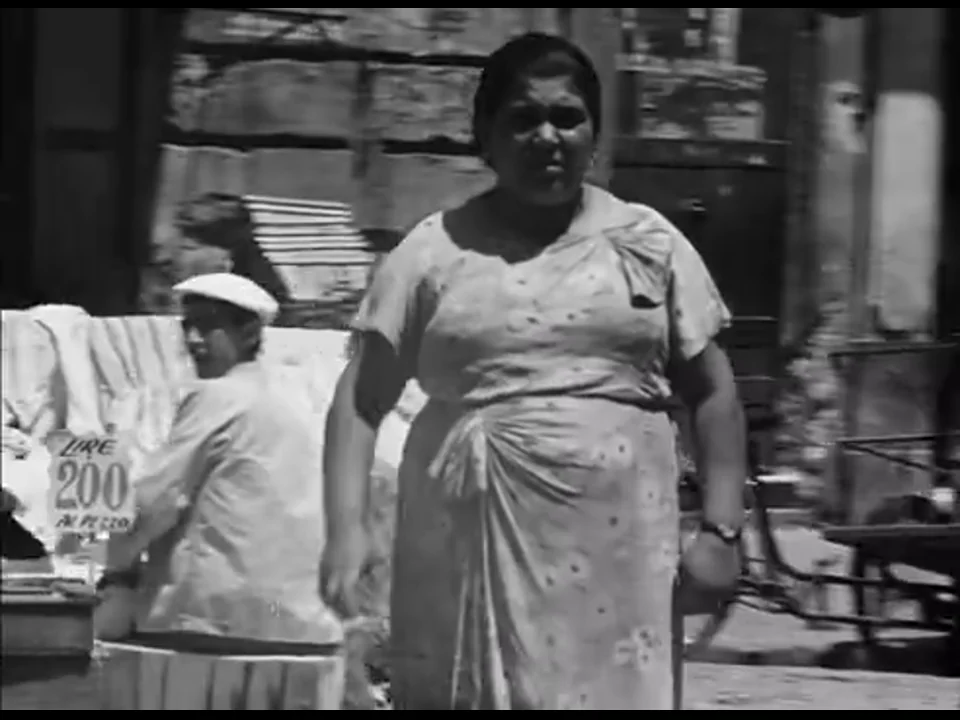
Multiple independent street views, Katherine's reaction shots, and the unchanged route must all be checked; the concept cannot be inferred from one passer-by.
Open viewing position ↗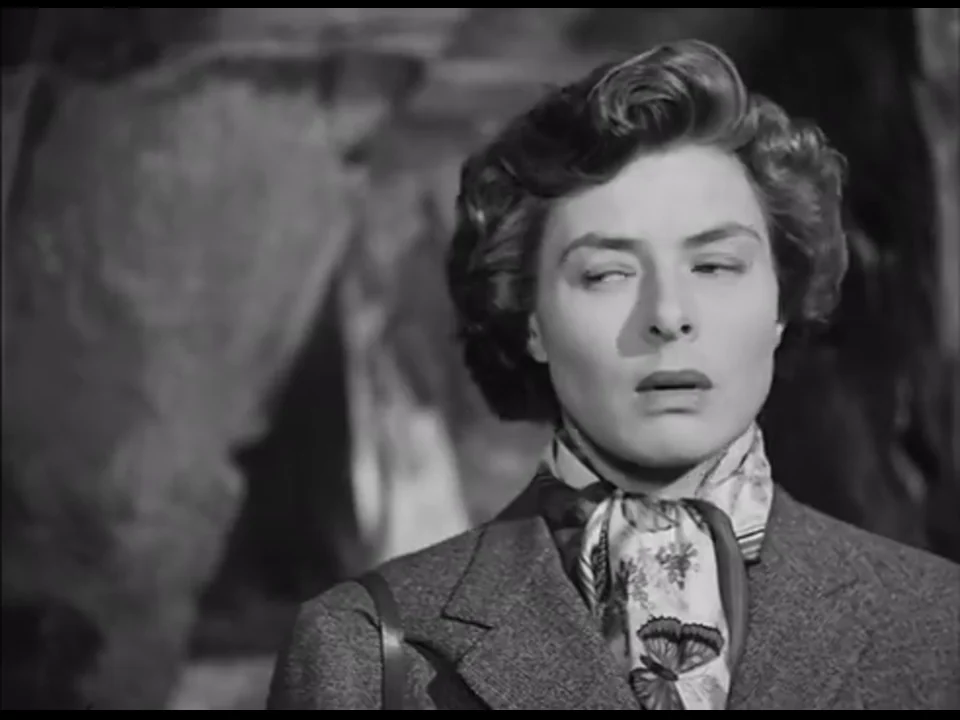
The echo must audibly return, while the prophecy of love must fail to become an answer Katherine can execute within the scene.
Open viewing position ↗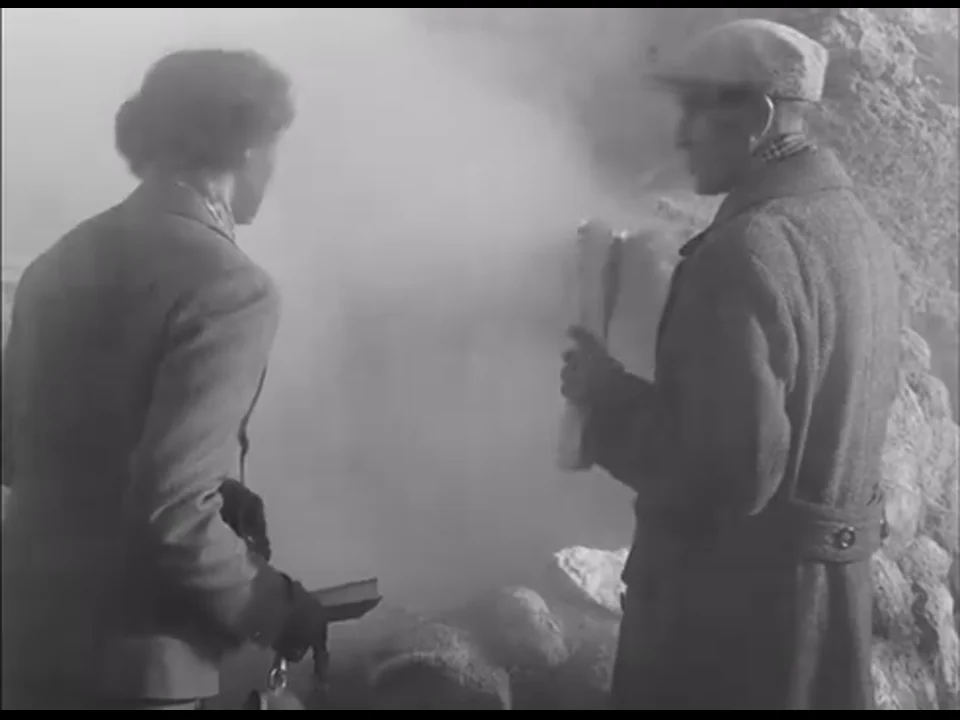
Steam must repeatedly conceal and reveal the figures within the same scene, while commentary fails to eliminate this rupture in visibility.
Open viewing position ↗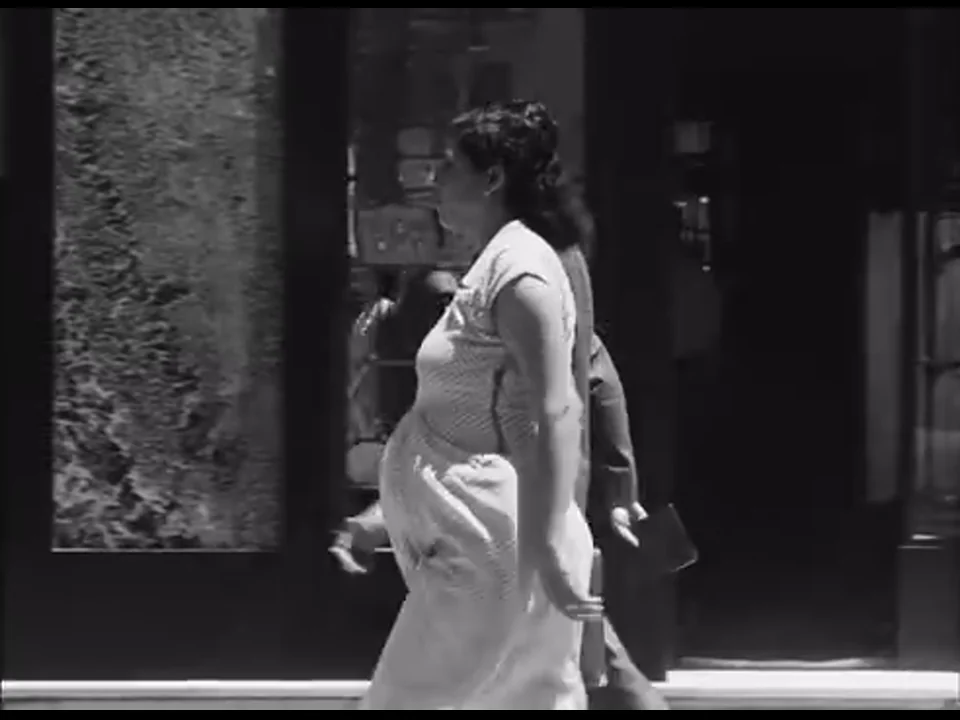
The spoken count must be compared with the solitary drive at 00:40:22–00:41:57 for the repetition to acquire structural meaning.
Open viewing position ↗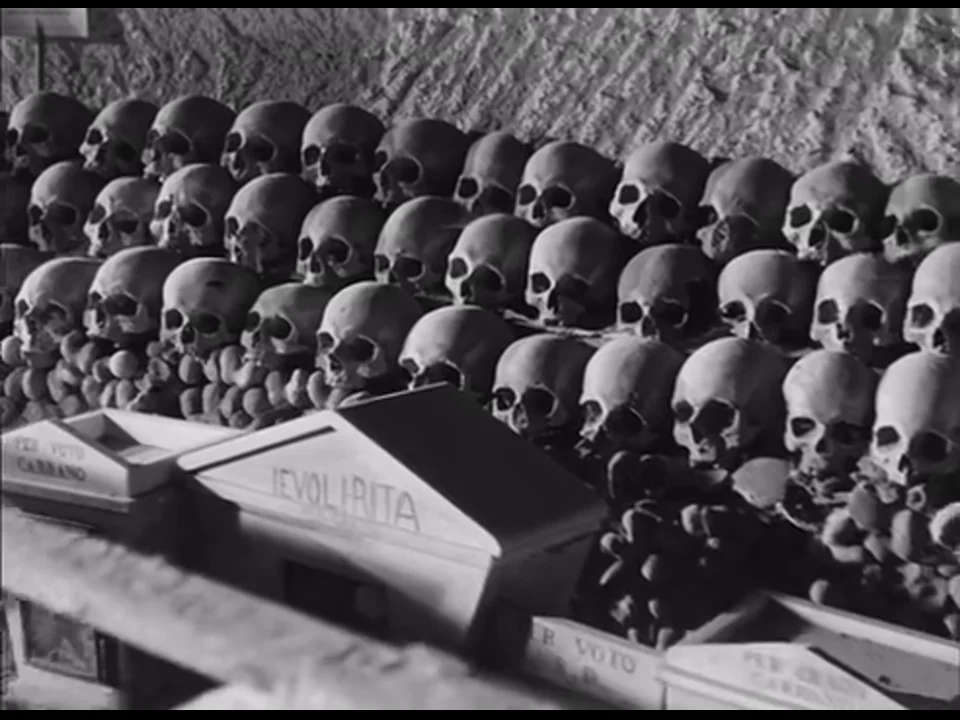
The distinction between visible remains and Natalia's private speech must be preserved; they connect through space and audio-visual relations rather than becoming the same thing.
Open viewing position ↗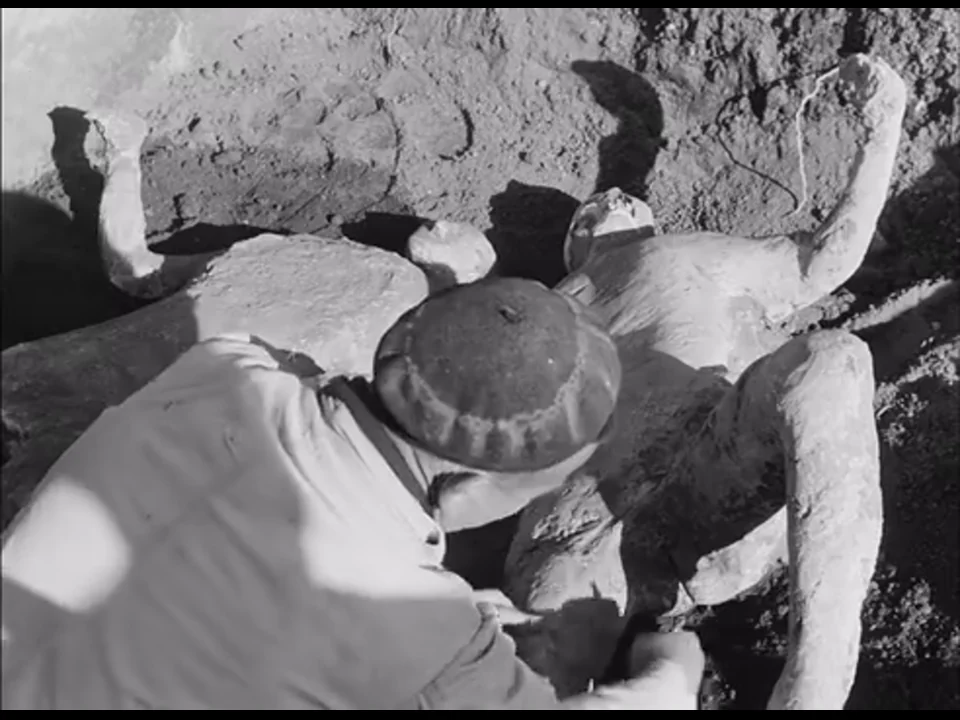
Technical reconstruction's success and sensory-motor response's failure must both remain visible; neither the bodies nor the couple alone is sufficient.
Open viewing position ↗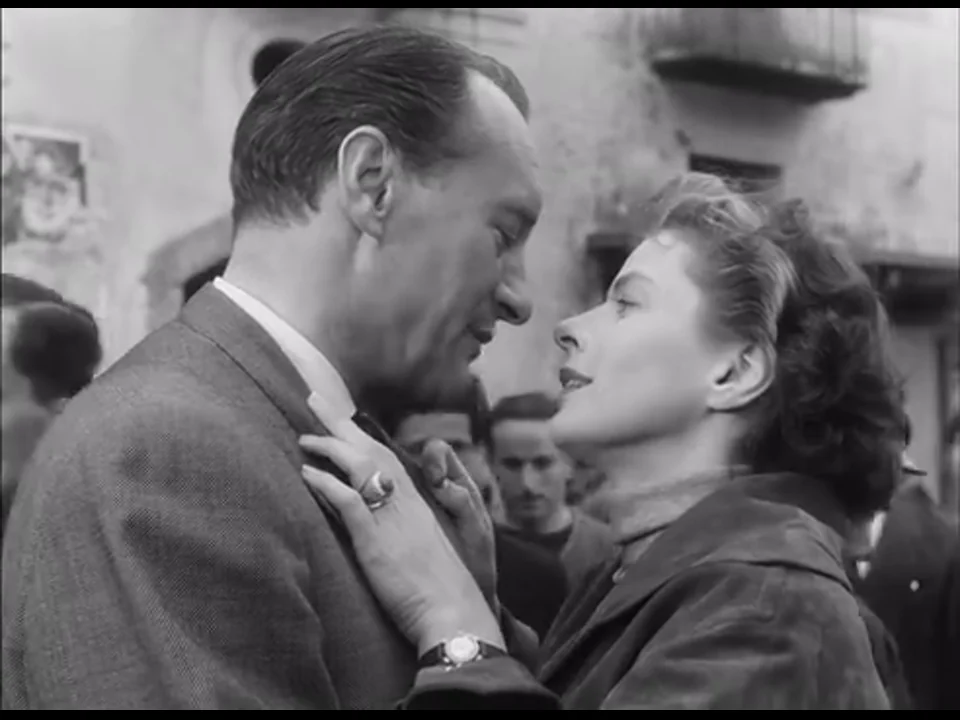
The crowd must visibly cause stoppage, separation, and renewed contact; the final embrace alone cannot establish a restored action-schema.
Open viewing position ↗Primary texts, scholarship, and locators
Theory coordinate: Cinema 2, Minnesota 1989, ch. 1, p. 2 (as The Lonely Woman / Viaggio in Italia)
- 01Cinema 2: The Time-Image
Authoritative source for the standard translation, translators, ISBN, and publication date.
Open the atlas source record →
This film in books and research
Gilles Deleuze : cinéma et philosophie · Atlas analysis
Journey to Italy
Marrati pp. 74–85 · site test
Film relation: This site tests Marrati's postwar criterion in the Pompeii sequence: the more successfully archaeologists cast, clear, and identify two bodies, the less Katherine can convert what she sees into an action adequate to her marriage.
Shot question: What does technical action complete, and what pressure of time remains in Katherine's seeing without being consumed by action?
Conclusion: The success of a local act can expose the failure of the larger action-structure, allowing seeing to acquire autonomous value.
Gilles Deleuze : cinéma et philosophie · Atlas analysis
If movements still finish, why has action already failed?
Marrati pp. 74–85
Claim: The postwar break must be demonstrated as a relation: characters can complete local movements from what they see and hear, yet those acts cannot treat the situation, assume its consequences, or open a next step.
Film relation: The technical operation at Pompeii successfully reveals two bodies yet suspends marital action; reunion in the procession occurs without turning what was seen into a completed solution.
Conclusion: Local success and global failure can coexist; that coexistence is the most testable form of sensory-motor rupture.
Cinema 1: The Movement-Image, French primary edition · Cinema 1, chapter 12Cinema 2: The Time-Image, French primary edition · Cinema 2, chapter 1
Gilles Deleuze : cinéma et philosophie · Atlas analysis
Time already presses into the shot—but is the crystal actually formed?
Marrati pp. 86–101
Claim: Direct time and crystal are not synonyms. A shot may preserve coexisting history, echo, and pressure of death; it becomes crystalline only when actual and contemporaneous virtual remain distinct while exchanging positions.
Film relation: Museum colossi, the echo of the Sibyl's chamber, and anonymous skulls repeatedly let the past act upon Katherine's present; all three show historical pressure entering current perception.
Conclusion: The sequence proves the pressure of direct time but retains assignable present visitor and past remnant; by itself it does not yet establish crystalline exchange.
Cinema 2: The Time-Image, French primary edition · Cinema 2, chapter 4Cinema 2: The Time-Image, French primary edition · Cinema 2, chapter 5
Cinéma 2: L’image-temps
Journey to Italy
Reading relation: Enter the pure optical situation through a character unable to master what she sees.
Gilles Deleuze : cinéma et philosophie
Journey to Italy
Reading relation: Return failed action, seeing, and belief in the world to a concrete film.
Sensory-Motor Rupture: How a Character Becomes a Seer
The act is completed; the situation remains unmastered
Claim: Rupture occurs between local motor success and the failure of the action-chain as a whole.
Conclusion: Record perception, ensuing movement, and alteration of the situation. Rupture is established when movement is completed but the situation remains untreated.
Cinema 2: The Time-Image · ch. 1, p. 2Cinema 2: The Time-Image · p. 2Gilles Deleuze: Cinema and Philosophy · pp. 56–57
Sensory-Motor Rupture: How a Character Becomes a Seer
The situation produces the seer
Claim: The seer is intensely receptive: the character sees more because inherited recognition and response no longer govern the visible.
Conclusion: Test whether seeing changes the character's perceptual regime: do inherited recognition, task, and response cease to distribute meaning?
Cinema 2: The Time-Image · ch. 1, pp. 2, 20–21; ch. 3, pp. 45–46Deleuze on Cinema · pp. 107–113Gilles Deleuze: Cinema and Philosophy · pp. 57–61
Sensory-Motor Rupture: How a Character Becomes a Seer
Technical success / personal inadequacy
Film comparison: The Pompeii operation succeeds while Katherine's marital action cannot extend.
The Crystal-Image: How Actual and Virtual Exchange
Crystalline states determine how the circuit continues
Claim: Shattering, enclosure, turning, and decomposition are formal states of the circuit that determine temporal direction, not mood labels.
Conclusion: Record how the circuit terminates, shatters, grows, turns, or decomposes; the change of state gives its temporal direction.
Viewing gateways and editions
- Verified complete Bilibili carrier: 游览意大利 Viaggio in Italia (1954)bilibili.comOpen film page ↗
- Page access
- Accessible when checked
- Version extent
- Recorded as a complete version
- Source type
- User-uploaded page
Edition note: Complete single-part film · 1:25:41.
Link checked: 2026-08-13