
Bi Gan / 毕赣 · 2015
Kaili Blues
路边野餐
Criterion: the Dangmai sequence lets search, past, future premonition, and spatial traversal coexist within one present.
Film details
- Original title
- 路边野餐
- Director
- Bi Gan / 毕赣
- Year
- 2015
- Region
- China
Film analysis: how shots organize concepts
How does Kaili Blues’ forty-one-minute take produce time rather than merely display an absence of cuts?
The Dangmai passage relays motorcycle, pickup, ferry, barbershop, live performance, and exchanged watches within one movement. Continuity does not fix everything in one present; it lets Chen Sheng’s search, Weiwei’s possible future, the resemblance to his dead wife, and local everyday life exchange positions en route. Time arises from those positions rewriting one another, not from duration alone.
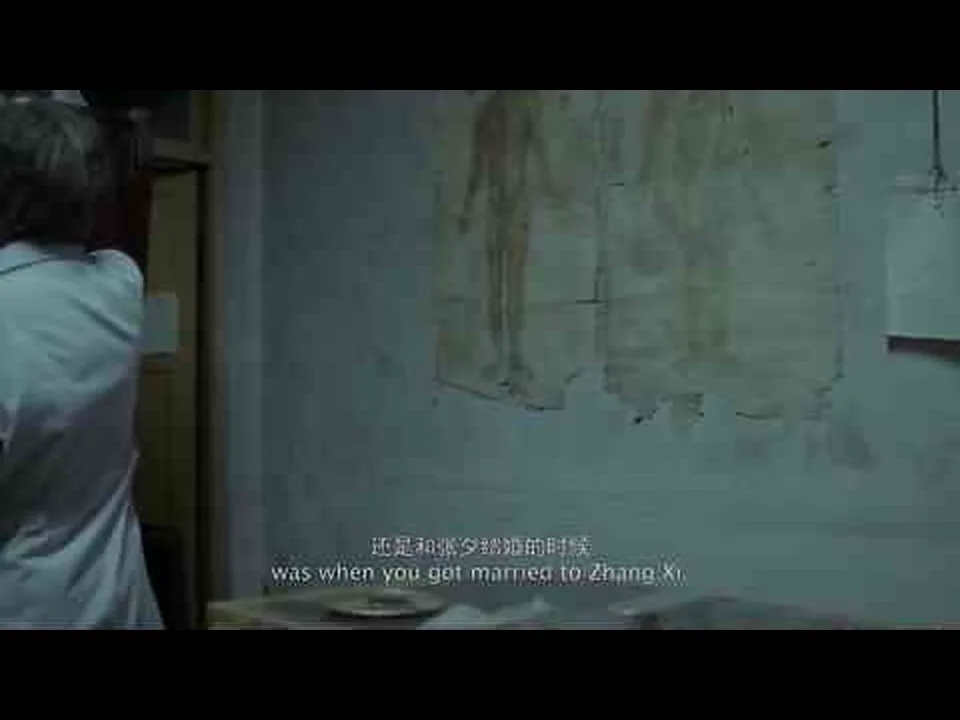
Clinic, television report about a ‘wild man,’ walls, patients, and Chen Sheng’s daily work share one cramped space; local rumour and practical affairs are not separated into different worlds.
Broadcast sound, clinic conversation, ambient noise, and poetry originate differently yet overlap in one present; sound first perforates the image with several temporal entrances.
A pure optical and sound situation does not require all action to cease. Perception already exceeds current tasks such as treatment or search, and the place begins to bear a past not absorbed by action.
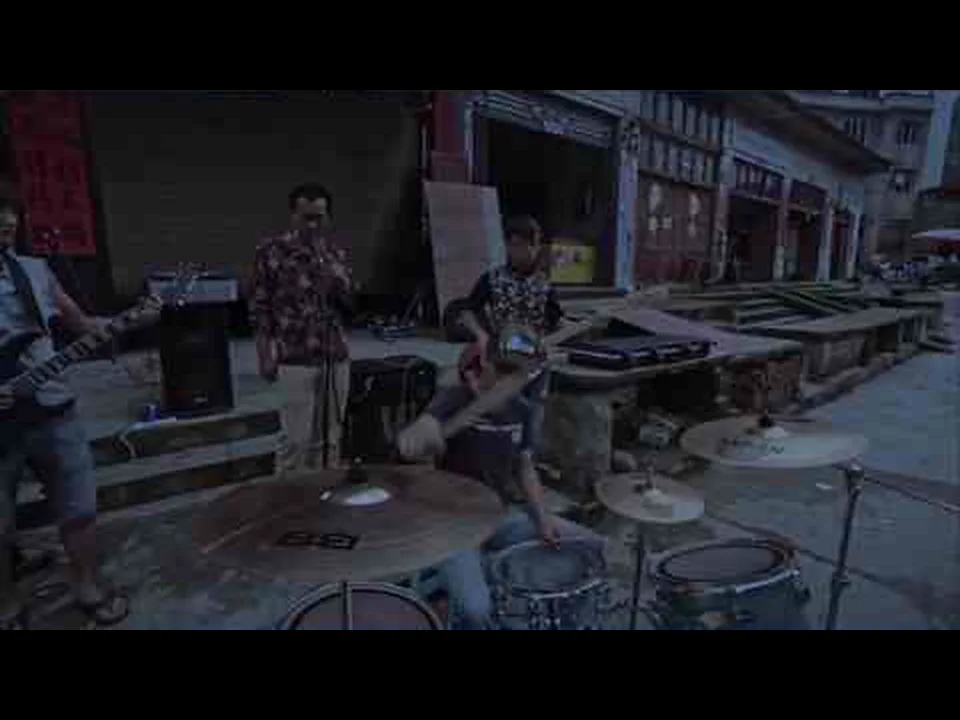
The same continuous passage has already travelled by motorcycle, pickup, ferry, and barbershop before reaching an outdoor band; its route continues only through other people’s work and vehicles.
The live song ‘Little Jasmine’ occupies public space and changes with the camera’s distance; it is not score but a local event that can be entered and left.
The take gives time to relay: every encounter provisionally redirects the route. Its enduring present is not a homogeneous container but an open field repeatedly reoriented by others, technologies, and virtual futures.
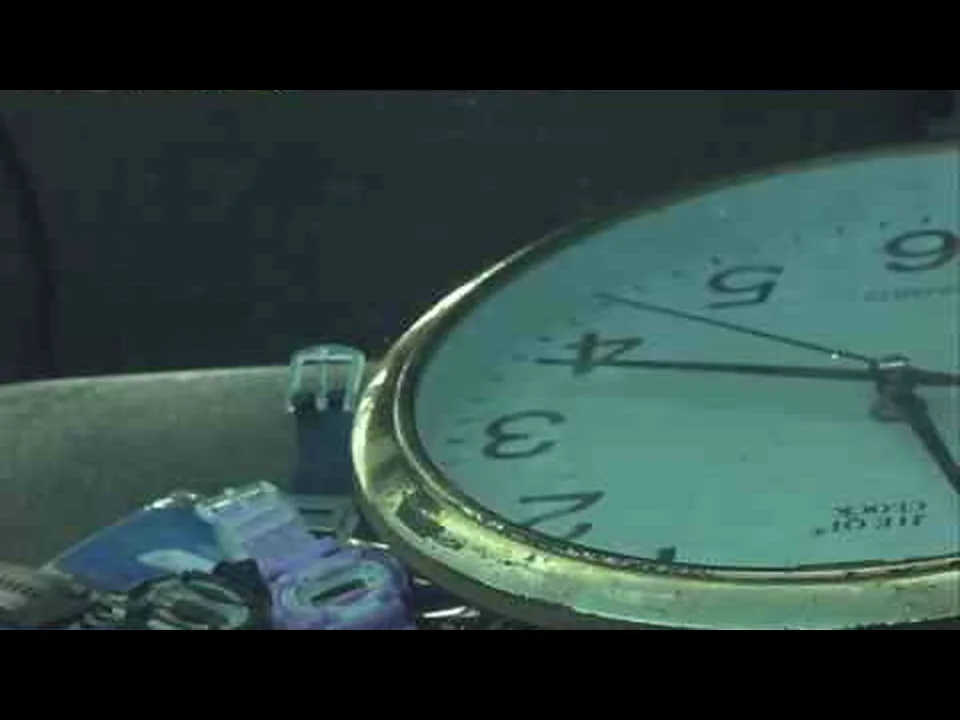
Clock face, glass reflection, moving vehicle, and the backs of figures overlap; the image does not allocate past, present, and future to three separate shots.
Continuous vehicle and ambient sound carry the fixed clock into motion. The soundtrack does not announce ‘time reversing’; it lets two directions rub against each other in one present.
The reversed clock is not a self-sufficient symbol. Together with route, reflection, and exchanged watches it forms a contact surface between sheets of past and peaks of present, from which the future is reimagined.
EDITION NOTE The user carrier runs 04:50:33. The target film occupies approximately 01:59:55–03:50:00, with unrelated padding on both sides; its first narrative shot appears around 02:00:25. Storyboard review places the celebrated Dangmai take at roughly 02:55:35–03:36:40 on the carrier (about 41:05). The atlas displays both feature and carrier axes.
The Dangmai long take does not arrange past, present, and future in sequence; it lets different ages, wishes, and objects provisionally exchange positions within one duration.
- 01The journey carries several pasts
Chen Sheng enters Dangmai carrying the search for Weiwei, the old doctor's request, memory of a former lover, and a photograph, cassette, and shirt to deliver to the doctor's former lover.
The action-goal is already occupied by several pasts; the journey cannot unfold through search causality alone. - 02The long take lets times exchange
Motorbike, walking, ferry, and song pass the camera among figures; the young Weiwei and a woman hairdresser who resembles Chen Sheng's late wife seem to occupy others' past or future positions.
Unbroken space does not guarantee one present; it lets several temporal layers actualize at once. - 03Objects leave temporal anchors
Watches, pinwheel, train motif, and reversed clock return around the long take without restoring a single timeline.
Sheets of past and peaks of present touch through objects, leaving time perceptible but not totalizable.
Close-reading questions
- 01How do cassette, poems, watches, train, and the Wild Man rumour carry what has happened into Chen Sheng's present search? Which returns are never marked as flashbacks yet keep changing how present figures and places must be recognized?
- 02The Dangmai long take moves continuously through motorcycle, rooftops, clinic, river, and song while the temporal positions of the youth, Weiwei, Yangyang, and Chen Sheng keep sliding. Why does unbroken space still fail to prove that they share one present?
- 03Where do wristwatch, wall clock, turning windmill, returning song, and train become temporal anchors? What material recurrences are erased if the long take is called merely a dream, and what future premonitions remain unplaceable if it is only a real journey?
Analysis and scene sources
Shots and scenes
Primary texts, scholarship, and locators
Theory coordinate: Editorial research proposition requiring shot-level analysis
Consult the primary-text locator above.This film in books and research
Sheets of Past and Peaks of Present: How the Order of Time Enters the Image
Temporal relation takes over image linkage
Claim: A chronosign appears when coexistence of sheets or simultaneity of peaks directly organizes shots.
Conclusion: Record version, temporal position, mode of evidence, and action-consequence; when temporal relation links shots directly, the order of time becomes an image principle.
Cinema 2: The Time-Image · ch. 5, pp. 116, 118, 120, 122–123Deleuze's Cinema Books · pp. 151–156
Sheets of Past and Peaks of Present: How the Order of Time Enters the Image
Can database operations reorder the visible past?
Claim: The atlas proposes a hypothesis that still requires version-bound evidence: retrieval, refresh, and predictive interfaces may reorder how recorded material enters a present decision. An actual database is not the virtual past, and content juxtaposition is not a peak of present. The bridge gains evidence only when a versioned operation changes an actual relation among body, memory, or choice.
Conclusion: Keep two ledgers: one for recollection-search or forking presents in the film, another for database version, retrieval, and feedback. Then draw the three-step chain—visible present, retrieved material, next choice. The two relations can be compared but not identified.
Gilles Deleuze's Time Machine · ‘Time and Memory: Orders and Powers,’ pp. 79–120The Neuro-Image · Chapters on brain-screen and database time
Sheets of Past and Peaks of Present: How the Order of Time Enters the Image
Temporal anchors in a long take
Film comparison: Tests both orders by tracing how past and future alter present action.
Viewing gateways and editions
- Verified Bilibili feature interval: 正片bilibili.comOpen film page ↗
- Page access
- Accessible when checked
- Version extent
- Recorded as a complete version
- Source type
- User-uploaded page
Edition note: The video runs 4:50:33. The feature occupies approximately 1:59:55–3:50:00, lasting about 1:50:05. Its opening marks begin at 1:59:55, the first narrative shot at about 2:00:25, and unrelated padding resumes after the end credits around 3:50:00. The continuous Dangmai take is approximately 2:55:35–3:36:40. The feature occupies seconds 7195–13800 of the carrier; the URL is positioned at the feature start. The video runs 4:50:33. The feature occupies approximately 1:59:55–3:50:00, lasting about 1:50:05. Its opening marks begin at 1:59:55, the first narrative shot at about 2:00:25, and unrelated padding resumes after the end credits around 3:50:00. The continuous Dangmai take is approximately 2:55:35–3:36:40.
Link checked: 2026-08-26