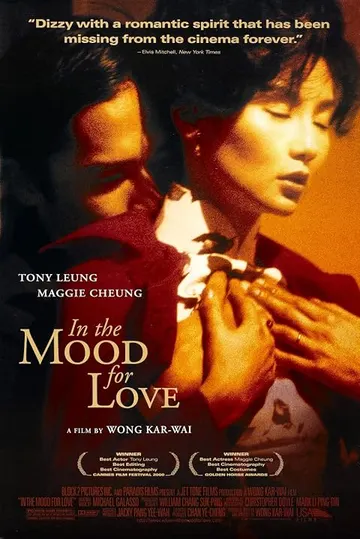
Wong Kar-wai / 王家卫 · 2000
In the Mood for Love
花樣年華
Su goes for noodles and Chow waits on stairs and corridors; the same music returns similar routes while distance, glance, and hesitation quietly change. When they act out how their spouses began the affair or how a confrontation might unfold, a scene often reveals only midway that it is rehearsal. The unactualized conversation thus determines what they can still say in actual life. The cavity at Angkor Wat preserves not a completed romance but a relation already becoming memory as it occurs and still continuing to act.
Film details
- Original title
- 花樣年華
- Director
- Wong Kar-wai / 王家卫
- Year
- 2000
- Region
- Hong Kong
Film analysis: how shots organize concepts
Why does an unrealized relation alter reality more persistently than the affair that actually occurred?
Noodle runs, corridors, music, and role-play repeatedly return the question of who the two might become. The virtual is not an imaginary alternative plot but a real relation changing how they speak, wait, leave, and preserve a secret.
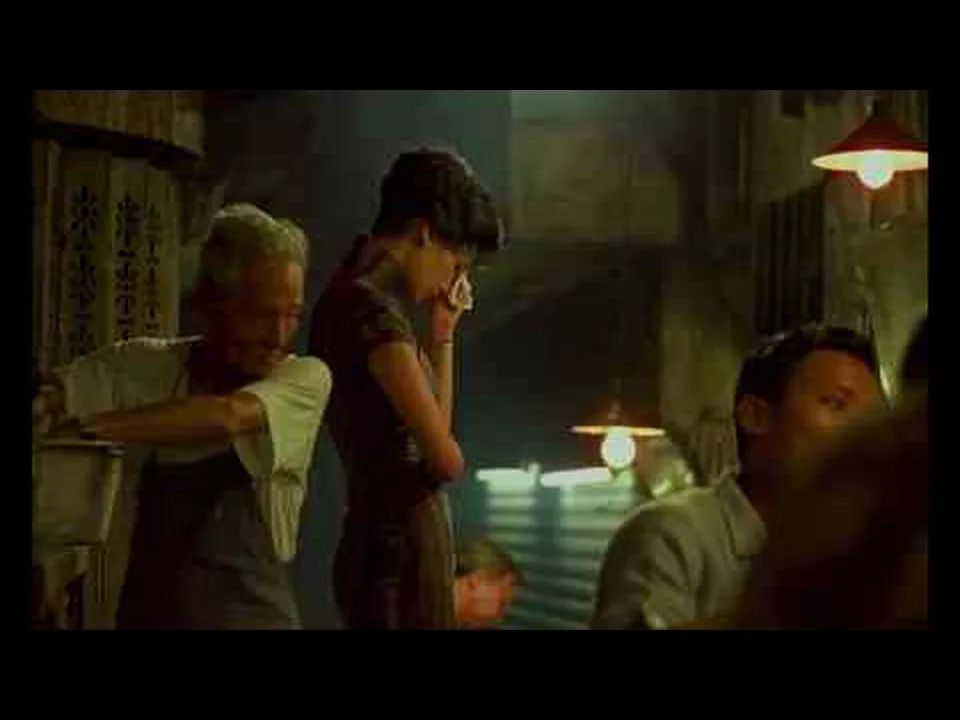
An oval window, narrow stairs, crowded tables, and the same music repeatedly organize passing encounters. The route stays the same while pauses and attention between bodies change each time.
Repetition is not merely an editing shortcut that compresses time. It accumulates, inside actual routine, an unrealized relation already exerting pressure.
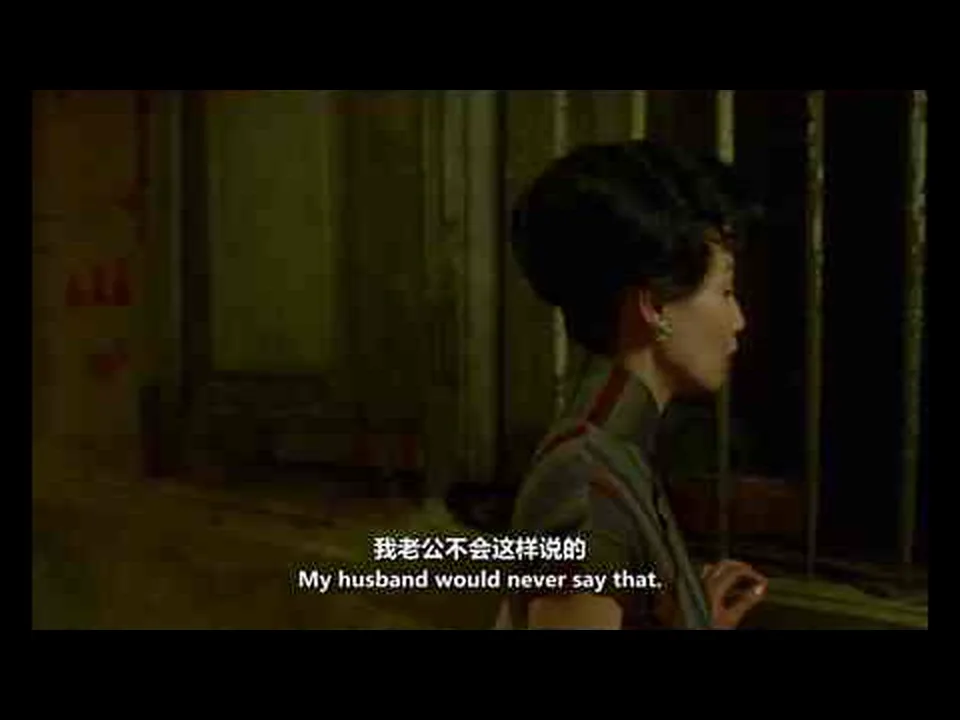
Su interrupts the scene—‘my husband would not say that’—and only after the dialogue has unfolded does the film confirm that each is playing the other's spouse.
The virtual scene is corrected by actual experience and in turn enlarges what the two can actually say and do. The crystal's minimal circuit lies in this reciprocal modification.
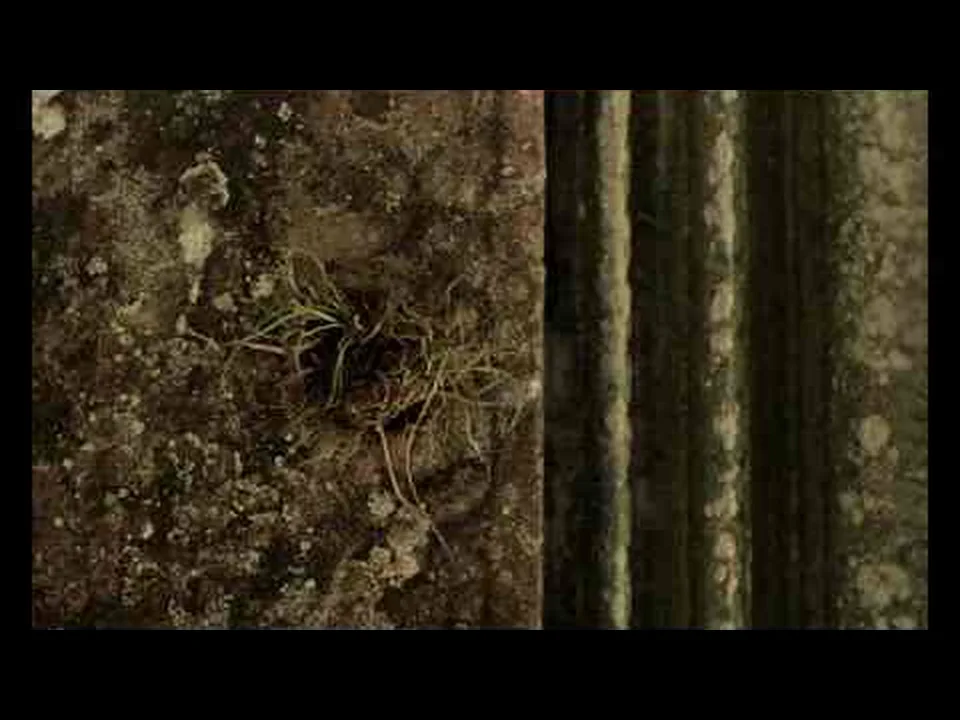
Chow speaks his secret into a wall-hole and seals it with grass and mud. After he leaves, the camera remains with stone, fissure, and vegetation.
The past no longer belongs only to private memory. It remains as a virtual face borne by an actual site, where preservation is also an irreversible alteration.
EDITION NOTE The feature occupies 03:00:05–04:38:40 of the Bilibili page. Cards show both feature time after subtracting the three-hour lead-in and carrier-page time.
Repeated routes and rehearsed dialogue let an unrealized relation remain active within actual life, making memory not hindsight but the virtual face of the present.
- 01Everyday routes begin to repeat
Narrow corridors, stairs, and noodle stall return under the same music as passing, collecting food, and waiting differ slightly each time.
Repetition does more than condense time; it gives the unspoken relation increasing actual pressure. - 02Rehearsal changes the present relation
Chow and Su act out how their spouses began the affair and how confrontation might occur, with scenes only later revealing themselves as rehearsal.
The virtual scene is not a false detour; it changes what the two can actually say and do. - 03The secret becomes material residue
Years later, Chow whispers the secret into a hole at Angkor Wat and seals it with mud; he leaves while the camera remains.
The unrealized relation leaves personal action and persists as a virtual past in an actual site.
Close-reading questions
- 01Take three noodle-run or corridor passages and compare pace, slow motion, bodily distance, and occluding doorframes under the same music. Does repetition preserve one relation, or make the still-unspoken relation more actual each time?
- 02Locate a conversation revealed only midway as the spouses' rehearsal. Which earlier reverse shot first makes it appear to be an actual confrontation? Once rehearsal is disclosed, how does it change what the pair can say and do in actual life?
- 03After Chow speaks the secret into Angkor Wat, seals the cavity with mud, and leaves, why does the camera remain with stone, wind, and temporal marks? How does a relation no one can retrieve acquire material duration?
Analysis and scene sources
Shots and scenes
Primary texts, scholarship, and locators
Theory coordinate: Editorial research proposition outside Cinema 2’s named cases
Consult the primary-text locator above.This film in books and research
Cinema After Deleuze · Book case
In the Mood for Love
pp. 145–149
Film relation: Slow motion, staggered stop-motion blurring, corridors, repeated music, and in-medias-res form make the present appear first as memory.
Shot question: Which present becomes déjà disparu as it occurs?
The Cinematic Body · Further discussion
Bodies do not only receive impacts; they orient and respond
pp. 50–51
Claim: Viewing is an exchange between the film's body and the spectator's body. Posture, breath, kinesthesia, and sensory memory help complete the image.
Extension: Sobchack stresses embodied intentionality, Marks situates haptic visuality in diasporic and intercultural memory, and Barker differentiates film–viewer contact across skin, musculature, and viscera.
Tension: Shaviro's tactile image is not Marks's 2000 concept of haptic visuality. The latter carries a specific politics of cultural memory and archives, and tactile proximity does not automatically create ethical proximity.
Sobchack, Carnal ThoughtsMarks, The Skin of the FilmBarker, The Tactile Eye
Viewing gateways and editions
- Verified Bilibili feature interval: 花樣年華 (2000)bilibili.comOpen film page ↗
- Page access
- Accessible when checked
- Version extent
- Restored version
- Source type
- User-uploaded page
Edition note: The video totals 5:38:40, with street-view padding at 0–3:00:00. The feature begins at 3:00:05 with BLOCK 2 / Cannes Classics and lasts 1:38:35; street imagery resumes after the restoration card at 4:38:40. The feature occupies seconds 10805–16720 of the carrier; the URL is positioned at the feature start. The video totals 5:38:40, with street-view padding at 0–3:00:00. The feature begins at 3:00:05 with BLOCK 2 / Cannes Classics and lasts 1:38:35; street imagery resumes after the restoration card at 4:38:40.
Link checked: 2026-08-25