Concept definition
A crystal-image forms when an actual image and its own virtual image coalesce in the smallest internal circuit. The two faces pursue, feed back into, and exchange with one another. They preserve their difference in kind, yet the stable assignment of one face permanently to the actual and the other permanently to the virtual becomes undecidable. This objective indiscernibility makes visible the present's continual split into an actual present and a coexisting virtual past.
What the concept explains
The crystal-image contracts an actual image and its own virtual image into the smallest circuit. The two faces remain different in kind while exchanging clarity, function, and attribution until original and copy cannot be fixed; this is stronger than an actual-virtual relation in general.
The Crystal-Image: How Actual and Virtual ExchangeDiagrams and film passages
The crystal: distinct faces exchange positions
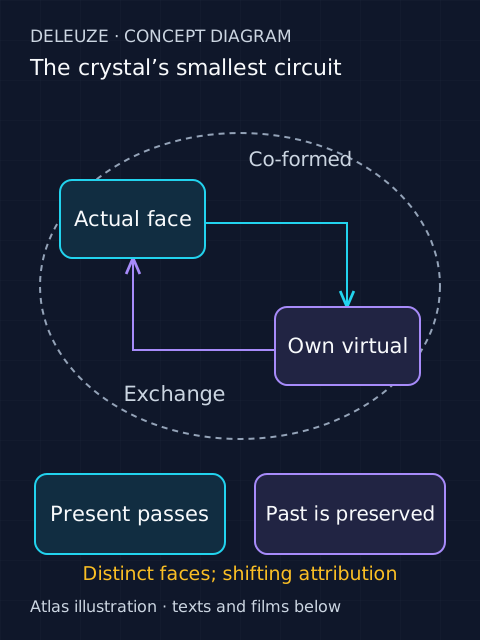
Structural illustration, not a reproduced figure from Deleuze. Actual and virtual remain different in kind; unstable attribution does not make them identical.
Open full-size diagramFind the image’s own virtual face
The crystal contracts an actual image and its simultaneously formed virtual image into the smallest circuit. Ask whether the two faces enter the same exchange. A mirror, flashback, or pair of timelines supplies possible material, not the structure by itself.
Follow exchange rather than a final reveal
Actual and virtual exchange, so neither face permanently occupies the actual position. Limpid/opaque develops another dimension of this exchange; it does not mean true/false. The difference in kind remains.
Time becomes visible through this splitting
The crystal brings the passing of the present and preservation of the past into the image together. In a film, trace how mirrors, performance, space, or audio-visual relations organize this simultaneity. Adjacent examples and countertests below help delimit the claim.
Diagram references
The Lady from Shanghai
The Lady from Shanghai (1947)
Atlas discussion reading
One speaker becomes body, reflection, and watched double at the same time.
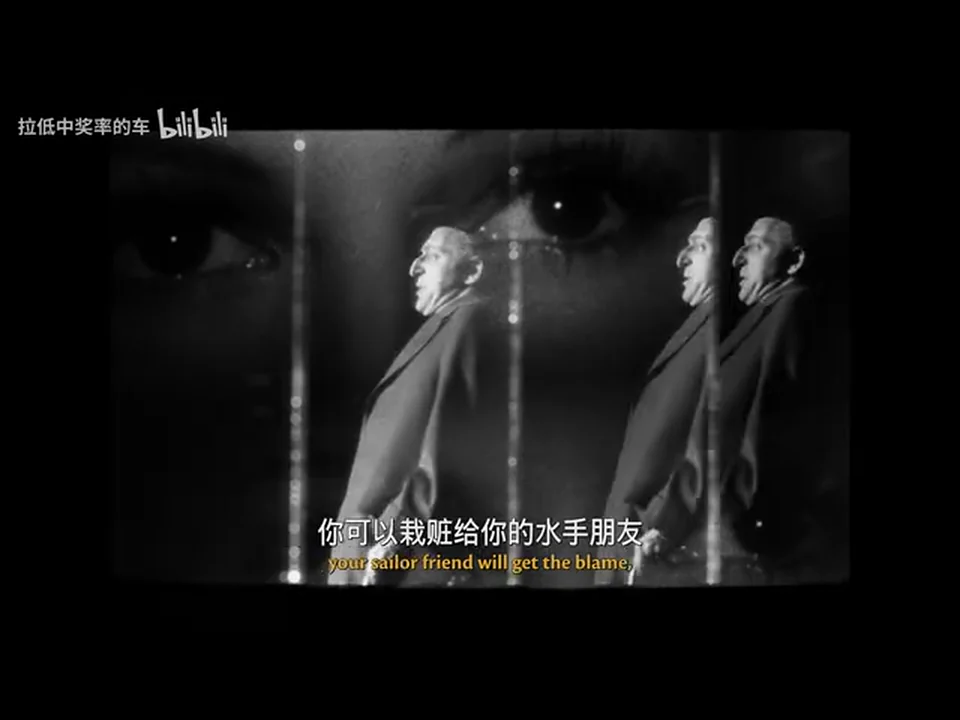
One speaker becomes body, reflection, and watched double at the same time.
Open full-size still- Displayed still
- 01:23:40
- Discussion passage
- 01:23:20–01:24:40
The mirror-hall passage was frame-checked; the anchor precedes the gunfire that terminates the proliferating reflections.
Complete Bilibili carrier; the shot at 单片 01:23:40 was checked frame by frame, and the still and timestamp come from the same public upload.
Still checked: 2026-08-14
Image
Three profiles of Bannister stand side by side while mirror seams split them apart.
Enlarged eyes in the background share a plane with the foreground reflections, removing any stable position of vision.
Sound
Bannister continues shifting blame toward O'Hara; one voice corresponds to several visible bodies.
Relation to the concept
Actual body and virtual reflections remain distinguishable while continually exchanging within the hall; the later shattering is not decoration but the termination of this crystal circuit.
Sources and further reading
- Bilibili · The Lady from Shanghai complete film
01:23:40 · Complete Bilibili carrier; the shot at 单片 01:23:40 was checked frame by frame, and the still and timestamp come from the same public upload.
- Cinema 2: The Time-Image
Cinema 2, chapter 4, pp. 68–87.
Lola Montès
Lola Montès (1955)
Atlas discussion reading
Her life is enclosed in the circus present as a repeatable, chargeable public exhibit.
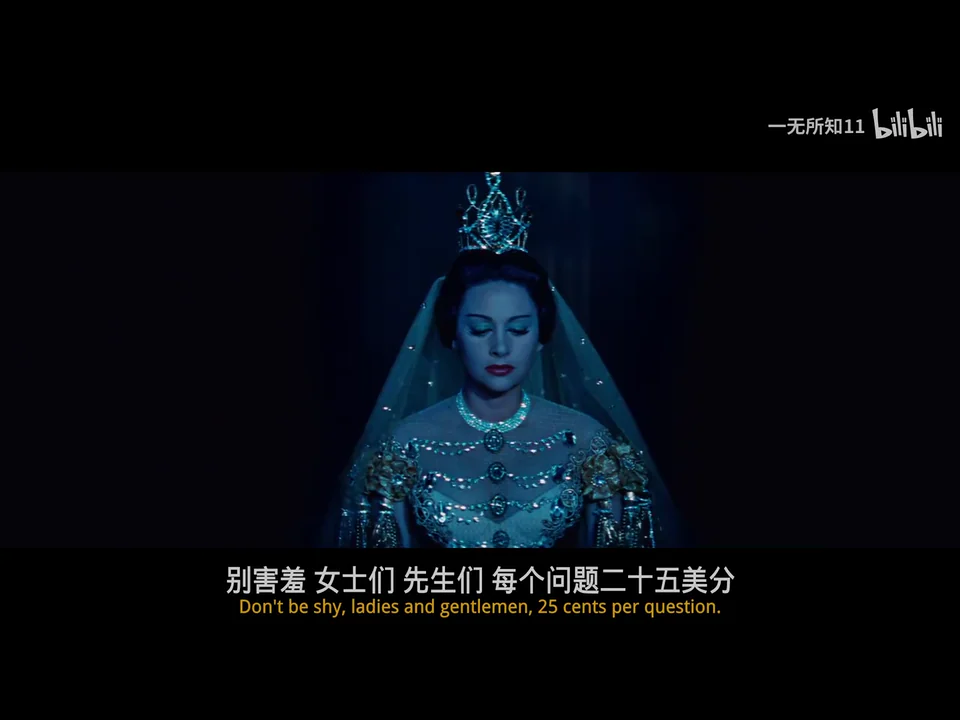
Her life is enclosed in the circus present as a repeatable, chargeable public exhibit.
Open full-size still- Displayed still
- 00:07:00
- Discussion passage
- 00:06:40–00:07:20
Frame-checked within the paid-question passage of the circus opening.
Complete Bilibili carrier; the shot at 单片 00:07:00 was checked frame by frame, and the still and timestamp come from the same public upload.
Still checked: 2026-08-14
Image
Lola remains frontally still in an isolated pool of light while the surrounding stage falls into darkness.
Crown, jewels, and centred framing turn the person into an exhibited image.
Sound
The ringmaster directly solicits audience questions and announces a charge of twenty-five cents for each one.
Relation to the concept
The circus present repeatedly recalls and prices Lola's past, making actual performance and virtual life feed one another in a closed circuit.
Sources and further reading
- Bilibili · Lola Montès complete film
00:07:00 · Complete Bilibili carrier; the shot at 单片 00:07:00 was checked frame by frame, and the still and timestamp come from the same public upload.
- Cinema 2: The Time-Image
Cinema 2, chapter 4, pp. 68–87.
Mirror
Зеркало (1974)
Atlas discussion reading
The boy outside the mirror and the reflected figures share one composition without reducing to one viewing position.
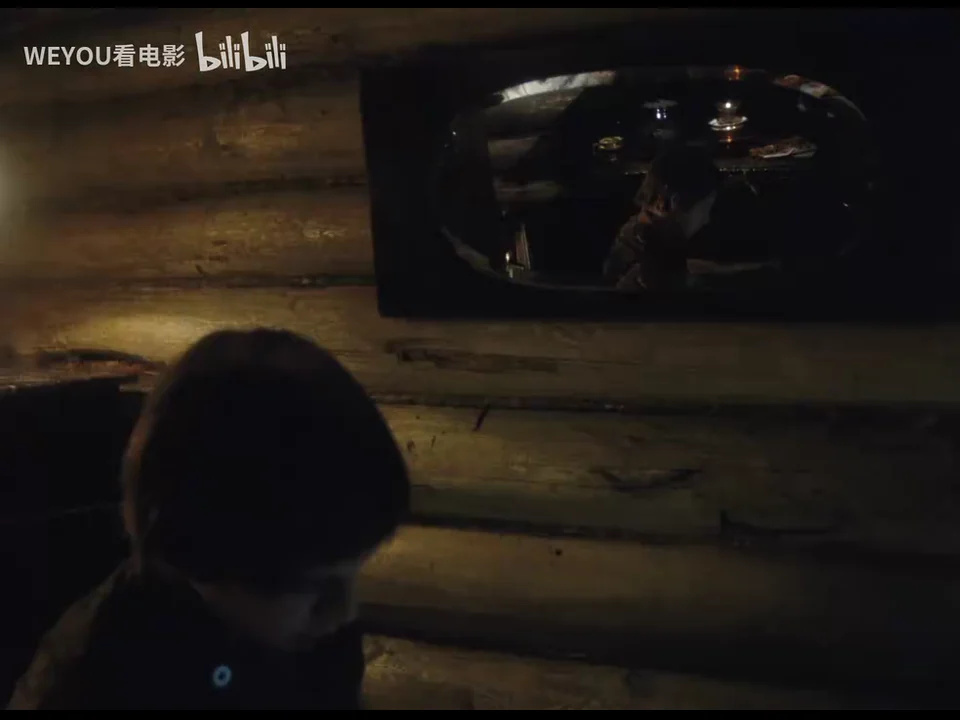
The boy outside the mirror and the reflected figures share one composition without reducing to one viewing position.
Open full-size still- Displayed still
- 01:25:00
- Discussion passage
- 01:24:40–01:25:20
Frame-checked within the interior mirror passage.
Complete Bilibili carrier; the shot at 单片 01:25:00 was checked frame by frame, and the still and timestamp come from the same public upload.
Still checked: 2026-08-14
Image
The boy's head remains below and outside the mirror; the oval glass inserts another group into the same timber-wall composition.
The bright mirror interior and darker exterior remain visible together without a cut to a separate memory shot.
Sound
Inside and outside the mirror share one continuous interior sound field; the reflected image receives no separate source of sound.
Relation to the concept
This mirror shot establishes only two visible zones within one composition; it does not by itself prove actual–virtual exchange. A crystalline reading still requires the returns of mother/wife, shifts between childhood and adulthood, and the archival passages.
Sources and further reading
- Bilibili · Mirror complete film
01:25:00 · Complete Bilibili carrier; the shot at 单片 01:25:00 was checked frame by frame, and the still and timestamp come from the same public upload.
- Cinema 2: The Time-Image
Cinema 2, chapter 4, pp. 68–87.
Black Swan
Black Swan (2010)
Atlas shot reading
Wound, double, and role exchange attribution
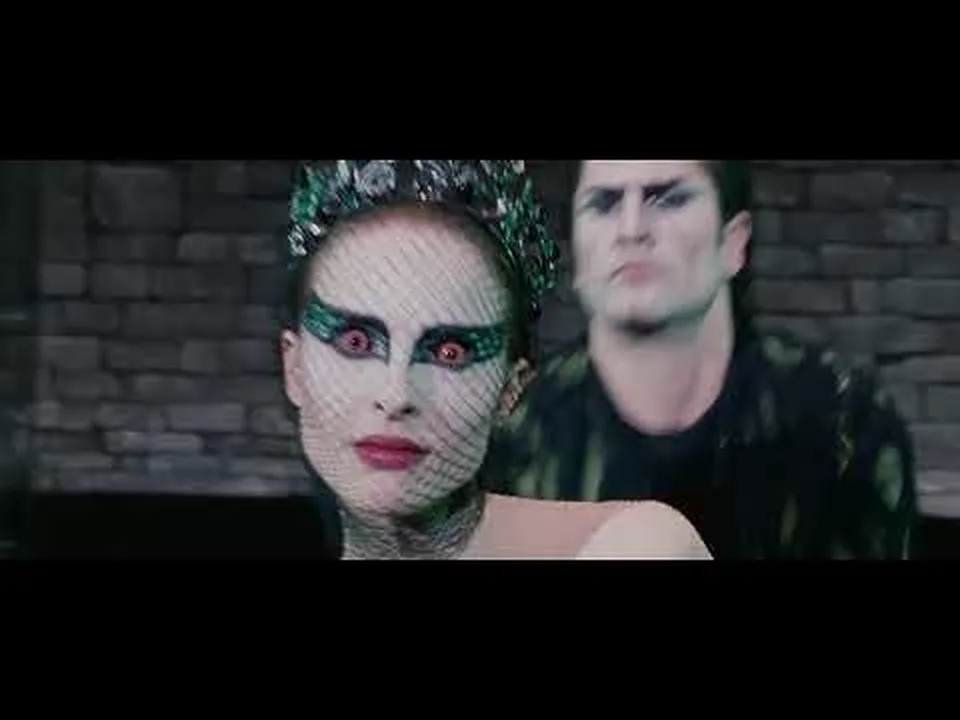
The shattered-mirror struggle first attributes the wound to Lily; when Lily appears unharmed, the wound returns to Nina's body while applause still demands completion of the role.
Open full-size still- Displayed still
- 常见 108 分钟版约 01:38:27—01:42:43
- Feature time
- 常见 108 分钟版约 01:38:27—01:42:43
The three images come from Searchlight's official trailer. Feature locators follow the common 108-minute edition; trailer stills are not presented as frames from the same feature seconds.
Open the named edition and locate the moment using the still and timecode.
Image
The shattered-mirror struggle first attributes the wound to Lily; when Lily appears unharmed, the wound returns to Nina's body while applause still demands completion of the role.
Relation to the concept
Actual body and role-image no longer occupy stable inside and outside positions but exchange around the wound. The crystal lies in that reciprocal exchange and its lethal consequence, not in the mirror alone.
Sources and further reading
- The Cinematic Body guide
Reconnect role production to performing bodies, gaze, and harm
- Cinema 2, Chapter 4
The crystal-image and its criteria
- Official Searchlight film page
Official trailer, credits, and release gateways
- Compare Mulholland Drive
Compare doubles, role allocation, and attribution of reality
In the Mood for Love
花樣年華 (2000)
Atlas shot reading
Role-play is not a false detour
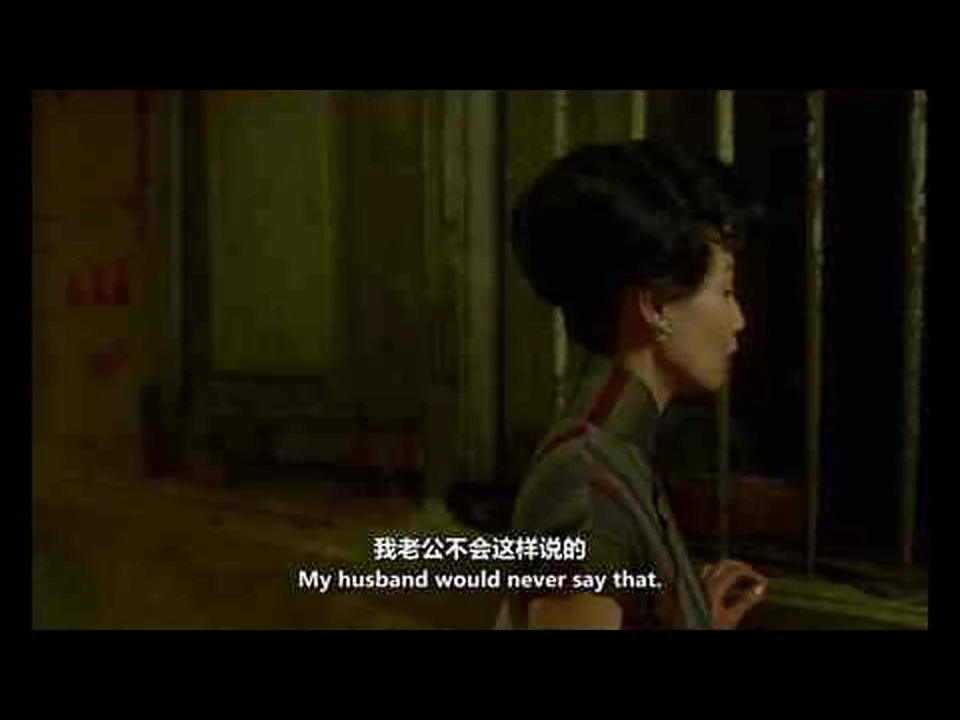
Su interrupts the scene—‘my husband would not say that’—and only after the dialogue has unfolded does the film confirm that each is playing the other's spouse.
Open full-size still- Displayed still
- 03:31:14
- Feature time
- 00:31:09
The feature occupies 03:00:05–04:38:40 of the Bilibili page. Cards show both feature time after subtracting the three-hour lead-in and carrier-page time.
The still and link retain the film guide's recorded shot locator.
Image
Su interrupts the scene—‘my husband would not say that’—and only after the dialogue has unfolded does the film confirm that each is playing the other's spouse.
Relation to the concept
The virtual scene is corrected by actual experience and in turn enlarges what the two can actually say and do. The crystal's minimal circuit lies in this reciprocal modification.
Sources and further reading
- Rushton guide, pp. 145–149
Close reading of slow motion, corridors, and déjà disparu
- Actual, virtual, and crystal dossier
Carry the three scenes into the full argument
- Criterion essay by Charles Yu
Another reading of time, missed relation, and repetition
- Compare Kaili Blues
Move from repeated routes to temporal exchange in a continuous take
Synecdoche, New York
Synecdoche, New York (2008)
Atlas shot reading
The director ends by receiving directions
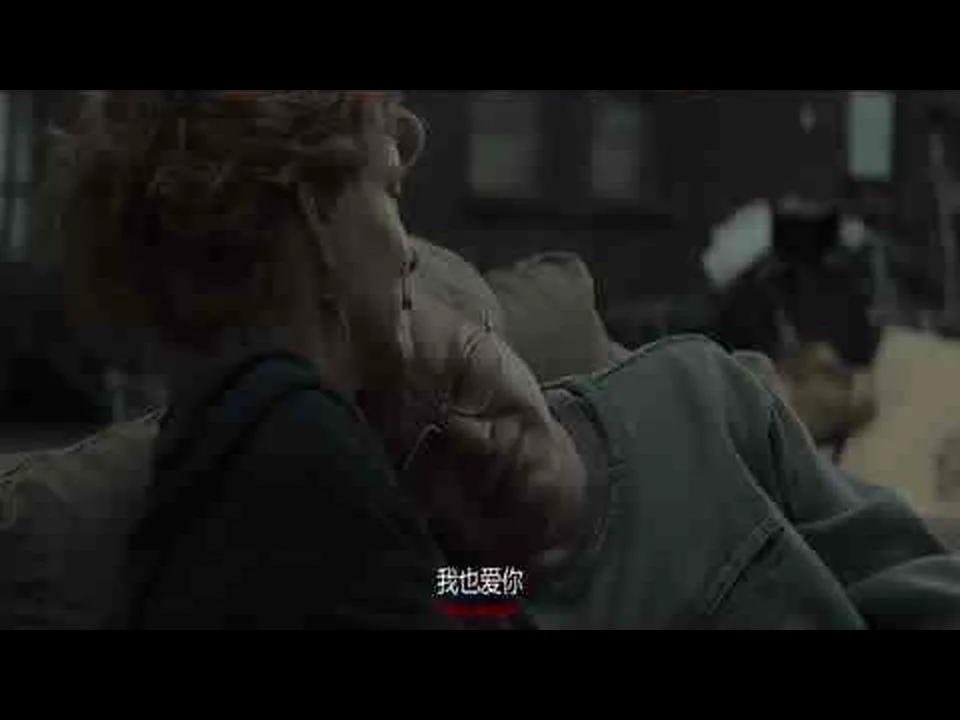
Millicent has assumed Caden's role. The aged Caden moves through the empty city under her voice in an earpiece, embraces ‘Mother,’ and finally awaits the word ‘die.’
Open full-size still- Displayed still
- 00:02:30
- Feature time
- 00:02:30
- Carrier part
- 14
The user-supplied Bilibili page divides the feature across fourteen parts and appends Tom and Jerry padding to each. The atlas captures only checked feature windows and always records both part number and within-part time.
The still and link retain the film guide's recorded shot locator.
Image
Millicent has assumed Caden's role. The aged Caden moves through the empty city under her voice in an earpiece, embraces ‘Mother,’ and finally awaits the word ‘die.’
Relation to the concept
The director who once issued instructions becomes a body staged by a voice. The crystal has no recoverable original: life, role, and command exchange around one body until death.
Sources and further reading
- Actual, virtual, and crystal dossier
Audit nesting and doubles with strict criteria
- Cinema 2, Chapter 4
The crystal's minimal circuit and exchanging faces
- Sony Pictures Classics press kit
Kaufman interview, production notes, and credits
- Compare Black Swan
Compare how a role system acquires a body
Long Day’s Journey into Night
地球最后的夜晚 (2018)
Atlas shot reading
The kiss happens with its disappearance inside it
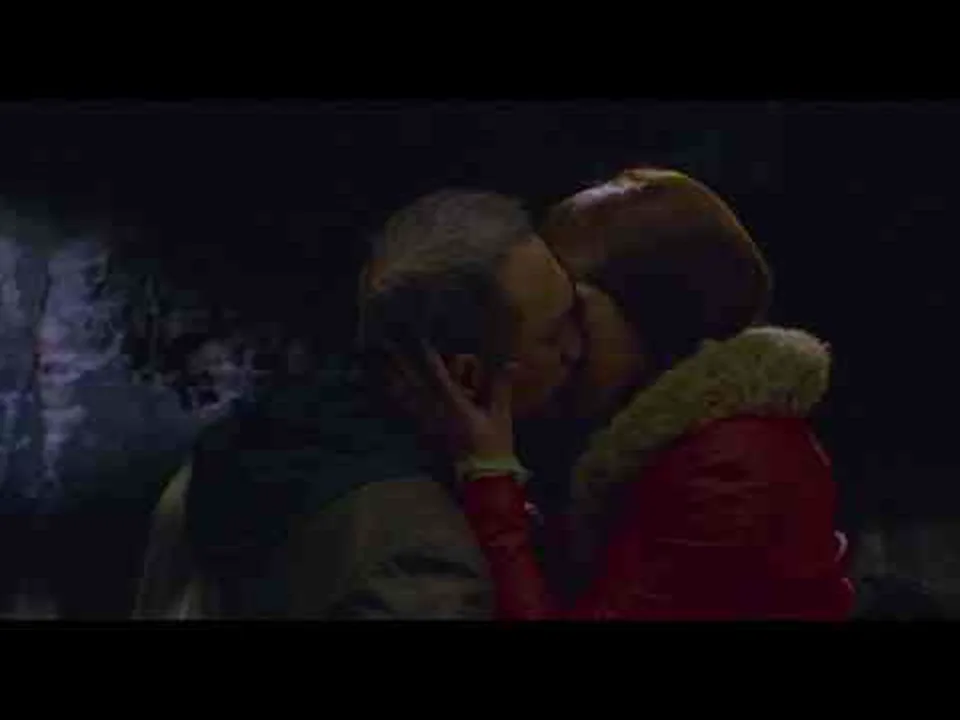
The room rotates as the figures kiss and brief sparks and fireworks light the encounter; the scene offers no reconciled space that could be inhabited for long.
Open full-size still- Displayed still
- 02:38:12
- Feature time
- 02:08:04
The user-supplied carrier runs 02:46:55. Unrelated nature/travel padding occupies its first 00:30:08; the target feature is approximately 00:30:08–02:46:55 on the carrier. Carrier time equals feature time plus 00:30:08, and all three jumps are checked on the carrier axis.
The still and link retain the film guide's recorded shot locator.
Image
The room rotates as the figures kiss and brief sparks and fireworks light the encounter; the scene offers no reconciled space that could be inhabited for long.
Sound
Close breathing, mechanical rotation, and distant reports obey no common scale: intimate contact and the outside world approach together and begin receding together.
Relation to the concept
The crystal is not mere confusion between true and false. Actual encounter and virtual loss must exchange while producing consequences. The kiss actualizes the relation and preserves its impossibility at once.
Sources and further reading
- Actual / virtual / crystal essay
Recheck the film through two faces, exchange point, and actual consequence
- Cinema 2, Chapter 4
Crystal, limpid/opaque exchange, and differentiation of time
- Criterion: viewing regime and long take
Verify the glasses, delayed title, and fifty-plus-minute take
- Film Comment: Bi Gan’s movement through time
Compare its account of routes, memory strata, and camera movement
- Compare Kaili Blues
How the same director redistributes time through another continuous route
Mulholland Drive
Mulholland Drive (2001)
Atlas shot reading
The box opens an evidentiary regime, not an answer
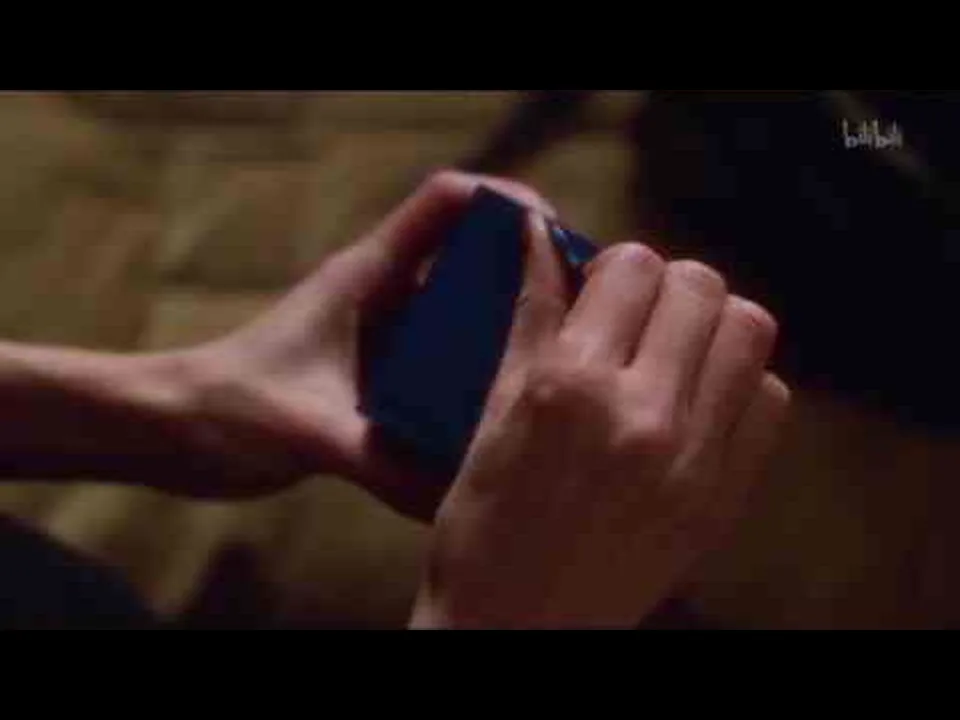
The blue key enters the lock, the lid opens, and Betty disappears from the room’s continuity; names, dwelling, intimacy, and murder clues subsequently exchange positions.
Open full-size still- Displayed still
- 01:55:10
- Feature time
- 01:55:10
All three stills and feature times use Bilibili’s official PGC ep378235 (02:27:00; internal BVID BV1g5411V7eS). Continuous audio facts for Club Silencio and the blue box were checked second by second against playable excerpts; excerpt time axes are not presented as the official feature axis.
The still and link retain the film guide's recorded shot locator.
Image
The blue key enters the lock, the lid opens, and Betty disappears from the room’s continuity; names, dwelling, intimacy, and murder clues subsequently exchange positions.
Sound
A marked near-silence follows the box’s fall, with footsteps and room sound returning later. The soundtrack first withdraws the old world’s continuity before the image redistributes its figures.
Relation to the concept
The crystal is not a blurred border between two ready-made worlds. Actual and virtual exchange evidentiary value after the opening, forcing every earlier name, room, and sound to be read again.
Sources and further reading
- Crystal essay: move beyond dream / reality
Check actual face, virtual face, exchange point, and consequence
- Pisters: The Neuro-Image guide
Connect identity change to brain, screen, and powers of the false
- Criterion: Lynch on audition and Silencio
Verify two treatments of the same material and the recording’s source
- Mactaggart: hearing loss and Club Silencio
Peer-reviewed study of audition, synchronization, and voice after collapse
- BFI: a cosmology beyond dream / reality
Keep the two-part solution as one reading rather than the final word
Films and scenes
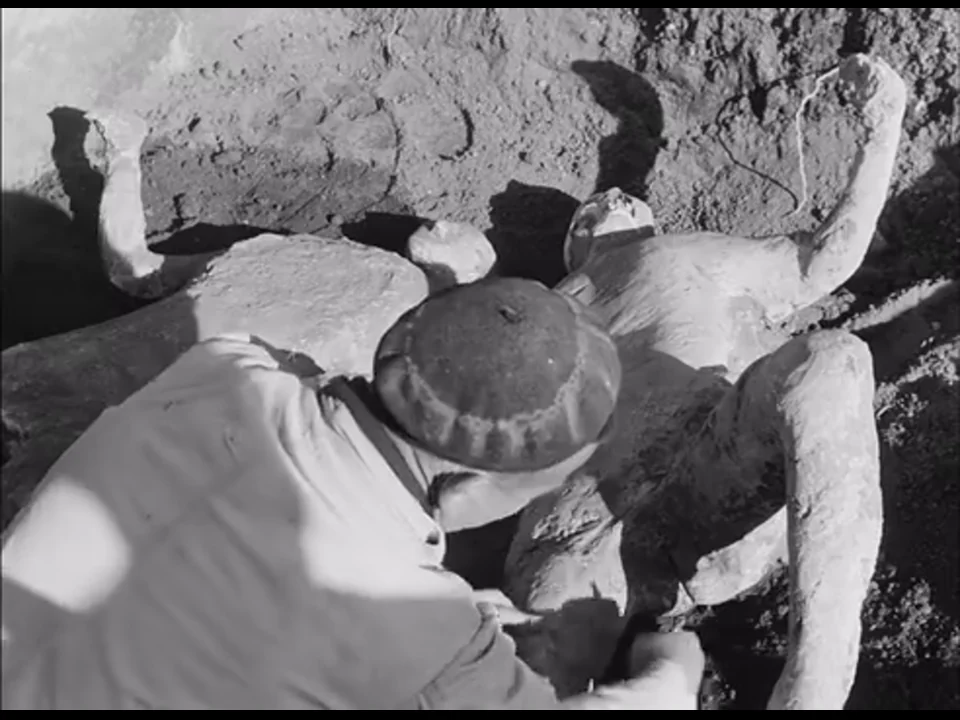
This is a countertest: pressure from present and past does not automatically make a crystal. The two faces must also enter an exchange in which attribution cannot be fixed.
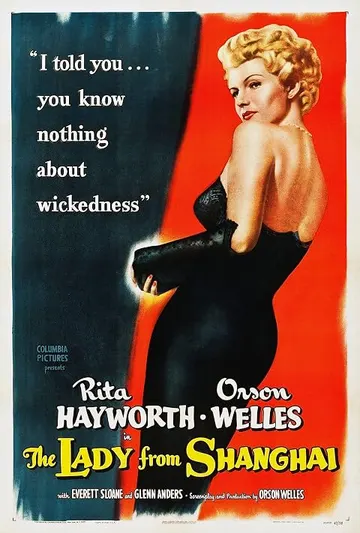
The hall of mirrors keeps bodies, reflections, and targets exchanging positions until gunfire reveals both the circuit and its fracture.
IMDb identification poster ↗Related film readings · 16 films
The Lady from Shanghai · 1947 · Candidate reading — The hall of mirrors keeps bodies, reflections, and targets exchanging positions until gunfire reveals both the circuit and its fracture.
Last Year at Marienbad · 1961 — Bifocal structure: Robbe-Grillet organizes incompatible peaks of the present, while Resnais places characters in coexisting sheets of the past.
8½ · 1963 — Reality, memory, fantasy, rehearsal, and the film project crystallize together; the unfinished work is both seed and environment absorbing life.
Death in Venice · 1971 — Artistic ideal, aristocratic world, and decaying body are caught in a crystal of too late; preservation simultaneously reveals decomposition from within.
Lola Montès · 1955 — The circus present rolls a series of virtual pasts inside itself. Flashback becomes a route through the crystal; actual/virtual exchange is the criterion.
The Rules of the Game · 1939 — Theatre and life, masters and servants, roles and reality nest within one another while retaining a fissure through which escape remains possible: the cracked crystal.
Mirror · 1974 — Deleuze explicitly calls it a turning crystal: mother and wife, childhood and present, memory and perception exchange actual and virtual positions.
Solaris · 1972 — Memory acquires an actual body on Solaris, forming a circuit with the virtual past. Evidence: a brief adjacent example in Cinema 2.
Black Swan · 2010 — The rehearsal mirror first corrects Nina's body, then reflections hesitate, slip out of phase, and even move before she does. The mirror no longer confirms a whole self; it compresses Nina and Lily, White Swan and Black Swan, into one body. Scratches, feathers, toes, and stage transformation are therefore more than illustrations of subjective hallucination: actual and reflected bodies rewrite one another, filming 'becoming the role' as a circuit that produces the performer in return.
Synecdoche, New York · 2008 — Caden copies New York inside a warehouse and assigns actors to copy friends, strangers, and himself. Each double demands more rooms, rehearsals, and doubles of doubles. The stage no longer abbreviates life; it expands like a crystalline seed into an environment that reabsorbs marriage, ageing, and death. Sammy first makes a profession of watching Caden and later assumes his role, showing that a copy is not a static image: it changes how the original can next live until neither person nor set retains an outside to which it can return.
In the Mood for Love · 2000 — Su goes for noodles and Chow waits on stairs and corridors; the same music returns similar routes while distance, glance, and hesitation quietly change. When they act out how their spouses began the affair or how a confrontation might unfold, a scene often reveals only midway that it is rehearsal. The unactualized conversation thus determines what they can still say in actual life. The cavity at Angkor Wat preserves not a completed romance but a relation already becoming memory as it occurs and still continuing to act.
Mulholland Drive · 2001 — Identity, performance, and memory rewrite one another. Criterion: an actual/virtual circuit.
Long Day’s Journey into Night · 2018 — Criterion: whether dream repairs action or opens an indiscernible actual/virtual circuit.
Readings in the same thematic group
Late Spring · 1949 — The vase still life intervenes between the daughter’s smile and tears, placing change within time’s unchanging form.
Journey to Italy · 1954 — Katherine is struck by unfolding landscapes and visual clichés, discovering something beyond what she can personally bear. She no longer resolves what she sees through action but becomes a seer.
Enter the Void · 2009 — City, memory, body, and possible futures interweave; viewing proceeds by reading relations among image strata.
Criteria
Name both faces of the circuit and track how each reflection, recollection, performance, or copy acts back upon the supposed original. Can the faces continue to exchange while the analysis still specifies their difference in kind?
Distinctions and counterexamples
Mirror, double, recollection, copy, and dream provide crystalline material only. If the two faces remain assignable or the second merely explains the first in one direction, no crystal circuit has formed.
Common confusion: A mirror, reflection, dream, flashback, or play-within-a-film is insufficient. If the actual remains a fixed original and the other face merely supplies information, the circuit is still one-way. Indiscernibility is not subjective viewer confusion but the failure of stable assignment within the relation itself.
Texts and sources
Cinema 2, ch. 4, pp. 68–97 (Minnesota 1989)
- 01Cinema 2: The Time-Image
Authoritative source for the standard translation, translators, ISBN, and publication date.
View source and edition →
Research disagreements
Replacement or coexistence?
The time-image reverses the subordination of time to movement; both regimes persist and can shift locally within one film.
Taxonomy or generator?
Fixed labels invite mere example-hunting; an open taxonomy requires new concepts to transform existing relations and explain across cases.
How do we use Deleuze precisely?
Test four layers: sensory-motor relation, actual/virtual circuit, audio-visual connection, and regime of truth.
Where contemporary images push this concept

Testing the concept against a new mechanismCandidate reading · same-session trace pending
The Viewing Booth: the viewer is in the frame
During the second viewing, present speech is actual. The earlier recording remains an actual archival carrier; what is virtual is the relation through which the first response continues to act in memory and re-viewing. A crystalline exchange begins only if the old response alters present judgement and present judgement in turn redefines the old response; a screen within a screen is not sufficient.
Scope and limits If a versioned shot review cannot show the second viewing changing the meaning of the first response or the present utterance, the recording remains retrospective material and should not be called a crystal-image merely because it mirrors the self.
- ICA: The Viewing Booth institutional pageInstitutional film page · viewing setupAn institutional synopsis is not a complete experiment log; the viewer’s specific reactions require the film edition.
- Pisters: The Neuro-Image guide and author pageScholarly monograph · author page and local PDFAuthor description and book synopsis are not independent film facts; concept pages must be checked against the published edition.
A concept relation that remains contestedCandidate reading · versioned passage review pending
Coma: how do bedroom, livestream, and dolls compete for the place of reality?
Bedroom, Zoom, web, animation, and doll world repeatedly contest the position of present reality, offering a disputed test for the crystal-image. Media layering is insufficient unless one layer becomes another's virtual memory and in turn rewrites it.
Scope and limits If every media switch is ultimately contained by a stable dream-versus-waking genre hierarchy and no reciprocal exchange occurs between images, the crystal claim should be withdrawn in favour of pandemic media hybridity.
- New York Film Festival: Coma film pageFestival institutional page · film factsThe institutional synopsis establishes media configuration, not a crystal structure or a time-image by itself.
- Pisters: The Neuro-Image guide and author pageScholarly monograph · author page and local PDFAuthor description and book synopsis are not independent film facts; concept pages must be checked against the published edition.

Extending the concept into contemporary conditionsCandidate reading · versioned passage review pending
A Night of Knowing Nothing: how a love letter folds into collective struggle
Heterogeneous material does not automatically form a crystal. The relation becomes a candidate only where the same passage presents the letter currently being read as actual while the protest archive enters as a virtual past still acting in it: the letter changes how the archive can be felt, and the archive exposes the letter's construction. This two-sided relation of one image-object must be verified rather than inferred from montage alone.
Scope and limits If heterogeneous materials are joined by one voice-over into a single historical explanation, actual and virtual do not exchange positions; mixed archive remains essayistic organisation and is not a crystal merely by virtue of heterogeneity.
- IDFA: A Night of Knowing Nothing film pageFestival official page · film factsThe institutional synopsis does not prove exact material provenance or the opening long take; return to the film and scholarship.
- Debashree Mukherjee: Cinema, Love, and Collective StrugglePeer-reviewed article · private archive and collective politicsThe article describes a particular cut and reading path; do not turn the anonymous narrator into unverified biography.
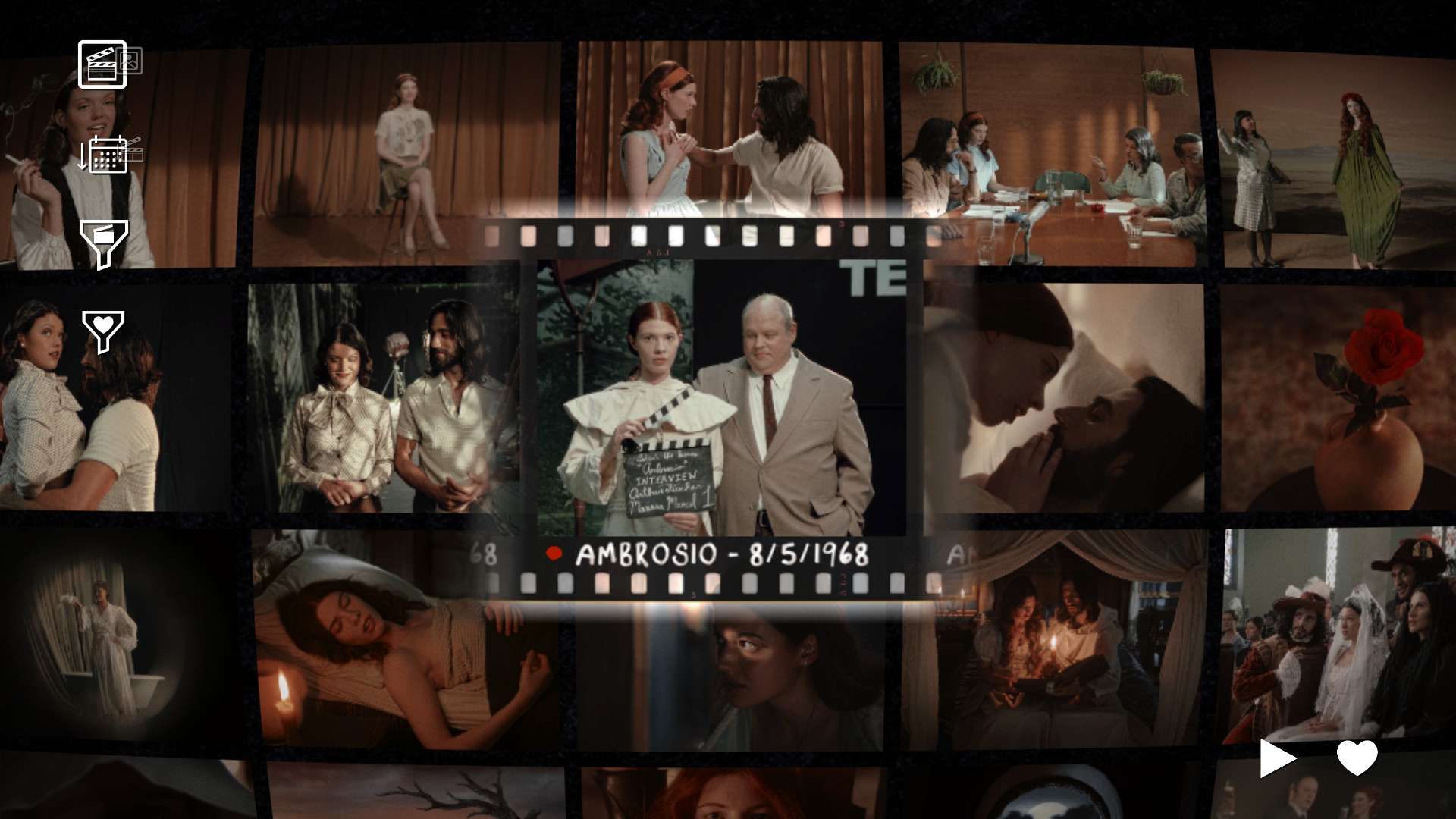
Testing the concept against a new mechanismCandidate reading · build and state-transition record pending
Immortality: how each click rearranges an image's past
The player's currently actualised viewing path meets virtual relations through which actor, character, and production past continue to act, yet reclassifying footage may remain an indexing operation. Match-cuts approach a crystal only when the actual appearance of the same image and its virtual performance relations become reciprocal and indiscernible as original or copy; unselected files are not the virtual.
Scope and limits If every match is only an index shortcut toward fixed revelation nodes and the player's choice changes no actual relation among materials, multiple database entrances do not amount to crystalline exchange.
- Steam: Immortality official listingOfficial platform listing · interaction factsThe store listing establishes mechanics and metadata, not actual player paths or genuine branching; play logs are required.
- Marco Caracciolo: Complexity and near-aha moments in digital narrativePeer-reviewed article · interactive narrative and player embodimentThe article provides an interactive-narrative bridge; it does not upgrade database multiplicity directly into Deleuzian virtuality.
Concepts to distinguish
Compare them
- Actual / virtualactuel / virtuel
The actual is a formed and locatable state. The virtual consists of fully determined and fully real differential relations, singularities, memories, and tendencies. It is not a possible future or a blurred copy of the actual. The virtual is actualized through differenciation: actualization creates a solution rather than making a pre-existing model resemble reality, and the formed actual continues to carry the virtual problem to which it responds.
→ - Limpid and opaquelimpide et opaque
As one face of the crystal becomes a clear actual image, the other recedes into opaque virtuality; then the two exchange. Their relation produces visibility.
→ - Seed and environmentgerme et milieu
A seed triggers crystallization within an as-yet amorphous environment, while that environment must itself possess a virtual crystalline structure. Seed and milieu reciprocally individuate one another, making the crystal a world in formation.
→