DEEP GUIDE · PRINT LOCATORS · FILM MATRIX
17The Neuro-Image
From schizoid minds, illusion, and surveillance to future time, database belief, open archives, and war multiscreens
The neuro-image is neither a brain-themed genre nor a technologically deterministic Cinema 3. It names a recursive circuit among brain, screen, and world: digital databases, hallucination, prediction, affect, and a cut from the future reorganize subjectivity, making neural plasticity a political contest between neuropower and the creation of new connections.
English · Stanford University Press · 2012 · ISBN 9780804781367
- UNITS
- 11
- LOCATORS
- 86
- CURATED BOOK CASES
- 24
- EXTENSIONS
- 10
CENTRAL ARGUMENT
Central argument and scope
CONTRIBUTION
Pisters carries movement- and time-images into networked software culture without treating them as obsolete stages. Schizoanalysis, 4EA cognition, Bergsonian time, Humean belief, Leibnizian folds, and Deleuzian neuropolitics form one argument from private brain worlds to colonial archives, Palestinian resistance, and Iraq-war screens.
PAGINATION
Stanford University Press, 2012, Cultural Memory in the Present; hardcover ISBN 978-0-8047-8135-0, paperback 978-0-8047-8136-7, ebook 978-0-8047-8284-5. The press lists 392 pages; the author site and UvA-DARE list 370. Printed pagination continues through the text, notes, and index.
SCOPE
Eleven substantive reading units, 86 narrow print locators, eighteen concepts, eight relation cards, twenty-four core cases from the book, ten explicitly marked site extensions, five outward perspectives, and a five-step route.
CHAPTER ARGUMENT CHAINS
11 reading units with exact print locators
The neuro-image is a brain-screen-world circuit
Digital screens weave delirium, hallucination, affect, databases, and future choice into a brain world that continually reconnects itself.
Beginning with the corporate delirium of Michael Clayton, the introduction limits how art, philosophy, and neuroscience interfere with one another and finally defines the screen as a membrane between inside and outside.
Three schizoid powers
Delirious insight, hallucinatory reality, and affective truth connect corporate law, pollution, medication, and urban screens into one world.
Software and method
Networked flows and deep remixability change screens, yet films remain thought-seeds that make problems rather than illustrations of theory.
A three-part circuit
Neuroscreen, neurophilosophy, and neuropolitics move from individual brain worlds to world memory and political choice.
EXACT PRINT LOCATORS
- p. 1
A delirious monologue assembles corporation, pollution, medication, and New York screens into a brain-world.
- p. 4
Schizoanalysis begins from delirious insight, hallucinatory reality, and affective truth.
- p. 8
The digital screen is composed of networked software, modulated flows, and deep remixability.
- p. 12
Art, science, and philosophy interfere; neuroscience is not an aesthetic judge.
- p. 17
Films are thought-seeds that make problems, not illustrations of theory.
- p. 20
The three parts correspond to neuroscreens, neurophilosophy, and neuropolitics.
- p. 28
Mirror neurons and plasticity help describe how images establish new circuits.
- p. 33
The neuro-image testifies to how the brain becomes our world and the world becomes a brain-city, a brain-world.
Disconnection is both symptom and circuit breaker
Schizoid media culture and clinical schizophrenia must remain distinct; images can expose failed connections and make new circuits of love and sensation.
The chapter moves from clinical disconnection, plasticity, and split-brain models through Alienations' colonial history and The Butterfly Effect's rewritten future to Lynch's digital brain landscapes.
The brain as disease
Clinical symptoms, the disconnection hypothesis, and experience-dependent plasticity supply limited models for media connection.
Historical and bodily disconnection
Illness returns to war, migration, family, and language, while memory fragments press the future backward into the present.
Digital brain landscapes
Bodily flow and data axons show intensity within disorder; the invisible machine can be pathological and critical.
EXACT PRINT LOCATORS
- p. 37
Electronic images and discontinuous brain systems jointly pose the brain as a problem.
- p. 41
Positive and negative symptoms and disconnection hypotheses must not be reduced to aesthetic metaphor.
- p. 46
Alienations returns psychosis to the Algerian war, migration, and language.
- p. 50
The Butterfly Effect joins inherited brain disease and childhood trauma to blackouts that unpredictably alter the future present.
- p. 53
Viewpoint no longer belongs to a stable eye; intracerebral temporal architecture organizes the film.
- p. 59
DIY madness landscapes juxtapose Cassavetes's bodily flows with Lynch's digital brain.
- p. 65
Inland Empire's axxonn connects characters, data flows, and failing synapses.
- p. 68
The neuro-image is both symptom of and antidote to contemporary media madness: it follows schizoid flow yet may create a new world of connection.
Perception is already inference
A free indirect relation lets brain, camera, and world permeate one another; powers of the false judge not plausibility but whether a fiction closes or creates life.
Deleuze and 4EA cognition meet around embodied enactment, while visual illusions and attention experiments never become neural arbiters of artistic value.
Illusion within perception
Two magic films and multistable images show seeing as joint inference by body, brain, action, and environment.
Attention is not consciousness
Free indirect viewpoint and feedforward/feedback processing let visible clues remain outside reflective awareness.
The ethical fork of the false
The split-brain narrator is a fictional self; base lies produce death while noble fictions open relations.
EXACT PRINT LOCATORS
- p. 73
The Illusionist and The Prestige reinstall early film magic in digital brain narratives.
- p. 75
4EA and Deleuze form a contestable adjacency, not one theory.
- p. 79
Visual illusions make one image appear in two ways or make stillness appear to move, showing perception’s openness to deception.
- p. 82
World and brain are in free indirect relation; the camera is neither purely objective nor enclosed subjective.
- p. 84
Feedforward sweep and feedback processing distinguish attention from reflective awareness.
- p. 91
Split brain and fictional self turn narrative reliability into the brain's divided choice.
- p. 95
Powers of the false judge what life a fiction makes rather than binary truth.
- p. 97
Fictions of love and destructive rivalry reveal the ethical fork of the false.
Surveillance also produces affect
Control societies modulate subjects through data and access; art need not exit the apparatus but can rewire paranoia, intimacy, desire, and forgiveness from within.
From the cold panoptic eye to Evidence Locker and Red Road, operator, recorded subject, author, and viewer repeatedly exchange positions.
From panopticism to modulation
Surveillance cinema moves from conspiracy films to databases, DNA, networks, and ubiquitous cameras.
From affect to feeling
Low-resolution CCTV gains hapticity and desire; unformed intensity gradually becomes emotion and social feeling.
Rewiring inside the apparatus
Mirror neurons and the as-if body loop explain a simulation mechanism without guaranteeing an ethical outcome.
EXACT PRINT LOCATORS
- p. 98
Control-society modulation is read with Evidence Locker and Red Road.
- p. 100
Surveillance cinema expands from Watergate conspiracy to databases, DNA, and ubiquitous cameras.
- p. 106
Red Road gives low-resolution CCTV touch, color, and desire.
- p. 110
Unformed affect, basic emotion, and social feeling are distinct layers.
- p. 116
The as-if body loop describes brain-body simulation of another's action and pain.
- p. 121
In the neuro-image, fiction and reality interpenetrate across the screen before us, the screen in the brain, and contemporary image culture.
- p. 122
Art twists an evidence database into intimate writing and a circuit breaker.
- p. 124
Resistance occurs by rewiring the camera-database assemblage.
The future is a cut, not a forecast
The third synthesis makes the future a force that cuts established selves and causalities, rearranging present and past; digital technology makes temporal layers callable but is not the sole cause.
Resnais shows that analog cinema already has database-like brain structures; Earth opens personal memory to geological and cosmic time.
Brain as filter
Bergsonian duration and memory turn the brain from a storehouse of representations into a device of selection and delay.
Embryos of the third synthesis
Habitual present, pure past, and a future cut meet in Resnais's fractured times.
Callable temporal layers
Databases call, morph, and nest temporal layers; nonhuman viewpoints extend memory toward ecological scales.
EXACT PRINT LOCATORS
- p. 127
Je t'aime, je t'aime, Muriel, and Earth turn brain-screen into a problem of time.
- p. 129
Deleuze adds the screen to Bergson’s metaphysics (time = brain = screen), allowing Pisters to propose the neuro-image as a third dimension.
- p. 133
Habitual present, pure past, and the future cut compose three syntheses of time.
- p. 140
Resnais's fractured recombination already contains a future-facing neuro-image.
- p. 146
Digital logic makes temporal layers callable and nestable like database items.
- p. 148
Resnais’s cerebral screens anticipate participatory digital culture and mix and reorder prior image regimes according to a digital logic.
- p. 151
Earth's epileptic-cosmic consciousness turns the third synthesis into a shock that generates a subject.
- p. 155
The fundamental openness of the third synthesis leads the neuro-image toward an epistemology that acknowledges that openness.
Databases turn knowledge into degrees of belief
Cross-screen evidence does not guarantee one truth; a Humean subject continually updates belief through association, habit, passion, and collective operations.
Lost turns island, names, flashbacks, flashforwards, numbers, and networked puzzle-solving into a Humean laboratory; database narrative is an instance of connection, not a complete world.
Probabilistic belief and empiricism
A crisis of truth turns knowledge toward probability and degrees of belief; association, passion, institutions, and brain science explain how subjects build relations.
Islands, rebirth, and transmedia
The desert-island myth connects rebeginnings after catastrophe to Lost, which then grows through television distribution, wikis, fan sites, and games.
Cosmic odyssey and providence lost
2001: A Space Odyssey and Avatar carry rebeginnings into cosmic space, while Eywa’s sign reopens destiny, freedom, necessity, and providence.
EXACT PRINT LOCATORS
- p. 156
Time’s crisis of truth leads the chapter to principles of probability and degrees of belief.
- p. 157
Lost joins the desert-island myth, Humean knowledge and belief, and transmedia storytelling in one problem.
- p. 160
Association gives the subject a possible structure; passions give it existence and are extended through institutions, norms, and imagination.
- p. 164
The desert-island myth acts as a seed of thought that grows anew in each repetition rather than nostalgically repeating the past.
- p. 166
Cast Away and Lost are proposed as contemporary attempts to restore the originary myth of the desert island.
- p. 175
Lost asks viewers to cultivate reasons to believe in a world of fools, con men, and tricksters while remaining vigilant toward ready-made links.
- p. 180
2001: A Space Odyssey and Avatar carry the Odyssean desire to leave the cradle and begin anew into cosmic space.
- p. 182
In Avatar, the seed of Eywa’s holy tree is read as a sign of providence, reopening destiny, freedom, and necessity.
Creation is a material-force event of expression
The neobaroque brain world is not an immaterial projection of authorial intention but an event of expression co-composed by film, apparatus, materials, and viewer-brain.
Pi makes an inner pole with grain, noise, headache, and number; The Fountain makes an outer pole through a cosmic tree, macro materials, and three timespaces.
Neobaroque folds
Monads, folds, and windowless windows organize excessive layers and multiple worlds.
Inner and outer poles
Characters do not solve situations; problems force them into visceral or cosmic brain worlds.
Material-force expression
Fluids, particles, sound, and bodies prevent digital effects from being misread as dematerialized illusion.
EXACT PRINT LOCATORS
- p. 186
Pi and The Fountain pose material force and creation in the neuro-image.
- p. 188
Neobaroque screens organize worlds through monads, folds, and windowless windows.
- p. 193
Action-thought becomes problem-theorem, forcing characters into brain worlds.
- p. 198
Grain, noise, headache, number, and ants make the mathematician's visceral split brain.
- p. 201
Pi’s multiple endings refuse to decide among divine light, self-injury, or release from the brain-machine, preserving the inner pole’s ambiguity.
- p. 205
The Fountain uses fractal geometry to fold time, composition, and micro-/macrocosmic scales through repetition.
- p. 209
The Fountain weaves writing, choice, and acceptance of death through three temporal layers, making active creation possible within fate.
- p. 214
The cosmic age brings mathematics, the brain, and storytelling into profound and knowing coarrangements.
The archive is a wager on the future
An open archive does not preserve a complete past; it keeps materials, conflicts, and gaps available for recutting, letting world memory be reperformed by future uses.
The Battle of Algiers models transhistoricity as it moves from decolonial collective memory through Third Cinema and counterculture to counterterror training and Palestinian contexts.
From ideology to world memory
Neuropolitics asks how images reorganize common memory and futures; digital variability opens archives to readings not yet present.
Transhistorical reactivation
Historical films admit present language and style; different collectivities contest the same archive anew.
Migrating sites and viewpoints
Counterterror, Palestinian, and installation contexts reread the archive; smooth spaces release it from fixed sites.
EXACT PRINT LOCATORS
- p. 217
Neuropolitics turns to how images reorganize common memory and future possibility.
- p. 220
The open archive connects archival drive, digital variability, and a wager on the future.
- p. 225
New historical cinema lets present language, gesture, and style enter the past.
- p. 227
The Battle of Algiers changes political function with context, becoming transhistorical world memory.
- p. 228
Newsreel style and mass action first construct anticolonial collective identity.
- p. 230
The archive becomes shared and contested memory for Third Cinema and counterculture.
- p. 232
Different actors, counterterror agencies, and Palestinian contexts reread the same film.
- p. 238
Walking Through Walls remigrates the archive through two kinds of smooth space.
Fabulation calls a people still missing
Minor political cinema does not represent a finished community; violence-laughter circuits, double becoming, mixed codes, and tiny deviations preserve utterances and gestures for a future people.
Answering critiques of realism and Eurocentrism in Deleuzian politics, the chapter uses Suleiman's trilogy to locate resistance in form, rhythm, viewpoint, and humor.
From critique to violence-laughter
Small repetitions-with-difference undo occupied everyday perception rather than supply a victory myth.
Double becoming and nomadism
Director and character, individual and collective become together; nomadism is mixed code and intensity, not migrant identity as ornament.
Small deviations toward the future
Paternal memory, 1948, hospital, and wall fold into the third synthesis; impossible gestures leave a crack for the future.
EXACT PRINT LOCATORS
- p. 243
The chapter answers critiques of political weakness, unreality, and Eurocentrism in Deleuze.
- p. 248
Suleiman composes a violence-laughter circuit through small repetitions-with-difference.
- p. 253
Fabulation does not represent an existing people; it calls a missing people between individual and collective.
- p. 256
Mixed codes, exteriority, intensity, and humor compose nomadic thought, not romanticized migration.
- p. 261
Impersonal luminosity makes minoritarian becoming a subjectivation anyone may enter.
- p. 265
The Time That Remains folds a father's manuscript, 1948, hospital, and wall into the third synthesis.
- p. 268
Wall-jumping, a pressure cooker, and dance are small future deviations rather than victory allegories.
- p. 270
Suleiman’s digitally imagined leap and his dialogue with Bitton let Israeli and Palestinian viewpoints meet around cinematographic images.
Multiscreens are a refractive battlefield, not a panorama of truth
Military images, phone photographs, DV diaries, news, networks, and reenactments compose battle screens; multiple viewpoints can correct one another or intensify affective manipulation and repeated injury.
Logistics of perception 2.0 moves from the Gulf War's subjectless distance to Iraq's intimate multiscreens; the ethical task is to preserve conflicts that resist synthesis and trace off-frame command chains.
From weapon vision to battle screens
Virilio's war-perception genealogy meets the simultaneous contest of networks, soldier video, and multilingual television.
Intimate affect is not justice
Redacted's multiscreens and soldier DV can expose conflict while remaining coded by military media.
Traumatic core and refractive viewpoint
Reenacting Abu Ghraib images can critique or consume injury again; every screen must be deflected by other screens.
EXACT PRINT LOCATORS
- p. 272
Iraq-war features and documentaries investigate both the war’s effects and its digitally filmed images, making multiple screens a condition of the neuro-image.
- p. 273
A history of war-vision technologies leads to the Gulf War's subjectless clean screens.
- p. 279
Redacted juxtaposes DV, news, documentary, surveillance, and webpages as an explosive viewpoint.
- p. 284
Intimate soldier diaries replace distant missile vision but remain encoded by military apparatuses.
- p. 290
Abu Ghraib images are a traumatic core whose reenactment may critique or harm again.
- p. 294
Mirzoeff grounds a new imaginary in concrete refusals; Pisters then distinguishes institutional power from affective force and micropolitical desire.
- p. 296
Multiscreens form refraction rather than panorama; every viewpoint is deflected by another screen.
- p. 298
Awareness of refractive distortion and affective openness to others’ actuality allow reality to return through multiple screens.
The future perspective rewires the whole book
The neuro-image makes past and present reconnectable, so neuropower and neuropolitics struggle across attention, plasticity, and world memory for futures not yet programmed.
The conclusion gathers nine chapters around the global-screen break between 1989 and 9/11 and defines the neuro-image as a practice of connection toward an unknown future.
Global screen break and neuropower
The fall of the Berlin Wall and 9/11 amplify the historical conditions of the neuro-image, while art and surveillance contest the plastic brain-screen.
The Future Is Now
The neuro-image belongs to the third synthesis, the time of the future, from which past and present are revisited, reordered, and recut.
Pathological degree zero and brain-worlds
The Butterfly Effect drives the third synthesis to the pathological degree zero of death before birth, before the conclusion returns to reciprocal shaping between brain and screen.
EXACT PRINT LOCATORS
- p. 299
The shift from movement-image to time-image is placed within complex historical conditions linking world, brain-screens, and cinema.
- p. 301
Professional and amateur images of 9/11, distributed through a dense global network across media, amplify the conditions for the neuro-image’s large-scale emergence.
- p. 303
The neuro-image belongs to the third synthesis, the time of the future, from which past and present can be revisited.
- p. 304
Past and present are recut from the perspective of the future at different speeds, intensities, and orders.
- p. 305
The director’s cut of The Butterfly Effect presents death before birth as a pathological degree zero of the third synthesis.
- p. 306
Twenty-first-century films place viewers inside brain-worlds, while brain and screen reciprocally shape one another between internalist and externalist poles.
WORKING CONCEPTS
18 searchable, operational concepts
Neuro-image
A circuit co-produced by brain, screen, and world, operating through delirium, database, affect, and a cut from the future.
- OPERATION
- It makes past-present reconnectable and turns plasticity into a site contested by power and creation.
- BOUNDARY
- Brain subject matter, puzzle narrative, or digital effects alone do not constitute it.
Brain-screen
A two-way membrane between internal brain activity and external screens, not two enclosed entities.
- OPERATION
- The screen selects, delays, disconnects, and returns to the world; the brain is reshaped by those circuits.
- BOUNDARY
- Brain equals screen is relational, not a reduction of mind to neurons.
Neuroscreen
The screen understood as selecting, disconnecting, modulating, and forming affect like a brain.
- OPERATION
- It links schizophrenia, illusion, and surveillance into a digital perceptual apparatus.
- BOUNDARY
- It is not merely a screen displaying a brain scan.
Schizoanalysis
Tracks how material flows, machinic lineages, subjective territories, and universes of value connect and disconnect.
- OPERATION
- It returns symptoms to assemblages of history, institution, family, language, and media.
- BOUNDARY
- It does not aestheticize clinical schizophrenia as a metaphor of creativity.
Breakthrough / breakdown
The same schizoid process may open new connections or fall into clinical suffering and incapacity.
- OPERATION
- It forces analysis to mark formal innovation, character experience, and concrete loss together.
- BOUNDARY
- Rupture does not automatically mean liberation.
Neuroplasticity
The capacity of brain circuits to change with experience and environment.
- OPERATION
- It enables both attentional modulation and new artistic circuits.
- BOUNDARY
- Plasticity is not unlimited flexibility or self-optimization.
Invisible machine
Contemporary images enter invisible brain processes of memory, prediction, hallucination, and affect.
- OPERATION
- It makes data axons and disconnections both symptoms and circuit breakers.
- BOUNDARY
- It is not one conspiratorial machine hidden behind the plot.
Powers of the false
Fiction is judged by whether it closes or creates life, not by binary truth.
- OPERATION
- It distinguishes base lies that make death from noble fictions that open relations.
- BOUNDARY
- It does not mean that everything is relative.
Free indirect relation
A visual relation in which brain, camera, and world permeate one another without becoming one.
- OPERATION
- It places images at a variable distance between pure objectivity and enclosed subjectivity.
- BOUNDARY
- It is not synonymous with character voice-over as a grammatical device.
Affect
An impersonal intensity that changes bodily capacity before being named as emotion.
- OPERATION
- It lets surveillance images produce hapticity, desire, paranoia, and forgiveness rather than only a cold gaze.
- BOUNDARY
- Affective intensity guarantees neither empathy nor political justice.
As-if body loop
A mechanistic model of the brain-body simulating another body's changes.
- OPERATION
- It partly explains how images enter bodies and how operator and recorded subject exchange positions.
- BOUNDARY
- Bodily simulation does not guarantee ethical action.
Third synthesis of time
The future as a cut rearranging the habitual present and pure past.
- OPERATION
- It lets a brain world speak from the future rather than merely display prophecy.
- BOUNDARY
- It is not a third stage in linear time.
Deep remixability
Software-level nesting of operations, data, and forms from different media.
- OPERATION
- It turns editing, database, compositing, and distribution into one callable circuit.
- BOUNDARY
- It is deeper than surface collage of unlike contents.
Database logic
Images, temporal layers, plot fragments, and archives form a recombinable set of which narrative is one connection.
- OPERATION
- It turns viewers into operators updating connections and confidence.
- BOUNDARY
- More data items do not necessarily make a narrative more open.
Degrees of belief
Continuous updating of confidence through habit, association, passion, and social mechanisms under uncertainty.
- OPERATION
- It shifts puzzle viewing from one truth to evidence weights, connection rules, and undecidables.
- BOUNDARY
- Probability need not appear as an explicit mathematical percentage in the film.
Neobaroque
A screen aesthetic of excess, layers, fractals, all-directionality, and data surfaces.
- OPERATION
- It rewrites monadic enclosure as dynamically refracting windows.
- BOUNDARY
- Many layers alone do not prove that worlds actually transform one another.
Open archive / transhistoricity
An archive continually reperformed by future uses, juxtaposing past, present, and unconnected futures.
- OPERATION
- It tracks original production, first use, later contexts, and material that remains missing.
- BOUNDARY
- Openness does not mean unconditional exposure of harmful material.
Neuropolitics / neuropower
Neuropower shapes subjects through attention, affect, and plasticity; neuropolitics studies and practices the political possibility of new circuits.
- OPERATION
- They contest the same brain-screen apparatus across surveillance, archives, war screens, and art.
- BOUNDARY
- They do not form an outside binary of bad power and good resistance.
PRIMARY TEXTS AND COMPARATIVE STUDIES
Related arguments and textual comparisons
Movement-image → time-image → neuro-image
- BOOK ARGUMENT
- The three are nested dimensions of growth, not technological epochs mechanically replacing one another.
- RELATED PRIMARY ENTRY
- Deleuze, Cinema 1/2, and the three syntheses in Difference and Repetition.
- CROSS-TEXT COMPARISON
- Rodowick's death/virtual-life thesis; Pisters insists that film-as-film persists.
- SITE TEST
- Require at least two of: entry into a brain world, future reorganization of time, and reciprocal brain-screen change.
Brain = screen ≠ neural reductionism
- BOOK ARGUMENT
- Brain and screen form an inside/outside membrane; science, philosophy, and art interfere and resonate.
- RELATED PRIMARY ENTRY
- Deleuze's brain-is-the-screen interview and Bergson's brain as filter.
- CROSS-TEXT COMPARISON
- 4EA cognition and Pepperell's dialethic screen.
- SITE TEST
- Every neuroscientific claim must state which mechanism it explains and which aesthetic or historical layer it does not.
Clinical schizophrenia ↔ schizoid media culture
- BOOK ARGUMENT
- Clinical suffering is not metaphorical material; disconnection, hallucination, and overload can diagnose media connection.
- RELATED PRIMARY ENTRY
- Deleuze and Guattari, Anti-Oedipus and A Thousand Plateaus.
- CROSS-TEXT COMPARISON
- Disconnection hypotheses, plasticity, split-brain narration, and Alienations' colonial history.
- SITE TEST
- List clinical fact, formal disconnection, and world-historical assemblage separately.
Database narrative ↔ Humean belief
- BOOK ARGUMENT
- Viewers adjust confidence across screens, while the subject itself forms through association and passion.
- RELATED PRIMARY ENTRY
- Deleuze, Empiricism and Subjectivity.
- CROSS-TEXT COMPARISON
- Manovich's database logic, Jenkins's convergence culture, fan wikis, and Lost.
- SITE TEST
- List data item, connection rule, viewer operation, and undecidable remainder; a reveal is not philosophical completion.
Surveillance ↔ affect ↔ control
- BOOK ARGUMENT
- Surveillance produces paranoia, intimacy, desire, and forgiveness as well as visibility; art may rewire it internally.
- RELATED PRIMARY ENTRY
- Deleuze, Postscript on the Societies of Control.
- CROSS-TEXT COMPARISON
- Damasio, Panksepp, mirror neurons, and Jill Magid's Evidence Locker.
- SITE TEST
- Record watcher/watched, data destination, first bodily change, and increase or decrease in capacity.
Archive ↔ third synthesis of time
- BOOK ARGUMENT
- The open archive does not complete the past; it preserves materials and conflicts for future recutting.
- RELATED PRIMARY ENTRY
- Deleuze's pure past and eternal return; Derrida, Archive Fever.
- CROSS-TEXT COMPARISON
- Reactivations of The Battle of Algiers across decolonization, Third Cinema, counterterror training, and Palestine.
- SITE TEST
- Show original production, first political use, later recontextualization, and absent or withheld material.
Fabulation ↔ the missing people
- BOOK ARGUMENT
- Minor political cinema uses double becoming to give a community utterances and gestures not yet existing.
- RELATED PRIMARY ENTRY
- Fabulation and the missing people in Cinema 2; nomadic thought.
- CROSS-TEXT COMPARISON
- Suleiman's trilogy and critiques by Spivak, Miller, and Hallward.
- SITE TEST
- Ask which pronouns, bodies, laughter, and impossible gestures loosen existing representation.
War multiscreens ↔ affective weapons
- BOOK ARGUMENT
- Logistics 2.0 enrolls everyone in screen war; multiple viewpoints may correct or intensify trauma and manipulation.
- RELATED PRIMARY ENTRY
- Virilio, War and Cinema, and Deleuze's control society.
- CROSS-TEXT COMPARISON
- Abu Ghraib images, Redacted, Standard Operating Procedure, and soldier DV.
- SITE TEST
- Record source, maker, platform, visible/withheld versions, reenactment, and repeated harm; more images do not equal truth.
FILMS AND IMAGES
Book cases and extended analyses
Michael Clayton
Tony Gilroy · 2007A delirious monologue connects corporate law, pollution, medication, urban screens, and a not-yet-visible truth into a brain world.
Alienations
Aliénations · Malek Bensmaïl · 2004Returns clinical psychosis to an assemblage of Algerian war, migration, family, hospital, and language.
The Butterfly Effect
Eric Bress & J. Mackye Gruber · 2004Memory gaps, seizure-like flashbacks, and rewritten futures turn the third synthesis into a reconnectable brain architecture.
Fear of Fear
Angst vor der Angst · Rainer Werner Fassbinder · 1975Female embodiment, domestic discipline, and distorted vision return madness to gendered everyday life.
Inland Empire
David Lynch · 2006DV grain, character splitting, networked axxonn, and invisible synapses compose a digital brain landscape.
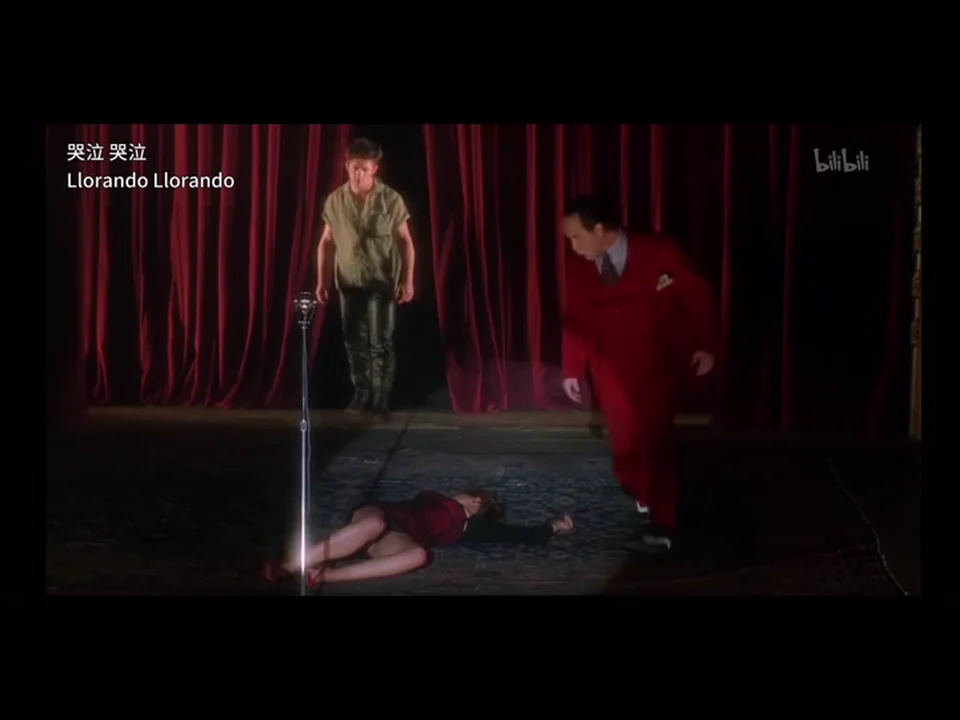
Mulholland Drive
David Lynch · 2001Identity, sound, performance, and memory rewrite one another, placing viewers inside a brain world without a stable owner.
The Illusionist
Neil Burger · 2006Early film magic, selective attention, and a fiction of love direct powers of the false toward relational creation.
The Prestige
Christopher Nolan · 2006Rivalry, doubles, sacrifice, and divided narration direct powers of the false toward destructive enclosure.
The Dark Knight
Christopher Nolan · 2008False heroism, unreliable public narrative, and divided choice turn truth into a fiction of collective survival.
Evidence Locker
Jill Magid · 2004Reconnects surveillance archive, love letter, recorded body, and institutional request, turning control into intimate writing.
Red Road
Andrea Arnold · 2006Low-resolution CCTV gains color, hapticity, desire, and shame, crossing operator and target positions.

Last Year at Marienbad
L’Année dernière à Marienbad · Alain Resnais · 1961Conflicting narration, repeated poses, and architecture let analog cinema anticipate a database-like brain-screen.

Muriel
Muriel ou Le temps d’un retour · Alain Resnais · 1963Algerian trauma moves within the present through rooms, objects, amateur film, sound, and montage.
Lost
J. J. Abrams, Damon Lindelof & Jeffrey Lieber · 2004–2010Island, flashbacks/forwards, numbers, ARG, fan wiki, and forums compose an open database for updating belief.
2001: A Space Odyssey
Stanley Kubrick · 1968A nonhuman cosmic viewpoint and interstellar island model open the personal brain-screen onto evolutionary time.
Pi
Darren Aronofsky · 1998Grain, high contrast, noise, headache, numbers, and ants compose the visceral inner pole of a mathematical brain world.
The Fountain
Darren Aronofsky · 2006Three timespaces, cosmic tree, body, and macro materials fold into the cosmic outer pole of the neobaroque.
The Battle of Algiers
La battaglia di Algeri · Gillo Pontecorvo · 1966One newsreel-like anticolonial memory is reactivated across Third Cinema, counterculture, counterterror training, and Palestinian contexts.
Chronicle of a Disappearance
Elia Suleiman · 1996Static shots, everyday intervals, humor, and fragments of identity loosen perceptual habits of occupied space.
Divine Intervention
Elia Suleiman · 2002A border-crossing balloon, a woman's passage, and impossible actions turn occupation into micropolitical violence-laughter circuit breakers.
The Time That Remains
Elia Suleiman · 2009A father's manuscript, 1948, the present hospital, wall, and impossible leap fold into the third synthesis.
Redacted
Brian De Palma · 2007DV diaries, news, documentary, surveillance, webpages, and reenactment form an explosive refractive viewpoint on war.
The Hurt Locker
Kathryn Bigelow · 2008Intimate sensation, telephoto observation, and battlefield addiction turn the soldier-body into an affective interface of perceptual logistics.
Standard Operating Procedure
Errol Morris · 2008Interview, photograph, reenactment, and off-frame command chain examine Abu Ghraib's traumatic archive.
After Yang
Kogonada · 2021SITE EXTENSION: a malfunctioning android's memory fragments turn brain-screen into questions of care, archival rights, and termination of personhood.
Severance
Dan Erickson et al. · 2022–SITE EXTENSION: partitioned persons, corporate space, data interfaces, and permissions rewrite the neuropolis as platform labor.
Black Mirror: Bandersnatch
David Slade · 2018SITE EXTENSION: choice tree, replay, platform logging, and narrative database write viewer operation into the work.
Immortality
Sam Barlow · 2022SITE EXTENSION: shot database, match cuts, performance archive, and player review co-produce an unfinishable update of belief.
Searching
Aneesh Chaganty · 2018SITE EXTENSION: cursor, notification, deletion, account switching, and window hierarchy unite investigation, intimacy, and data trace.
Coded Bias
Shalini Kantayya · 2020SITE EXTENSION: grounds neuropower in training data, classification threshold, false positives, enforcement consequences, and appeal rights.
Eye in the Sky
Gavin Hood · 2015SITE EXTENSION: drone, satellite, videoconference, casualty probability, and multinational command turn logistics 2.0 into platform decision.
Welcome to Chechnya
David France · 2020SITE EXTENSION: synthetic faces become an experiment in identity protection, powers of the false, and image-provenance disclosure.
Nope
Jordan Peele · 2022SITE EXTENSION: a nonhuman predator, camera apparatus, animal perception, and spectacle economy redistribute watcher and watched.
Memoria
Apichatpong Weerasethakul · 2021SITE EXTENSION: an unlocatable sound joins bodily memory, land, violent archive, and nonhuman time into an open brain-world.
OUTWARD PERSPECTIVES
Further questions and research directions
The predictive platform subject
- QUESTION
- When recommendation, generation, and feedback edit in real time, is the neuro-image's future cut open or predictive?
- EXTENSION
- Extends neuropower to real-time feeds, personalized interfaces, generative video, and account permissions.
- TENSION
- Novel output may be continuous modulation within a probability space.
- TEST
- Record prompt/training source, objective, ranking, feedback, exit, and platform logs.
Neurodiversity and anti-pathologization
- QUESTION
- Does brain-world analysis let people with psychiatric disabilities define their own experience and support?
- EXTENSION
- Reads schizoanalysis with neurodiversity, illness narrative, care, and media access.
- TENSION
- The aesthetic language of circuit breakers can hide clinical pain, medical violence, and everyday support.
- TEST
- Separate self-description, formal disconnection, clinical mechanism, historical institution, and care need.
The decolonial open archive
- QUESTION
- When states, movements, and search algorithms reread an archive, who gets naming and annotation rights?
- EXTENSION
- Connects The Battle of Algiers' transhistoricity to digital collections, colonial metadata, platform search, and community annotation.
- TENSION
- Openness can enable future recutting and repeated harm through contextless circulation.
- TEST
- List original production, rightsholder, first use, metadata changes, absences, and community annotation.
Synthetic images and provenance responsibility
- QUESTION
- When a synthetic face both protects and deceives, how should powers of the false be judged?
- EXTENSION
- Connects powers of the false, free indirect relation, and open archive to deepfakes, generative documentary, and provenance marking.
- TENSION
- Disclosure can build trust and expose people who require anonymity.
- TEST
- Record training/source material, participant consent, synthesis scope, disclosure audience, revocability, and expected harm.
War OSINT and multiscreen responsibility
- QUESTION
- When satellite, drone, social video, geolocation, and model inference share a screen, does more evidence approach truth?
- EXTENSION
- Extends logistics 2.0 to platformized OSINT, geolocation, moderation, synthetic content, and live circulation.
- TENSION
- Verification demands detail, while public detail can expose survivors, locations, and tactical information.
- TEST
- Build a refractive chain of source, time, place, transcode, crop, platform, uncertainty, and harm.
READING ROUTE
Chapter sequence and reading questions
- 01pp. 1–8, 26–34
Establish the necessary conditions
Mark delirium, hallucination, affect, and the brain-screen-world circuit, then state the explanatory limit of neuroscience.
- 02pp. 127–155
Read the temporal metaphysics next
Use one Resnais case to separate habitual present, pure past, and future cut, preventing a brain-scan-style reading.
- 03pp. 37–124
Return to disconnection, illusion, and affect
Closely view The Butterfly Effect, The Prestige, and Red Road, recording one formal circuit and one ethical limit for each.
- 04pp. 156–214
Move from confidence to material-force
For Lost list data item, connection rule, viewer operation, and undecidable; then distinguish inner/outer poles with Pi and The Fountain.
- 05pp. 217–306
Scale private brain worlds into neuropolitics
Across archive, Palestine, and Iraq cases, ask who shapes circuits, where interruption occurs, and which viewpoints must not be synthesized.
EDITIONS, SOURCES, AND RIGHTS
Return from the guide to editions, catalogues, and research
Copyright remains with Patricia Pisters, Stanford University Press, and relevant rightsholders.
Covers identify editions. Film images are low-resolution stills for commentary, with a source and timecode. Third-party images carry no open-licence designation.
Stanford University Press edition record ↗
Patricia Pisters, The Neuro-Image: A Deleuzian Film-Philosophy of Digital Screen Culture, Stanford University Press, 2012. Paperback ISBN 9780804781367.
Edition, series, publication date, pagination, ISBN, and official description; not a full-text download.University of Amsterdam author profile ↗
Official University of Amsterdam academic profile for Patricia Pisters.
Verification of affiliation, research areas, projects, and publications.UvA-DARE record for The Neuro-Image ↗
Bibliographic record for the book in the University of Amsterdam research database.
Used to verify metadata, affiliation, and pagination conventions; this catalogue record does not imply open access to the full book.Author's list of article translations ↗
The author's site lists a Chinese translation of Machines of the Invisible and other article translations.
Used to distinguish translated articles from a full-book translation; no formal Chinese translation of the whole book was verified.Cinema 2: The Time-Image ↗
Related primary source for brain-screen, time-image, powers of the false, fabulation, and the missing people.
University of Minnesota Press edition entry.Lev Manovich, Software Takes Command ↗
Comparative source for deep remixability, software culture, and database logic.
Official Bloomsbury book record.Paul Virilio, War and Cinema ↗
Comparative source for logistics of perception, weapon vision, and genealogies of war screens.
Official Verso edition record.