Concept definition
The noosign marks a crisis in the relation between image and thought. Classical cinema's promise that an organic whole and shock would automatically reach thought fails; the image instead confronts thought with the Outside, the unthought, and its own powerlessness, reopening the problem of belief in the world.
What the concept explains
The noosign is not a difficult image that merely prompts reflection but a crisis in the image-thought relation: organic totality and shock no longer guarantee thought, and the image confronts thought with the Outside, the unthought, and its own powerlessness, reopening belief in the world.
The Irrational Cut: How the Interstice Becomes a LectosignDiagrams and film passages
Alphaville
Alphaville, une étrange aventure de Lemmy Caution (1965)
Atlas shot reading
The corridor is already a machine
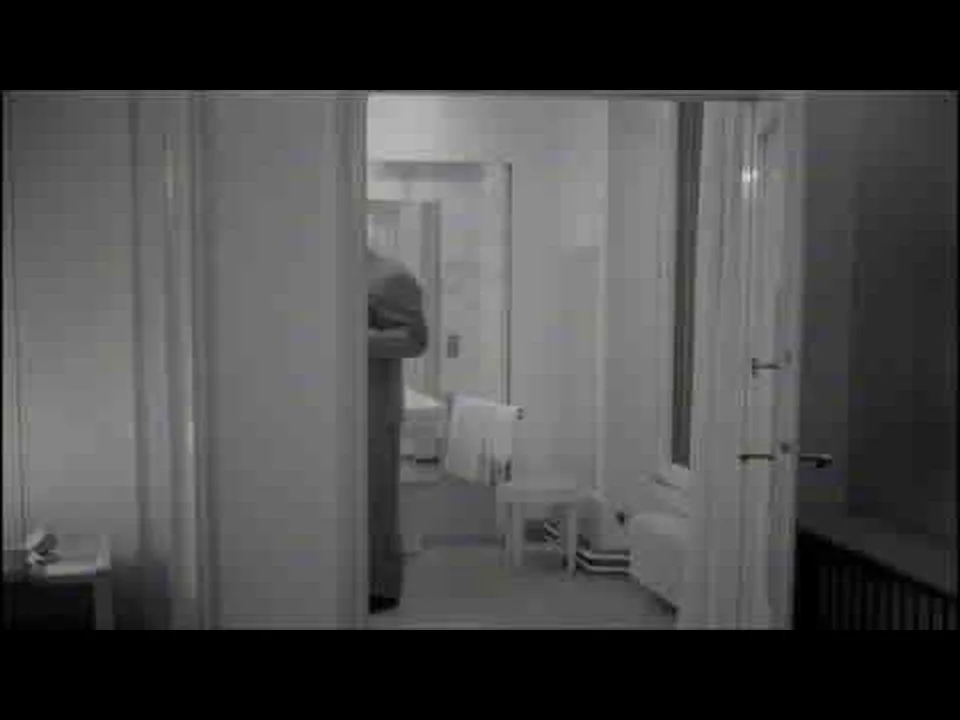
Doors, lights, telephones, and room numbers in an ordinary hotel distribute Lemmy Caution across addressable spaces, while the source of command remains dispersed through the environment.
Open full-size still- Displayed still
- 00:05:55
- Feature time
- 00:05:55
Stills and jumps use the user-supplied Bilibili carrier. The feature occupies 00:00:00–01:39:10; coastal aerial footage after it is carrier padding.
The still and link retain the film guide's recorded shot locator.
Image
Doors, lights, telephones, and room numbers in an ordinary hotel distribute Lemmy Caution across addressable spaces, while the source of command remains dispersed through the environment.
Relation to the concept
Paris locations cease to be mere stand-ins for a future city and become an information network. The noosign first changes how the question ‘who rules?’ can be asked.
Sources and further reading
- Cinema 2, Chapter 9
Cinema, thought, and the electronic automaton
- Cinema 2 edition record
Check primary-text and translation coordinates
- Criterion essay on Alphaville
Continue with Godard's operations on genre, city, and language
- Compare Synecdoche, New York
Move from a voice of control to doubles and earpiece commands
Films and scenes
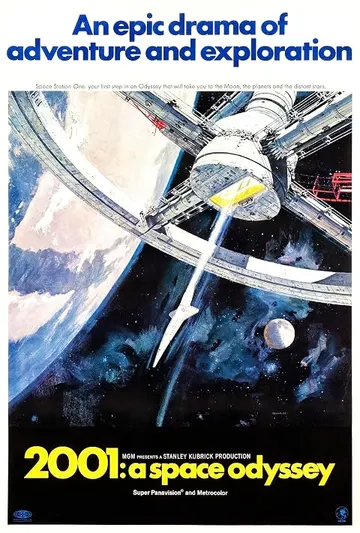
The cut from the thrown bone to an orbital craft first composes civilization as a technological whole. HAL's surveillance, lip-reading, and elimination of the crew then turn that whole's automatic reason into an impotence of thought; after the Stargate, perception can no longer return to any task-goal. These three changes in the rule of connection, rather than the film's enigmatic subject matter, force thought to reopen its relation to the world.
IMDb identification poster ↗Related film readings · 7 films
Teorema · 1968 — The visitor’s arrival distributes consequences like a theorem, yet his departure leaves an unsolved problem. Bodies, desert, and scream force thought toward an outside.
Passion · 1982 — Tableaux vivants, factory labour, and failed production remain unresolved. The film turns theorem into problem and relinks bodies, images, and sounds across intervals.
2001: A Space Odyssey · 1968 · Candidate reading — The cut from the thrown bone to an orbital craft first composes civilization as a technological whole. HAL's surveillance, lip-reading, and elimination of the crew then turn that whole's automatic reason into an impotence of thought; after the Stargate, perception can no longer return to any task-goal. These three changes in the rule of connection, rather than the film's enigmatic subject matter, force thought to reopen its relation to the world.
Synecdoche, New York · 2008 — Caden copies New York inside a warehouse and assigns actors to copy friends, strangers, and himself. Each double demands more rooms, rehearsals, and doubles of doubles. The stage no longer abbreviates life; it expands like a crystalline seed into an environment that reabsorbs marriage, ageing, and death. Sammy first makes a profession of watching Caden and later assumes his role, showing that a copy is not a static image: it changes how the original can next live until neither person nor set retains an outside to which it can return.
Dogville · 2003 — Black stage, white lines, and invisible doors turn setting into a map of thought and reveal space as a relational machine.
Napoléon · 1927 — Mounted on horseback or hurled like a weapon, the camera is first freed from fixed support. Superimpositions and the triptych screen then juxtapose, collide, and expand local movements. Present battle and immense history are not unified by one viewpoint; they produce a mathematical sublime between interval and whole.
Alphaville · 1965 — Alpha 60's voice, an ever-contracting dictionary, and ubiquitous interrogation turn power from a single tyrant into an information network. Lemmy enters with the body of an old detective film and with poetry, making action, language, and feeling into noise the machine cannot process. The controlled city develops a rhythmic fault from within.
Criteria
Does the image merely present a puzzle, or does it undo an established whole of thought and force thinking to face the Outside, the unthought, and its own powerlessness?
Distinctions and counterexamples
Philosophical dialogue, complex narration, abstraction, ritual bodies, or brain-shaped décor does not automatically make a noosign. The analysis must show an established whole of thought failing and the image changing the problem itself.
Common confusion: Criterion: bodies, ceremonies, audio-visual gaps, and brain-like mise-en-scène are possible mechanisms only. Difficulty, philosophical dialogue, or brain-shaped décor is not itself a noosign.
Texts and sources
Cinema 2, ch. 7–8
- 01Cinema 2: The Time-Image
Authoritative source for the standard translation, translators, ISBN, and publication date.
View source and edition →
Research disagreements
Replacement or coexistence?
The time-image reverses the subordination of time to movement; both regimes persist and can shift locally within one film.
Taxonomy or generator?
Fixed labels invite mere example-hunting; an open taxonomy requires new concepts to transform existing relations and explain across cases.
How do we use Deleuze precisely?
Test four layers: sensory-motor relation, actual/virtual circuit, audio-visual connection, and regime of truth.
Where contemporary images push this concept
Counterexample against conceptual overreachCandidate reading · same-session trace pending
TikTok For You: what decides the next image?
Automatic continuation is not by itself a noosign. Deleuze's spiritual automaton concerns how images force thought to confront relations that recognition cannot master. A recommender calculating the next item establishes automation of sequence, so the case remains a counterexample first.
Scope and limits If inquiry observes only continuous playback and cannot show how ranking, feedback, and exit design jointly compel or interrupt thought, the spiritual-automaton claim should be withdrawn in favour of a platform-sequence analysis.
- TikTok: How TikTok recommends videos #ForYouOfficial platform document · dated 2020 versionThis is corporate self-description, not a source-code audit or a complete account of the 2026 implementation; preserve version and interface evidence.
- Firth / Marinelli: DatacastingOpen-access article · TikTok algorithmic flowThe article describes one platform moment, not all TikTok implementation or a Deleuze primary concept.
Counterexample against conceptual overreachCandidate reading · build and state-transition record pending
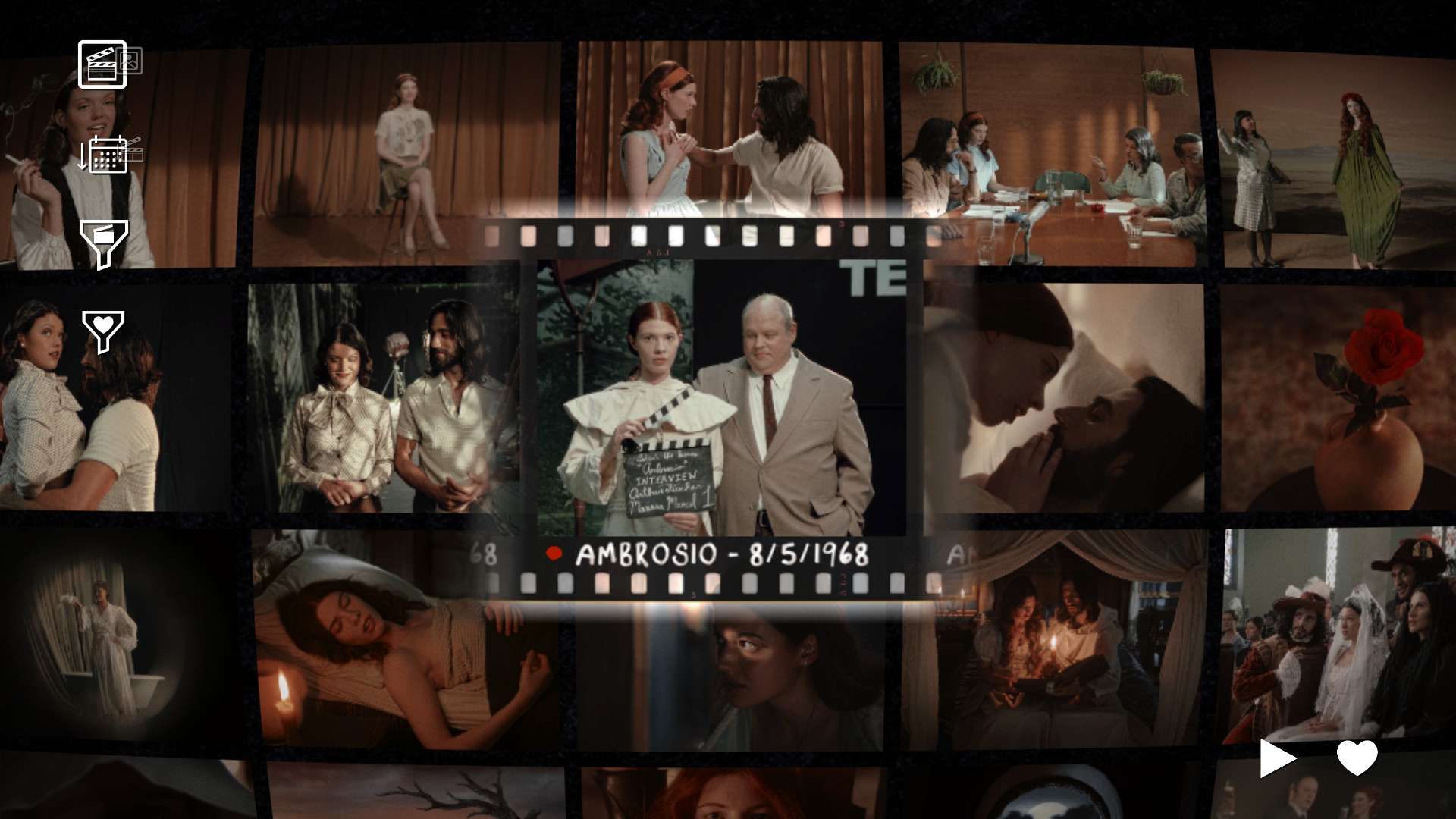
Immortality: how each click rearranges an image's past
Clicking, pausing, rewinding, and matching seem to make the player an operator of thought, yet may amount only to recognition labour scripted by the interface. The case asks whether the spiritual automaton compels thought or packages recognition as free discovery.
Scope and limits If every input rewards graphic similarity and leads to a preset clip, leaving the player without a break in recognition, the mechanism should be described as database retrieval rather than a spiritual automaton.
- Steam: Immortality official listingOfficial platform listing · interaction factsThe store listing establishes mechanics and metadata, not actual player paths or genuine branching; play logs are required.
- Marco Caracciolo: Complexity and near-aha moments in digital narrativePeer-reviewed article · interactive narrative and player embodimentThe article provides an interactive-narrative bridge; it does not upgrade database multiplicity directly into Deleuzian virtuality.
- Kristen M. Daly: Cinema 3.0: The Interactive-ImageScholarly article · external naming of interactive imageCinema 3.0 is Daly’s framework, not a third cinema theory written by Deleuze.
Counterexample against conceptual overreachCandidate reading · same-session trace pending
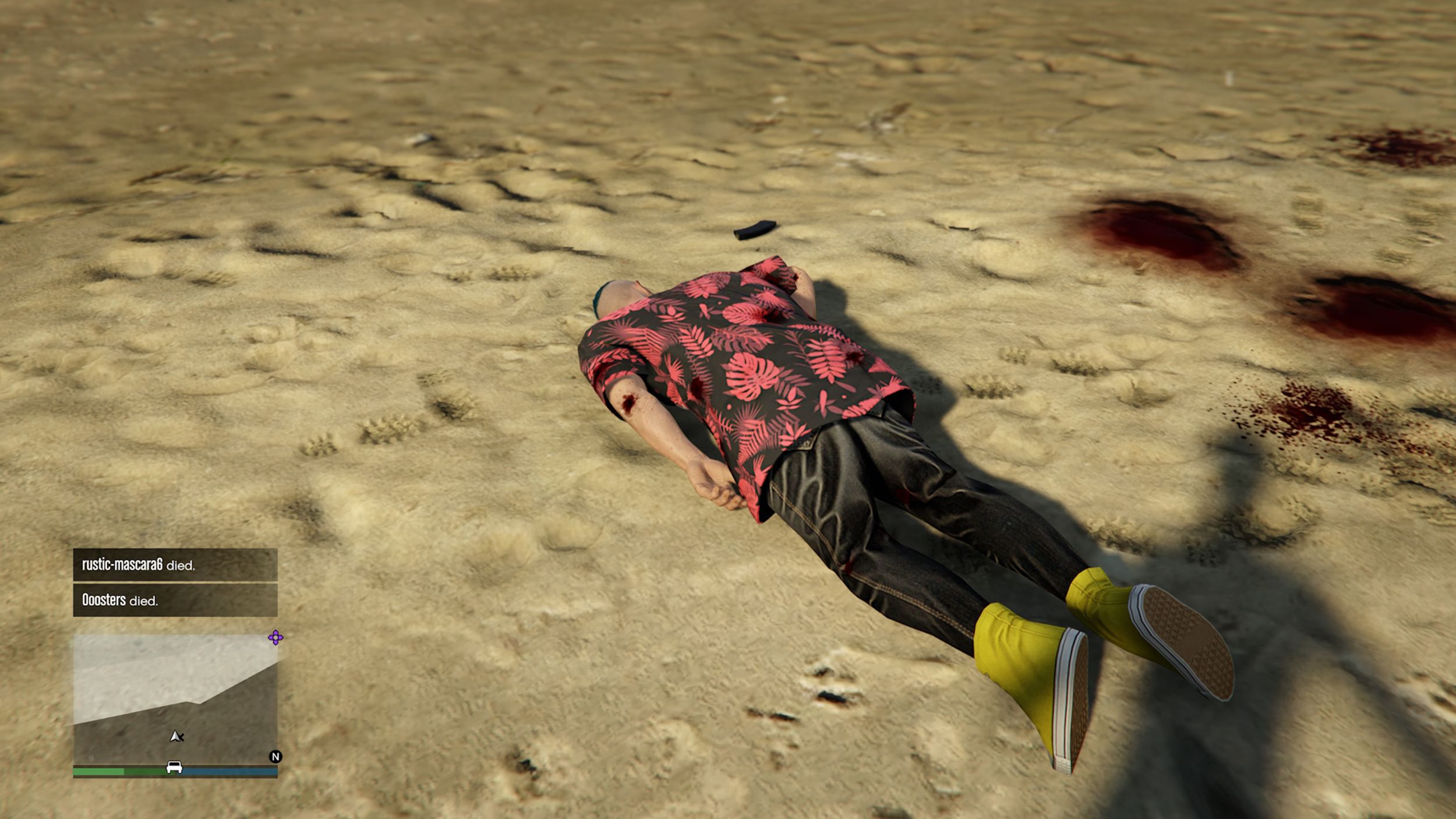
Grand Theft Hamlet: game accidents interrupt Shakespeare
Game rules, network lag, and passing players can interrupt rehearsal, but software automation does not thereby become a noosign. The counterexample can be upgraded only if a session trace shows accidents breaking recognition and forcing performers to reinvent theatrical relations.
Scope and limits If gunfire, lag, and passer-by interruptions are all edited into expected jokes and never alter rehearsal decisions, GTA remains a set and the spiritual-automaton relation does not hold.
- IDFA: Grand Theft Hamlet film pageFestival official page · machinima factsFestival catalogues also list 2023/91 minutes; editions must be logged separately rather than merged.
- Machinima as a Production Technique: Grand Theft HamletScholarly article · game engine and documentary structureThe article does not replace sequence-level logging of in-game accidents, lag, and camera movement; virtual space is not directly the virtual.
Concepts to distinguish
Compare them
- Irrational cut / intersticecoupure irrationnelle / interstice
Deducible continuity among shots, sounds, and images gives way to an irreducible interval between series. Thought is forced to happen within it.
→ - Body / braincorps / cerveau
Everyday attitudes and gestus sediment time in the body; cinema of the brain turns space, light, colour, and connection into a map of thought. Body and brain form two distinct cinematic mechanisms of thought.
→ - Lectosignlectosigne
The time-image tends toward an image that must be read: picture, sound, text, data, and invisible relations form strata. Viewing becomes an ongoing work of comparison, recomposition, and concept formation.
→ - Fabulationfabulation
Characters and filmmakers jointly remake reality through narration, performance, and re-enactment. Story no longer serves a prior truth; it creates a speaking position for a collective still in formation.
→ - Speech act and a people to comeacte de parole / peuple à venir
The storytelling speech-act crosses private affairs and politics, produces collective utterances, and prefigures the people who are missing.
→