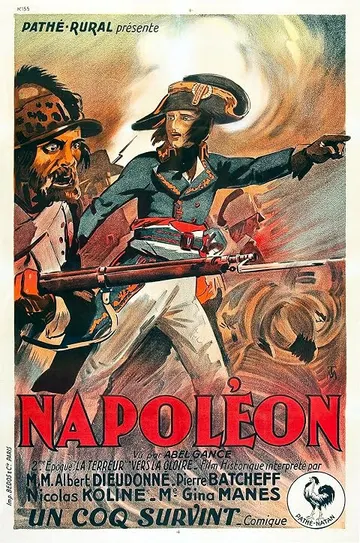
Abel Gance / 阿贝尔·冈斯 · 1927
Napoléon
Napoléon vu par Abel Gance
Mounted on horseback or hurled like a weapon, the camera is first freed from fixed support. Superimpositions and the triptych screen then juxtapose, collide, and expand local movements. Present battle and immense history are not unified by one viewpoint; they produce a mathematical sublime between interval and whole.
Film details
- Original title
- Napoléon vu par Abel Gance
- Director
- Abel Gance / 阿贝尔·冈斯
- Year
- 1927
- Region
- France
Film analysis: how shots organize concepts
Mobile camera, superimposition, and triptych screen push local movements toward a historical whole no single viewpoint can contain.
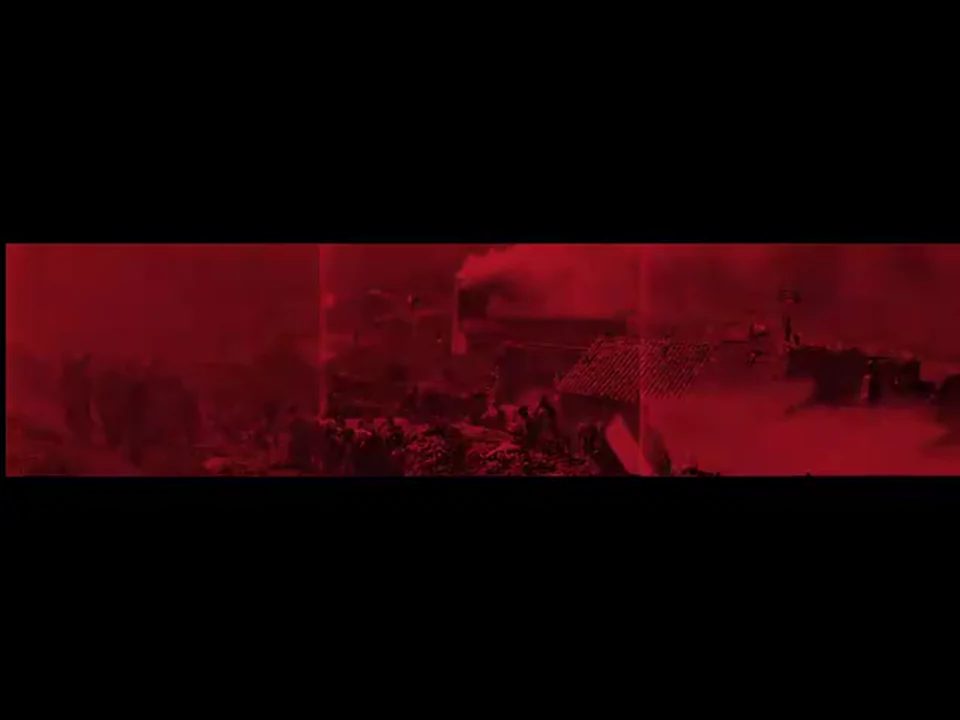 05:24:00
- 01Camera leaves its support
In snowball fight and battle, the camera changes position with running, throwing, horses, and impacts.
Perception no longer stands outside action; the camera itself becomes part of the movement-image. - 02Series enter resonance
The Convention's waves of bodies crosscut with the stormy sea, gestures and directions resonating across heterogeneous shots.
Montage produces a whole from juxtaposed movements rather than illustrating a pre-given historical unity. - 03The screen multiplies laterally
The final triptych simultaneously juxtaposes army, maps, flags, and faces in changing combinations.
Several presents contest the whole, producing a mathematical sublime between interval and boundless history.
Close-reading questions
- 01In the snowball fight, the camera changes position with charges, throws, and impacts; how does children's play turn a fixed viewpoint into a unit of movement that bodies can hurl?
- 02The Convention's surging crowd crosscuts with a stormy sea: political tumult → natural movement → shared rhythm. How does montage produce a whole possessed by no single shot?
- 03The final triptych juxtaposes army, maps, flags, and faces; why is horizontal expansion not merely a wider picture but several presents contesting the historical whole at once?
Shots and scenes
Primary texts, scholarship, and locators
Theory coordinate: Cinema 1, Minnesota 1986, ch. 3, pp. 45, 47–48
- 01Cinema 1: The Movement-Image
Standard Minnesota English translation and a principal citation edition in Anglophone scholarship.
Open the atlas source record →
Viewing gateways and editions
- Verified complete Bilibili carrier: 拿破仑 Napoléon 1927 (修复版)bilibili.comOpen film page ↗
- Page access
- Accessible when checked
- Version extent
- Restored version
- Source type
- User-uploaded page
Edition note: Restored complete single-part film · 5:33:04.
Link checked: 2026-08-14