Irrational cut / interstice
coupure irrationnelle / intersticeirrational cut / interstice
Concept definition
Deducible continuity among shots, sounds, and images gives way to an irreducible interval between series. Thought is forced to happen within it.
What the concept explains
An irrational cut belongs to neither image-series that it separates and cannot be filled by spatial continuity, psychological causality, or omitted information. It opens an interstice through which incommensurable sound, visual, or image-series must be relinked externally.
The Irrational Cut: How the Interstice Becomes a LectosignDiagrams and film passages
Tropical Malady
สัตว์ประหลาด! (2004)
Concept relation awaiting verification
Tiger title card after black
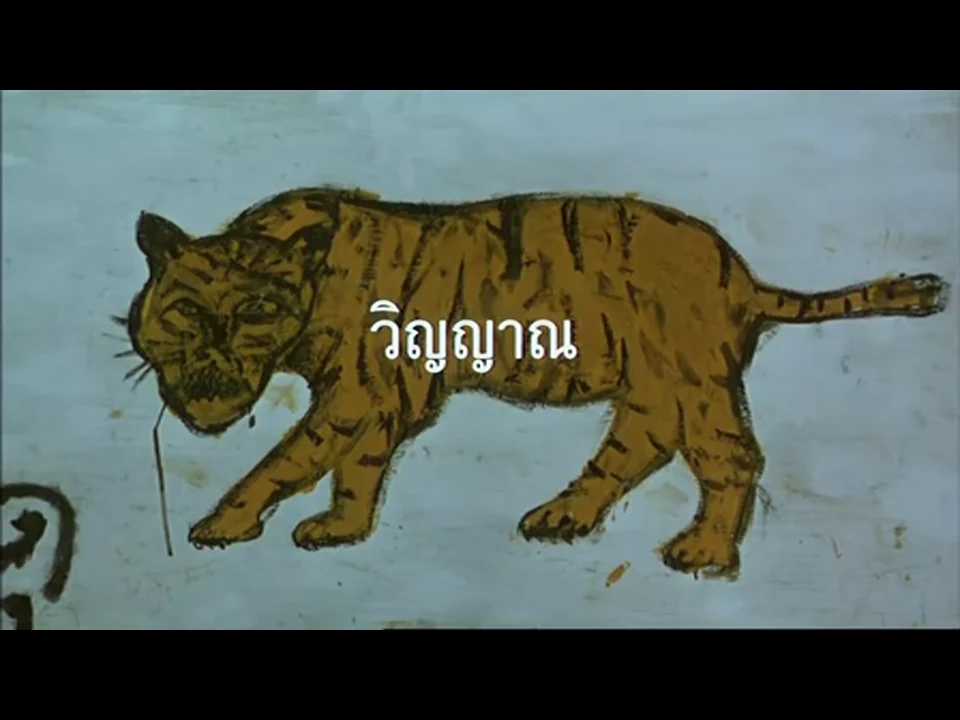
Photographs, black screen, and a second title sequence headed 'A Spirit's Path' sever the everyday love story of the first half. Bilibili timecode 00:58:55.
Open full-size still- Displayed still
- 00:58:55
- Discussion passage
- 00:58:18 - 00:59:22
Frame-checked against the single-part Bilibili repost stream BV12QcAzME5g: the page API reports 6,867 seconds and the retrieved qn16 media runs 6,866.48 seconds. Bilibili supplies no subtitle track; dialogue sense was cross-checked against a third-party English SRT bearing the same DVDRip release name.
Single-part user repost on Bilibili; the page and anonymous Player API were verified as playable. No platform subtitle track is present.
Still checked: 2026-08-13 · Carrier access checked: 2026-08-13
Image
After the final interior shot of the first half, photographs of the two men appear and the image turns black.
The black screen gives way to a hand-drawn tiger, the Thai word for 'spirit,' and a second set of credits; the exact-release English SRT renders the written sequence as 'A Spirit's Path' and a shaman legend, after which the image enters the forest at night.
Sound
The preceding sound stops at the black interval, so the aural break coincides with the visual rupture.
After the photographs turn to black, the track settles into sustained near-silence; no spoken dialogue or narration is heard over the tiger cards.
Relation to the concept
Test the cut through two image-series that remain related without being directly deducible.
Sources and further reading
- Bilibili · 冰山阴影_ · public repost page
00:58:55 · Photographs, black screen, and a second title sequence headed 'A Spirit's Path' sever the everyday love story of the first half. Bilibili timecode 00:58:55.
Muriel
Muriel ou Le Temps d’un retour (1963)
Atlas discussion reading
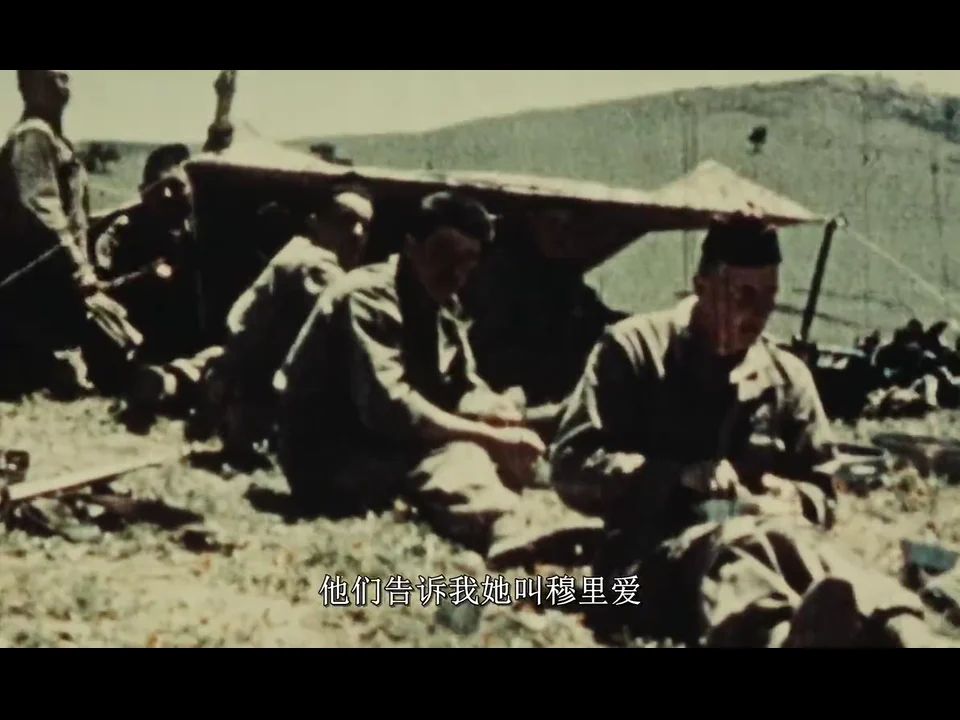
The routine soldiers' footage does not show torture; Bernard's present voice presses the absent event into the image.
The routine soldiers' footage does not show torture; Bernard's present voice presses the absent event into the image.
Open full-size still- Displayed still
- 第11分段 00:00:25 / Part 11 00:00:25
- Discussion passage
- 第11分段 00:00:00–00:01:25 / Part 11 00:00:00–00:01:25
- Carrier part
- 11
Part 11 was frame-checked; the anchor lies in the disjunction between silent 8mm footage and Bernard's narration.
Complete Bilibili carrier; the shot at 第11分段 00:00:25 was checked frame by frame, and the still and timestamp come from the same public upload.
Still checked: 2026-08-14
Image
The 8mm footage shows soldiers sitting and resting in the hills; it does not show the torture Bernard describes.
Grain, faded colour, and projected-film texture mark the footage as another layer of record.
Sound
Over 8mm images without synchronized location sound, Bernard's present voice names Muriel and continues his account.
Relation to the concept
The wartime past is neither fully restored by the footage nor contained in speech; the split between routine images and torture testimony makes the past act in the present as an untotalizable sheet.
Sources and further reading
- Bilibili · Muriel, part 11
第11分段 00:00:25 / Part 11 00:00:25 · Complete Bilibili carrier; the shot at 第11分段 00:00:25 was checked frame by frame, and the still and timestamp come from the same public upload.
- Cinema 2: The Time-Image
Cinema 2, chapter 5, pp. 116, 118, 120, 122–123; these are film-level primary-text coordinates, while the present shot relation is this site's analysis.
The Ganges Woman
La Femme du Gange (1974)
Atlas discussion reading
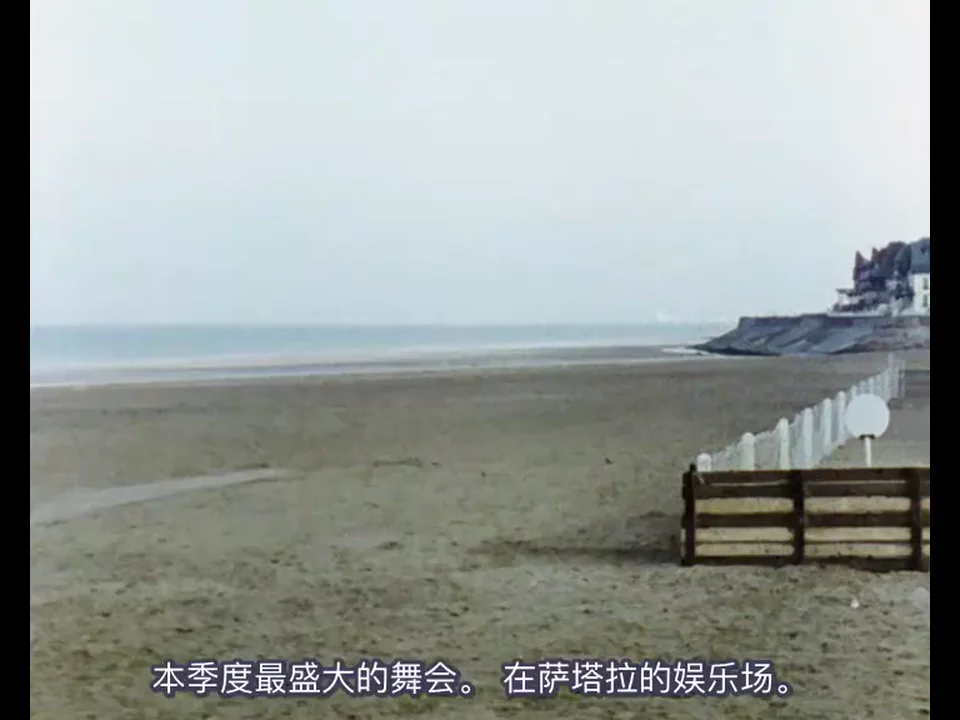
The voice points toward a ball and its figures while the image holds on a place with no speaker.
The voice points toward a ball and its figures while the image holds on a place with no speaker.
Open full-size still- Displayed still
- 第1分段 00:08:20 / Part 1 00:08:20
- Discussion passage
- 第1分段 00:08:00–00:08:40 / Part 1 00:08:00–00:08:40
- Carrier part
- 1
Part 1's empty-beach and off-screen voice passage was frame-checked.
Complete Bilibili carrier; the shot at 第1分段 00:08:20 was checked frame by frame, and the still and timestamp come from the same public upload.
Still checked: 2026-08-14
Image
Beach, bench, fence, and distant buildings remain empty; neither the ball nor a speaker appears.
Sound
An off-screen voice speaks of a grand ball without receiving a synchronized source in the empty view.
Relation to the concept
Sound and image unfold independently rather than through synchronized explanation; the viewer must read the interval among empty place, absent figures, and off-screen narration.
Sources and further reading
- Bilibili · La Femme du Gange, part 1
第1分段 00:08:20 / Part 1 00:08:20 · Complete Bilibili carrier; the shot at 第1分段 00:08:20 was checked frame by frame, and the still and timestamp come from the same public upload.
- Cinema 2: The Time-Image
Cinema 2, chapter 7, pp. 173–180; chapter 9, pp. 245–261.
From the Cloud to the Resistance
Dalla nube alla resistenza (1979)
Atlas discussion reading
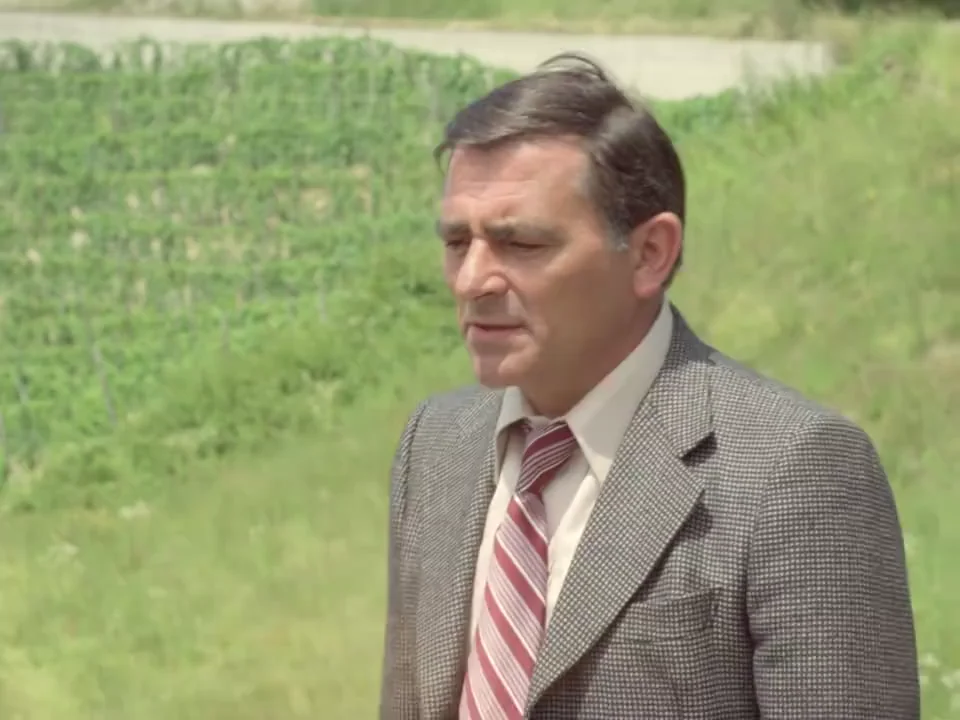
Speech does not explain the land; voice and fields inscribed by struggle must be read together.
Speech does not explain the land; voice and fields inscribed by struggle must be read together.
Open full-size still- Displayed still
- 01:10:00
- Discussion passage
- 01:09:35–01:10:25
The monologue-in-the-fields passage was frame-checked.
Complete Bilibili carrier; the shot at 单片 01:10:00 was checked frame by frame, and the still and timestamp come from the same public upload.
Still checked: 2026-08-14
Image
The man speaks at the field's edge while crops, paths, and parcels remain clearly visible behind him.
The shot does not cut to dramatic action as an illustration of the speech.
Sound
The man delivers Pavese's text in a continuous, measured voice without erasing the outdoor sound field.
Relation to the concept
The land is read as a stratum marked by struggle while speech crosses without exhausting it; the two series reconnect history at their respective limits.
Sources and further reading
- Bilibili · From the Clouds to the Resistance complete film
01:10:00 · Complete Bilibili carrier; the shot at 单片 01:10:00 was checked frame by frame, and the still and timestamp come from the same public upload.
- Cinema 2: The Time-Image
Cinema 2, chapter 9, pp. 253, 255, 259.
Pierrot le fou
Pierrot le fou (1965)
Atlas shot reading
War is compressed into a tourist-recognizable package
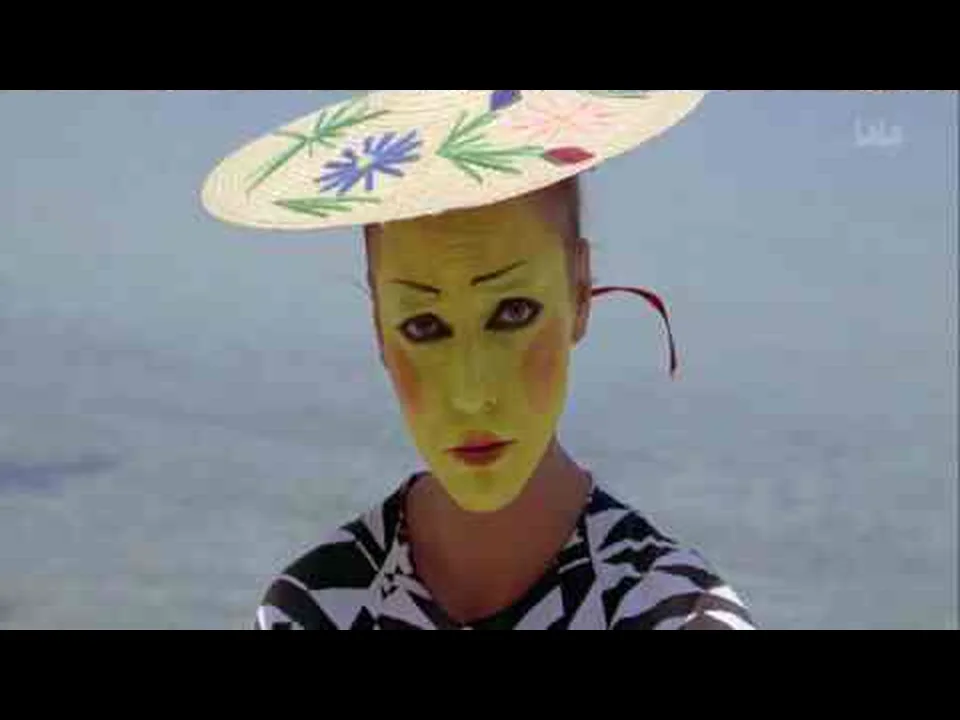
Marianne wears yellowface and a conical hat while Ferdinand plays an American soldier; with minimal props they sell tourists an instantly recognizable ‘Vietnam War.’
Open full-size still- Displayed still
- 00:57:35
- Feature time
- 00:57:35
All three stills and jumps use Bilibili’s official PGC ep368800 (01:50:45; internal BVID BV1zz4y1k7Ej). Official access can vary by membership and region; shot locator, edition record, and theoretical source remain separately documented.
The still and link retain the film guide's recorded shot locator.
Image
Marianne wears yellowface and a conical hat while Ferdinand plays an American soldier; with minimal props they sell tourists an instantly recognizable ‘Vietnam War.’
Sound
Cries of ‘Hollywood’ and ‘Communist,’ war effects, and fabricated ‘Vietnamese’ compress history into genre sound. The racialized cliché is exposed and simultaneously reused by the film.
Relation to the concept
The passage is neither an effect of prior action nor a cause of what follows, yet it recategorizes the image and lets story resume elsewhere. The irrational cut changes the measure of linkage rather than merely cutting abruptly.
Sources and further reading
- Cinema 2, Chapter 7
Shock to thought, categories, and connections no longer totalized
- Cinema 2, Chapter 9
Autonomous audiovisual series and the interval
- Deleuze seminar, 29 Jan 1985
Primary seminar discussion of the Vietnam skit, category, and irrational cut
- Criterion: self-portrait in a shattered lens
Verify the party, advertising speech, and fragmentary form
- Pantenburg: open Godard / Farocki study
Continue tracing seascape, horizon, and disembodied voice
- Compare Passion
Move from categorical interruption to vertical juxtaposition of painting, factory, and studio
Pierrot le fou
Pierrot le fou (1965)
Atlas shot reading
The body ends; the film does not
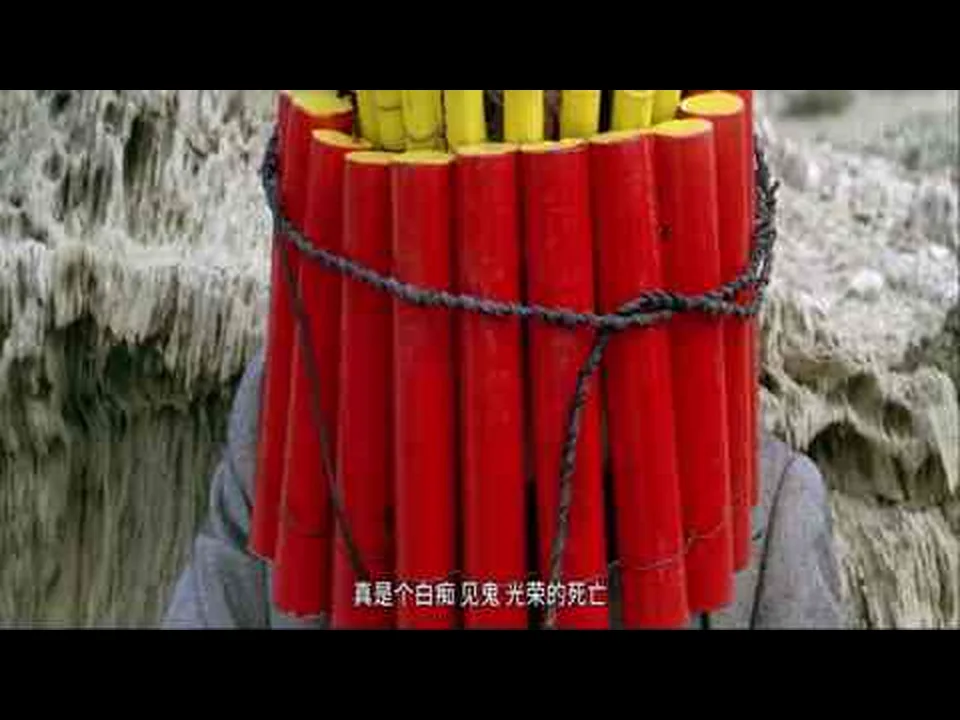
A blue-painted face is enclosed by red and yellow dynamite. After lighting it, Ferdinand tries to handle the fuse; shout and action are interrupted by explosion, followed by sea and horizon.
Open full-size still- Displayed still
- 01:48:41
- Feature time
- 01:48:41
All three stills and jumps use Bilibili’s official PGC ep368800 (01:50:45; internal BVID BV1zz4y1k7Ej). Official access can vary by membership and region; shot locator, edition record, and theoretical source remain separately documented.
The still and link retain the film guide's recorded shot locator.
Image
A blue-painted face is enclosed by red and yellow dynamite. After lighting it, Ferdinand tries to handle the fuse; shout and action are interrupted by explosion, followed by sea and horizon.
Sound
The explosion does not close the soundtrack. Disembodied voices of Ferdinand and Marianne continue Rimbaud’s ‘Eternity’ over the sea, letting speech exceed the visible body.
Relation to the concept
Self-destruction attempts a heroic endpoint, while hesitation arrives too late to reverse action. The irrational cut leaves voice, sea, and verse as a remainder irreducible to plot closure.
Sources and further reading
- Cinema 2, Chapter 7
Shock to thought, categories, and connections no longer totalized
- Cinema 2, Chapter 9
Autonomous audiovisual series and the interval
- Deleuze seminar, 29 Jan 1985
Primary seminar discussion of the Vietnam skit, category, and irrational cut
- Criterion: self-portrait in a shattered lens
Verify the party, advertising speech, and fragmentary form
- Pantenburg: open Godard / Farocki study
Continue tracing seascape, horizon, and disembodied voice
- Compare Passion
Move from categorical interruption to vertical juxtaposition of painting, factory, and studio
Passion
Passion (1982)
Atlas shot reading
Grand conquest keeps returning to ‘take your positions’
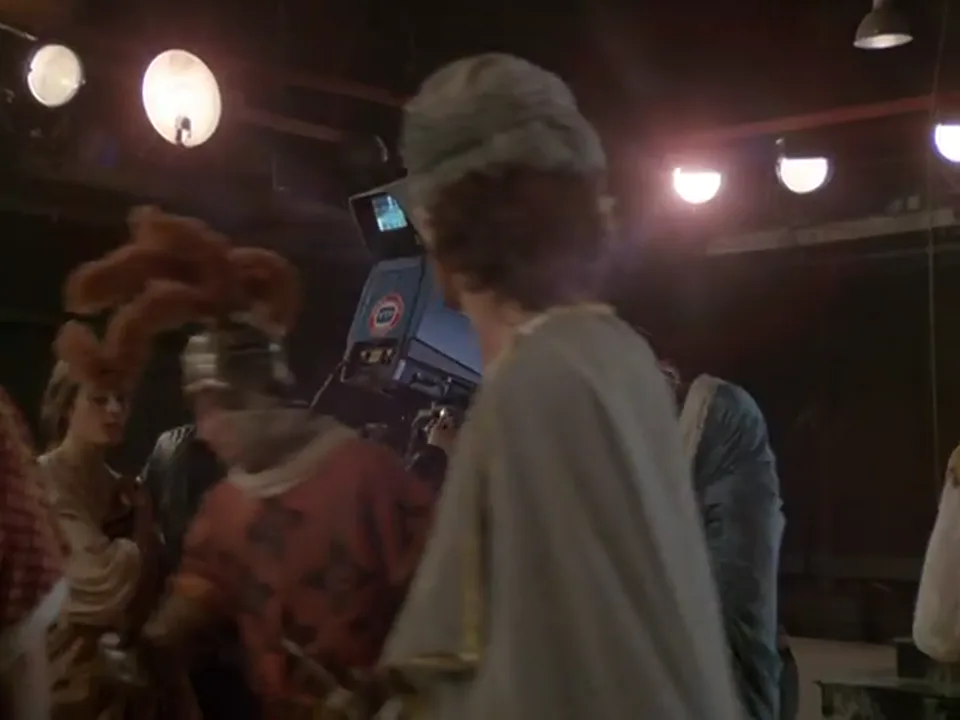
Camera, track, crew, horses, armoured figures, and crowd remain together within the Delacroix-like scene; the history of conquest continually shows itself as rehearsal, direction, and rework.
Open full-size still- Displayed still
- PAL 00:50:30
- Feature time
- PAL 00:50:30
Frame research uses the public Internet Archive reference copy (01:24:18, 25fps PAL speed-up). Its three images are checked frames, while watch links are marked as edition locators rather than direct Bilibili shots. In 87–88-minute editions these events usually occur about 4% later; align by visual and spoken checkpoints. User-supplied BV1gPKPzZEfZ is Ryusuke Hamaguchi’s 2008 namesake and remains excluded from Godard’s record.
Open the named edition and locate the moment using the still and timecode.
Image
Camera, track, crew, horses, armoured figures, and crowd remain together within the Delacroix-like scene; the history of conquest continually shows itself as rehearsal, direction, and rework.
Sound
An off-screen account of Delacroix gives way to increasingly dense commands: ‘back to work,’ ‘positions,’ ‘why aren’t you working,’ ‘Work!’ Commands move bodies but do not produce a final completed picture.
Relation to the concept
The irrational interval keeps imperial image and modern studio labour incommensurable yet mutually pressuring. Incompletion is not production anecdote but a force making thought ask who labours, commands, and bears risk for spectacle.
Sources and further reading
- Cinema 2, Chapter 7
Category, thought, and connection no longer guaranteed by a whole
- Cinema 2, Chapter 8
Bodily attitudes, work, and belief in this world
- Cinema 2, Chapter 10
Conclusion on open image, information, and outside
- Ilse Lafer: Passion in Work
Trace Goya, factory, strike, and unfinished production page by page
- Deleuze seminar: pictorial category
Primary account of tableaux as vertically developing categories
- Cinémathèque française edition record
Verify the 87-minute edition, production, and music
Films and scenes
Voices detached from visible bodies and images of rooms, attitudes, and absent events form heterogeneous series that can meet only at the limit of absence.
IMDb identification poster ↗Related film readings · 13 films
Hiroshima mon amour · 1959 — Private memory and historical catastrophe remain incommensurable; sound and image place both experiences within one interval, making forgetting temporal structure.
Passion · 1982 — Tableaux vivants, factory labour, and failed production remain unresolved. The film turns theorem into problem and relinks bodies, images, and sounds across intervals.
India Song · 1975 · Candidate reading — Voices detached from visible bodies and images of rooms, attitudes, and absent events form heterogeneous series that can meet only at the limit of absence.
Pierrot le fou · 1965 — Words, colours, bodies, songs, and quotations form multiple series. Thought is forced in the intervals between them.
A Letter to Three Wives · 1949 — The absent woman’s voice hangs over three marriages at once. Its displaced source and three possible consequences make time fork around one threat.
Muriel · 1963 — The Algerian War past remains fragmentary as short montage, rooms, and speech continually transform it across different sheets.
From the Cloud to the Resistance · 1979 — Mythic text, postwar resistance, and filmed land form distinct strata. Speech acts awaken the image’s historical pressure across irrational cuts.
The Ganges Woman · 1974 — Two atemporal voices and the visible image each form autonomous series. The irrational cut preserves their boundaries so sound and image meet only at their limits.
The Lorry · 1977 — Sound acquires the reader's body while the visual is emptied into an unoccupied cab, roads, and a phantom lorry. As the lorry moves toward the sea, terrestrial movement enters Duras's oceanic perception.
Tropical Malady · 2004 — The film’s rupture produces a new perceptual regime among love, legend, human-animal becoming, and forest, testing the postwar European model in return.
Providence · 1977 — The sick writer’s coughs, thunder, gunshots, and fictional characters translate into one another through montage; body, history, and weather become sheets of one brain-world. The morning gathering does not debunk the night’s fiction but composes a transverse sheet across it.
Readings in the same thematic group
Chronicle of Anna Magdalena Bach · 1968 — Anna's narration, letters, and the son's account form free indirect discourse. Live performance lets music acquire a resistant force independent of score and biographical explanation.
Her Venetian Name in Deserted Calcutta · 1976 — The soundtrack of India Song is placed over a different field of ruins. Names remain in an earlier stratum of memory while the ruins belong to another present; sound and image do not coincide on-screen and approach one another only at their limits.
Criteria
Does this cut conceal an ellipsis, or produce an irreducible relation?
Distinctions and counterexamples
A jump cut, blackout, ellipsis, continuity error, or shock edit remains technical if action later fills the gap. The interstice must not be treated as a simple synonym for the irrational cut either.
Common confusion: Criterion: technical discontinuity must produce an irreducible relation.
Texts and sources
Cinema 2, ch. 7–9
- 01Cinema 2: The Time-Image
Authoritative source for the standard translation, translators, ISBN, and publication date.
View source and edition →
Research disagreements
Replacement or coexistence?
The time-image reverses the subordination of time to movement; both regimes persist and can shift locally within one film.
Taxonomy or generator?
Fixed labels invite mere example-hunting; an open taxonomy requires new concepts to transform existing relations and explain across cases.
How do we use Deleuze precisely?
Test four layers: sensory-motor relation, actual/virtual circuit, audio-visual connection, and regime of truth.
Concepts to distinguish
Compare them
- Noosignnoosigne
The noosign marks a crisis in the relation between image and thought. Classical cinema's promise that an organic whole and shock would automatically reach thought fails; the image instead confronts thought with the Outside, the unthought, and its own powerlessness, reopening the problem of belief in the world.
→ - Body / braincorps / cerveau
Everyday attitudes and gestus sediment time in the body; cinema of the brain turns space, light, colour, and connection into a map of thought. Body and brain form two distinct cinematic mechanisms of thought.
→ - Lectosignlectosigne
The time-image tends toward an image that must be read: picture, sound, text, data, and invisible relations form strata. Viewing becomes an ongoing work of comparison, recomposition, and concept formation.
→ - Fabulationfabulation
Characters and filmmakers jointly remake reality through narration, performance, and re-enactment. Story no longer serves a prior truth; it creates a speaking position for a collective still in formation.
→ - Speech act and a people to comeacte de parole / peuple à venir
The storytelling speech-act crosses private affairs and politics, produces collective utterances, and prefigures the people who are missing.
→