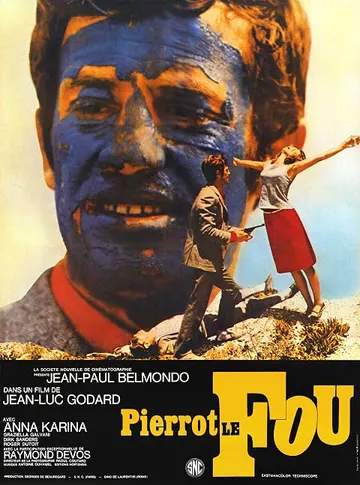
Jean-Luc Godard / 让-吕克·戈达尔 · 1965
Pierrot le fou
Pierrot le fou
Words, colours, bodies, songs, and quotations form multiple series. Thought is forced in the intervals between them.
Film details
- Original title
- Pierrot le fou
- Director
- Jean-Luc Godard / 让-吕克·戈达尔
- Year
- 1965
- Region
- France / Italy
Film analysis: how shots organize concepts
Why does Pierrot le fou repeatedly abandon carrying an action to completion and instead cut and reconnect colour, advertising, war performance, writing, and poetry?
The party first lets advertising formulae seize the characters’ speech. The Vietnam skit abruptly turns flight into a saleable racialized genre. The dynamite ending tries to make a full stop but is reopened by hesitation, explosion, seascape, and disembodied verse. The film composes heterogeneous series through ‘and’; relation arises from intervals rather than being guaranteed by a complete story.
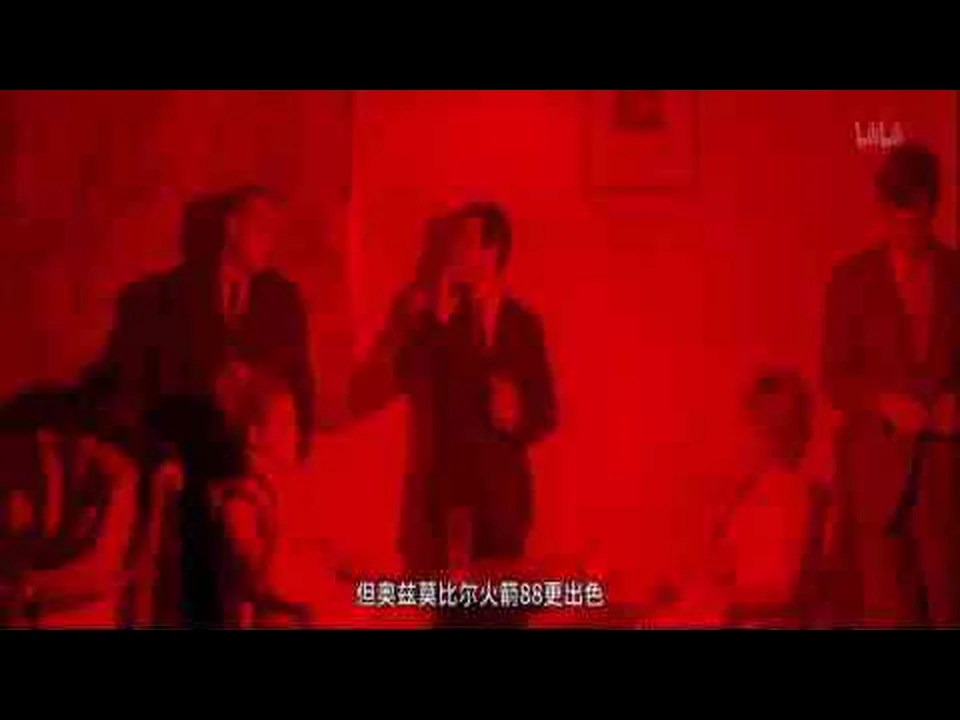
Red, yellow, and blue monochrome light compress guests into advertising-like planes; composition resembles product images taking turns on screen rather than neutral social space.
Characters exchange no experience and take turns reciting formulae for cars and toiletries. Speech still leaves mouths but has lost a unique speaking position.
The lectosign asks viewers to read how colour fields, commodity speech, and bodies compose rather than search for psychology. Cliché is not a theme but a media machine preformatting what can be said.
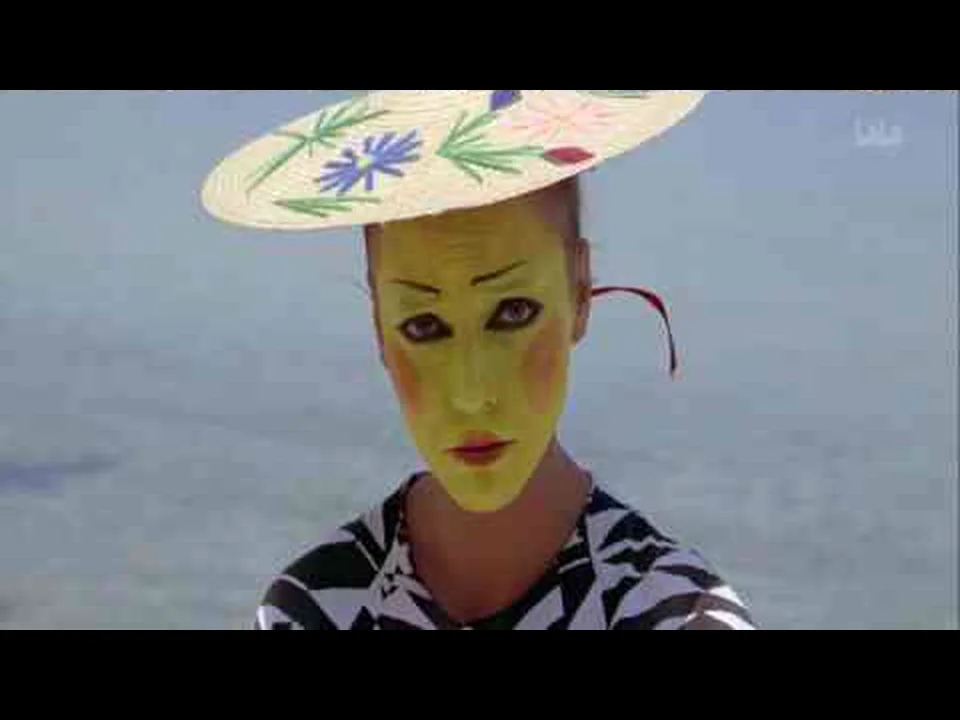
Marianne wears yellowface and a conical hat while Ferdinand plays an American soldier; with minimal props they sell tourists an instantly recognizable ‘Vietnam War.’
Cries of ‘Hollywood’ and ‘Communist,’ war effects, and fabricated ‘Vietnamese’ compress history into genre sound. The racialized cliché is exposed and simultaneously reused by the film.
The passage is neither an effect of prior action nor a cause of what follows, yet it recategorizes the image and lets story resume elsewhere. The irrational cut changes the measure of linkage rather than merely cutting abruptly.
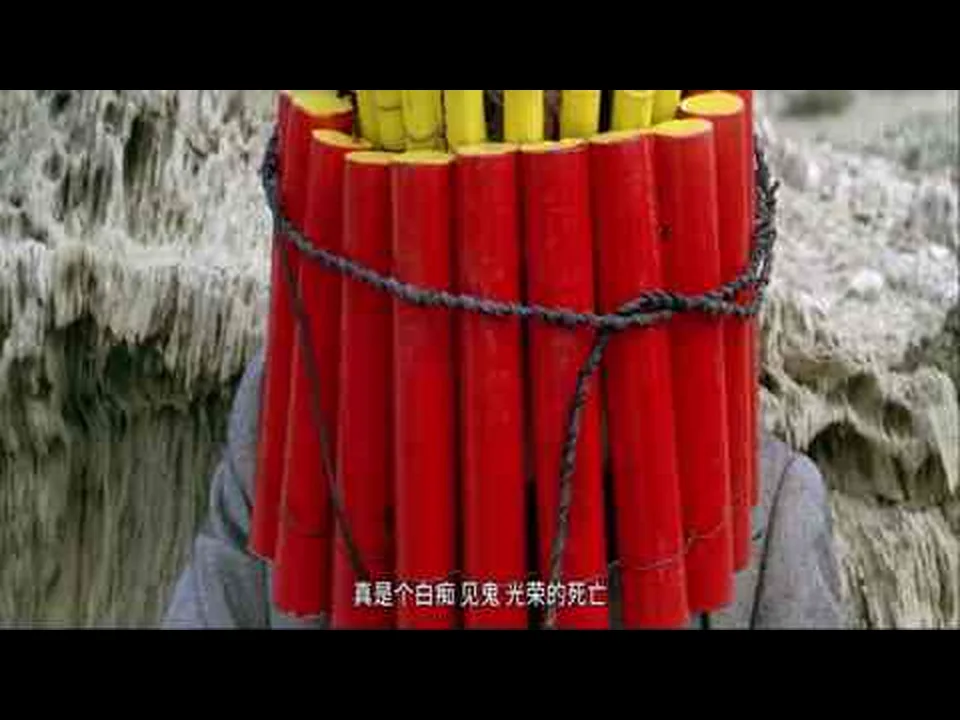
A blue-painted face is enclosed by red and yellow dynamite. After lighting it, Ferdinand tries to handle the fuse; shout and action are interrupted by explosion, followed by sea and horizon.
The explosion does not close the soundtrack. Disembodied voices of Ferdinand and Marianne continue Rimbaud’s ‘Eternity’ over the sea, letting speech exceed the visible body.
Self-destruction attempts a heroic endpoint, while hesitation arrives too late to reverse action. The irrational cut leaves voice, sea, and verse as a remainder irreducible to plot closure.
EDITION NOTE All three stills and jumps use Bilibili’s official PGC ep368800 (01:50:45; internal BVID BV1zz4y1k7Ej). Official access can vary by membership and region; shot locator, edition record, and theoretical source remain separately documented.
Colour blocks, advertising speech, songs, and explosion repeatedly cut the road movie's continuous route, forcing the image to be read between shots rather than inside the story.
- 01Clichés saturate the everyday
Party guests recite advertising copy while magazines, comics, and primary-colour planes enter Ferdinand and Marianne's escape.
Language and image first appear as ready-made fragments the characters cannot unify into a credible world. - 02The journey is joined by intervals
Cars, coast, diary, song, and direct address jump across one another, while sound often crosses or refuses visual causality.
The 'and' of editing replaces the natural passage from one action to the next. - 03Self-destruction cannot restore the whole
Ferdinand paints his face blue and wraps himself in dynamite; his cry of regret is cut by the blast, followed only by sea and verse.
The endpoint of action does not close the story; the irrational cut leaves thought in the audio-visual remainder.
Close-reading questions
- 01When party guests speak perfume, automobile, and lifestyle advertising as dialogue, can Ferdinand still identify a real person behind speech? Log how slogans, primary-colour blocks, and faces replace one another, testing when cliché saturates perception.
- 02Road, coast, diary, songs, and direct address do not join at one narrative tempo. Which sounds cross visual cuts, and which written words interrupt action? What structure of intervals appears when every ‘then’ is rewritten as ‘and’?
- 03Ferdinand paints his face blue, binds on dynamite, and cries regret, yet sea and verse remain after the blast. Does the ending complete an act of self-destruction, or convert its failure into an audiovisual remainder belonging to no body?
Analysis and scene sources
Shots and scenes
Primary texts, scholarship, and locators
Theory coordinate: Cinema 2, ch. 1, p. 10; ch. 8, pp. 189, 191–92, 200; ch. 9, p. 255
- 01Cinema 2: The Time-Image
Authoritative source for the standard translation, translators, ISBN, and publication date.
Open the atlas source record →
Viewing gateways and editions
- Official Bilibili feature page: 狂人皮埃罗bilibili.comOpen film page ↗
- Page access
- Login required
- Version extent
- Recorded as a complete version
- Source type
- Distributor or streaming platform
Edition note: Official Bilibili feature · 1:50:45; membership and regional conditions apply.
Link checked: 2026-08-25
- Criterion Collectioncriterion.comOpen film page ↗
- Source type
- Distributor or streaming platform