DEEP GUIDE · PRINT LOCATORS · FILM MATRIX
25《后人类影像:探索一种后德勒兹的电影哲学》
From post-cinema, ghosts, infection, and war to illness, blood, fire, machine vision, slow time, and mind games
As images, algorithms, machines, cities, and ecologies enter the body, the subject is neither sovereign nor merely dissolved into a network node. Jiang Yuhui adds trauma, finitude, and irreversible injury to Deleuzian becoming: the posthuman subject is one that can be wounded, reflect, and remain answerable for the consequences of connection.
Simplified Chinese · 上海人民出版社 · 2024 · ISBN 9787208190122
- UNITS
- 18
- LOCATORS
- 117
- CURATED BOOK CASES
- 24
- EXTENSIONS
- 13

CENTRAL ARGUMENT
Central argument and scope
CONTRIBUTION
The book turns a post-Deleuzian position into a cross-media diagnosis: the ghost tests temporal debt, infection tests environmental modulation, and war tests control circuits. Illness, blood, and fire return negativity to concrete bodies, while city, ecology, games, and three methodological extensions carry it into digital culture.
PAGINATION
Shanghai People's Publishing House, first edition and first printing, July 2024, ISBN 978-7-208-19012-2, catalogued as 10+439 pages.
SCOPE
Eighteen substantive reading units, 117 narrow print locators, eighteen concepts, ten relation cards, twenty-four core screen cases from the book, thirteen explicitly marked site extensions, six outward perspectives, and a five-step route.
CHAPTER ARGUMENT CHAINS
18 reading units with exact print locators
Post-cinema is not after cinema
Once medium ontology loosens, the question shifts from what cinema is to what is becoming cinema.
Cinematic experience disperses across apparatus, environment, consumption, and body, making subjectivity the book's real problem.
Experiential assemblage
Casetti replaces a closed medium with an assemblage of image, environment, technology, and spectator.
Rupture and poor images
Rupture, roughness, and demanded participation may interrupt frictionless consumption.
The subject after affect
The more freely post-cinematic affect circulates, the more urgent the question of reflection and responsibility becomes.
EXACT PRINT LOCATORS
- p. 1
Informational space, media, and perception turn viewing into whole-body experience.
- p. 3
Cinema's future is secured by image-becoming-concept, not new devices.
- p. 5
Cinematic experience is a dynamic assemblage of six kinds of elements.
- p. 8
Becoming and rupture rewrite ontology as a question of becoming.
- p. 13
The opacity of a poor image can awaken reflection.
- p. 15
Post-cinematic affect pushes subjectivity to the foreground.
A fourth dimension of finitude
The posthuman subject rebuilds responsibility through mortality, passivity, dependence, and trauma rather than restoring sovereignty.
Transhuman, nonhuman, and symbiotic theories unsettle the classical subject; a fourth dimension prevents subjectivity from disappearing into networks.
Three established routes
Enhancement, internal inhumanity, and multispecies entanglement each loosen the human boundary.
A fissure in vitalism
The leap from potestas to potentia still presupposes a subject capable of experience and reflection.
Traumatic materialism
Finitude and helplessness make vulnerability the point of departure for responsibility.
EXACT PRINT LOCATORS
- p. 19
The posthuman contains fear and joy, refusing the enhancement/extinction binary.
- p. 20
Transhuman, inhuman, and nonhuman form three established dimensions.
- p. 25
Symbiosis discourse may conceal extinction within post- and non-.
- p. 30
The theory of life-capacity still requires the hidden condition of reflection.
- p. 34
Finitude, mortality, and passivity make vulnerability ontological.
- p. 37
Dependence and helplessness begin a reconstruction rather than abolition of subjectivity.
The ghost makes the future indebted
The ghost is not retro imagery but the disturbance of a calculable present by the dead, repressed histories, and unrealized futures.
Crystalline coexistence is pushed by Derridean untimeliness into an ethical demand: the subject must answer what returns rather than prove its reality.
Genre and position
Genre posthumans and informational positions cannot explain temporal debt.
Crystal and specter
Actual-virtual coexistence meets untimely return, and the future begins to claim the present.
Beyond machine time
Neither discrete code nor analog continuity is sufficient for spectral time.
EXACT PRINT LOCATORS
- p. 38
Experimental images break from replicant and terminator genre clichés.
- p. 43
A narrative subject understood as an information position can be replaced by a machine.
- p. 48
Spectral return reopens narrative time through never having been human.
- p. 50
Spectral, crystalline, machine, and narrative times enter one field of tension.
- p. 53
Digital time tends toward discrete coding and control.
- p. 54
Spectral time returns as a future crossing life and death.
Images become environmental effects
The infective image can refract a nonhuman ecology and turn the subject into a repeatedly moldable database surface.
Moving from affect to effect, the chapter tracks how images as technical beings permeate life and uses survival to test becoming against manipulation.
From affect to effect
Cinematized life requires analysis of bodily change and technical existence.
Database and refraction
Autonomous surfaces flatten time, while Annihilation produces ecological mutation through refraction.
The ethics of survival
Infection becomes hypnosis when difference can no longer survive.
EXACT PRINT LOCATORS
- p. 55
Effects, storyboards, consumption, and platforms make daily life a lethal machine.
- p. 58
The time-image can itself be technologized into a callable effect.
- p. 61
Effect means both what cinema does and how it exists.
- p. 65
The modeling impulse compresses the world into an autonomous surface.
- p. 68
The Shimmer renders infection as refraction, mutation, and spectral life.
- p. 71
The repeatedly reshaped survivor becomes the ethical dividing line.
Simulation can kill directly
Cinema, military vision, feedback, and command compose a war machine; when the machine defines human error, symbiosis turns into elimination.
The chapter moves from vanished resistance in remakes to operational simulation, drone moral distance, and responsibility in automated killing.
Remake and cybernetics
The human-machine question becomes why resistance disappears from feedback systems.
Simulation executes reality
War images train perception; Ender's Game and drone imagery remove the buffer between simulation and reality.
Error and betrayal
Once machines classify humans as error, control and responsibility split apart.
EXACT PRINT LOCATORS
- p. 72
Two remakes shift the problem from humanity to vanished resistance.
- p. 76
Three waves of cybernetics connect posthuman theory to the cinema-war machine.
- p. 81
War films enroll spectators in power rather than merely representing battle.
- p. 85
Simulation can execute killing directly, undoing the real/false boundary.
- p. 88
The question becomes how machines define human error.
- p. 90
Cold vision and data rewrite symbiosis as betrayal.
Machine madness tests self-control
Learning, feedback, and connection do not ensure obedience; delirium joins technical goal drift to a crisis of subjective boundaries.
The author rejects the binary of techno-vitalism and runaway acceleration, testing reason, trauma, foresight, and responsibility through female delirium.
The machine that can go mad
Goal drift reveals disconnection within the connected subject.
Reason's border and discipline
The cogito proves itself at madness's border, while The Handmaid's Tale gives trauma a bodily space.
Foresight and perversion
Arrival and Gone Girl test whether responsibility is swallowed by foresight or symbolic structure.
EXACT PRINT LOCATORS
- p. 95
The question shifts from machine learning to whether a machine can go mad.
- p. 98
The connected subject simultaneously produces boundary anxiety.
- p. 102
A learning machine's goal may drift from its designer's intent.
- p. 105
The author rejects the choice between vitalist optimism and accelerated loss of control.
- p. 110
The cogito returns to the struggle before reason and madness separate.
- p. 121
Bright enclosed space makes female trauma visible.
- p. 127
The film's foreknowledge is criticized for weakening responsibility in action.
- p. 129
Perversion and maternal signs offer two female deliriums.
The interval makes haptics ethical
Haptics is not unmediated fusion; the human body and film body never fully coincide, and distance preserves subject and other.
Sobchack, Marks, and Shaviro make viewing bodily; the author limits immersive optimism through asymmetric capture, mediated memory, and dying images.
Unequal bodies
The film-body lineage reveals noncoincidence through Lady in the Lake's subjective camera.
Memory and reversibility
Memory mediates touch; touching and being touched approach but never merge.
Dying images
Viewing decaying images means bearing disappearance rather than technologically possessing it.
EXACT PRINT LOCATORS
- p. 130
Film body and haptic visuality establish an embodied lineage.
- p. 135
The cinematic machine always risks one-way capture of the subject.
- p. 141
Subjective cinematography makes the inequality of film body and human body visible.
- p. 146
Haptic contact still occurs through audiovisual mediation and memory.
- p. 150
Touching and being touched approach without coinciding.
- p. 153
Identifying with an image means bearing its disappearance.
Responsibility persists at world's end
The apocalyptic image refuses to exchange spectacular destruction for easy rebirth; without guarantees, care for a helpless other becomes the final measure.
The chapter separates revelation from pure destruction and cosmos from experienced world, using Melancholia to turn apocalypse from salvation into mournful responsibility.
Apocalypse and absolute nothing
Apocalyptic disclosure cannot substitute for thinking world-ending.
Spectacle and prophecy
Disaster spectacle and a known future can pre-absorb genuine loss.
Melancholic responsibility
As the world vanishes, sheltering another becomes an ethics without guarantee.
EXACT PRINT LOCATORS
- p. 154
Revelation/new beginning is distinguished from pure destruction.
- p. 156
World is the horizon of experience, transcendence, and responsibility.
- p. 161
Absolute nothing exposes thought's affirmative presupposition.
- p. 167
Disaster films often imbalance visual spectacle and empty humanism.
- p. 173
Prophetic structures may be captured by the preemption of a known future.
- p. 175
Melancholia turns apocalypse into responsibility for another's death.
- p. 177
Rupture, trauma, and absolute nothing lead to three embodied experiences.
Illness breaks time and demands narration
Medically visible disease does not coincide with lived illness; narrative can re-form experience and prematurely close disorder.
Sontag's anti-metaphor is supplemented by history, bodily action, and three illness narratives, then grounded in Chinese films of stigma, desire, death, and futurity.
Disease/illness and models
Visible diagnosis, invisible pain, and social narrative must be separated.
Rupture and emplotment
Restitution, chaos, and quest differently organize time broken by illness.
Chinese illness images
Humor, blood, and wind test redemptive narrative and an open future.
EXACT PRINT LOCATORS
- p. 181
Blind Massage begins from the mismatch between medical visibility and invisible pain.
- p. 186
Demetaphorization still requires history, society, and action.
- p. 192
Curse-infection-redemption and restitution-chaos-quest are juxtaposed.
- p. 197
Illness interrupts continuity among past, present, and future.
- p. 202
Laughing at death can shape a self and aestheticize chaos.
- p. 206
Blood and wind separate cursed desire from open becoming.
Blood carries mute pain into relation
Blood is material and a sign of life, kinship, violence, infection, and community; it socializes unspeakable pain without turning another's suffering into utility.
Accident, disease, war, and carnival compose four relational subjects rather than four fixed personalities.
Pain and asymmetry
Scarry's account of pain finding voice meets Levinas's useless suffering.
Four images of blood
Reversal, objectification, and transfer carry blood across the individual/social boundary.
Life and bloodlust
Kinship, infection, witnessing, and media carnival collide in Chinese cases.
EXACT PRINT LOCATORS
- p. 207
Pain begins to tell a story when it finds voice, with blood as medium.
- p. 212
Another's suffering resists justification by social utility.
- p. 217
Blood establishes transsubjective relations through reversal, objectification, and transfer.
- p. 221
Accident, disease, war, and carnival organize four Chinese films.
- p. 227
Blood points simultaneously to life, death, kinship, and infection.
- p. 233
Bodily blood overlaps social bloodlust, turning carnival into expenditure.
- p. 236
Four subjects model suffering crossing personal and social boundaries.
Fire preserves irreversible time
Fire's creation/destruction, illumination/concealment, and instant/process push negativity to an elemental level and refute the fantasy of infinitely resettable digital worlds.
Landscape becomes a theater co-staged by body, history, and viewing; from Burning to Notre Dame reconstruction and Sekiro, the issue is whether deep memory leaves an afterimage.
Element and landscape
Fire compresses opposites into process, and landscape ceases to be background.
Unreadable interiors
Exhausted landscapes and psychic distance compel viewer participation.
Digital reconstruction and afterimage
Trauma-free restoration erases deep time, while faint calls preserve responsibility.
EXACT PRINT LOCATORS
- p. 237
Fire connects creation, destruction, actual, and virtual.
- p. 242
Seamless connection can become a landscape monster consuming difference.
- p. 248
Landscape theater leads to an impossible past and passive creation.
- p. 254
Fire enters cinema from element, totem, and medium of war.
- p. 261
Distance between exhausted exterior and unreadable interior intensifies participation.
- p. 269
Three layers of fire suspend the viewer inside and outside the film.
- p. 275
Digital restoration exposes the erasure of deep memory by trauma-free landscapes.
- p. 277
Blue afterimages retain calls and empathy in digital ruins.
Shanghai becomes a temporal singularity
The city is not a futurist backdrop but a temporal vortex in which past and future fold back and force an irreversible present choice.
Templexity, Looper, decopunk, and Saturday Fiction connect Shanghai's acceleration, historical layering, and performance spaces into an actant.
Forking acceleration
The third synthesis forks into creative acceleration and exhausting vortex.
The future organizes backward
Future Shanghai rewrites the present, while self-ending choice cuts the loop.
Decoration and performance
Collaged surfaces and theatrical space let the city think its media history.
EXACT PRINT LOCATORS
- p. 281
City, ecology, and games move negativity into real-world interfaces.
- p. 284
Eternal return/death drive is read as two accelerations.
- p. 286
Templexity and Looper cast Shanghai as a temporal singularity.
- p. 290
Self-ending becomes an irreversible choice borne in the present.
- p. 293
Art Deco recomposes history through surface collage.
- p. 296
Saturday Fiction weaves the city into an actant of time travel.
Digital immortality still has a material bill
Digital images depend on energy, minerals, computation, transport, and waste; ecological cinema must admit finite matter and nonhuman time into form.
The chapter moves from the paradox of uploaded immortality through media footprints and deep time toward cinema-without-cinema, refusing to reduce ecology to disaster subject matter.
Immortality and footprint
Uploaded consciousness and digital spectacle both depend on exhaustible infrastructure.
Deep time
Object-oriented form and low-footprint production admit nonhuman scales.
Mortal ecology
Ecological consciousness recognizes the shared mortality of media, nature, and subject.
EXACT PRINT LOCATORS
- p. 297
Mind upload exposes media immortality through bodily death.
- p. 300
Digital spectacle still depends on energy, minerals, transport, and waste.
- p. 305
Digital networks reconnect rather than transcend finite energy.
- p. 308
Riverglass turns environmental subject matter into object-oriented form.
- p. 311
La Jetée and carbon-balanced production ask after cinema without cinema.
- p. 313
Ecological consciousness is an immersive restitution of a decaying world.
Replay reopens the future but does not equal freedom
Interactivity and button count do not guarantee subjectivity; games differ temporally when save points split the present into futures, even as algorithms may prewrite every branch.
Film viewing is already interactive; convergence should be judged by how operation, narrative, reflection, and permanent consequence are coordinated.
Demystifying interaction
Viewing, replay, and sharing also alter relations, while feedback remains bounded.
The film-game bottleneck
Cutscenes and choice can interweave and interrupt emotion and reflection through operation.
Present peaks
Saving and replay open one present into multiple future tests.
EXACT PRINT LOCATORS
- p. 314
Interaction is not exclusive to games; viewing practices reconnect cinema.
- p. 317
Immediate feedback remains limited by algorithmic permission.
- p. 319
Late Shift and The Dark Pictures test cutscene-choice interweaving.
- p. 323
Interactive operation may disrupt reflection, emotion, and narrative coherence.
- p. 326
Save points and replay open the present into multiple futures.
- p. 327
Discrete present peaks challenge accounts of cinematic presentness.
Machine vision automates and may estrange centered sight
Vision does not copy objects but diagnoses invisible forces; machine vision's politics depends on what sensing, inference, and interface reveal or conceal.
Nietzsche, Bataille, Virilio, Brakhage, and Snow form a lineage from the valuing eye through blind vision to machinic movement.
Eye and blindness
Genealogical, bodily, and solar eyes shatter the unified viewer.
Reversing automated vision
The crisis of machine vision may also generate heterogeneous eye-screen assemblages.
Closed eyes and wavelength
Darkness, grain, zoom, and sound wave make noncentered intensities visible.
EXACT PRINT LOCATORS
- p. 331
The visual extension responds to French thought's denigration of vision.
- p. 333
Artistic vision diagnoses invisible forces rather than copying objects.
- p. 338
The genealogical eye connects perspective, body, and value creation.
- p. 344
Vertiginous descent lets blindness consume the central viewpoint.
- p. 349
Eye and screen can generate a dynamic molecular assemblage.
- p. 354
Closed-eye vision restores decay, darkness, and entoptic movement to perception.
- p. 359
Wavelength joins machinic zoom, light, and material flashing.
Slow makes difference inside fast flows
Slow is neither a speed value nor nostalgic withdrawal but time retained for events not yet digested inside high-speed capture.
Fast cinema acts on nerves and dissolves the subject; Taste of Cherry and The Anabasis make slow into aftertaste, contemplation, and a politics of facing a disappearing world.
Beyond fast/slow
Slow gains political force only by tearing difference within dominant fast flows.
Neural capture
High-frequency images produce pleasure and passive bodily dissolution.
Aftertaste and contemplation
Slow turns toward events that occurred but remain uncomprehended.
EXACT PRINT LOCATORS
- p. 360
Slow should be understood through difference, not as fast's opposite.
- p. 364
An effective slow strategy tears difference inside dominant speed.
- p. 368
Fast cinema directly captures eye, nerve, and flesh.
- p. 370
The flying hero retains self-command; the jet man is destroyed by speed.
- p. 375
Taste of Cherry turns solution-seeking into aftertaste.
- p. 379
The Anabasis makes slow a contemplative politics facing disappearance.
Cinema actively makes philosophical problems
Strong film-philosophy requires form itself to produce problems; puzzles, signs, and metafilm become reflective only when their circuits encounter an outside.
Through Cavell, Deleuze, and Elsaesser, the author reaches thought experiment and games, separating closed puzzle-solving from strong connections capable of criticizing reality.
From illustration to production
Cinema moves from philosophical object to an automaton that thinks and makes problems.
Reflexivity and thought experiment
Genuine reflexivity preserves external difference; counterexamples and possible worlds intervene in reality.
Strong digital connection
The digital aggregates difference, and games may make philosophical problems operable tests.
EXACT PRINT LOCATORS
- p. 380
Cinema can generate rather than merely illustrate philosophical problems.
- p. 386
The thought-image advances cinema into the strong version.
- p. 389
Puzzle and sign interpretation may become closed alienation.
- p. 392
Mind-game film traces reciprocal effects between work and spectator.
- p. 396
Counterexamples and possible worlds let cinema intervene in reality.
- p. 398
Games become a candidate future for strong film-philosophy.
The ghost preserves an irreducible question
As digital systems tend toward operational univocity, Hamlet's inaction, ghost, and film versions preserve fissures between life/death, dream/waking, and reason/madness.
Brain Dance and four Hamlets condense the book: a genuinely post-Deleuzian brain cinema must make life's flow encounter absence, death, and resistance.
Game and inaction
Operational univocity meets a revenge chain broken by consciousness and ethical hesitation.
Three spectral theaters
Ghost, memory, and desire organize world, death, and subject position.
Effects and video remnants
Brainscapes can drown the ghost and still leave a question in their fissures.
EXACT PRINT LOCATORS
- p. 399
Brain Dance opposes cinematic dream-making to direct game-brain linkage.
- p. 402
Cinema sustains dream/waking oscillation; games tend toward one pole absorbing the other.
- p. 406
Hamlet's inaction turns revenge drama into a theater of consciousness.
- p. 413
Ghost, memory, and desire form three spectral theaters.
- p. 419
Brain cinema turns from life's flow toward dislocation, absence, and resistance.
- p. 425
Inner struggle projects onto tomb, castle, and sea.
- p. 431
The effects-driven brainscape still leaves three traces of absence.
- p. 437
Reverse video and urban repetition preserve the question itself.
WORKING CONCEPTS
18 searchable, operational concepts
Post-cinematic condition
Cinema disperses into an assemblage of screens, environments, technologies, consumption, and bodily experience.
- OPERATION
- Changes the unit of analysis from carrier to apparatus relations.
- BOUNDARY
- A new device or streaming alone does not constitute post-cinema.
Image-becoming-concept
Images force concepts into being through formal movement and rupture.
- OPERATION
- Requires the film to pose a problem only its images can organize.
- BOUNDARY
- Philosophical dialogue or subject matter does not equal concept creation.
Posthuman subject
A finite subject entangled with machines and nonhumans yet capable of reflection and responsibility.
- OPERATION
- Tracks capacity, dependence, and attribution of consequences together.
- BOUNDARY
- Cyborg appearance does not automatically produce a posthuman subject.
Fourth dimension
Beyond transhuman, inhuman, and nonhuman, it rebuilds subjectivity through vulnerability and negativity.
- OPERATION
- Writes mortality, passivity, and dependence into symbiosis.
- BOUNDARY
- It is not a return to the self-sufficient humanist subject.
Traumatic materialism
Understands material subjectivity through bodily dependence, helplessness, and irreversible trauma.
- OPERATION
- Tests technical connection by who is injured and whether recovery is possible.
- BOUNDARY
- Tragic mood or trauma metaphor is insufficient.
Spectral image
Repressed history and unrealized future disturb the present through untimely demands.
- OPERATION
- Separates visible return, trace of absence, and future demand.
- BOUNDARY
- Ghost subject matter, nostalgic filters, and flashbacks are not sufficient.
Machine time
Time organized by discrete coding, computation, feedback, and control.
- OPERATION
- Tracks sampling, latency, updating, and permission.
- BOUNDARY
- Fast or slow digital editing is not itself machine time.
Infective image
The image refracts and recomposes body/world like an environmental effect.
- OPERATION
- Analyzes paths of permeation, feedback targets, and surviving difference.
- BOUNDARY
- A virus plot does not automatically make an infective image.
Database narrative
Models the world as callable, recombinable, and sortable data items.
- OPERATION
- Marks data items, linking rules, user operation, and undecidable remainder.
- BOUNDARY
- Nonlinear story or multiple endings alone are insufficient.
Cinema-war machine
A lethal assemblage of cinematic perception, military vision, simulation, feedback, and command.
- OPERATION
- Maps responsibility across sensing, classification, decision, execution, and review.
- BOUNDARY
- Weapon subject matter or battle effects do not equal war-machine analysis.
Delirious machine
A techno-subjective assemblage in which learning goals, connections, and reason's boundary drift together.
- OPERATION
- Compares designed goal, effective goal, and bearer of loss of control.
- BOUNDARY
- Glitches, visual noise, or a mad character are not sufficient.
Haptic cinema
Viewing that approaches the body through texture, blur, sound, and memory without canceling distance.
- OPERATION
- Explains both the mechanism of approach and the interval that remains.
- BOUNDARY
- Immersion or close-up alone does not create haptic ethics.
Apocalyptic image
Tests responsibility before absolute world-ending without dissolving loss in promised rebirth.
- OPERATION
- Observes the definition of world, action without guarantee, and concrete others.
- BOUNDARY
- Scale of disaster or city-destruction imagery is insufficient.
Negative experience
Illness, blood, and fire confront the subject with incapacity, pain, death, and irreversibility.
- OPERATION
- Separates bodily fact, social sign, institutional action, and form.
- BOUNDARY
- Dark style, failure, or tragic ending does not equal negativity.
Templexity
Past and future fold through an urban singularity and force a present choice.
- OPERATION
- Tracks how the future rewrites city and action backward.
- BOUNDARY
- Retro-futurism or urban neon is not templexity.
Media ecology
Includes energy, minerals, computation, transport, waste, and nonhuman time in cinematic experience.
- OPERATION
- Maps the image's material chain from production to disposal.
- BOUNDARY
- Nature imagery or environmental subject matter does not itself make ecological form.
Replay's present peak
Saving and replay open one present into multiple futures.
- OPERATION
- Records saves, system memory, persistent state, and false branches.
- BOUNDARY
- Repeated scenes or loop narratives are not necessarily game-like replay.
Strong film-philosophy
Cinema makes and tests philosophical problems through its own form.
- OPERATION
- Identifies formal operations irreducible to plot propositions.
- BOUNDARY
- Referencing philosophers, puzzles, or metafiction is insufficient.
PRIMARY TEXTS AND COMPARATIVE STUDIES
Related arguments and textual comparisons
Becoming ↔ negativity ↔ reconstructed subject
- BOOK ARGUMENT
- Becoming that ignores death and trauma dissolves the subject into an unaccountable flow.
- RELATED PRIMARY ENTRY
- Deleuze's Difference and Repetition and A Thousand Plateaus; Wolfe on finitude.
- CROSS-TEXT COMPARISON
- Pisters seeks new links through neuroplasticity; Jiang asks who is wounded.
- SITE TEST
- Record added and lost capacities, irreversible loss, decision-maker, and bearer.
Spectral time ↔ crystalline time ↔ digital control
- BOOK ARGUMENT
- Actual-virtual coexistence still needs the dead's debt and future demand to interrupt the calculable present.
- RELATED PRIMARY ENTRY
- Deleuze's Cinema 2; Derrida's Specters of Marx.
- CROSS-TEXT COMPARISON
- Pisters's future cut rearranges the past; Jiang stresses returning absence.
- SITE TEST
- Separate visible present, virtual memory, returning absence, and future demand.
Infection ↔ database ↔ platform modulation
- BOOK ARGUMENT
- Databases can create heterogeneous connections and compress life into a controllable surface.
- RELATED PRIMARY ENTRY
- Deleuze's Logic of Sense; media materialism.
- CROSS-TEXT COMPARISON
- Pisters stresses probabilistic belief; Jiang adds hypnosis and survival.
- SITE TEST
- List data sources, modeling rules, feedback target, remainder, and exit cost.
War simulation ↔ control society ↔ human error
- BOOK ARGUMENT
- Simulation can directly kill, and machines define humans by defining error.
- RELATED PRIMARY ENTRY
- Deleuze's Postscript on Control Societies; Virilio's War and Cinema.
- CROSS-TEXT COMPARISON
- Pisters analyzes multiscreen logistics; Jiang analyzes reduction to error in feedback loops.
- SITE TEST
- Record sensing, classification, authority, latency, revocation, and responsibility for collateral harm.
Haptics ↔ interval ↔ dying image
- BOOK ARGUMENT
- The interval of noncoincidence, not fusion, preserves haptic ethics.
- RELATED PRIMARY ENTRY
- Merleau-Ponty; Sobchack; Laura U. Marks; Shaviro.
- CROSS-TEXT COMPARISON
- Marks approaches bodies through intercultural memory; Jiang centers decay and death.
- SITE TEST
- State both how form approaches the body and which distance remains.
Illness/blood/fire ↔ private pain ↔ social narrative
- BOOK ARGUMENT
- Pain cannot be fully said yet must enter public relations through metaphor, institution, and image.
- RELATED PRIMARY ENTRY
- Scarry; Levinas; Michel Henry.
- CROSS-TEXT COMPARISON
- Chinese illness and elemental images return theory to concrete medicine and history.
- SITE TEST
- Record bodily fact, testimony, sign, institution, and form together.
Machine eye ↔ blind vision ↔ machine vision
- BOOK ARGUMENT
- Automated vision can decenter the human and make new perception; the issue is revelation and concealment.
- RELATED PRIMARY ENTRY
- Nietzschean perspectivism; Bataille's eye; Virilio's machine vision.
- CROSS-TEXT COMPARISON
- Brakhage's closed-eye vision and Wavelength can be read against computer vision.
- SITE TEST
- Separate camera seeing, sensor recording, model inference, and interface display.
Replay ↔ mind game ↔ strong film-philosophy
- BOOK ARGUMENT
- Replay reopens futures; cinematic form rather than dialogue produces philosophical problems.
- RELATED PRIMARY ENTRY
- Deleuze's spiritual automaton and third synthesis; Elsaesser's mind-game film.
- CROSS-TEXT COMPARISON
- Pisters emphasizes belief updating; Jiang demands irreversible responsibility.
- SITE TEST
- Mark real/false branches, save points, system memory, permanent consequences, and formal operations.
Machine eye ↔ sound wave ↔ bearer
- BOOK ARGUMENT
- When machine vision and sound waves jointly cut into bodily visibility, the question is not only who sees but who bears the consequences of being recorded, predicted, or misread.
- RELATED PRIMARY ENTRY
- The book's juxtaposition of machine eye, closed-eye vision, and Wavelength (pp. 331–359); Deleuze's sound-image break in Cinema 2.
- CROSS-TEXT COMPARISON
- Colman treats sound as a relation of responsibility rather than atmosphere (pp. 101–146); Rushton connects the independent sound series to post-cinematic apparatuses (pp. 63–68, 101–118).
- SITE TEST
- Separate camera seeing, sensor recording, sound bearing, model inference, interface display, and the affected person; the presence of sound does not by itself prove subjectivity.
Digital ruins ↔ spectral time ↔ archival responsibility
- BOOK ARGUMENT
- Digital saving and replay make the ghost seem callable while exposing version, carrier, permission, and irreversible absence; an archival machine cannot replace a response to what is lost.
- RELATED PRIMARY ENTRY
- The book's replay, urban screens, and Brain Dance in Hamlet and Cyberpunk 2077 (pp. 399–437).
- CROSS-TEXT COMPARISON
- Sutton returns the carrier's afterlife and access rights to the photographic archive (pp. 201–235); Rushton asks after preservation regimes through post-cinematic classification and viewing rights (pp. 119–156); Colman places archival sound within the responsibility of crystalline time (pp. 147–200).
- SITE TEST
- Check the source carrier, edited version, access rights, withdrawal mechanism, and irrecoverable gaps; replay count is not the same as memory being preserved.
FILMS AND IMAGES
Book cases and extended analyses
Blade Runner
Ridley Scott · 1982The replicant genre opens the human-machine boundary and becomes a baseline requiring spectral time and finite subjectivity.
Corporate Cannibal
Corporate Cannibal · Nick Hooker / Grace Jones · 2008Digital morphing compresses body, commodity, and spectral machine into an unstable surface.
Annihilation
Alex Garland · 2018The Shimmer tests the survival of difference through refraction, infection, and ecological interpenetration.
Blade Runner 2049
Denis Villeneuve · 2017The remake comparison turns the posthuman problem into why resistant imagination has weakened.
Good Kill
Andrew Niccol · 2014Drone screens beside domestic life show that geographic distance does not cancel moral distance.
Kill Command
Steven Gomez · 2016Autonomous weapons define humans as error, turning symbiosis into machinic elimination.
The Handmaid's Tale
Bruce Miller et al. · 2017–Bright enclosure, disciplined bodies, and historical detail compose an apparatus of female delirium.
Arrival
Denis Villeneuve · 2016Foreknowledge tests whether necessary action, salvation narrative, and responsibility remain distinct.
Lady in the Lake
Robert Montgomery · 1946First-person cinematography tries to merge camera, character, and viewer, revealing their inequality.
Melancholia
Lars von Trier · 2011It cancels salvation and grounds apocalyptic ethics in making a fragile shelter for a helpless other.
Love for Life
Gu Changwei · 2011Blood, contagion, desire, stigma, and community intersect, resisting an individual inspiration story.
The Bold, the Corrupt, and the Beautiful
Yang Ya-che · 2017Blood connects desire, power, familial continuity, and spectral return into a social relation.
Burning
Lee Chang-dong · 2018Narrative, ruptural, and psychic fires hold unreadable interiority apart from exhausted landscape.
Rebuilding Notre Dame: Inside the Great Cathedral Rescue
BBC · 2020Irreversible fire conflicts with resettable digital reconstruction, producing deep-memory tension.
Looper
Rian Johnson · 2012Future Shanghai organizes the present backward, and self-ending turns freedom into irreversible choice.
Saturday Fiction
Lou Ye · 2019Alleys, theater, espionage, reality, and performance weave Shanghai into a temporal actant.
Riverglass
Andrej Zdravič · 2010Object orientation, reflective distance, and deep time move ecology from subject to form.
Late Shift
Tobias Weber · 2016Cutscenes and choices test narrative continuity and false branching in interactive film.
The Dark Pictures Anthology: Man of Medan
Supermassive Games · 2019Replay, character death, and multiplayer choice test system memory and responsibility.
Wavelength
Michael Snow · 1967Sustained zoom, sound wave, light, and temporal gaps make machinic movement and material flashes rewrite one another.
Taste of Cherry
Abbas Kiarostami · 1997It turns answer-seeking into aftertaste, directing slow time toward an event that occurred but remains undigested.
The Anabasis of May and Fusako Shigenobu, Masao Adachi and 27 Years without Images
Eric Baudelaire · 2011Absent images, delayed narration, and contemplation compose a politics of facing a disappearing world.
Hamlet
Michael Almereyda · 2000Reverse video, urban screens, and repeated saving carry the spectral question into digital ruins.
Cyberpunk 2077
CD Projekt Red · 2020Brain Dance opposes cinematic dream-making to the game's desire for operable neural linkage.
After Yang
Kogonada · 2021SITE EXTENSION: tests vulnerable posthuman subjectivity through breakdown, care, and ownership of memory.
Titane
Julia Ducournau · 2021SITE EXTENSION: counters enhancement myths through bodily mutation, invented kinship, and irreversible injury.
Neptune Frost
Saul Williams & Anisia Uzeyman · 2021SITE EXTENSION: joins anticolonial technology, gender becoming, and e-waste in a global posthuman view.
Coded Bias
Shalini Kantayya · 2020SITE EXTENSION: advances the machine eye into training data, misrecognition, and rights of contestation.
All Light, Everywhere
Theo Anthony · 2021SITE EXTENSION: traces surveillance genealogy across photography, weapons, measurement, and policing.
The Creator
Gareth Edwards · 2023SITE EXTENSION: tests human error through autonomous weapons, target classification, and revocation decisions.
De Humani Corporis Fabrica
Véréna Paravel & Lucien Castaing-Taylor · 2022SITE EXTENSION: reopens disease/illness and visual intrusion through endoscopic machine vision.
Disco Elysium
ZA/UM · 2019SITE EXTENSION: failure, skill voices, and persistent state turn replay into a test of responsibility.
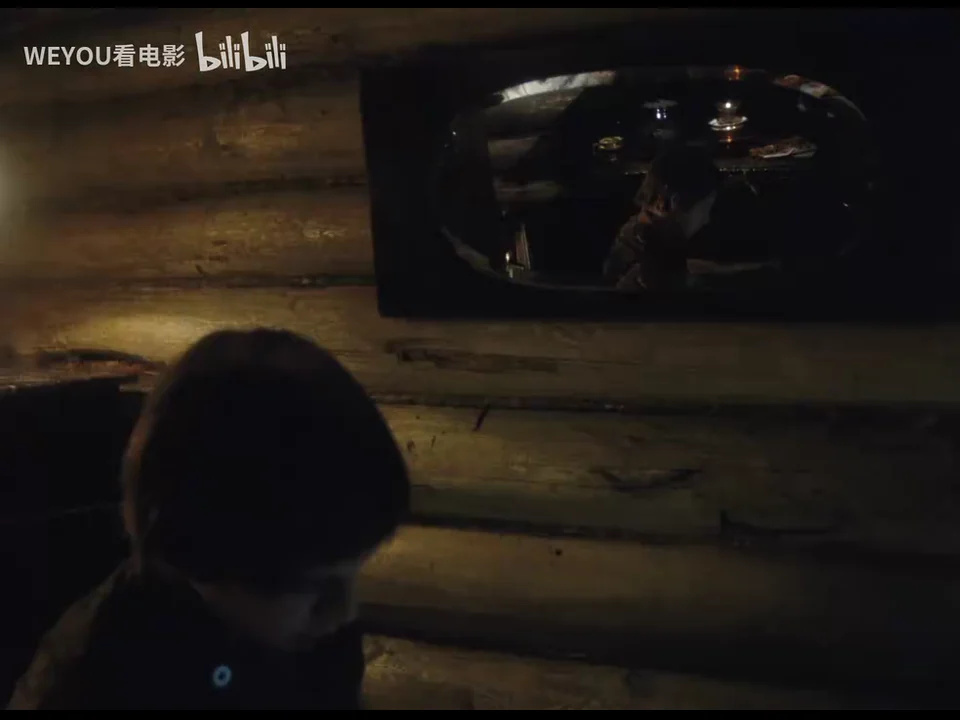
Mirror
Andrei Tarkovsky · 1975SITE EXTENSION: tests whether untimely family, archive, and dream images make an unpaid spectral demand.
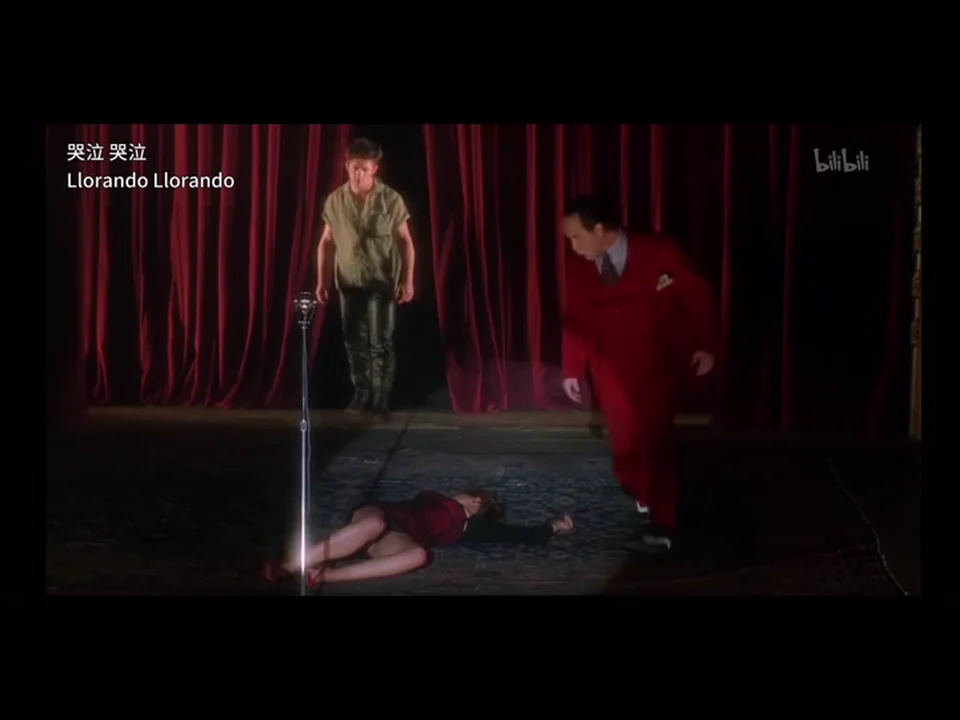
Mulholland Drive
David Lynch · 2001SITE EXTENSION: Club Silencio separates voice, body, mechanical playback, and spectator affect, extending the delirious machine.
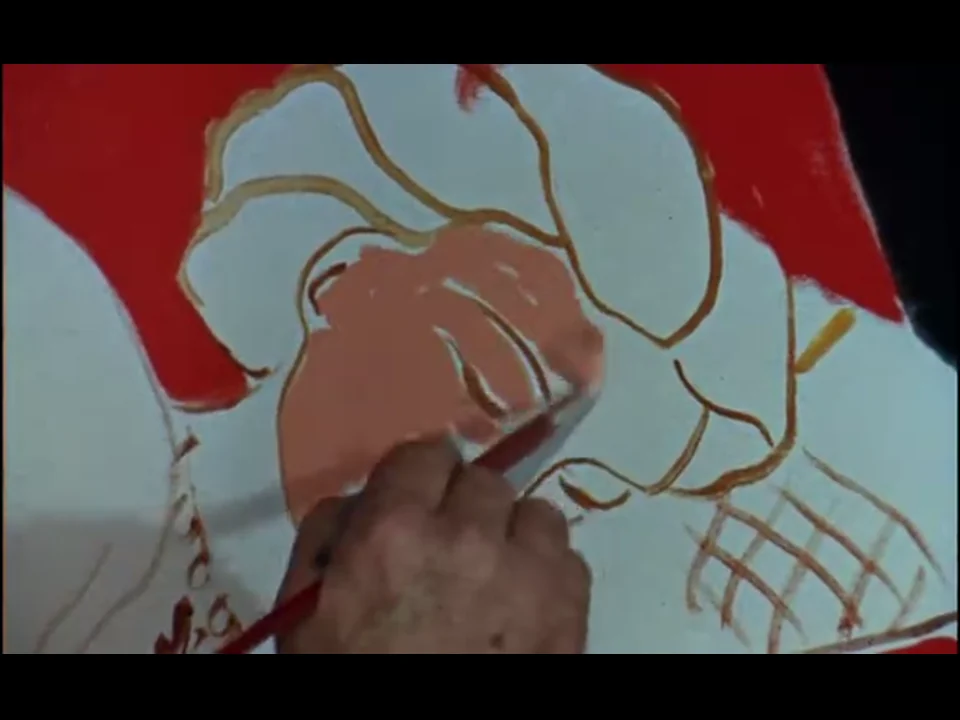
F for Fake
Orson Welles · 1973SITE EXTENSION: uses editorial promises, performed authorship, and truth/falsehood reversals to test authenticity in generative-image culture.
Memoria
Apichatpong Weerasethakul · 2021SITE EXTENSION: turns the machine-eye question into one of bearing sound and care through an unarchivable sonic impact, bodily tremor, and intergenerational memory.
April
Dea Kulumbegashvili · 2025SITE EXTENSION: tests whether posthuman care retains concrete responsibility through medical soundscapes, boundary bodies, and institutional vision.
OUTWARD PERSPECTIVES
Further questions and research directions
Platform subject and recommender control
- QUESTION
- Who tunes posthuman connection, and who bears the cost of exit?
- EXTENSION
- Connects infection, database, and control society to recommendation feeds, moderation, account permissions, and model updates.
- TENSION
- Becoming cannot replace governance analysis; fluidity may be continuous modulation.
- TEST
- Record data source, ranking objective, feedback, exit, and appeal layer by layer.
AI war and chains of responsibility
- QUESTION
- When an automated system kills wrongly, does responsibility stop at model, operator, commander, or procurement regime?
- EXTENSION
- Extends the cinema-war machine to training data, objectives, confidence thresholds, and human review.
- TENSION
- Autonomy discourse can hide institutional designers and turn operators into final scapegoats.
- TEST
- Mark authority across sensing, classification, recommendation, approval, execution, and review.
Disability, illness, and care
- QUESTION
- Does vulnerability analysis let ill and disabled people speak, or use them as philosophical limits?
- EXTENSION
- Connects disease/illness, dependence, and finite subjectivity to disability studies, care labor, and media access.
- TENSION
- Negativity can acknowledge loss and miswrite disabled life as lack.
- TEST
- Separate medical change, lived experience, institutional barrier, care relation, and authority of self-description.
Media ecology and climate accounting
- QUESTION
- Which minerals, energy, labor, and waste sustain digital imagery's weightless surface?
- EXTENSION
- Extends the ecology chapter to data centers, chip supply chains, virtual production, and generative-model energy use.
- TENSION
- Carbon numbers cannot summarize water, toxicity, labor, and colonial extraction.
- TEST
- List material chains and uncertainty across device, training/production, distribution, viewing, and disposal.
Generative images and digital ghosts
- QUESTION
- Is a synthetic dead person or copied persona memory, asset, or a ghost making a demand on the present?
- EXTENSION
- Connects spectral time to synthetic faces, voice cloning, digital estates, and the right to terminate a persona.
- TENSION
- Realism does not automatically create spectral ethics; absence, debt, and consent matter.
- TEST
- Record training source, wishes of the dead, inheritance rights, disclosure, revocability, and affected kin.
Sound, bodies, and bearing responsibility
- QUESTION
- Once sound enters a body or a model, who can withdraw, replay, or refuse it?
- EXTENSION
- Connects machine vision, haptic cinema, and posthuman finitude to the sound-evidence layer for Memoria, Sound of Falling, and April.
- TENSION
- The emotional force of sound cannot replace checking its source, carrier, and bearer.
- TEST
- For each sound, record the audible fact, segment locator, carrier, affected body, permission, and evidence boundary.
READING ROUTE
Chapter sequence and reading questions
- 01pp. 1–37
Begin with the finite subject
Map the post-cinematic assemblage and mark added capacity, dependence, and irreversible risk on each connection.
- 02pp. 38–92
Complete the three-image diagnosis
Closely view one ghost, infection, and war case, marking temporal debt, ecological modulation, and the kill chain.
- 03pp. 95–177
Test machine, body, and world
Ask how goals drift, which haptic interval remains, and who cares for whom without guarantees.
- 04pp. 181–277
Return negativity to material
For illness, blood, and fire, separate bodily fact, testimony, social sign, institution, and form.
- 05pp. 281–437
Enter the digital ruins
Move from city, ecology, and games to machine vision, slow time, and mind games; use Hamlet to test whether the system preserves an inexhaustible question.
EDITIONS, SOURCES, AND RIGHTS
Return from the guide to editions, catalogues, and research
Copyright remains with Shanghai People's Publishing House, the author, and relevant rightsholders.
Covers identify editions. Film images are low-resolution stills for commentary, with a source and timecode. Third-party images carry no open-licence designation.
ECNU School of Politics and International Relations book record ↗
Jiang Yuhui, Posthuman Images: Exploring a Post-Deleuzian Philosophy of Cinema, Shanghai People's Publishing House, 2024, ISBN 9787208190122.
Edition, description, preface, and publisher information; not a full-text download.Jiang Yuhui faculty profile ↗
Official author profile at ECNU's School of Politics and International Relations.
Verification of affiliation, research areas, and publications.UIBE Library catalogue ↗
Catalogue record for ISBN, edition, physical format, and 10+439 pagination.
Institutional library catalogue.Renmin University catalogue / cloud-library record ↗
Institutional holdings and bibliographic record for the book.
Catalogue entry in the university's holdings and study platform.Cinema 2: The Time-Image ↗
Related primary source for crystal-image, spiritual automaton, third synthesis, and missing people.
University of Minnesota Press edition entry.N. Katherine Hayles, How We Became Posthuman ↗
Publisher entry for cybernetics, information, and embodied posthumanism.
University of Chicago Press record.Patricia Pisters, The Neuro-Image ↗
Comparative source for brain-screen, database narrative, surveillance, and neuropolitics.
Stanford University Press record.