DEEP GUIDE · PRINT LOCATORS · FILM MATRIX
15Deleuze and Cinema: The Film Concepts
From cinematographic consciousness, movement, and vectors to time, politics, topology, and a Spinozist ethics
Film concepts are not a closed catalogue for labelling films but an open operational system for tracing how images select, connect, and alter worldly relations. Movement-images and time-images are mutually revisable poles, not a value hierarchy of old and new cinema.
English · Berg · 2011 · ISBN 9781847880536
- UNITS
- 15
- LOCATORS
- 128
- CURATED BOOK CASES
- 18
- EXTENSIONS
- 10
CENTRAL ARGUMENT
Central argument and scope
CONTRIBUTION
Colman reorganizes Deleuze's two Cinema volumes into a continuous workflow: frame, shot, cut, and montage; perception-affection-action; then transsemiotics, screen-vectors, time, politics, topology, and ethics. Its strongest contribution is not terminological simplification but a specification of what each concept observes, how it operates, and where it fails.
PAGINATION
Main text pp.1–200; Notes pp.201–210; Glossary pp.211–218; Bibliography pp.219–238; Films Listed by Director pp.239–246; Filmography pp.247–262; Index pp.263–280.
SCOPE
Fifteen reading units, 128 narrow print locators, eighteen concept groups, ten relation cards, twenty core book films, ten site extensions, six outward perspectives, and a five-step route. The book's director list on pp.239–246 contains 338 entries.
CHAPTER ARGUMENT CHAINS
15 reading units with exact print locators
How cinema composes a consciousness
Cinematographic consciousness is not a director's psychology but a selective system composed by images, technologies, viewing habits, and historical biases.
The introduction first changes how the book is read: Deleuzian terms must circulate back to filmic operations, classification must remain open, and the researcher's position must enter the analysis.
Consciousness is composed
The Crowd turns the competition among person, mass, and camera centre into a methodological entry point.
Reading has a position
Film culture, institutional history, and feminist position shape what counts as conceptual evidence.
Terms return to images
Anglophone scholarship is an intermediary; final judgments return to concrete audiovisual relations.
EXACT PRINT LOCATORS
- p. 1
Cinematographic consciousness emerges from relational arrangement rather than personal intention.
- pp. 2–3
The Crowd tests the individual centre within mass flow and camera organization.
- p. 4
Paris film culture in the 1980s forms a historical condition of the thought.
- p. 5
Reading should circulate among concept, filmic operation, and function.
- p. 6
Media expansion and feminist positioning expose classificatory bias.
- p. 7
Anglophone scholarship provides a bridge without replacing French terminology or close viewing.
- p. 8
The introduction hands the reader to a ciné-system that can keep growing.
From taxonomy to open machine
The ciné-system defines categories through transformations among them; it must admit new signs, mixed states, and images yet to appear.
The chapter brings Bergson, Peirce, Hjelmslev, Pasolini, and Guattari into one open system, distinguishes centred from acentred relations, and refuses to seal movement and time into two chronological catalogues.
A processual system
Classification arises from becoming relations among images, not fixed essences.
Two poles and an open whole
Movement and time are transforming poles within a whole that remains in change.
Diagram and function
Centre, acentredness, and sign-force become legible only through concrete functions.
EXACT PRINT LOCATORS
- p. 9
The ciné-system is a processual relation network rather than a dictionary list.
- pp. 10–11
Bergson's whole encompasses change without arresting it as a closed sum.
- pp. 12–13
Several semiotic lineages expand image matter without reducing cinema to language.
- pp. 14–15
Movement-image and time-image are poles of a system, not higher and lower periods.
- pp. 16–17
Openness, crystallization, and topology define categories through exchange relations.
- pp. 18–19
The world-image makes a sign a force of action rather than a static reference.
- pp. 20–21
Diagrammatics and the ciné-dialectic map poles of difference and processes of transport as an open relation.
- pp. 22–23
The function section moves taxonomy from definition to operation and leaves an entrance for new signs.
How movement changes a relational whole
Movement-image is not synonymous with displacement within the frame; local movement matters conceptually only when it changes relations among objects, bodies, and the whole.
From six movement-images and Jarmusch's black frames to the repeated routes of Elephant, the chapter moves from visible displacement to qualitative change and duration.
Types and scales of movement
Human, nonhuman, black frames, and camera can all reset the centre of movement.
Routes, behaviour, and false movement
Elephant turns repeated routes into relational topology, while Bergson separates movement from static instants.
Any-instant-whatever and duration
Objects recombine in duration; movement is not measured by completed poses.
EXACT PRINT LOCATORS
- p. 25
Six movement-images mark functional differences rather than six genres.
- pp. 26–27
Jarmusch's black frame interrupts visible continuity and retrains viewing.
- pp. 28–29
Human and nonhuman movements can both alter salience and centre.
- pp. 32–33
Elephant makes different bodies retrace one corridor across intersecting times.
- pp. 33–34
Bergson's critique targets the illusion of reconstructing movement from static slices.
- pp. 35–36
Any-instant-whatever replaces privileged poses, allowing difference within a continuous process.
- pp. 37–38
Objects combine in duration as the whole changes qualitatively with local movement.
How the camera selects a world
Frame, shot, and cut are related but noninterchangeable value selections: they distribute visibility, viewpoints on movement, off-screen force, and relational breaks.
Wenders's doubled viewpoint, descriptive geometry, and modulation turn technical parameters into epistemological and political questions: who becomes centre and what continues to act off screen.
Three selections
Framing extracts a set, the shot synthesizes movement, and the cut marks relational change.
Geometry, modulation, and traits of the frame
The frame has spatial limits yet varies through light, sound, density, and off-screen force.
Camera consciousness
A moving centre connects spatial organization to politics and thought.
EXACT PRINT LOCATORS
- p. 39
Frame, shot, and cut each distribute value and attention.
- pp. 40–41
Wenders's doubled viewpoint lets a shot belong to and exceed a character.
- pp. 42–43
The definitions separate the frame's relatively closed set from the shot's mobile section.
- pp. 47–48
Descriptive geometry tracks how an image organizes measurable relations.
- pp. 47–48
Modulation describes continuously changing limits and light values rather than one-time formation.
- pp. 50–51
Five traits of the frame make inside, outside, and density separately testable.
- pp. 52–53
Camera consciousness appears as a redistribution of centred relations.
- p. 54
Spatial organization is already an entry into politics and thought.
What kind of connection composes the whole
Montage is not editing speed but the kind of whole, indirect time, and collective order produced by relations among shots.
Four montage schools and Bergson's third level show that the whole organizes nation, machine, mass, and action, while technical pressure deforms the continuum.
Four wholes and three operations
Organic, dialectical, quantitative, and intensive models compose distinct politics of the whole.
Indirect time and national schools
Movement relations render time indirectly and install national narrative within form.
Pressure, deformation, and prohibition
The continuum changes under pressure; forbidden montage marks an ethical boundary.
EXACT PRINT LOCATORS
- p. 55
Four schools compose shots into a whole in different ways.
- pp. 56–57
Bergson's third level connects local sets to a continuously changing whole.
- pp. 58–59
Montage operations determine whether difference becomes unity, collision, or excess.
- p. 60
Time appears indirectly through movement relations.
- p. 61
National schools connect form to imagined political community.
- pp. 62–63
Technical pressure changes the continuum rather than decorating a given narrative.
- p. 64
Forbidden montage shows that linkage can judge on behalf of bodies and events.
Who sees, and how things see
The perception-image is not a character's point-of-view shot; it describes how world-flow is subtracted around a centre of indetermination and how liquid, gaseous, and nonhuman reference points loosen that centre.
From the direct address of Just Another Girl on the I.R.T. to Vertov's machine eye, the chapter situates perception among gendered bodies, camera-being-with, material images, and mobile reference points.
The politics of perceptual position
Embodied position and direct address change who has authority to interpret whom.
Being with the camera
The subjective-objective split yields to a continuously moving perceptual relation.
Image as matter
Acentred perception lets things participate in selection and action.
EXACT PRINT LOCATORS
- p. 65
Perceptual position is always materialized by bodies and power relations.
- pp. 66–67
Direct address redistributes the positions of interpreter and interpreted.
- pp. 68–69
The living image forms perceptual categories through subtraction and delay.
- pp. 70–71
Camera-being-with describes viewpoint as co-produced by camera and body.
- pp. 72–73
Liquid perception exceeds fixed subjective and objective positions.
- p. 74
Gaseous perception disperses reference points into molecular movement.
- pp. 75–76
Bergson's image=matter removes the presupposed split between image and thing.
- pp. 77–78
Mobile reference points make centre a temporary function rather than a subject's essence.
Intensity between perception and action
The affection-image occupies the interval between stimulus and action; face, close-up, colour, and virtual space register intensity not yet assigned to a definite emotion or act.
The Night of the Hunter, The Host, and The Cabinet of Dr. Caligari move affect from inner psychology into a shared field of light, space, face, and nonhuman deformation.
Virtual space and nonhuman intensity
Space and monster reorganize bodily capacities before action.
Face, close-up, and interval
The close-up extracts intensity from personal identity and redirects it within an encounter interval.
Firstness, colour, and actualization
Spinoza and Peirce frame affect as a change in capacity rather than an emotion label.
EXACT PRINT LOCATORS
- pp. 80–81
The Night of the Hunter potentializes determinate space through animals, the boat, and shadows, making threat precede action.
- p. 81
In The Host, the search for a missing child generates affective intensity.
- p. 81
In Caligari, Cesare's disappearance generates anxiety-affect.
- pp. 82–83
The close-up temporarily extracts the face from action coordinates.
- pp. 84–85
Affect occurs in the encounter interval between perception and action.
- p. 86
Spinozist affect is measured by increases and decreases in bodily capacity.
- p. 87
Firstness and colour preserve qualities not yet actualized.
- p. 88
Affect can change the direction of the next actualization.
How action produces reality
The action-image connects situation and response into a transformation of reality; SAS′, ASA′, and deforming forms must be judged through relational chains, not action spectacle or character will.
Three action-images, LaBruce's morphological deformation, and the sensory-motor crisis make action both a construction of social space and a test of its limits.
Three forms
Large form, small form, and their deformations order situation and action differently.
Bodily behaviour and crisis
Action materializes image conditions and can expose the failure of an inherited circuit.
Limits and questions
Social space-time determines what action can alter; four questions test the form.
EXACT PRINT LOCATORS
- p. 89
Three action-images distinguish relational order rather than genre subject.
- pp. 90–91
LaBruce deforms action formulas through mismatches of body and genre.
- p. 93
Secondness actualizes quality as confrontation or action between two terms.
- p. 93
SAS′ and ASA′ differ by the ordering of situation and action.
- pp. 94–95
Bodily behaviour materializes abstract form as image conditions.
- pp. 96–97
Crisis occurs when action no longer fills the perceptual interval.
- p. 100
Four philosophical questions return formal names to functional testing.
Signs operate rather than merely label
Cinematic matter precedes linguistic classification; transsemiotics tracks how sound, image, writing, gesture, and colour translate, resist, and transform observation.
Godard's audiovisual politics, the limits of Metz and Saussure, and the extensions of Peirce and Pasolini show that naming already intervenes in power and description alters its object.
Naming and the limits of language
Audiovisual relations resist closure by a single linguistic meaning.
Cinema's nonlinguistic signs
Peirce and Pasolini let image matter cross inherited linguistic levels.
Colour fissure and descriptive mutation
Ozu's colour and the act of observation show signs continuing to emerge in use.
EXACT PRINT LOCATORS
- p. 101
Naming selects visible relations and is therefore already political.
- pp. 102–103
Godard makes sound and image interrogate rather than explain one another.
- pp. 104–105
Metz and Saussure cannot contain the full range of cinematic matter.
- pp. 107–108
Cinematic matter traverses and deforms linguistic strata rather than forming a direct homology with them.
- p. 111
From zeroness to thirdness, signs are ordered by generative levels rather than vocabulary.
- p. 111
Pasolini preserves image matter and free indirect viewpoint.
- pp. 112–113
Ozu's colour forms a fissure irreducible to narrative meaning.
- p. 114
Description alters the route of observation and is therefore a sign event.
Vector: direction and agency on screen
The screen-vector treats a sign as a force with source, carrier, direction, scale, resistance, and residue; an arrow becomes analysis only when those relations are testable.
Image-signs can proliferate without limit. Agency, sequence, direction, and territorial vectors make genre, history, light, and sound traceable routes of force.
Sign genesis and vector grammar
Agency, sequence, and direction turn static meaning into process.
History, fusion, and pause
Local allegory and audiovisual relations can propel, reverse, or arrest force.
Genre, light-sound, and cognitive routes
Vectors can identify genre and history and analyse how sound, image, affect, action, and situation jointly lay a cognitive route.
EXACT PRINT LOCATORS
- p. 115
Image-signs can continue to emerge; classification remains open.
- p. 118
Agency joins sequence, coordinate, direction, and magnitude in the vector grammar.
- p. 118
Sequence and direction place the sign within a temporal route.
- pp. 118–119
Stratified vectors delimit territory and also cross its boundary along a deterritorializing direction.
- pp. 122–123
Local allegory connects historical pressure to concrete sound and image.
- p. 124
Audiovisual asynchrony can redirect a vector.
- pp. 126–127
Vector-fusion converges directions, while vector-pause interrupts advance without ending force.
- pp. 128–129
Genre, light, and sound jointly lay a cognitive route.
- p. 129
Vectors can identify genre and history while placing sound, image, affect, action, and situation within one analysis.
Time appears directly
The time-image is not a general name for slow motion, memory, or nonlinear narrative; it makes present, past, and becoming cease to obey a completable action-chain.
Four core problems from Cinema 2, temporal diagrams, signaletic material, and landscape move from indirect to direct time, culminating in the crystal's exchange of transparent and opaque sides.
From indirect time to diagrams
Time ceases to be merely the measure of movement; diagrams render relations between past and present visible.
Event and signaletic landscape
The present is not the nature of the image; event and matter precede stable narrative positions.
Becoming, potentialization, and crystal
Time keeps reality differentiating; the crystal shows exchange between the actual present and virtual past.
EXACT PRINT LOCATORS
- p. 131
The chapter establishes its entry into time through four core Cinema 2 chapters and problems.
- pp. 132–133
Indirect time is derived from movement; direct time suspends action itself.
- p. 134
The seed marks temporal potential not yet unfolded.
- pp. 136–137
The juxtaposed diagrams divide coexistence between past and present into comparable routes.
- pp. 139–140
The present is not the image's natural tense; an event actualizes before being assigned a temporal place.
- pp. 141–142
Signaletic matter lets time act through textures of light and sound.
- p. 143
Landscape can carry time without relying on character recollection.
- pp. 144–145
Time as becoming keeps reality in potentialization.
- p. 146
The crystal makes time perceptible through exchange between transparent and opaque faces.
Every image organizes a people
Political cinema is not defined by political subject matter but by how visibility, speaking authority, missing peoples, and collective capacities are organized.
Gender, national culture, cliché, minor language, and collective enunciation move politics from content into image composition and the ownership of speech.
Image politics and missing peoples
Every image distributes positions; rupture makes the problem of peoples obscured by cliché appear.
Minor language and collective enunciation
Minor cinema produces heterogeneous speaking relations within dominant language.
Propaganda, political futures, and screen ethics
Formal intensity can be captured by war propaganda; political analysis asks whose future an image serves and who bears its consequences.
EXACT PRINT LOCATORS
- p. 147
Every image distributes visibility and relational position.
- pp. 149–150
Gendered viewpoint shapes who acts and who is watched.
- p. 150
National culture can stabilize an image territory and can be deterritorialized.
- pp. 152–153
Cliché blocks new relations through prefabricated connections.
- pp. 155–156
The people are missing means a collective remains to be created, not that crowd shots are absent.
- pp. 155–156
Minor cinema produces a stutter within dominant language and shifts who can speak.
- pp. 157–158
Private speech acquires collective-enunciative force by addressing a missing people.
- p. 159
Propaganda shows that formal force has no preset emancipatory direction.
- pp. 160–161
Political analysis asks in whose future the image will act and tests formal intensity together with material consequences.
- p. 161
Screen ethics places formal force, modes of obedience, and communal consequences within one judgment.
A relational geometry of screen space
Cinematic topology describes space not by fixed coordinates but by how actual and virtual, heterotopias, incompossible worlds, and historical strata fold, adjoin, and deform.
From screen mind-map through Leibnizian continuum, crystalline entrances, and political scale, the chapter makes space a transformer of relations.
Map, heterotopia, and continuum
Screen space connects nonadjacent strata and lets actual and virtual act on one another.
Incompossible worlds and crystalline entrances
Divergent worlds and sheets of past connect through entrances rather than one coordinate system.
Political scale and spatial deformation
Ozu and Godard make topological relations alter visibility and the scale of community.
EXACT PRINT LOCATORS
- p. 163
Screen space is first a relational mind-map.
- pp. 164–165
Actual and virtual actualize one another through spatial entrances.
- p. 166
Heterotopic and entropic spaces distinguish juxtaposition from dissipation.
- p. 169
Leibnizian calculus and converging series establish a topology of continuity for screen time.
- p. 169
Calculus-like variation describes relational approach rather than fixed position.
- pp. 171–172
Incompossible worlds act simultaneously in strata without being merged into one world.
- p. 172
Sheets of past give space different historical pressures.
- p. 175
A crystalline entrance marks a concrete site of exchange between two faces.
- pp. 176–177
Topological scale determines how individual acts connect to collective structure.
- p. 178
Ozu and Godard make spatial deformation carry thought.
When images force thought
Thought is not a film expressing an opinion; when cliché, automatic circuits, and subjective-objective judgment fail, bodily attitude, rupture, and the unthought force new relations to be composed.
The bodily time of Jeanne Dielman, the spiritual automaton, spectator posture, and a neorealist-rhizomatic line connect the thought-image to world-making.
Bodily repetition and automaton
Minute differences undo everyday cliché, while shock can open or close thought.
Body, spectator, and becoming
Attitude situates the spectator within relation; becoming and rhizome exceed inherited causality.
Psychomechanics and world
Cinema thinks by producing a world of relations that can continue.
EXACT PRINT LOCATORS
- pp. 179–180
Jeanne Dielman makes minute differences within repeated labour carry bodily time.
- p. 181
Cliché substitutes automatic recognition for encounter.
- p. 181
The creative power of the false interrupts a single model of truth.
- p. 182
The spiritual automaton explains how an image-machine can trigger thought.
- p. 183
The value of shock depends on whether it opens relations or merely compels submission.
- p. 184
Bodily attitude places time and thought before action.
- p. 185
The spectator's position is part of the image relation.
- p. 186
Neorealism opens thought through the sensory-motor break.
- pp. 187–188
Becoming and rhizome let thought exceed arborescent causality.
- p. 189
Psychomechanics tracks how images act on the thinking body.
- p. 190
Thought is tested by whether images compose new worldly relations.
Ethics is a test of capacity, not judgment
Cinematographic ethics first asks how an audiovisual assemblage is composed, what it can do, and whose relational capacity it increases or diminishes before evaluating it; it is not a moral stamp on a film.
The orange in Rocco and His Brothers, heterogenesis, circulation between the two Cinema volumes, Spinoza, and the limit of power in Salò turn open classification into a consequential analysis of capacity.
Minor objects, history, and heterogenesis
Sound, objects, bodies, and technologies transform one another within the assemblage.
System tasks and Spinoza
Describing composition, tracking function, and testing change jointly answer what an assemblage can do.
Question, power, and belief in the world
Capacity can be organized coercively; ethics must record affected bodies and possible alternative relations.
EXACT PRINT LOCATORS
- p. 191
The orange sound-image in Rocco and His Brothers condenses dynamic temporal histories.
- p. 192
Difference, geological history, and the open system treat history as a relation still in formation.
- p. 193
Heterogenesis means that terms in an assemblage alter one another through encounter.
- p. 193
The open cinematic system offers lessons in a grammar for articulating image politics, with formally unlimited potential for innovation.
- p. 195
The two Cinema volumes require reciprocal reading; their whole remains open.
- p. 196
The system's tasks are to describe composition, function, and change.
- p. 197
Spinozist ethics takes increases and decreases of relational capacity as its material.
- p. 197
The construction of a question predetermines which answers can appear.
- p. 199
Salò shows that capacity can be locked by asymmetrical power.
- p. 200
Beginning from composition and function, cinematic belief rests in worldly relations that can still open.
WORKING CONCEPTS
18 searchable, operational concepts
Cinematographic consciousness
A selective relation composed by images, technologies, bodies, and historical biases, not authorial psychology.
- OPERATION
- Identify what determines salience, centre, and the off-screen.
- BOUNDARY
- Director intention or character point of view is insufficient by itself.
Ciné-system
An image taxonomy governed by transformations among categories and an open whole.
- OPERATION
- Record which connection a new case alters.
- BOUNDARY
- The concept list is not a set of exclusive drawers.
Movement-image
An image in which local movement qualitatively changes a relational whole.
- OPERATION
- Compare object, centre, and whole before and after movement.
- BOUNDARY
- Visible displacement or camera movement does not establish it automatically.
Frame–shot–cut
Three operations that extract a set, synthesize movement, and mark a relational break.
- OPERATION
- Record field, off-screen, viewpoint on movement, and cut separately.
- BOUNDARY
- They cannot be collapsed into generic composition.
Montage
The construction of a whole and indirect time through relations among shots.
- OPERATION
- Specify the form of the whole, temporal effect, and excluded terms.
- BOUNDARY
- Rapid cutting, collage, or transition count is not sufficient evidence.
Perception-image
A relation in which world-flow is selected and subtracted around a centre of indetermination.
- OPERATION
- Record input, subtraction, reference point, and advantage for action.
- BOUNDARY
- A point-of-view shot is only one possible carrier.
Affection-image
Intensity in the perception-action interval not yet actualized as a definite act.
- OPERATION
- Track changes across face, light-colour, sound, and bodily capacity.
- BOUNDARY
- A character displaying emotion is not equivalent to an affection-image.
Action-image
A sensory-motor relation in which action transforms a situation into a new situation.
- OPERATION
- List S, A, S′, and unresolved residue.
- BOUNDARY
- Action density or heroic will is insufficient.
Transsemiotics
Translation and deformation among sound, image, writing, gesture, and colour.
- OPERATION
- Record translation, resistance, and residue layer by layer.
- BOUNDARY
- Translating an image into one theme loses its material operations.
Signaletic material
Matter with luminous, sonic, kinetic, and rhythmic qualities prior to linguistic coding.
- OPERATION
- Begin from perceptible texture before judging meaning.
- BOUNDARY
- It is not meaningless pure form.
Screen-vector
A directed process transmitting meaning and force through screen relations.
- OPERATION
- Mark source, carrier, direction, resistance, redirection, and residue.
- BOUNDARY
- A diagram arrow or character orientation alone is not vector analysis.
Time-image
An image in which temporal relations become directly perceptible rather than subordinate to a completable action-chain.
- OPERATION
- Test action failure, event, sheets of past, and future openness.
- BOUNDARY
- Slowness, long take, nonlinearity, or flashback is only a clue.
Opsign / sonsign
A situation seen or heard before it can be converted into habitual action.
- OPERATION
- Identify stimulus, failure of the old action scheme, and duration of suspension.
- BOUNDARY
- An attractive empty shot or ambient sound does not establish it automatically.
Crystal-image
The exchange relation between an actual present and virtual past in the smallest circuit.
- OPERATION
- Mark both faces, point of exchange, undecidability of attribution, and consequence.
- BOUNDARY
- Mirror, dream, or flashback is not a sufficient condition.
Political cinema
Cinema that organizes collective relations through visibility, language, people, and boundaries.
- OPERATION
- Record who speaks, who is represented, and who bears formal consequences.
- BOUNDARY
- Political subject matter and progressive slogans are both insufficient.
Minor cinema
A film practice that produces collective enunciation and a people in becoming within dominant language.
- OPERATION
- Track linguistic stutter, addressee response, and changed authority to represent.
- BOUNDARY
- A filmmaker's minoritized identity does not define the form by itself.
Topology
A relational geometry organizing spatial, temporal, and world strata by adjacency, fold, entrance, and deformation.
- OPERATION
- Map strata, entrances, boundaries, crossers, and changes of scale.
- BOUNDARY
- Complex staging does not automatically constitute topology.
Cinematographic ethics
A Spinozist evaluation based on how an assemblage increases or diminishes relational capacity.
- OPERATION
- Record beneficiaries, harmed parties, asymmetrical power, and alternative relations separately.
- BOUNDARY
- Suspending judgment does not cancel analysis of harm.
PRIMARY TEXTS AND COMPARATIVE STUDIES
Related arguments and textual comparisons
Open taxonomy
- BOOK ARGUMENT
- Categories are defined through transformations and the system must admit new signs.
- RELATED PRIMARY ENTRY
- Cinema 1's introduction and concluding taxonomy; Cinema 2's reorganization through new signs and an open whole.
- CROSS-TEXT COMPARISON
- Rushton uses concrete films to test abstract labels; Bogue reconstructs the sign lineage.
- SITE TEST
- Every new case must state its operation and difference and may occupy several relational layers.
Movement and the whole
- BOOK ARGUMENT
- Movement-image is the qualitative change of a whole through local movement.
- RELATED PRIMARY ENTRY
- Cinema 1, chapters 1–2, on Bergsonian movement and movement/whole.
- CROSS-TEXT COMPARISON
- Rushton distinguishes four wholes through Griffith, Eisenstein, Gance, and Lang.
- SITE TEST
- A scene card states which relations change; character or camera movement alone is insufficient.
Frame and off-screen
- BOOK ARGUMENT
- Frame, shot, and cut are value selections, while the off-screen continues to act on the field.
- RELATED PRIMARY ENTRY
- Cinema 1, chapter 2, on framing, shot, and out-of-field.
- CROSS-TEXT COMPARISON
- Marks adds haptic surface; Rushton's Hitchcock places the spectator inside off-screen relations.
- SITE TEST
- Record field, off-screen sound, unseen causality, and shifting centre together.
Perception-affection-action circuit
- BOOK ARGUMENT
- The three images are functions of one interval, not psychological labels.
- RELATED PRIMARY ENTRY
- Cinema 1, chapters 4–12, on the centre of indetermination, firstness/secondness, and SAS′/ASA′.
- CROSS-TEXT COMPARISON
- Shaviro stresses the image's prior action on the spectator's body; Marks traces sensory memory entering the circuit.
- SITE TEST
- Describe stimulus, interval, intensity, and act first; do not mark action-image when action fails to transform the situation.
Transsemiotics and vector
- BOOK ARGUMENT
- Cinematic matter precedes language; vector describes force, scale, direction, and resistance.
- CROSS-TEXT COMPARISON
- Pisters extends the vector toward databases, interfaces, and networked attention.
- SITE TEST
- Every vector has a source, carrier, direction, resistance, redirection, and residue.
Time and crystal
- BOOK ARGUMENT
- Actual-virtual exchange makes time directly perceptible; crystal is not confusion between reality and illusion.
- RELATED PRIMARY ENTRY
- Cinema 2, chapters 3–4, on recollection circuits, crystal, and the present-past split.
- CROSS-TEXT COMPARISON
- Sutton extends the argument into photographic memory; Rushton differentiates crystalline states through Ophüls, Fellini, Welles, and Resnais.
- SITE TEST
- Mark actual face, virtual past, point of exchange, and undecidable attribution; an ordinary flashback does not qualify.
Politics and topology
- BOOK ARGUMENT
- Politics arises from organizing visibility, people, language, and boundary; topology describes how those relations fold.
- RELATED PRIMARY ENTRY
- Cinema 2, chapters 7–8, on missing peoples, minor cinema, and modern political cinema.
- CROSS-TEXT COMPARISON
- Marrati returns belief in the world to a philosophical problem; posthuman work adds nonhuman actors and platform boundaries.
- SITE TEST
- Record who speaks, who is represented, who crosses a boundary, and which collective capacity changes.
Thought and ethics
- BOOK ARGUMENT
- Thought begins when automatic circuits break; ethics tests relational capacity rather than applying external moral rules.
- RELATED PRIMARY ENTRY
- Cinema 2, chapters 7–8, on the spiritual automaton, unthought, and belief in this world.
- CROSS-TEXT COMPARISON
- Rushton distinguishes Eisensteinian shock from Godardian interstice; von Trier exposes the power risks of suspending judgment.
- SITE TEST
- Record capacity changes, power asymmetry, alternative relations, and spectator position separately.
Sound-signs, transsemiotics, and responsibility
- BOOK ARGUMENT
- Transsemiotic material and the sonsign release sound from the image’s caption; sound gains temporal weight only when it changes perception, action, or a position of responsibility.
- RELATED PRIMARY ENTRY
- This book pp. 101–114 and 131–146; Cinema 2, chapters 2 and 9, provide primary coordinates for the sonsign and audiovisual disjunction.
- CROSS-TEXT COMPARISON
- Sutton pp. 50–63 and 201–226 connect the acoustic gap to photographic memory; Rushton pp. 63–68 returns the sonsign to action crisis; Jiang pp. 331–359 follows sound wave, zoom, and the machine eye through Wavelength.
- SITE TEST
- Record source visibility, delay, occlusion, and continuity across cuts before stating whose visibility, capacity to act, or ethical burden changes.
The crystal as a material operation, not a mirror metaphor
- BOOK ARGUMENT
- The time-image and topology require actual–virtual exchange to occur in material, spatial, and viewing relations rather than treating ‘crystal’ as a pretty name for dream or reflection.
- RELATED PRIMARY ENTRY
- This book pp. 131–146 on time-image/crystal-image and pp. 163–178 on topology; Cinema 2, chapters 4 and 5, are the primary checks.
- CROSS-TEXT COMPARISON
- Sutton pp. 123–165 places exchange in the photographic view; Rushton pp. 73–100 differentiates crystalline states; Jiang pp. 38–54 pushes coexistence toward the specter’s unpaid demand.
- SITE TEST
- Map actual face, virtual face, exchange point, spatial entrance, and real consequence; a mirror, dream, flashback, or long take alone is insufficient.
FILMS AND IMAGES
Book cases and extended analyses
The Crowd
The Crowd · King Vidor · 1928The individual and mass flow contest the image centre, establishing the problem of cinematographic consciousness.
Man with a Movie Camera
Chelovek s kinoapparatom · Dziga Vertov · 1929The machine eye places the camera within world-flow and tests acentred perception.
Elephant
Elephant · Gus Van Sant · 2003Repeated routes through the same corridors turn causal action into temporal topology.
Alice in the Cities
Alice in den Städten · Wim Wenders · 1974Travel viewpoint and photographic apparatus split the centre and test the shot's double perspective.
Battleship Potemkin
Bronenosets Potyomkin · Sergei Eisenstein · 1925Dialectical linkage and close-up move sensory conflict toward collective qualitative change.
Just Another Girl on the I.R.T.
Just Another Girl on the I.R.T. · Leslie Harris · 1992Direct address changes gendered perception and interpretive authority.
The Night of the Hunter
The Night of the Hunter · Charles Laughton · 1955Animals, boat, and shadow potentialize space, making threat affective before determinate action.
The Host
Gwoemul · Bong Joon-ho · 2006The search for a missing child generates affective intensity.
The Cabinet of Dr. Caligari
Das Cabinet des Dr. Caligari · Robert Wiene · 1920Cesare's disappearance generates anxiety-affect.
Run Lola Run
Lola rennt · Tom Tykwer · 1998Running direction, speed, and repetition compose branching screen-vectors.
Hiroshima mon amour
Hiroshima mon amour · Alain Resnais · 1959Audiovisual fissures connect private memory and historical images in a circuit that never fully coincides.
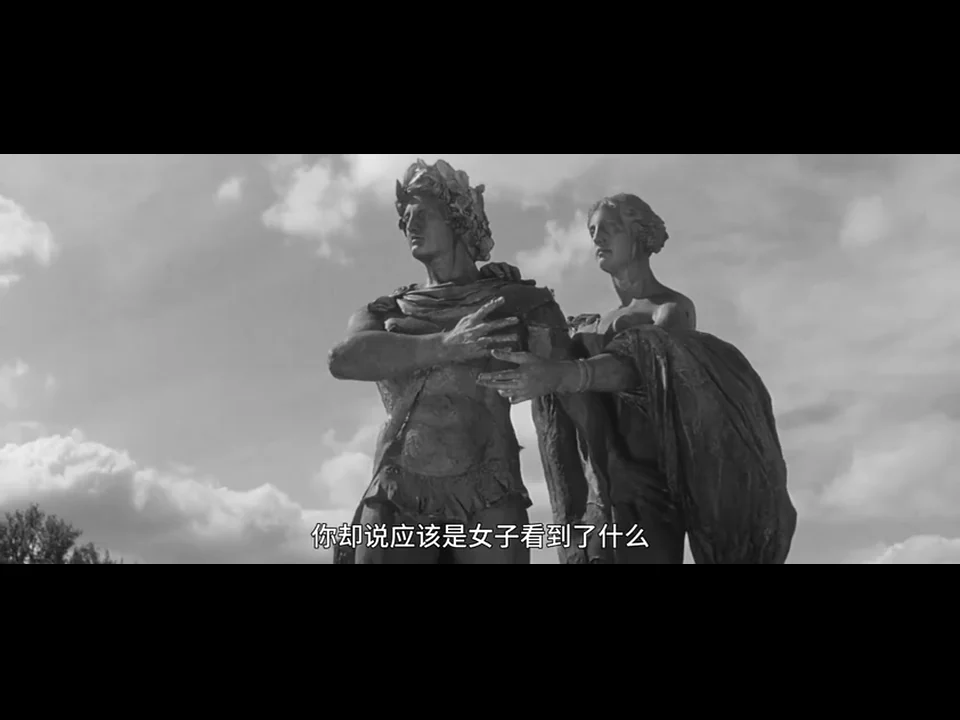
Last Year at Marienbad
L’Année dernière à Marienbad · Alain Resnais · 1961Conflicting narratives, poses, and spaces keep actual and virtual exchanging places.
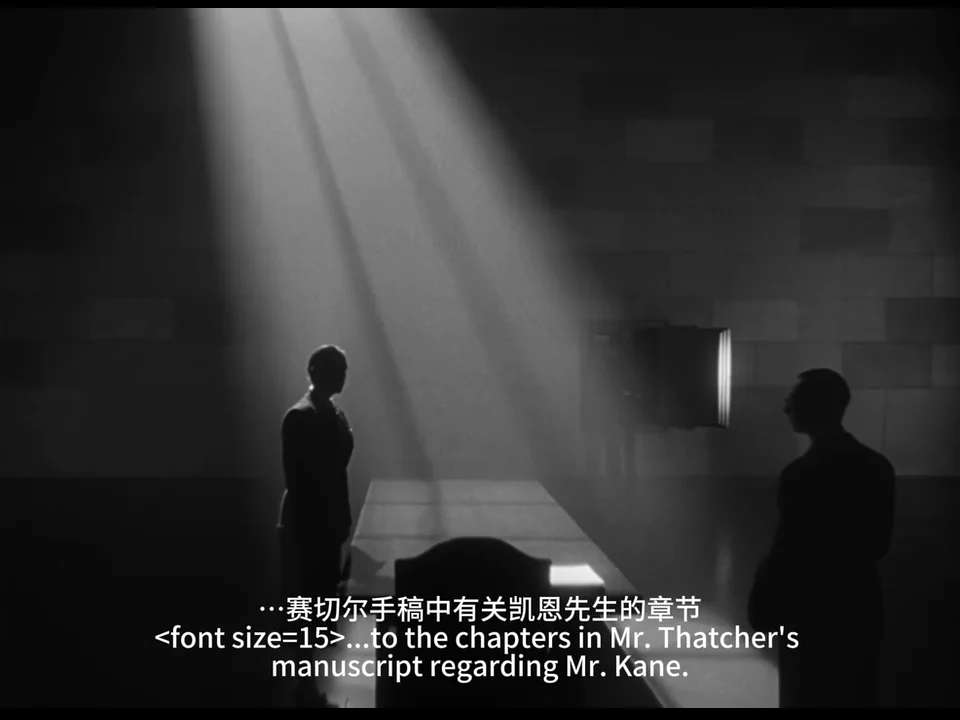
Citizen Kane
Citizen Kane · Orson Welles · 1941Testimony and archive enter different sheets of past, replacing a single character truth with topology.
L’eclisse
L’eclisse · Michelangelo Antonioni · 1962The unpeopled ending lets space carry relational residues and an unoccupied future.
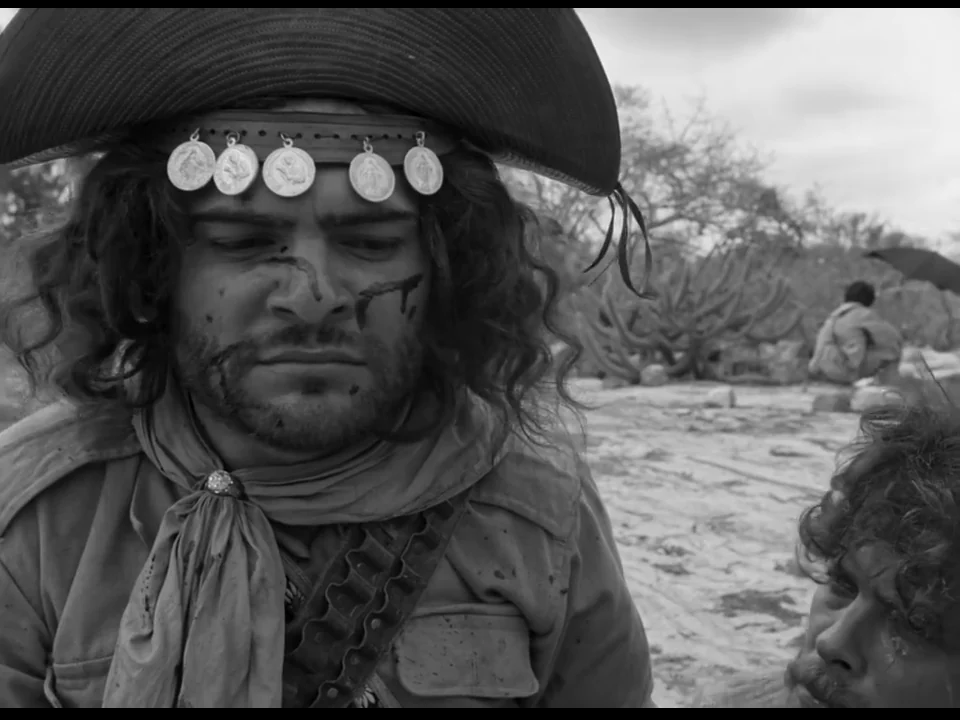
Black God, White Devil
Deus e o diabo na terra do sol · Glauber Rocha · 1964Myth, banditry, song, and face compress into minor cinema's collective enunciation.
Jeanne Dielman
Jeanne Dielman, 23 quai du Commerce, 1080 Bruxelles · Chantal Akerman · 1975Minute differences in repeated labour make bodily time force thought before narrative explanation.
Salò, or the 120 Days of Sodom
Salò o le 120 giornate di Sodoma · Pier Paolo Pasolini · 1975A closed power assemblage tests the limit of capacity ethics and the position of victimized bodies.
Rocco and His Brothers
Rocco e i suoi fratelli · Luchino Visconti · 1960The orange sound-image condenses dynamic temporal histories.
Holy Motors
Leos Carax · 2012A body changing roles tests the open ciné-system and the status of agency.
Under the Skin
Jonathan Glazer · 2013Nonhuman and covert-camera viewpoints extend liquid and gaseous perception.
Goodbye to Language
Adieu au langage · Jean-Luc Godard · 2014Split stereoscopic parallax hands transsemiotic relation to the spectator's eyes for recomposition.
The Assassin
Hou Hsiao-hsien · 2015Withheld action suspends the action-image and redistributes political capacity.
Atlantics
Atlantique · Mati Diop · 2019Absent migrants form collective enunciation through sea, voice, and possessed bodies.
Memoria
Apichatpong Weerasethakul · 2021A source-less sound carries the sonsign from private symptom toward geological and colonial memory.
Aftersun
Charlotte Wells · 2022DV footage becomes a memory crystal between the daughter's present and the father's virtual past.
The Zone of Interest
Jonathan Glazer · 2023The split between everyday images and off-screen violence tests the ethics of framing.
Sound of Falling
Mascha Schilinski · 2025SITE EXTENSION: places Colman’s sonsign and transsemiotic tests in a house shared by four generations of women, asking whether anticipatory sound changes the responsibility of figures and spectators.
April
Dea Kulumbegashvili · 2025SITE EXTENSION: treats breath, low frequencies, and rain as boundary material; medical causality still operates, so sonic intensity alone cannot certify a time-image.
OUTWARD PERSPECTIVES
Further questions and research directions
Platform interfaces and algorithmic vectors
- QUESTION
- Where do recommendation, autoplay, and swipe gestures direct attention?
- EXTENSION
- Extend the screen-vector into interface, metrics, ranking, and feedback loops.
- TENSION
- Colman's vector analysis addresses cinematic signs; platform algorithms are a later site test, not the author's prediction.
- TEST
- Record input, ranker, interface carrier, direction, resistance, beneficiary, and exit condition.
Feminist and decolonial perception
- QUESTION
- Who is treated as the default centre of indetermination, and whose experience is subtracted?
- EXTENSION
- Connect perception-image to gaze, racialized salience, colonial archives, and counter-archives.
- TENSION
- An acentred camera does not automatically undo power in production institutions or spectator positions.
- TEST
- Record camera centre, production authorization, speaking authority, subtitling/translation, and subjects' dissent separately.
Disability perception and access
- QUESTION
- When a sensory-motor circuit diverges from the norm, is it treated as deficit or another image relation?
- EXTENSION
- Connect perception-affection-action to captions, audio description, touch, cognitive legibility, and disability experience.
- TENSION
- A philosophical sensory-motor break does not substitute for disabled experience or access design.
- TEST
- Check availability, perceivability, operability, understandability, and participation separately.
Nonhuman perception and ecological topology
- QUESTION
- How do water, animals, machines, and geology become relational actors rather than environmental metaphors?
- EXTENSION
- Use acentred perception, vectors, and topology to trace material flows, infrastructure, and multispecies capacities.
- TENSION
- Nonhuman agency does not erase responsibility for pollution, ownership, or unequal exposure.
- TEST
- Record material source, flow, controller, cost, affected bodies, and irreversible consequences.
Generative images and provenance ethics
- QUESTION
- When synthetic images enter memory and political relations, who has authority to mark their provenance and real consequences?
- EXTENSION
- Connect transsemiotics, crystal, and ethics to training provenance, content credentials, and circulation.
- TENSION
- The philosophical virtual is not AI virtuality; a nonindexical image can still have real effects.
- TEST
- Record source material, model, edit chain, disclosure, circulation context, affected parties, and correction path together.
Archive listening and off-screen responsibility
- QUESTION
- When an archive supplies the image but sound enters from elsewhere, who is responsible for putting the two evidentiary series back together?
- EXTENSION
- Connect sonsign, crystal, and topology to edition, mix, archival access, and the speech of affected people.
- TENSION
- Ethical pressure produced by off-screen sound cannot replace historical archives, survivor testimony, or production interviews.
- TEST
- Record source, edition, edit relation, absent party, authorizer, and falsifying evidence separately.
READING ROUTE
Chapter sequence and reading questions
- 01Introduction + Ch. 1, pp. 1–24
Map the open system first
Map only the movement/time poles, centred/acentred relation, and possible new connections; do not memorize terms.
- 02Chs. 2–4, pp. 25–64
Disassemble material operations
Choose one scene and record movement, frame, shot, cut, and montage before interpreting theme.
- 03Chs. 5–7, pp. 65–100
Trace the bodily circuit
Break the same scene into perceptual input, affective interval, and action output, then locate one circuit failure.
- 04Chs. 8–12, pp. 101–178
Map sign, time, and politics
Place sound, image, writing, vector, memory strata, and spatial boundaries in one relational map.
- 05Chs. 13–14, pp. 179–200
Audit through thought and ethics
Ask which automatic judgment stops and whose capacity rises or falls, then revise the first map.
EDITIONS, SOURCES, AND RIGHTS
Return from the guide to editions, catalogues, and research
Copyright remains with Felicity Colman, Bloomsbury, and relevant rightsholders.
Covers identify editions. Film images are low-resolution stills for commentary, with a source and timecode. Third-party images carry no open-licence designation.
Deleuze and Cinema: The Film Concepts ↗
Felicity Colman, Deleuze and Cinema: The Film Concepts, 1st ed. (Berg/Bloomsbury, 2011), paperback ISBN 9781847880536, 288 pp.
Official Bloomsbury edition, publication date, extent, and ISBN record; checked 2026-08-14.DOI record: Deleuze and Cinema ↗
DOI 10.5040/9781501351099.
DOI and publisher ebook entry; no open-license field was identified.Kingston University research record ↗
Kingston University Research Repository, “Deleuze and Cinema: The Film Concepts.”
Institutional author-work record used to verify authorship and bibliographic data.Felicity Colman — RMIT University ↗
RMIT University, Felicity Colman profile.
Current institutional author profile; checked 2026-08-14.Cinema 1: The Movement-Image ↗
Gilles Deleuze, Cinema 1: The Movement-Image, trans. Hugh Tomlinson and Barbara Habberjam (University of Minnesota Press, 1986), ISBN 9780816614004.
Official University of Minnesota Press primary-text record and purchase access.Cinema 2: The Time-Image ↗
Gilles Deleuze, Cinema 2: The Time-Image, trans. Hugh Tomlinson and Robert Galeta (University of Minnesota Press, 1989), ISBN 9780816616770.
Official University of Minnesota Press primary-text record and purchase access.