DEEP GUIDE · PRINT LOCATORS · FILM MATRIX
13Photography, Cinema, Memory
From Lumière, Atget, Helen Levitt, and La Jetée to Warhol, digital loops, and networked memory
A photograph is not a sealed past instant. Viewing joins its actual surface, virtual memory, and unrealized future in an open circuit; stillness and movement are insufficient divisions of photographic and cinematic time.
English · University of Minnesota Press · 2009 · ISBN 9780816647392
- UNITS
- 8
- LOCATORS
- 54
- CURATED BOOK CASES
- 11
- EXTENSIONS
- 7
CENTRAL ARGUMENT
Central argument and scope
CONTRIBUTION
Sutton reinvents photographic time through Deleuze's crystal-image. Moving through event, pose, living present, point of view, and becoming, he takes photography beyond a single route of death and trace into Warhol, digital loops, archives, and networked memory.
PAGINATION
Preface pp.ix–xiii; numbered sequence through index p.269; publisher listing 296 pages.
SCOPE
Eight reading units, 54 narrow print locators, 18 concept groups, ten relation cards, eighteen photographic or film cases, seven contemporary extensions, and a five-step route.
CHAPTER ARGUMENT CHAINS
8 reading units with exact print locators
From the metaphor of death to becoming
Cinema is not photography's opposite but a conceptual machine for seeing photographic time anew.
The preface establishes a method: replace preset still/moving and past/present binaries with crystalline relation and open classification.
Reframing the problem
Photographic time shifts from media-death narratives to relations occurring in an act of viewing.
The crystalline tool
Exchange between actual and virtual gives duration to a still surface.
Open taxonomy
Taxonomy proceeds by operations and uses rather than fixing eternal media essences.
EXACT PRINT LOCATORS
- p. ix
Photographic time is placed at the junction of media change and film philosophy.
- p. x
The crystal-image provides a model of actual-virtual exchange.
- p. xi
Cinema is not photography's opposite but a tool for viewing it anew.
- p. xii
Taxonomy serves open comparison rather than fixed media essence.
- p. xiii
A photograph's future uses matter as much as its past trace.
- pp. x–xi
Concept creation rather than a priori media ontology is the book's starting point.
The event of photography
A photograph's eventfulness arises from relations among production, format, viewing, and future use, not from an analogue/digital label.
Digital cinema, pose, event philosophy, DVD, and cinephile practice jointly dismantle the linear story that photography has died.
Digital endings and event
The alleged ending is one narrative of technical change; an event depends on whether a new relation can be sustained.
Concept, spectator, format
Concepts are not externally applied; viewing is shaped by distribution, place, and pause or replay tools.
Impure taxonomy
The impurity of photography and cinema enables operational classification.
EXACT PRINT LOCATORS
- pp. 1–2
Vidocq and digital cinema expose limits in the narrative of photography's end.
- pp. 7–8
Pose and maternal temporality let the still image contain bodily duration.
- pp. 12–13
Event and fidelity distinguish a sustained new relation from ordinary technical novelty.
- pp. 19–20
A theoretical concept is not a label applied to an image from outside.
- pp. 23–24
Models of the spectator are shaped by distribution, format, and spatial conditions.
- pp. 25–26
DVD and cinephile practice change the time of pausing, replaying, and collecting.
- pp. 31–32
The impurity of photography and cinema supports an open taxonomy.
Photographic memory and photographic time
A photograph is neither timeless nor limited to proving what-has-been; its actual surface enters virtual memory in viewing.
A Matter of Life and Death, cinematic stillness, the transparent/pictorial paradox, and public images of death make memory an ongoing relation.
Colour, time, and photographic destiny
The photograph need not be destined as a dead instant or mere film frame.
Cinema makes stillness visible
Imitating a still photograph makes cinema's own mechanisms of viewing and surface perceptible.
Public memory circuit
Historical images are continually recomposed between actual surface and virtual layers.
EXACT PRINT LOCATORS
- pp. 33–34
A Matter of Life and Death places photography, colour, and otherworldly time together.
- pp. 39–40
A photograph is neither timeless nor confined to chronological ordering.
- pp. 45–46
Destining the photograph as a film frame ignores the event occurring in viewing.
- pp. 50–51
When cinema imitates still photography, it makes its own viewing mechanism visible.
- pp. 57–58
The paradox of transparent window and pictorial surface persists simultaneously.
- pp. 60–61
The falling-man photograph entangles nonchronological time, death, and public memory.
- pp. 62–63
Photographic memory arises from an actual connection between surface and virtual layer.
The division of time
Modern temporal discipline converts movement into equivalent units, yet photographic events can retain incommensurable intensity and future use.
Factory gates, Lumière, and Atget rewrite modernity together: recording participates in discipline and preserves a living present for later viewing.
Labour time and intensity
Factory and equivalence organize modern movement, while intensity resists full conversion.
The everyday becomes event
Lumière's ordinary movement acquires a living present through repeated viewing.
Atget faces the future
Urban traces do not only mourn the past; they await later archival, artistic, and political uses.
EXACT PRINT LOCATORS
- pp. 65–66
The factory gate connects recorded movement to labour-time discipline.
- pp. 71–72
Intensity and equivalent exchange provide different organizations of time.
- pp. 79–80
Lumière images make ordinary movement into a repeatable event.
- pp. 85–86
The living present of the universe resists assigning photography solely to a dead past.
- pp. 92–93
Atget's urban photographs face both traces and future uses.
- pp. 97–98
Reception history regenerates the temporality of a work.
The photographic view
Point of view is not subjective opinion but a relational position organizing multiple local worlds.
Helen Levitt, searching cameras, labyrinths, and Last Year at Marienbad develop the photographic view into a crystalline relation.
Monad and truth
A local viewpoint can gather multiple relations without collapsing into arbitrary relativism.
Search and labyrinth
Mobile viewing produces knowledge through local paths rather than seeking one final answer.
Photographic act and crystal
A shared photographic-cinematic act keeps actual and virtual in exchange.
EXACT PRINT LOCATORS
- pp. 99–100
Helen Levitt's street photographs gather multiple relations through a monadic view.
- pp. 105–106
Truth and point of view cannot be reduced to subjective opinion.
- pp. 113–114
Kids' searching camera turns viewing into mobile inquiry.
- pp. 118–119
The labyrinth consists of multiple local paths and does not mean truth is absent.
- pp. 123–124
An act shared by photography and cinema can form an actual-virtual crystal.
- pp. 128–129
Last Year at Marienbad folds point of view, memory, and undecidability together.
- pp. 132–133
The photographic view is constituted through relation rather than static media essence.
How a photograph works
A photograph works through context, narration, and a circuit between actual surface and virtual memory, not through indexical proof alone.
Cindy Sherman, La Jetée, and crystalline decomposition move photography from what it is to how it produces relations.
Context and stereotyped performance
Repeated performance makes image production visible without guaranteeing that stereotype fails.
Still image enters cinematic time
La Jetée gives still images duration through sound, sequence, and memory.
Decomposition and becoming
A crystal can change in decomposition; becoming-photography is named by operation rather than carrier.
EXACT PRINT LOCATORS
- pp. 135–136
Cindy Sherman requires interpretation to include context and acts of viewing.
- pp. 140–141
Stereotyped images are made through repeated performance and can fail within repetition.
- pp. 145–146
Photographic narrativity arises from relational organization, not only story cues inside the frame.
- pp. 151–152
La Jetée composes cinematic time from still sequence, sound, and memory.
- pp. 158–159
Actual surface and virtual memory form a minimal crystalline circuit.
- pp. 164–165
A crystal in decomposition brings decay and change into image structure.
- pp. 167–168
Becoming-photography defines photography by operation rather than material carrier.
Becoming-photography: the Warhol assemblage
Warhol is not an authorial style to imitate but an assemblage among bodies, celebrity, video, architecture, duration, and queer culture.
Long duration, feedback screens, faces, and celebrity let photographic operation exceed the still photograph and become through film and video.
Becoming is not imitation
The desiring space and relational continuum of My Hustler replace imitation of authorial personality.
Face, star, and feedback
Queer culture, star surface, and double-screen video alter portrait relations.
Duration and imperceptibility
Empire makes architecture and viewing labour an event, while the assemblage persists through relation.
EXACT PRINT LOCATORS
- pp. 169–170
My Hustler connects duration, desire, and performance space.
- pp. 175–176
Becoming is not assuming an identity but entering a relational continuum.
- pp. 181–182
Becoming-Warhol describes an assemblage rather than imitation of personality.
- pp. 187–188
Face, celebrity, and queer culture alter the portrait's social circuit.
- pp. 192–193
Poor Little Rich Girl and Outer and Inner Space overlay screen, feedback, and bodily surface.
- pp. 196–197
Empire makes duration, architecture, and viewing labour into an event.
- pp. 199–200
The Warhol assemblage persists through relation rather than stylistic copying.
The new uses of photography
Networks, databases, and digital loops do not abolish photographic time; they extend memory circuits into assemblages of storage, retrieval, circulation, and governance.
Webcams, actor-networks, Memento, Claerbout, and the noosphere push the book toward the platform era without equating digitality with becoming.
Duration and network
Empire and 24/7 webcams distinguish shared viewing labour from continuous surveillance.
Monument, immemory, loop
Memory is remade through narrative, apparatus, and digital loop rather than faithfully retrieving the past.
Governance of global memory
Expanded circulation also brings visibility, control, and inequality.
EXACT PRINT LOCATORS
- pp. 201–202
Empire and the 24/7 webcam distinguish durational viewing from continuous surveillance.
- pp. 207–208
Actor-network places images within folded time and material connection.
- pp. 213–214
The photograph as monument and Memento make memory work visible.
- pp. 219–220
Immemory is not forgetting but a past relation reorganized by media.
- pp. 225–226
Digital loops make a simple division between photograph and movement untenable.
- pp. 231–232
Global network memory expands circulation and control together.
- pp. 234–235
New uses are judged by relations and effects, not analogue/digital labels.
WORKING CONCEPTS
18 searchable, operational concepts
Becoming-photography
Photographic becoming defined by operational relations rather than carrier.
- OPERATION
- Track people, machines, surfaces, duration, and use.
- BOUNDARY
- Not making cinema look like still photography.
Crystal-image
A structure in which actual and virtual exchange continuously and approach indiscernibility.
- OPERATION
- Identify both sides and each exchange.
- BOUNDARY
- Still frame, mirror, or recollection alone is insufficient.
Actual
The image surface perceived and acting in the present.
- OPERATION
- Record visible material detail and current action.
- BOUNDARY
- Not truth opposed to falsity.
Virtual
Memory and relation coexisting with the present and capable of actualization.
- OPERATION
- Specify its trigger and alteration of the present.
- BOUNDARY
- Not unreal, imaginary, or simply digital.
Photographic event
A new relation formed through production, viewing, and subsequent use.
- OPERATION
- Check whether the new relation can be sustained.
- BOUNDARY
- Not every new technology or shutter instant.
Photographic time
Time unfolded among viewing, memory, and future use.
- OPERATION
- Mark capture, viewing, recollection, and reuse separately.
- BOUNDARY
- Not merely the date of exposure.
Photographic memory
Memory work formed through connection between actual surface and virtual past.
- OPERATION
- Record trigger, past layer, and present change.
- BOUNDARY
- Not the photograph storing complete memory for a subject.
Pose
A gesture condensing preparation, duration, and bodily relation within stillness.
- OPERATION
- Track actions and viewing duration around the pose.
- BOUNDARY
- Not simply staging or falsification.
Destiny of the photograph
A theoretical path predetermining the photograph as dead instant or film frame.
- OPERATION
- Identify uses the theory excludes in advance.
- BOUNDARY
- Not the work's only actual future.
Cinematic stillness
Cinema's operation of making stillness and viewing duration perceptible.
- OPERATION
- Compare freeze, still sequence, and nearly motionless shot.
- BOUNDARY
- Not identical to pressing pause.
Living present
A present in which past traces continue to change and act.
- OPERATION
- Explain how viewing activates rather than merely receives the past.
- BOUNDARY
- Not erasing historical distance.
Photographic view
A relational position organizing multiple local worlds.
- OPERATION
- Map the paths the viewpoint connects and omits.
- BOUNDARY
- Not subjective opinion or simply a POV shot.
Monad
A local structure expressing multiple world-relations from a finite position.
- OPERATION
- Test whether the local folds wider relations.
- BOUNDARY
- Not a sealed isolated individual.
Labyrinth
A structure composed of multiple local paths of inquiry.
- OPERATION
- Record forks, returns, and invisible paths.
- BOUNDARY
- Not mere confusion or absence of truth.
Indiscernibility
Actual and virtual cannot be separated by a fixed line within exchange.
- OPERATION
- Show how shot or viewing makes separation impossible.
- BOUNDARY
- Not spectator ignorance of a plot answer.
Monument
An image structure preserving sensation and demanding future re-entry.
- OPERATION
- Record what is preserved and how later viewing activates it.
- BOUNDARY
- Not only an official memorial structure.
Immemory
A past relation reorganized by media rather than fully recalled or simply forgotten.
- OPERATION
- Distinguish deletion, displacement, looping, and recomposition.
- BOUNDARY
- Not a medical label for amnesia.
Noosphere
A technosocial layer formed by global circulation and memory.
- OPERATION
- Analyse connection, storage, visibility, and control together.
- BOUNDARY
- Not a neutral global collective brain.
PRIMARY TEXTS AND COMPARATIVE STUDIES
Related arguments and textual comparisons
Photographic event is not technical novelty
- BOOK ARGUMENT
- The photographic event is jointly formed through production, viewing, and subsequent use.
- RELATED PRIMARY ENTRY
- Deleuzian event and becoming provide related entries, while Sutton also creates tension through Badiou.
- CROSS-TEXT COMPARISON
- Media archaeology adds nonlinear genealogies of format, apparatus, and historical use.
- SITE TEST
- A new relation must be sustained by later viewing or practice; new equipment alone does not count as event.
The minimal actual-virtual circuit
- BOOK ARGUMENT
- Photographic surface and memory layer alter each other in viewing.
- RELATED PRIMARY ENTRY
- Cinema 2, Bergsonism, and Matter and Memory provide related entries to crystal and memory.
- CROSS-TEXT COMPARISON
- Photographic index theory stresses causal trace; Sutton asks which temporal circuit the trace enters.
- SITE TEST
- Name actual, virtual, and at least one reciprocal change; association alone does not establish a crystal.
The living present of past traces
- BOOK ARGUMENT
- Lumière and Atget images continue to become through later viewing and use.
- RELATED PRIMARY ENTRY
- Matter and Memory's perception-memory relation is the related primary entry.
- CROSS-TEXT COMPARISON
- The photograph-as-death route stresses having-been; archive studies adds preservation, classification, and recontextualization.
- SITE TEST
- Explain how a past trace changes present perception or action rather than substituting nostalgic feeling.
Point of view is not opinion
- BOOK ARGUMENT
- The photographic view organizes multiple world-relations from a local position.
- RELATED PRIMARY ENTRY
- Leibniz, monad, and The Fold provide related entries.
- CROSS-TEXT COMPARISON
- Narrative POV studies stresses informational restriction; the book also addresses the constitution of relational worlds.
- SITE TEST
- Map what the viewpoint connects, folds, and excludes rather than ending with the word subjective.
Becoming-photography exceeds the carrier
- BOOK ARGUMENT
- Photographic operation can become through still image, film, video, celebrity, and viewing duration.
- RELATED PRIMARY ENTRY
- Becoming and assemblage in A Thousand Plateaus provide related entries.
- CROSS-TEXT COMPARISON
- Media ontology divides by material; media ecology comes closer to relations and infrastructure.
- SITE TEST
- List relations that change operation; using a photo or looking photographic is insufficient.
Warhol as assemblage
- BOOK ARGUMENT
- Warhol is composed through bodies, camera, screen, celebrity, queer culture, and duration.
- RELATED PRIMARY ENTRY
- Assemblage and becoming-imperceptible provide related primary entries.
- CROSS-TEXT COMPARISON
- Auteur and style history explain attribution, while queer media studies adds desire and public space.
- SITE TEST
- Replace personality praise with a map of people, things, machines, space, and viewing labour.
Immemory and digital loop
- BOOK ARGUMENT
- Media loops reorganize the past as neither complete recollection nor simple forgetting.
- RELATED PRIMARY ENTRY
- Syntheses of time and pure past provide cross-textual entries.
- CROSS-TEXT COMPARISON
- Trauma, archive, and database studies distinguish inaccessible, repressed, and algorithmically ranked pasts.
- SITE TEST
- Record whether absence is deletion, invisibility, retrieval failure, looped overwrite, or re-editing.
Connection and control in network memory
- BOOK ARGUMENT
- Global image circuits extend photographic use and connect public screens, surveillance, and political agendas to the noosphere.
- RELATED PRIMARY ENTRY
- Control-society texts and the noosphere form related cross-textual entries.
- CROSS-TEXT COMPARISON
- Platform studies adds recommendation, cloud storage, moderation, training data, deletion rights, and visibility inequalities.
- SITE TEST
- Record controller and affected party across storage, retrieval, recommendation, circulation, and deletion.
The afterlife of the carrier
- BOOK ARGUMENT
- The new uses of photography turn the carrier from a storage container into a relation continually retrieved, reordered, and recontextualized.
- RELATED PRIMARY ENTRY
- Sutton pp. 201–226 discuss networks, monuments, immemory, and digital loops; Cinema 2, chapter 4, supplies the primary actual–virtual entry.
- CROSS-TEXT COMPARISON
- Colman pp. 131–146 treats the crystal as a temporal operation; Rushton pp. 73–100 differentiates crystalline states; Jiang pp. 399–437 carries return into digital ruins. Sutton adds the material chain of file, format, and access rights.
- SITE TEST
- For one image, list capture carrier, custodian, index fields, re-edited versions, viewers, and deletion rights; without these, later use cannot be reduced to abstract memory.
The acoustic gap in photographic memory
- BOOK ARGUMENT
- Sutton joins a photograph’s actual surface to virtual memory, while leaving sound’s source, delay, and listener position as materials for further inquiry.
- RELATED PRIMARY ENTRY
- Sutton pp. 50–63 and 201–226; Cinema 2, chapter 9, on audiovisual disjunction and lectosigns, provides the primary entry.
- CROSS-TEXT COMPARISON
- Colman pp. 101–146 places sound within transsemiotics and the time-crystal; Rushton pp. 63–68 returns the sonsign to action crisis; the atlas sound cards test the listener’s consequence through Memoria and Sound of Falling.
- SITE TEST
- Record source visibility, entry/exit time, and continuity across cuts before asking whether sound changes the actual–virtual relation; atmosphere alone does not qualify.
FILMS AND IMAGES
Book cases and extended analyses
A Matter of Life and Death
Michael Powell & Emeric Pressburger · 1946Colour/monochrome, photography, and otherworldly time compose mediated memory.
Workers Leaving the Lumière Factory
Lumière · 1895Labour discipline and ordinary movement as event appear together.
Eugène Atget's Paris photographs
Eugène Atget · 1890s–1920sUrban traces acquire new temporality through Surrealism, archives, and future viewing.
Last Year at Marienbad
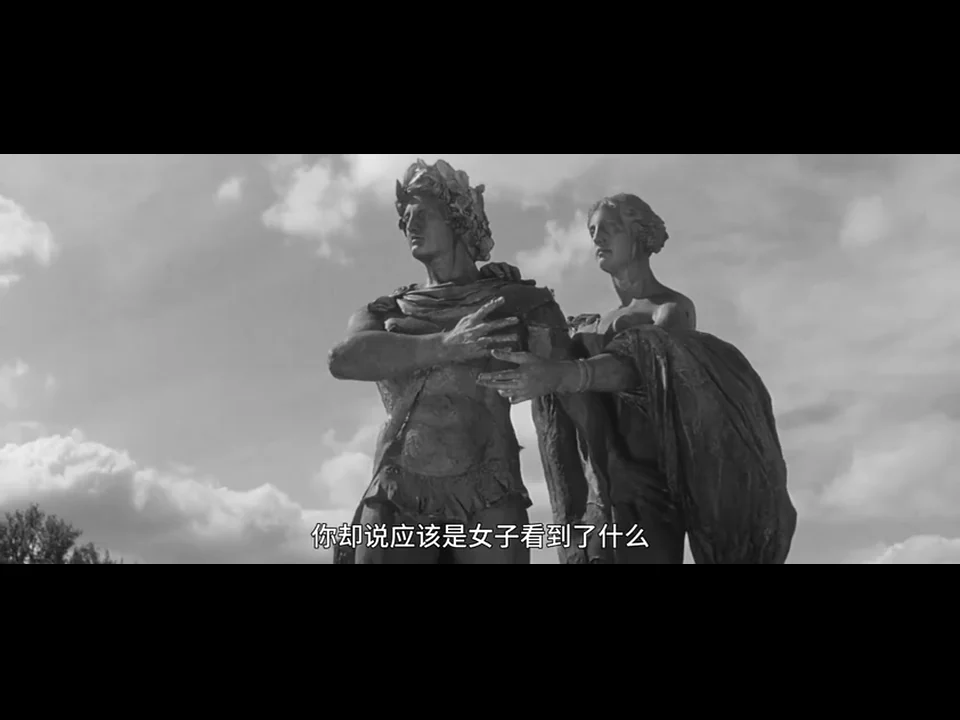
L’Année dernière à Marienbad · Alain Resnais · 1961Repeated poses, spaces, and conflicting memories bring viewpoint into an undecidable crystal.
La Jetée
Chris Marker · 1962Still images, sound, and recollection sequence show that cinematic time need not depend on continuous movement.
Kids
Larry Clark · 1995The searching camera makes the photographic view a mobile epistemic and ethical problem.
Empire
Andy Warhol · 1964Architecture, long duration, and viewing labour turn near-stillness into event.
Outer and Inner Space
Andy Warhol · 1965Double screen and video feedback turn portrait surface into actual-virtual exchange.
Memento
Christopher Nolan · 2000Photographs, tattoos, and reverse order turn mnemonic tools into instruments of manipulation.
David Claerbout's digital loops
David Claerbout · 1990s–2000sMinimal movement and long loops redraw the photo/film boundary by operation rather than carrier.
Mirror
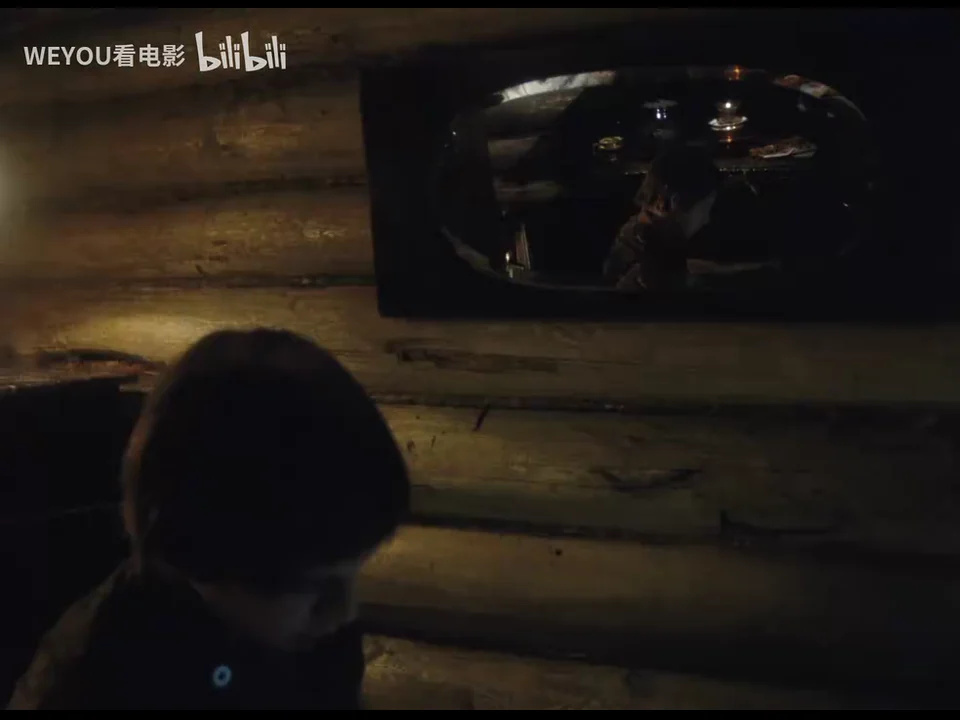
Andrei Tarkovsky · 1975Family photographs, news material, and poetic memory test an open crystalline circuit.
Eternal Sunshine of the Spotless Mind
Michel Gondry · 2004Erasure technology connects immemory, love, and future action.
Mobile Live Photo
2015–Brief movement surrounds a key still, testing the difference between product labels and actual viewing operations.
AI photo animation
2020sDistinguishes a photograph's virtual future from motion generated by probabilistic models.
Urban network cameras
24/7Connects duration to storage, retrieval, identification, and governance.
Automated photo-memory reels
2010s–Algorithms select, order, and score personal photographs, intervening in the actualization of virtual pasts.
Caught by the Tides
贾樟柯 / Jia Zhangke · 2024SITE EXTENSION: places old digital fragments, present bodies, and urban preservation states under Sutton’s test of new uses, asking who gains interpretive authority when material reappears.
With Hasan in Gaza
Kamal Aljafari · 2001 footage / later re-editedSITE EXTENSION: places destroyed images, family memory, and later access rights together to test whether photography’s future uses are decided jointly by survivors and archival institutions.
OUTWARD PERSPECTIVES
Further questions and research directions
Platform albums and recommender memory
- QUESTION
- When a platform selects On This Day, who actualizes the virtual past?
- EXTENSION
- Extend Sutton's new uses into recommendation, cloud storage, deletion, and data portability.
- TENSION
- The 2009 argument does not contain today's generative models or platform scale; this is a later site test.
- TEST
- Record control across storage, indexing, recommendation, sharing, and deletion.
Generative images and synthetic memory
- QUESTION
- Can a probabilistically generated old photograph enter a memory circuit without being mistaken for historical trace?
- EXTENSION
- Connect actual-virtual tests to provenance, training data, and synthetic disclosure.
- TENSION
- The virtual is not AI virtuality, and absence of indexicality does not remove social effects.
- TEST
- Record provenance chain, prompt, model, circulation context, and recalled past together.
Colonial archive and counter-archive
- QUESTION
- Who names, classifies, digitizes, and opens a photograph's future uses?
- EXTENSION
- Use counter-archive, restitution, and community metadata to make open use less abstract.
- TENSION
- The living present does not erase photographic violence, ownership, or colonial classification.
- TEST
- Record photographic power, custody history, metadata authorship, access restriction, and community dissent.
Photographic accessibility
- QUESTION
- For whom does an image remain invisible without alternative text, tactile access, or contextual description?
- EXTENSION
- Extend the viewing event into screen readers, description, magnification, tactile graphics, and cognitive legibility.
- TENSION
- Sutton's general spectator cannot substitute for specific disability experience and access design.
- TEST
- Check availability, perceivability, operability, understandability, and participation separately.
Carrier, custody, and the power to hear
- QUESTION
- Who keeps the image, and who decides which sounds and versions may re-enter the present?
- EXTENSION
- Connect Sutton’s photographic event to Colman’s signaletic material, Rushton’s sonsign, and the atlas sound-evidence layer.
- TENSION
- Sutton’s photographic memory argument cannot replace independent evidence about archival institutions, production labour, and historical violence.
- TEST
- Record bearer and affected party across capture, mixing, preservation, retrieval, authorization, and withdrawal.
READING ROUTE
Chapter sequence and reading questions
- 01pp. ix–32
Suspend media essence
Write production, format, viewing, and subsequent use for one image.
- 02pp. 33–98
Separate four times
Mark capture, present viewing, recalled past, and future use.
- 03pp. 99–168
Test the crystal
Name actual, virtual, and reciprocal exchange; exclude cases with association alone.
- 04pp. 169–200
Map the assemblage
Use a Warhol case to connect body, machine, space, celebrity, and viewing labour.
- 05pp. 201–235
Enter network governance
Mark controllers and affected parties across storage, retrieval, recommendation, circulation, and deletion.
EDITIONS, SOURCES, AND RIGHTS
Return from the guide to editions, catalogues, and research
Copyright remains with the University of Minnesota Press and relevant rightsholders.
Covers identify editions. Film images are low-resolution stills for commentary, with a source and timecode. Third-party images carry no open-licence designation.
University of Minnesota Press ↗
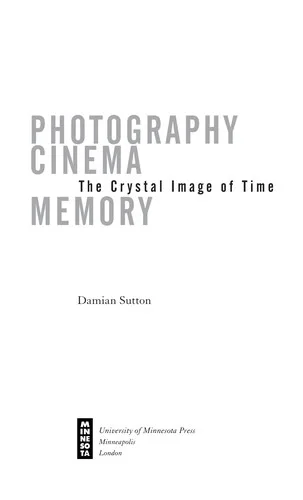
Damian Sutton, Photography, Cinema, Memory, 2009, PB 9780816647392.
Publisher metadata, contents, purchase, and cover verification.JSTOR institutional edition ↗
Stable record 10.5749/j.ctttswn6.
Institutional access; not labelled authorized full-book open access.Google Books record ↗
Bibliographic and limited-preview record.
Edition information and limited preview.Screen review ↗
Screen review, DOI 10.1093/screen/hjq036.
Comparative research entry; not the full book.Cinema 2: The Time-Image ↗
Related primary entry for crystal-image, actual-virtual, and indiscernibility.
Publisher metadata and published edition.Bergson, Matter and Memory ↗
Related primary text for perception, memory, actual, and virtual.
Publisher edition entry.