DEEP GUIDE · PRINT LOCATORS · FILM MATRIX
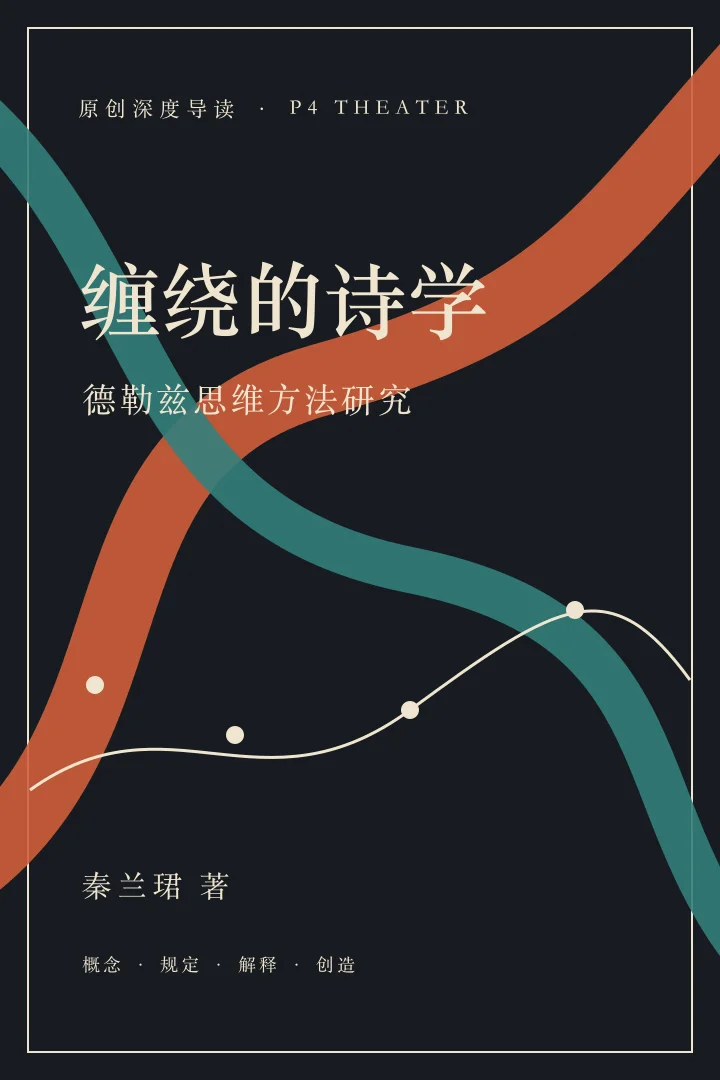
30《缠绕的诗学:德勒兹思维方法研究》
From the eight postulates of thought, true ideas, and genetic definition to expression, differentiation, Alice, and the evaluation of life
A method of thought is not a set of rules preceding its object. It is a constrained movement formed as concepts, texts, traditions, and interpreters enter one another. Entwinement does not mean that everything is connected; it tracks how a problem forces concepts across established levels and produces difference.
Simplified Chinese · 中国文联出版社 · 2017 · ISBN 9787519024956
- UNITS
- 9
- LOCATORS
- 68
- CURATED BOOK CASES
- 0
- EXTENSIONS
- 14
CENTRAL ARGUMENT
Central argument and scope
CONTRIBUTION
Rather than arranging Deleuze chronologically by book, Qin Lanjun reconstructs a methodological machine. She first clears the postulates of recognition and representation, then uses Spinozist true ideas, expression, and immanent cause to show how method validates itself within its object. Differentiation, event, sense, and the paradoxes of Alice become observable operations of thought, before creation is finally tested by its effects on the capacities of life.
PAGINATION
The printed text and end matter are continuously numbered through p.404.
SCOPE
Nine reading units, 68 single- or adjacent-double-page locators, 18 concept groups, eight relation cards, fourteen site-extension films, five outward perspectives, and a five-step route. The source book analyses no titled feature film.
CHAPTER ARGUMENT CHAINS
9 reading units with exact print locators
Turning entwinement from metaphor into research procedure
Methodological research must track how concepts work among text, tradition, and interpretation rather than substituting biography or period labels for argument.
The introduction gives entwinement three senses: thinkers and problems enter one another, levels within a text are nested, and the interpreter's operations enter the interpreted object. The book's three parts thus form an experiment moving from clearing postulates, through reconstructing interpretation, to application and evaluation.
Biography is only an entry
A twentieth-century life and twenty-first-century thought establish a historical position without explaining concepts through life events.
Three faces of entwinement
Intellectual lineage, textual relation, and interpretive act enter one another while remaining distinguishable.
Three parts as a methodological experiment
Clearing, interpretation, and application are not linear steps; each later operation returns to and revises the earlier one.
EXACT PRINT LOCATORS
- pp. 1–2
Deleuze's life, reception, and status as a twenty-first-century thinker frame the research problem.
- pp. 3–4
Methodological research does not label a philosophy by period; it follows how concepts work.
- pp. 6–7
The first layer of entwinement is the mutual entry of thinkers, problems, and concepts within interpretation.
- pp. 8–9
The second and third layers concern nesting within the text and between interpreter and object.
- pp. 10–11
The book moves from clearing postulates and reconstructing interpretation to application and reflection.
- p. 12
Entwinement is a practical procedure of thought, not merely a metaphor for mixture.
How eight postulates turn thought into a recognition machine
Thought is not recognition naturally initiated by a well-intentioned subject. It begins when a sign that existing categories cannot recognize forces each faculty beyond its ordinary use.
The chapter dismantles eight postulates—innate thought, common sense and good sense, recognition, representation, error, proposition, problem, and knowledge—before using learning and discord among the faculties to explain how thought actually occurs. Recognition retains an everyday function but loses its status as the model of creative thought.
Postulate one: innate thought
The subject is presumed to think naturally and move toward truth, concealing the conditions under which thought begins.
Postulate two: common sense and good sense
The faculties are presumed to agree upon the same object and move together from indetermination to determination.
Postulate three: recognition
Different sensations, memories, and imaginings are subordinated to the same object, leaving difference as mere aspects of identity.
Postulate four: representation
Identity, resemblance, analogy, and opposition arrange difference into forms governable by existing concepts.
Postulate five: error
Reducing failure of thought to false judgment misses deeper mechanisms such as stupidity, baseness, and false problems.
Postulate six: proposition
The truth of propositions cannot replace the truth of problems; deriving problems from ready answers reverses the order of thought.
Postulate seven: problem
A problem is not a blank waiting to be filled by an answer but a productive structure distributing the conditions of solutions.
Postulate eight: knowledge
Learning occurs through an encounter with signs and cannot be reduced to copying established knowledge.
Conclusion and objections
In encounter, faculties exceed ordinary use and become discordant; this compulsion rather than voluntary recognition initiates thought.
EXACT PRINT LOCATORS
- pp. 17–18
Innate thought treats everyone's natural capacity to think as an unexamined starting point.
- pp. 21–22
Common sense and good sense pre-coordinate the faculties around the same object.
- pp. 26–27
Recognition returns difference to the identifying loop of this is the same thing.
- pp. 32–33
Representation arranges difference from conceptual identity, opening the fourth postulate.
- pp. 39–40
Representation domesticates difference through identity, resemblance, analogy, and opposition.
- pp. 46–47
Treating failure only as error hides deeper conditions such as stupidity, baseness, and false problems.
- pp. 53–54
Truth or falsity of propositions is not that of problems; ready answers reverse the order of thought.
- pp. 59–60
A problem is not a gap awaiting an answer but a productive structure distributing solution conditions.
- pp. 65–66
Learning occurs in encounters with signs and cannot be reduced to copying knowledge outcomes.
- pp. 70–71
Encounter pushes each faculty beyond ordinary use into discordant transcendent exercise.
- pp. 76–77
Genuine thought is not voluntary recognition but compulsion by something unrecognizable.
How a true idea produces method and object together
If a method requires another method as guarantee, it regresses infinitely. A true idea exhibits method within its own movement through reflective form and expressive content.
Through the Treatise on the Emendation of the Intellect, the chapter recasts method from external rule into the productive relation of the idea itself. An idea can become an idea of the idea while expressing the cause of its object, so form, content, means, end, method, and object validate one another in one genetic chain.
Method and infinite regress
Method cannot wait forever for another set of rules to legitimate it; it must validate itself in the movement of thought.
Form of the true idea: reflection
The idea becomes an idea of the idea, making the formation of knowledge itself perceptible.
Content of the true idea: expression
A true idea does not merely correspond to an object; it expresses its cause and productive relations.
Form and content co-generate
Reflection and expression intertwine so method and object, means and end, validate one another within the same chain.
EXACT PRINT LOCATORS
- pp. 78–79
The Treatise is read as the difficulty of how method begins, not as a rulebook.
- pp. 82–83
Method cannot wait infinitely for another method's proof; it must validate itself within thought.
- pp. 84–85
The form of a true idea is reflective: an idea can become an idea of an idea.
- pp. 87–88
Reflection does not abandon the object; it makes the genetic relation of knowing perceptible.
- pp. 89–90
The content of a true idea is expressive: it expresses its cause and productive relations.
- pp. 92–93
Form and content, means and end, method and object validate one another in one genetic chain.
How six methods of definition compete
A good definition does not merely list properties of a finished object; it carries the object's movement of genesis. Comparing methods means comparing the differences they produce.
How to define a circle becomes a shared experimental field. Analytic, constructive, negative, synthetic, practical, and paradoxical routes connect respectively with Descartes, Kant, Hegel, Aristotle, Hume, and Deleuze. Rather than choosing a static winner, Qin observes how each definition arranges conditions, facts, levels, and genesis.
Analytic definition
Properties are extracted from a finished object, often leaving genesis outside the definition.
Constructive definition
Kantian construction brings conditions of constructibility into the object, while leaving the genesis of those conditions to be asked.
Negative definition
Hegel advances definition through contradiction, allowing Qin to highlight Deleuze's reservations about producing difference through negation.
Synthetic definition
Aristotelian genus, species, and induction organize empirical material while preselecting which differences can appear.
Practical definition
Hume returns relations to habit, use, and experiential association, making definition a practical effect.
Paradoxical definition
The Deleuze-Spinoza route defines the circle through the movement that produces it, carrying cause within definition.
Deleuzian definition
Definition crosses levels of form and content, principle and fact, method and product; comparison itself produces difference.
EXACT PRINT LOCATORS
- pp. 94–95
How a circle is defined establishes a shared experiment for comparing methods.
- pp. 97–98
Kantian construction includes conditions of constructibility while leaving their genesis to be explained.
- pp. 107–108
Hegelian negative definition advances through contradiction, highlighting Deleuze's reservations about negation.
- pp. 114–115
Aristotelian synthesis and induction show how genus-species frameworks organize empirical material.
- pp. 119–120
Hume's practical definition returns relation to habit, use, and experiential association.
- pp. 125–126
The Deleuze-Spinoza route defines a circle through its producing movement, carrying cause within definition.
- pp. 135–136
Paradoxical definition crosses levels of form/content, principle/fact, and method/product.
- pp. 139–140
Comparison does not select a static correct answer; it reveals which differences a mode of definition produces.
How expression rewrites transcendent theology as immanence
Concepts carry old problems but can transform them through relational recomposition. Once attribute, substance, and mode enter the mechanism of expression, cause no longer governs effects from outside the world.
Qin enters the definitions of Spinoza's Ethics through conceptual history. Attribute and divine names, substance-mode, and one-many are rearranged; univocity removes hierarchy, and expression converts the question of how God enters the world into how the movement of substance is immanent to the world's movement.
Attribute and divine names
Attribute inherits theological naming while changing hierarchical relations among God, human beings, and being through univocity.
Substance-mode and one-many
A mode is not an inferior copy outside substance but a determinate expression of its power.
Expression and tradition
Expression inherits theological vocabulary while transforming its problem so cause and effect remain on one plane of immanence.
Recasting the problem
The issue is no longer how substance moves into the world but how its movement occurs only within the movement of attributes and modes.
EXACT PRINT LOCATORS
- pp. 144–145
Conceptual history rather than isolated word meaning opens the definitions of Spinoza's Ethics.
- pp. 146–147
Attribute connects with the theological tradition of divine names, showing that concepts carry old problems.
- pp. 152–153
Univocity changes the hierarchical distribution among God, human beings, and being.
- pp. 156–157
Substance and mode are not an external one and many but two poles within expression.
- pp. 162–163
A mode is not an inferior copy outside substance but a determinate expression of its power.
- pp. 166–167
Expression inherits and transforms theological tradition, making immanence the central problem.
- pp. 175–176
The conclusion recasts God entering the world as a movement in which cause remains immanent to effect.
Interpreting Spinoza must itself be immanent
Textual rearrangement avoids arbitrary rewriting only when constrained by conceptual relations and transformation of problems. The way expression is interpreted must itself become expressive.
The chapter compares Spinoza's order of proof with Deleuze's rearrangement, moving from immanent cause to the force and capacity of modes. The interpreter does not stand outside the object: when method enters conceptual movement, interpretation and interpreted object form an isomorphic circuit.
Immanent cause
Cause does not leave its effect, and the effect does not detach from the cause it expresses.
The power of modes
An individual is not merely a passive effect; capacity is measured through relations of affecting and being affected, acting and undergoing.
Interpretation and entwinement
The interpreter's procedure enters the interpreted concept rather than pronouncing conclusions from outside the text.
Isomorphism of method and object
The method of interpreting expression becomes expressive, forming an immanent method-object circuit.
EXACT PRINT LOCATORS
- pp. 177–178
Spinoza's order of proof and Deleuze's rearrangement show how interpretation transforms a text.
- pp. 181–182
An immanent cause does not leave its effect, nor does the effect detach from the cause it expresses.
- pp. 186–187
The power of modes turns the individual from passive effect into a composition of intensities with capacities for action.
- pp. 194–195
Power as capacity is not domination but what a being can do and undergo.
- pp. 204–205
Textual rearrangement is not arbitrary rewriting; conceptual relations and transformed problems constrain it.
- pp. 212–213
Interpretation and entwinement place the interpreter's procedure within the movement of the interpreted concept.
- pp. 216–217
The interpretation of expression becomes expressive itself, forming an isomorphic circuit of method and object.
How differentiation varies through becoming, event, and sense
Differentiation is the double process from virtual problem-structure to actual solutions. Becoming, event, and sense are not four loose vocabularies but variants of one methodological machine at different levels.
The chapter begins with differential relations and singularities in the double process of différentiation/différenciation, then develops it as becoming, where identity boundaries destabilize together; event, which no accident exhausts; and sense, expressed by a proposition but irreducible to denotation. Nonsense is the paradoxical excess that makes heterogeneous series communicate.
Differentiation as method
Differential relations and singularities are determined within a virtual problem and actualized in qualities and parts.
Differentiation as becoming
Becoming is not a transition from completed state A to B but a middle movement destabilizing the A/B boundary together.
Differentiation as event
A bodily state of affairs actualizes but does not exhaust an event; counter-actualization lets the performer take up the event without coinciding with resentment toward the accident.
Differentiation as sense
Sense is what a proposition expresses while differing from denotation, manifestation, and signification.
Nonsense and the paradoxical element
Nonsense is not nothingness but an excessive position circulating through series and enabling heterogeneous terms to communicate.
EXACT PRINT LOCATORS
- pp. 218–219
Differentiation is proposed as a double process from virtual problem-structure to actual solutions.
- pp. 226–227
Calculus and embryology supply models, but a philosophical concept is not a transplanted scientific term.
- pp. 236–237
Becoming is not transition between completed states but a middle movement destabilizing identity on both sides.
- pp. 248–249
Event differs from state of affairs: no bodily actualization exhausts the event.
- pp. 255–256
The actor-role model presents counter-actualization: taking up an event without coinciding with personal resentment toward the accident.
- pp. 262–263
Sense is what a proposition expresses but is not denotation, manifestation, or signification.
- pp. 278–279
Nonsense is not absence but an excessive term that makes heterogeneous series communicate and produce sense.
- pp. 285–286
Differentiation, becoming, event, and sense are variants of one method at different levels.
How Alice turns method into narrative apparatus
Lewis Carroll's names, twins, squares and circles, and Snark are not illustrations of concepts. They make pure becoming, double series, infinite regress, and the empty-place object operate within language and narrative.
The chapter moves from Tweedledum and Tweedledee's exchange of identities into pure becoming, tests naming through the regress of a song's title, exposes the power to define through Humpty Dumpty's square-circle problem, and makes the Snark, the purloined letter, handkerchief, and crown circulate as empty-place objects between series. It ends with learning: problems begin in encounters with singular signs.
Twins: pure becoming and double series
Names and bodies exchange, preventing identity from serving as the stable origin of change.
Infinite regress and the song's name
The name of the song and what the name is called send linguistic levels into regress, making the naming relation itself an object.
The square circle and Humpty Dumpty
The question of who may define a word connects paradoxical definition, power, and the production of sense.
Nonsense and hunting the Snark
Hunting an object that cannot be fixed turns empty place and serial movement into narrative mechanisms.
Empty-place object and learning
The empty-place object migrates between series, and encounter with a singular sign opens a problem rather than filling it from an answer.
EXACT PRINT LOCATORS
- pp. 290–291
The twins test identity and pure becoming through exchanges of name and body.
- pp. 297–298
Two series are not static parallels; a paradoxical element circulating between them sets both in motion.
- pp. 303–304
The name of the song and what the name is called stage an endless regress of linguistic levels.
- pp. 309–310
Humpty Dumpty's power to name links paradoxical definition to the production of sense.
- pp. 314–315
The square-circle problem shows paradox not merely violating logic but exposing conditions of definition.
- pp. 318–319
The hunting of the Snark turns objectlessness, empty place, and serial movement into a narrative apparatus.
- pp. 326–327
The Snark, purloined letter, handkerchief, and crown are juxtaposed as empty-place objects circulating between series.
- p. 329
A problem opens through encounter with a singular sign rather than being backfilled from an answer.
Creation must submit to an evaluation of life
Differentiation, intuition, and dramatization make concept creation rigorous, yet creation is not good by itself. It must be evaluated by whether relations increase capacities to feel, think, and act.
Intuition is not inward inspiration but a procedure for distinguishing tendencies in kind and establishing true problems. Dramatization supplies concepts with genetic scenes by asking who, when, where, and through which forces. Qin then introduces the danger of creation, rejects the equation of novelty with value, and concludes pedagogically: teaching arranges encounters rather than copies answers.
Differentiation and intuitive thought
Bergsonian intuition establishes true problems along tendencies and differences in kind, returning differentiation to processes of life.
Problematization and dramatization
Who, how, when, where, and through which forces recast static essence as genetic conditions.
The danger of creation
Creation can open relations and can produce control or destruction; formal novelty is not proof of value.
Good, bad, and capacities of life
Evaluation turns to whether relations increase capacities for action, feeling, and thought.
Deleuze as educator
Teaching arranges encounters, problems, and signs so learners generate relations rather than copy completed knowledge.
EXACT PRINT LOCATORS
- pp. 330–331
A philosophy-of-life perspective returns differentiation to Bergsonian intuition and the construction of true problems.
- pp. 339–340
Intuition is not inward feeling but a rigorous division of differences, tendencies, and problem conditions.
- pp. 347–348
Dramatization asks who, when, where, and through which force, giving the concept a genetic scene.
- pp. 354–355
Philosophy as concept creation also brings risk; creation itself cannot simply be equated with the good.
- pp. 362–363
Evaluation turns to whether a relation increases capacities to act, feel, and think.
- pp. 370–371
Teaching should arrange encounters rather than transmit copies.
- p. 374
The book locates methodological value in fostering life's differentiation rather than building a closed system.
WORKING CONCEPTS
18 searchable, operational concepts
Entwinement
Concepts, traditions, textual levels, and interpretive acts enter one another without merging into identity.
- OPERATION
- Identify each term, the direction of entry, and where difference is retained.
- BOUNDARY
- Not a vague network in which everything relates, nor evidence-free association.
Dogmatic image of thought
A set of postulates that makes thought appear natural, well-intentioned, identical, and capable of recognizing truth.
- OPERATION
- Identify the subject, object, correct direction, and form of failure presumed by an analysis.
- BOUNDARY
- Everyday recognition has uses; the problem is smuggling it in as the general model of thought.
Innate thought
The capacity and right direction of thought are assigned to the subject in advance.
- OPERATION
- Ask through which encounter, training, and institutional relation a subject is forced to think.
- BOUNDARY
- Not a denial that people think, but a refusal to naturalize its conditions of genesis.
Common sense / good sense
Common sense coordinates faculties around one object; good sense orders a shared direction from indetermination to determination.
- OPERATION
- Record separately whether perception, memory, imagination, and action actually converge on one object.
- BOUNDARY
- Social consensus and moral conscience are not identical to these technical senses.
Recognition
The operation that subordinates different sensations, memories, and imaginings to the same object.
- OPERATION
- Check whether an unrecognizable detail changes viewing or action.
- BOUNDARY
- Recognition is one practical capacity but not a sufficient model of creative thought.
Representation
Difference is arranged through identity, resemblance, analogy, and opposition into forms governable by existing concepts.
- OPERATION
- Specify which representational mechanism recuperates each difference.
- BOUNDARY
- An image having representational content does not mean analysis must be governed by representation.
True / false problem
A true problem produces and distributes conditions of solution; a false problem often comes from mixed divisions or a ready answer projected backward.
- OPERATION
- State which possible solutions the problem redistributes before evaluating answers.
- BOUNDARY
- Difficulty, an open ending, or missing information does not by itself make a problem true.
Learning and signs
Learning is encounter with a sign that must be interpreted but cannot be immediately recognized, pushing faculties into discordant exercise.
- OPERATION
- Record the sign, failure of recognition, new task of each faculty, and generated skill.
- BOUNDARY
- A sign is not a hidden message, and learning is not copying the correct answer.
True idea
An idea reflective in form and expressive of its object's productive cause in content.
- OPERATION
- Make the analytic method show how it holds within relations of the material.
- BOUNDARY
- Not merely a correct judgment corresponding to an object.
Expression
Cause, attribute, mode, and idea manifest themselves in an immanent relation rather than through an external subject representing an object.
- OPERATION
- Analyse how image, sound, and body act on one another before discussing subjective viewing.
- BOUNDARY
- Not a general term for self-expression, message transmission, or symbolism.
Univocity of being
Being is said in one sense of different beings while differences of intensity and mode remain.
- OPERATION
- Check whether human, object, and image operations share one plane while retaining their differences.
- BOUNDARY
- Not the claim that all beings are identical or equal in value.
Immanent cause
Cause does not leave its effect, and the effect does not stand outside its cause.
- OPERATION
- Map how cause continues to act within the ongoing movement of its effect.
- BOUNDARY
- Not the abolition of causality or the reduction of everything to a closed system.
Power / capacity
A being's relational capacity to affect and be affected, to act and undergo.
- OPERATION
- Compare capacities for action, feeling, and connection gained or lost across a scene.
- BOUNDARY
- Not domination, status advantage, victory, or intensity of violence.
Differentiation / differenciation
The first determines differential relations and singularities in a virtual problem; the second actualizes them in qualities and parts.
- OPERATION
- Record virtual relation, singularity, actualizing operation, and actual result in separate fields.
- BOUNDARY
- Not generic change, and the two French processes must not be collapsed into one undifferentiated synonym.
Becoming
A middle movement not bounded by completed identities A and B, destabilizing both sides together.
- OPERATION
- Find zones of proximity, mutual transformation, and intensities not attributable to one side alone.
- BOUNDARY
- Not imitation, costume change, a growth arc, or movement from A into a completed B.
Event / Aion
The event as expressed is not exhausted by one bodily state of affairs; Aion divides it simultaneously toward what has passed and what is to come.
- OPERATION
- Record both material accident and the unresolved relation still expressed audiovisually.
- BOUNDARY
- Philosophical distance does not erase harm, responsibility, or material consequence.
Sense / nonsense
Sense is the event expressed by a proposition; nonsense is the paradoxical excess making heterogeneous series communicate.
- OPERATION
- Identify two series, the element circulating between them, and the rearrangement it produces.
- BOUNDARY
- Nonsense is not nothingness, gibberish, or lack of explanation.
Dramatization
The dynamic conditions of a concept are asked through who, how, when, where, and by which forces.
- OPERATION
- Rewrite each abstraction as observable roles, times, spaces, and relations of force.
- BOUNDARY
- Not rhetorical dramatics or exaggerated conflict.
PRIMARY TEXTS AND COMPARATIVE STUDIES
Related arguments and textual comparisons
Thought begins in compulsion, not goodwill
- BOOK ARGUMENT
- The eight postulates conceal the encounter with the unrecognizable through which thought begins.
- RELATED PRIMARY ENTRY
- The image of thought in chapter three of Difference and Repetition, and learning through signs in Proust and Signs.
- CROSS-TEXT COMPARISON
- What Is Philosophy? treats opinion, rather than error alone, as thought's enemy.
- SITE TEST
- First locate a concrete audiovisual sign that breaks recognition, then test whether perception, memory, and thought change their uses.
Method must validate itself within its object
- BOOK ARGUMENT
- Reflective form and expressive content co-generate within the true idea.
- RELATED PRIMARY ENTRY
- Spinoza's Treatise on the Emendation of the Intellect and Deleuze's Expressionism in Philosophy: Spinoza.
- CROSS-TEXT COMPARISON
- Film-form analysis cannot begin with a preset label; shot relations must show why a concept applies.
- SITE TEST
- Every conceptual case must provide at least one observable editing, audiovisual, or spatiotemporal relation and one counterexample.
A good definition carries genesis
- BOOK ARGUMENT
- Paradoxical definition includes the movement producing a circle within its definition.
- RELATED PRIMARY ENTRY
- Genetic definition in Spinoza's Treatise and conditions of genesis in Difference and Repetition.
- CROSS-TEXT COMPARISON
- A concept of montage should be defined through movement, interval, and transformation between shots rather than a list of stylistic attributes.
- SITE TEST
- Write the concept as input relation, transforming operation, and observable result, then state the boundary where it fails.
Expression places one and many on one immanent plane
- BOOK ARGUMENT
- The conceptual history of attribute, substance, and mode rewrites transcendent theology as immanent expression.
- RELATED PRIMARY ENTRY
- Deleuze's Expressionism in Philosophy: Spinoza.
- CROSS-TEXT COMPARISON
- Cinema 1 places images on an immanent plane of matter-light rather than treating them only as representations for consciousness.
- SITE TEST
- Analyse operative relations among images before subjective viewing; a POV shot does not automatically subordinate all images to a subject.
Capacity is measured relationally
- BOOK ARGUMENT
- The power of a mode is its capacity to affect and be affected, to act and undergo.
- RELATED PRIMARY ENTRY
- Spinoza's Ethics and Deleuze's Spinoza: Practical Philosophy.
- CROSS-TEXT COMPARISON
- Cinema of the body can express changing capacity through posture, fatigue, rhythm, touch, and spatial resistance.
- SITE TEST
- Record which possibilities of action, feeling, and connection are gained or lost in character-environment relations across the scene.
Differentiation connects virtual problem and actual form
- BOOK ARGUMENT
- Determination of virtual relations and actualization of actual differences form a double process.
- RELATED PRIMARY ENTRY
- Chapters four and five of Difference and Repetition.
- CROSS-TEXT COMPARISON
- The time-image in Cinema 2 directly images virtual past, actual present, and bifurcating future.
- SITE TEST
- Distinguish scrambled information from transformed temporal relation and identify the image-circuit making temporal layers coexist.
An event is not exhausted by its accident
- BOOK ARGUMENT
- A state of affairs actualizes but cannot exhaust an event; counter-actualization retains distance for reenactment and transformation.
- RELATED PRIMARY ENTRY
- The event series of The Logic of Sense.
- CROSS-TEXT COMPARISON
- Before and after in the time-image can remain suspended beyond action's result, keeping the event open to interpretation.
- SITE TEST
- List the bodily accident and the unresolved event expressed audiovisually; neither substitutes for the other.
Creation requires an evaluation of life
- BOOK ARGUMENT
- Concept creation carries danger, and its value depends on whether relations increase capacities of life.
- RELATED PRIMARY ENTRY
- What Is Philosophy? and Nietzsche and Philosophy.
- CROSS-TEXT COMPARISON
- New image technologies can open sensation and can close it into predictable stimulus.
- SITE TEST
- For every innovative form, ask which sensible, thinkable, and actionable relations it increases and whom or what it excludes.
FILMS AND IMAGES
Book cases and extended analyses
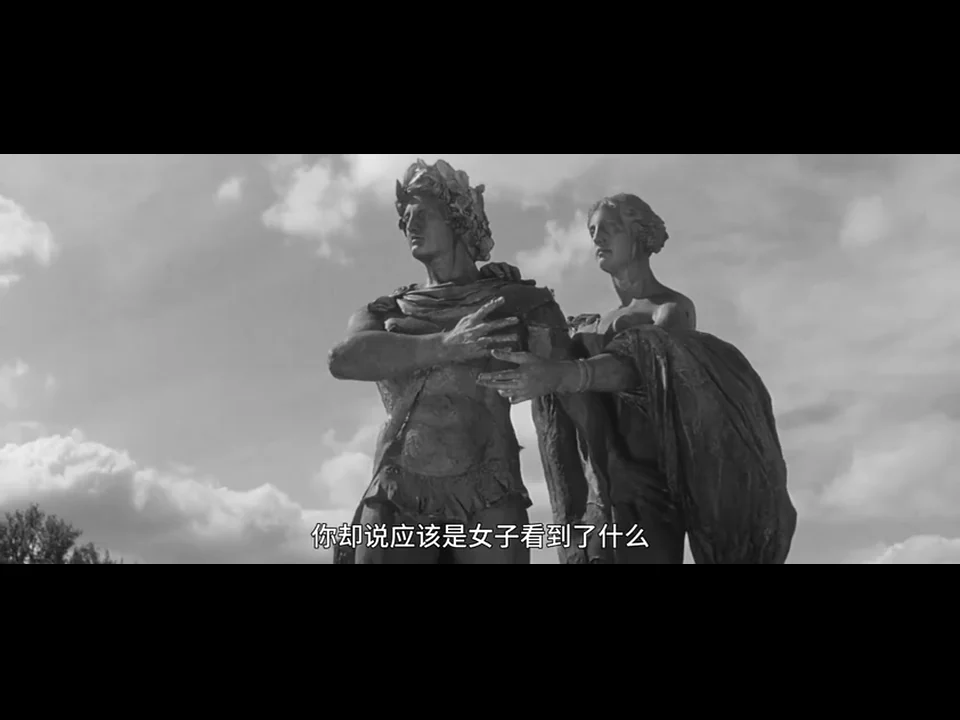
Last Year at Marienbad
L’Année dernière à Marienbad · Alain Resnais · 1961Site extension: hotel space, repeated narration, and conflicting memories test whether one version can exhaust an event.
Vertigo
Vertigo · Alfred Hitchcock · 1958Site extension: Scottie's remaking of Judy turns recognition and representation's suppression of difference into a visible operation; the unsent letter also gives the spectator foreknowledge, preventing the green light from being reduced to one man's subjective hallucination.
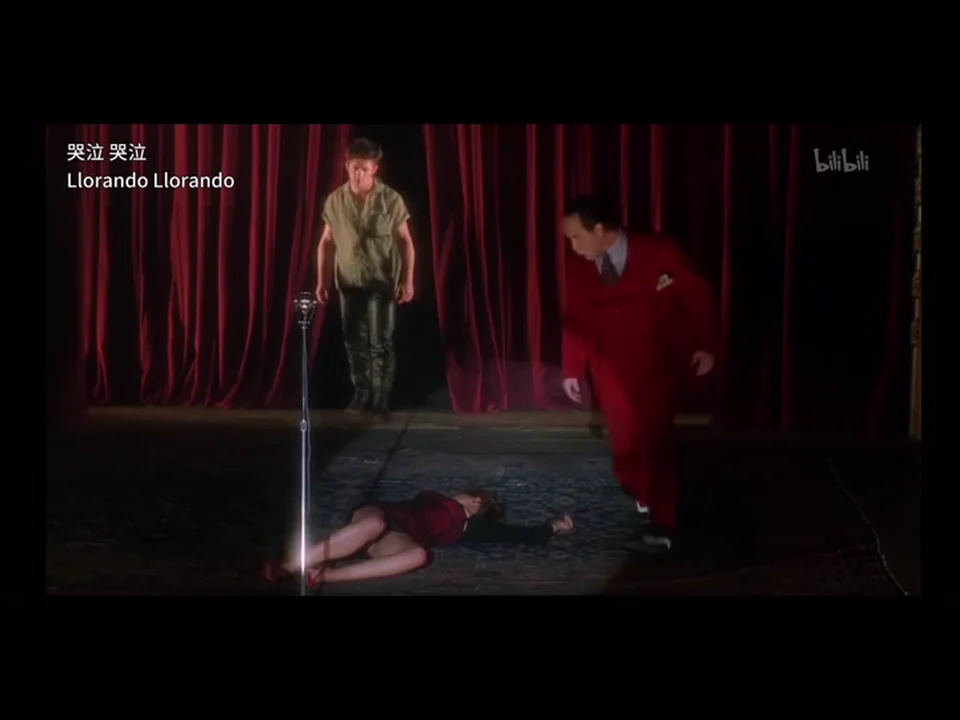
Mulholland Drive
Mulholland Drive · David Lynch · 2001Site extension: the blue box, exchanged names, and Club Silencio test empty-place object, nonsense, and audiovisual separation together.
Céline and Julie Go Boating
Céline et Julie vont en bateau · Jacques Rivette · 1974Site extension: sweets, the house, and repeated performance turn Alice-like learning through signs into a cinematic apparatus.
Orpheus
Orphée · Jean Cocteau · 1950Site extension: mirror passages, reversed movement, and radio codes test how two worlds express themselves through one interface.
Stalker
Сталкер · Andrei Tarkovsky · 1979Site extension: detours through the Zone, the Room, and desire disable action-goals and force the characters to reformulate the problem.
La Jetée
La Jetée · Chris Marker · 1962Site extension: stills, sound, and memory circuits test when repeated images produce different temporal relations.
Je t’aime, je t’aime
Je t’aime, je t’aime · Alain Resnais · 1968Site extension: a failed time experiment releases fragments of the past from linear action and makes them return according to a problem-structure.
Meshes of the Afternoon
Meshes of the Afternoon · Maya Deren & Alexander Hammid · 1943Site extension: door, key, flower, and knife exchange places in a loop, making props differential operators migrating between series.
The Exterminating Angel
El ángel exterminador · Luis Buñuel · 1962Site extension: an invisible prohibition and repeated failures to leave shift the problem from visible obstacle to relational configuration.
Persona
Persona · Ingmar Bergman · 1966Site extension: superimposed faces, audiovisual fissures, and film rupture test how identity and image-material destabilize together.
Inland Empire
Inland Empire · David Lynch · 2006Site extension: leaking roles, nested scenes, and rabbit passages test when heterogeneous series produce communication.
Sans Soleil
Sans Soleil · Chris Marker · 1983Site extension: epistolary voice-over, travel images, and Zone processing test how images express memory rather than represent a past object.
OUTWARD PERSPECTIVES
Further questions and research directions
Algorithmic recognition and synthetic images
- QUESTION
- When a classifier decides what this is in advance, which differences can still force system or viewer to alter judgment?
- EXTENSION
- Extend the eight postulates into facial recognition, recommender labels, generative models, and automated moderation.
- TENSION
- Qin studies philosophical method and does not predict machine learning; algorithmic comparison is a later site experiment.
- TEST
- Record training category, unrecognized item, human override, affected subject, and whether feedback changes the model.
Pedagogy of encounter and assessment
- QUESTION
- Does a course transmit recognizable answers or arrange encounters through which learners generate problems?
- EXTENSION
- Turn Deleuze as educator into tasks of observation, rewriting, comparison, and counterexample in the film classroom.
- TENSION
- Forcing thought is not coercing students; pedagogy must preserve agency, opt-out, and accessibility.
- TEST
- Compare problem-structures before and after the course rather than only accuracy of term recall.
Translation, double terms, and conceptual difference
- QUESTION
- Does one Chinese equivalent flatten two distinct processes in the source language?
- EXTENSION
- Use différentiation/différenciation as a model for Chinese-French-English records of process, page, and use.
- TENSION
- Etymological difference is not automatic proof of conceptual correctness; syntax, argument, and operation remain decisive.
- TEST
- For each disputed term, record original, context, process, and the gains and losses of translation.
Archive, provenance, and interpretive circuits
- QUESTION
- When an image is re-edited, annotated, and recommended, how does interpretation enter the object and alter its future uses?
- EXTENSION
- Extend interpretation and entwinement into digital archives, metadata, subtitles, and platform circulation.
- TENSION
- Interpretation entering its object does not erase distinctions of provenance, edition, and rightsholder.
- TEST
- Build a traceable chain across original, digitization, edit, annotation, publication, and reuse.
Evaluation of life, ecology, and infrastructure
- QUESTION
- Whose capacity does an image innovation increase, and onto which bodies, workers, and environments does it displace cost?
- EXTENSION
- Extend evaluation of life from character ethics to computation, energy, devices, labour, and accessibility.
- TENSION
- Capacity is not abstract vitality; an increase here may coincide with diminished capacity elsewhere.
- TEST
- List beneficiaries, harmed parties, material inputs, reversibility, and long-term relational change separately.
READING ROUTE
Chapter sequence and reading questions
- 01pp. 17–77
Build the negative measure first
Annotate one sequence for the eight postulates: innate thought, common sense, recognition, representation, error, proposition, problem, and knowledge.
- 02pp. 78–140
Build a genetic definition
Write input, transformation, and result for one shot relation, then compare six modes of definition: analytic, constructive, negative, synthetic, practical, and paradoxical.
- 03pp. 144–217
Enter the Spinozist hinge
Map attribute, substance, mode, expression, immanent cause, and capacity, then test the map through changing capacities across a scene.
- 04pp. 218–329
Read differentiation four times
Read one sequence through virtual/actual, becoming, event/state of affairs, and sense/nonsense.
- 05pp. 330–374
Conclude through an evaluation of life
For one formal innovation, state the capacities to feel, think, act, and participate that it increases and diminishes.
EDITIONS, SOURCES, AND RIGHTS
Return from the guide to editions, catalogues, and research
Copyright remains with China Federation of Literary and Art Circles Publishing House, Qin Lanjun, and relevant rightsholders.
Covers identify editions. Film images are low-resolution stills for commentary, with a source and timecode. Third-party images carry no open-licence designation.
OCLC WorldCat record ↗
Qin Lanjun, The Poetics of Intertwinement: Study on Deleuze's Way of Thinking, China Federation of Literary and Art Circles Publishing House, first edition and printing, March 2017, ISBN 9787519024956, OCLC 1273522851. The parallel English title is bibliographic metadata, not evidence of a published translation.
Edition, language, and holdings verification; no authorized full-text open access or formal translation located.Guangdong University of Foreign Studies author profile ↗
Official lecture page used to verify Qin Lanjun's education, institutional history, research interests, and publications.
Author information; the page photograph is linked only and not reused.Difference and Repetition ↗
Related primary entry for the image of thought, problems, difference, and the double process of differentiation.
Published-edition entry at Columbia University Press.The Logic of Sense ↗
Related primary text for becoming, event, Aion, sense/nonsense, and the Alice series.
Published-edition entry at Columbia University Press.What Is Philosophy? ↗
Related primary entry for concept creation, plane of immanence, and art's preservation of sensation.
Published-edition entry at Columbia University Press.Cinema 1: The Movement-Image ↗
Cross-textual entry for movement-image, perception/affection/action, and the sensory-motor schema.
Published-edition entry at the University of Minnesota Press.Cinema 2: The Time-Image ↗
Cross-textual entry for pure optical and sound situations, crystal, bifurcating time, body, and thought.
Published-edition entry at the University of Minnesota Press.A Thousand Plateaus ↗
Extended primary reading for becoming, assemblage, deterritorialization, and plane of immanence.
Published-edition entry at the University of Minnesota Press.