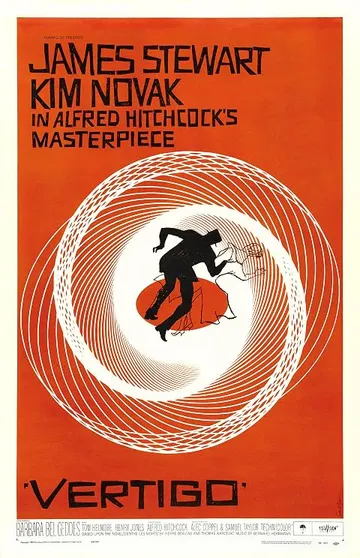
Alfred Hitchcock / 阿尔弗雷德·希区柯克 · 1958
Vertigo
Vertigo
Cinema 1, pp. 204–205 both supplies a general criterion for Hitchcock's inclusion of spectator response within a director–film–spectator relation and directly explains Vertigo through variations in the Same's relations to the dead woman, husband, and detective; it does not analyze the atlas's three chosen passages shot by shot. Rushton, pp. 53–57, gives a more specific chain: Elster's commission scripts Scottie's viewing through the absent Carlotta; Judy's unsent letter confirms the deception for the spectator before Scottie; the remaking of Judy then unfolds inside that knowledge gap. Three atlas scene records bind commission, confession, and green-lit remaking to the 02:07:27 repost timeline. A boundary is equally important: Rushton p. 124 explicitly classifies the dolly zoom as the affection-image par excellence, so it cannot serve by itself as positive relation-image evidence. The green light's actual–virtual reading likewise remains a candidate pending evidence of a reciprocal circuit.
Film details
- Original title
- Vertigo
- Director
- Alfred Hitchcock / 阿尔弗雷德·希区柯克
- Year
- 1958
- Region
- United States
Film analysis: how shots organize concepts
Close-reading questions
How do Elster's assignment, Judy's unsent letter, and the green-lit remaking successively alter what Scottie and the spectator know, allowing desire to control a body through that knowledge gap?
- 01From 00:12:00 to 00:15:50, Elster defines the surveillance task before either Madeleine or Carlotta appears. How does an absent woman become the third term that prearranges what Scottie will see and how he will interpret it?
- 02From 01:38:30 to 01:40:30, Judy writes and then destroys her confession. How does a letter that never reaches Scottie first alter the spectator's position of knowledge, turning the second half from an identity puzzle into informed viewing of control?
- 03From 01:53:45 to 01:56:50, costume, hairstyle, green light, and circular camera movement organize Judy as Madeleine. Which shot facts establish relations among desire, knowledge, and control, and what reciprocal-circuit evidence is still missing before claiming an actual–virtual exchange?
Shots, relations, and concepts
- 1Record
Elster brings Scottie into a wood-panelled office and the men alternate in medium views; images of ships, harbours, and buildings are visible on the walls and desk. Elster asks Scottie to follow his wife and explains her anomalous behaviour as the influence of the dead Carlotta. Scottie questions the possession story but ultimately accepts the task of observation.
Open the scene currently used to ground this chain: The absent Carlotta already governs the investigation - 2Judge the relation
Follow her is a clear assignment, yet its object is not one woman alone: Scottie must judge whether Carlotta's past is affecting Madeleine. From the start, the assignment ties Scottie and Madeleine to the absent Carlotta. The past associated with the dead Carlotta enters the present not through flashback but through her name, a family history, and the terms of the assignment; it directs Scottie's looking before he sees any evidence.
- 3Name the concept last
Relation-image、Mental-image. Only concepts whose scene relation resolves to “supports” under the current record are named here; candidates, adjacent terms, and countertests are not merged into the conclusion.
- 4Countertest
If the conversation is summarized merely as a detective receiving an assignment, it remains plot exposition. The relation-image claim holds only if the absent Carlotta continues as a third term governing how Madeleine, Elster, Scottie, and spectator interpret later images; if that third term ceases to operate, the classification must be downgraded.
Shots and scenes
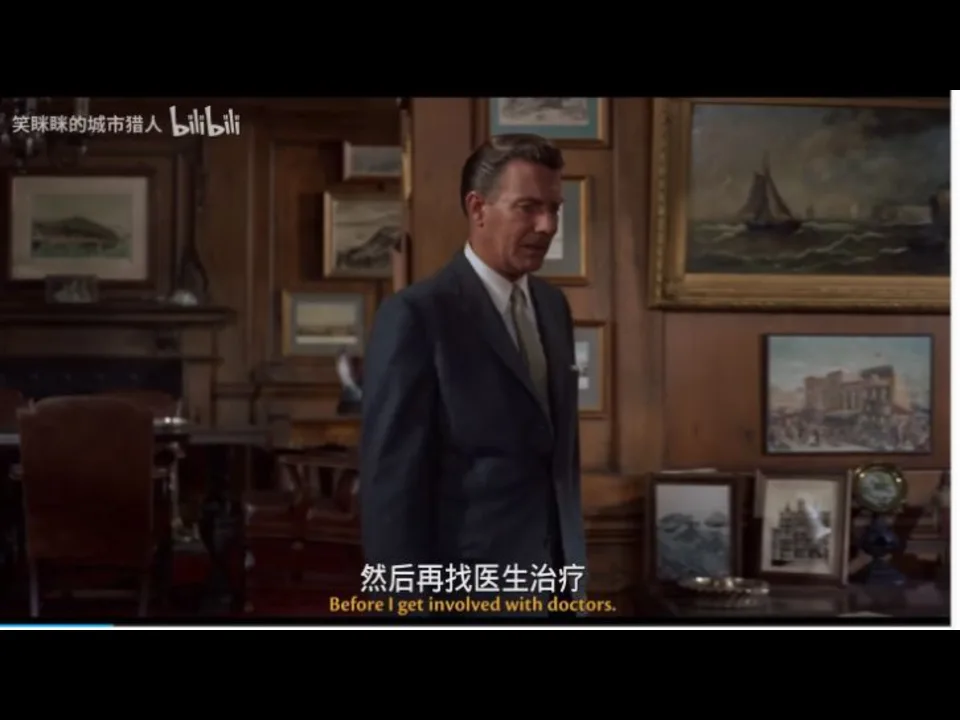
If the conversation is summarized merely as a detective receiving an assignment, it remains plot exposition. The relation-image claim holds only if the absent Carlotta continues as a third term governing how Madeleine, Elster, Scottie, and spectator interpret later images; if that third term ceases to operate, the classification must be downgraded.
Open viewing position ↗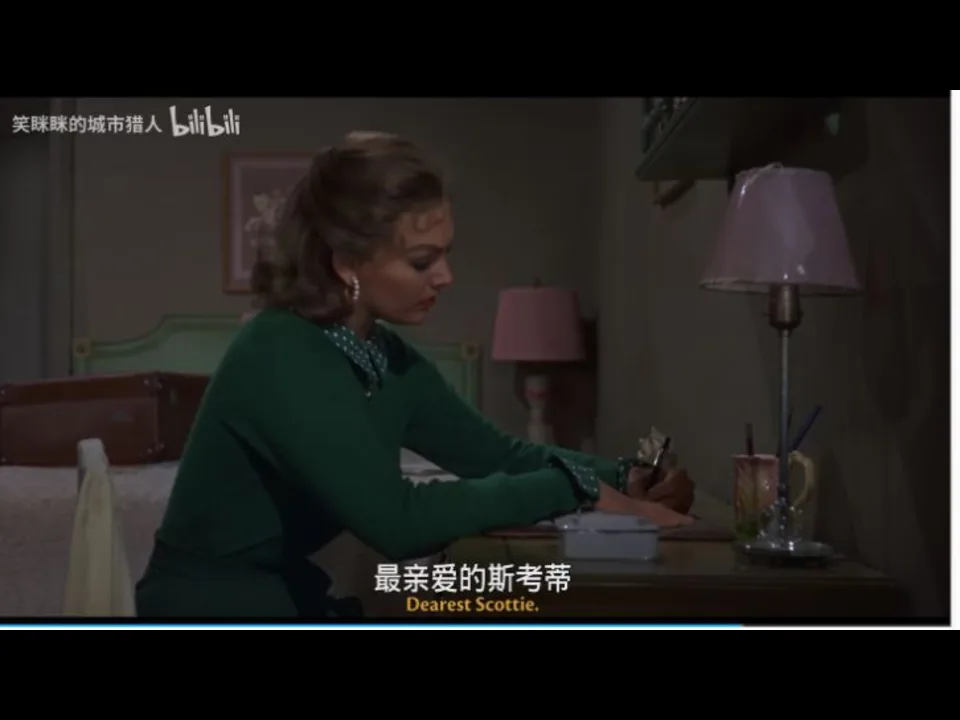
The letter as prop is not itself the demark. Rushton's claim is that Judy disrupts the established Carlotta–Madeleine series and acquires a new function. Detached from the first half's doubling series and the spectator's knowledge gap, the writing becomes mere exposition and both demark and relation-image claims must be withdrawn.
Open viewing position ↗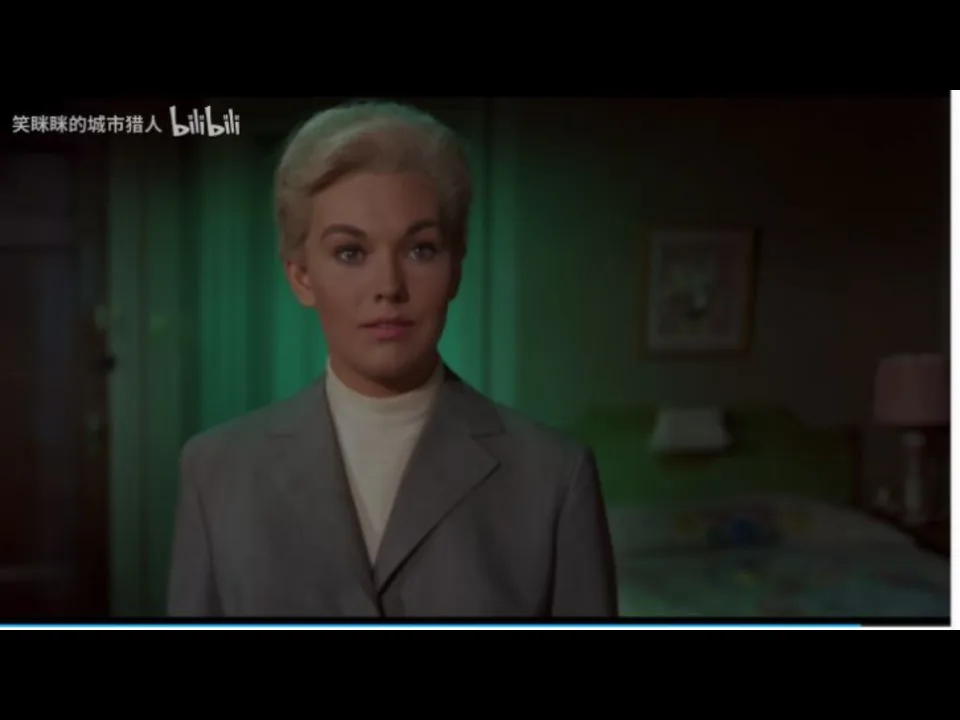
Rushton, pp. 56–57, supports Scottie's remaking of the desired object and shows that the spectator already knows Judy's identity, making the process of control visible. The atlas is responsible for treating green light and circular camera movement as relational mechanisms. If that knowledge gap is ignored, the scene reduces to remaking action and affective intensity; green colour, memory, or superimposition alone cannot establish an actual–virtual relation or crystal-image.
Open viewing position ↗Primary texts, scholarship, and locators
Theory coordinate: Cinema 1, Minnesota 1986, ch. 12, pp. 204–205; Richard Rushton, Cinema After Deleuze (2012), pp. 53–57, 124; atlas scene-level application
- 01Cinema After Deleuze
Treats Hitchcock as a central case of the relation-image; pp. 48–53 distinguish relation, spectator knowledge, and the demark and include the crop-duster in North by Northwest.
Open the atlas source record → - 02Cinema 1: The Movement-Image
Standard Minnesota English translation and a principal citation edition in Anglophone scholarship.
Open the atlas source record →
Scholarship cited by the scene records: Each study is listed once, with its locators and supported scenes retained together.
- 01Deleuze’s Cinema Books: Three Introductions to the Taxonomy of Images
Locator(s): David Deamer, Deleuze’s Cinema Books (2016), pp. 132–137
Cited by scene(s): The absent Carlotta already governs the investigation · The unsent letter moves the spectator ahead of Scottie
Deamer supplies general criteria for mark, demark, symbol, and relation-image; he does not establish that a particular letter, colour, or camera movement has already acquired any of those statuses.
Open the atlas source record → - 02Cinema After Deleuze
Locator(s): Richard Rushton, Cinema After Deleuze (2012), pp. 53–54 · Richard Rushton, Cinema After Deleuze (2012), pp. 55–57 · Richard Rushton, Cinema After Deleuze (2012), pp. 56–57
Cited by scene(s): The absent Carlotta already governs the investigation · The unsent letter moves the spectator ahead of Scottie · The return in green light: how desire manufactures its object
Rushton develops Vertigo's relational structure through Elster's commission, Judy's disruption of the existing series, spectator foreknowledge, and Scottie's remaking of the desired object. The substantive film argument ends on p. 57; p. 58 adds no film evidence.
Rushton writes that “Judy is no doubt the demark in Vertigo” and that “the audience must know more than Scottie.” The atlas's 01:39:20 coordinate and shot facts come from carrier review, not the book.
Rushton explains Scottie's remaking of Judy as regaining the object of desire and keeps spectator foreknowledge within the relational web; he does not directly analyze the green lighting or the 360-degree camera movement.
Open the atlas source record →
This film in books and research
《缠绕的诗学:德勒兹思维方法研究》 · Atlas extension
Vertigo
Film relation: Site extension: Scottie's remaking of Judy turns recognition and representation's suppression of difference into a visible operation; the unsent letter also gives the spectator foreknowledge, preventing the green light from being reduced to one man's subjective hallucination.
Shot question: Which costume, posture, memory, spectator knowledge, and power relations manufacture the same woman in the green light?
Cinema After Deleuze · Book case
Vertigo
pp. 53–57
Film relation: Elster's commission first scripts surveillance through the absent Carlotta, and Judy's unsent letter then lets the spectator know the deception before Scottie; remaking Judy consequently becomes a process of control under an informed gaze.
Shot question: Once the spectator knows the truth, how do the unsent letter, green light, and Scottie's gaze each participate in remaking the object of desire?
Viewing gateways and editions
- Official Bilibili feature page: 迷魂记bilibili.comOpen film page ↗
- Page access
- Region restricted
- Version extent
- Recorded as a complete version
- Source type
- Distributor or streaming platform
Edition note: Official Bilibili feature · 2:07:49, subject to regional and account conditions. The three scene analyses use the 2:07:27 edition with hard-coded Chinese and English subtitles, BV1ECSHYoEwW; each edition has its own timeline.
Link checked: 2026-09-01