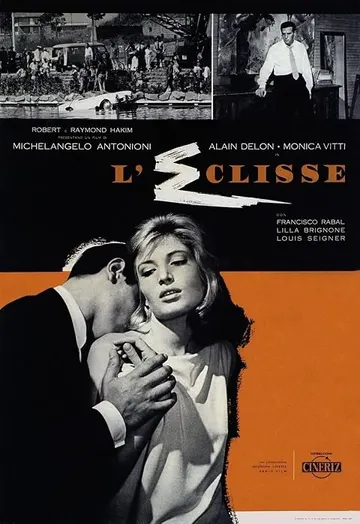
Michelangelo Antonioni / 米开朗基罗·安东尼奥尼 · 1962
L’Eclisse
L’eclisse
After characters and rendezvous withdraw from the ending, places, objects, wind, and city noise persist. Time appears independently of relational action.
Film details
- Original title
- L’eclisse
- Director
- Michelangelo Antonioni / 米开朗基罗·安东尼奥尼
- Year
- 1962
- Region
- Italy / France
Film analysis: how shots organize concepts
How does L’eclisse let a breakup, a minute of silence, and a missed appointment progressively transfer agency from characters to objects, sound, and place?
At the opening, the couple cannot formulate a decision that ends the relation, so fan, razor, footsteps, and furniture take over rhythm. The exchange compresses death’s interruption into a short, priced pause. The ending lets the meeting place continue after its protagonists fail to appear. The time-image does not mean ‘nothing happens’; events no longer take completed character action as their sole measure.
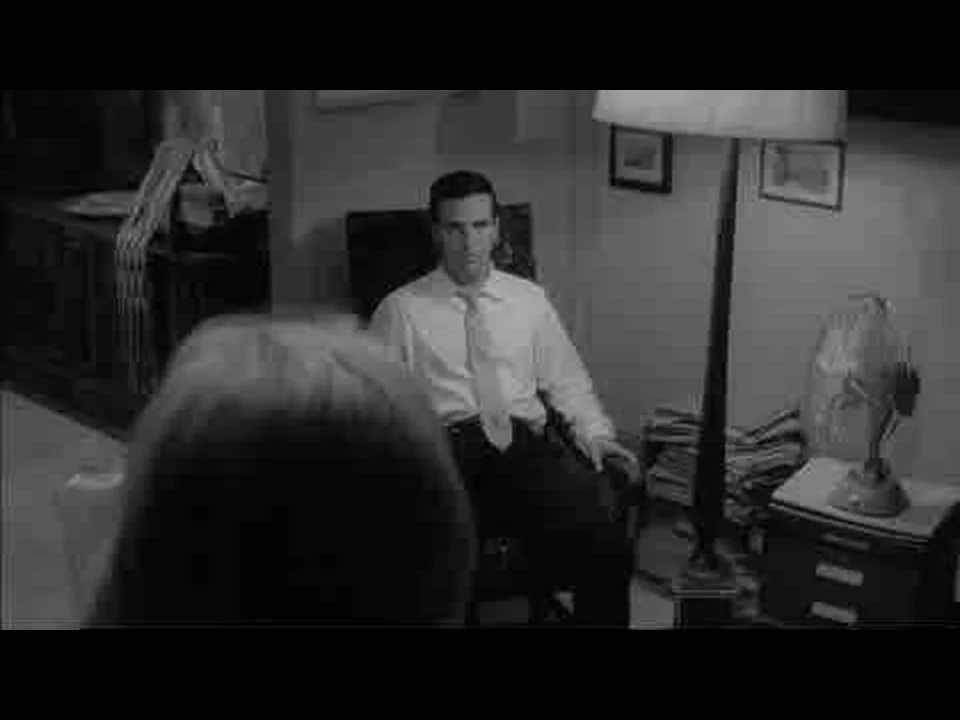
Lamp, fan, table, doorframe, and blinds repeatedly separate Vittoria and Riccardo. She walks, turns away, and touches objects without organizing a decisive conversation.
Fan hum, heels, electric razor, and long silences occupy the soundtrack. Language no longer governs the scene; machine and gait keep time for the relation.
The sensory-motor schema loosens within ordinary gestures: seeing, hearing, and touching continue but cannot extend into an action that completes the breakup. A pure optical and sound situation begins in this suspension.
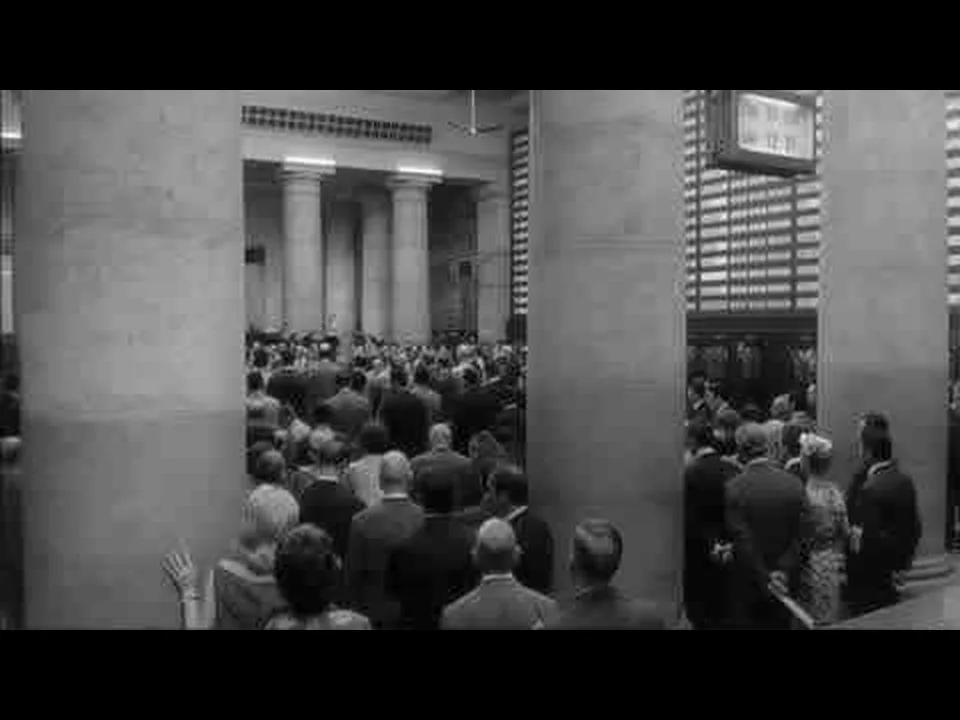
Calls, gestures, boards, telephones, and crowded bodies between columns suddenly stop and rearrange; the prior trading actions resume immediately when commemoration ends.
Relative silence on this carrier lasts only about twenty seconds, approximately 00:23:12.5–00:23:32.4. Telephones and room resonance never fully vanish, and the noise restarts.
Sound exposes a systemic rhythm beyond individual intention: death does not reorganize the action-chain but is absorbed as a brief pause. The sonsign lies in ‘noise–incomplete silence–noise returning,’ not merely in a loud market.
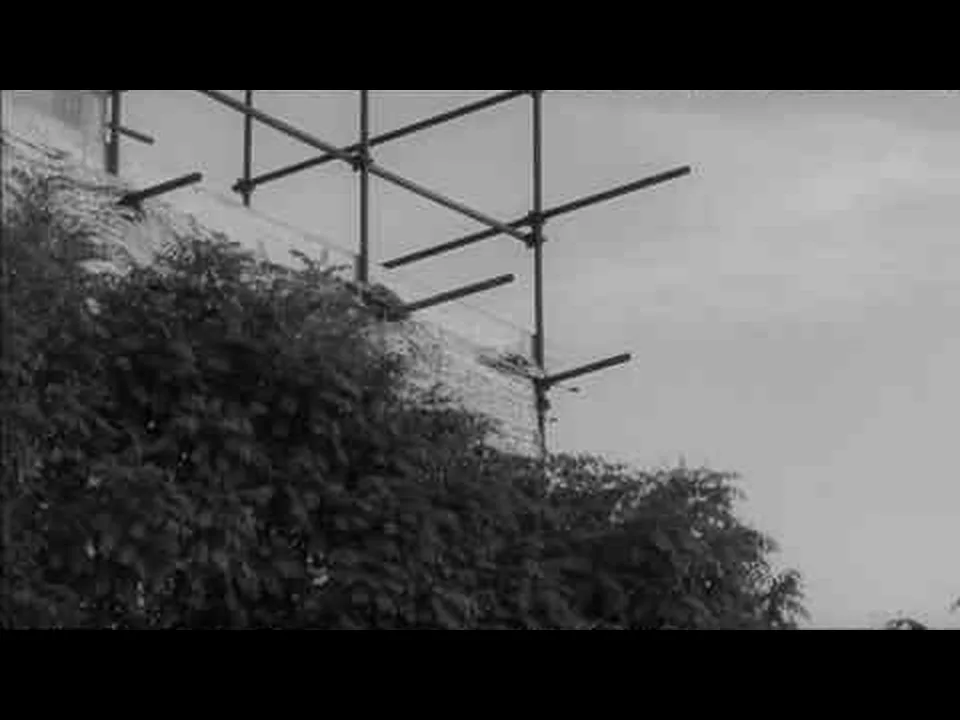
Hoarding, fence, tree, building material, water stain, newspaper, streetlight, and strangers successively occupy the meeting place; Vittoria and Piero never appear.
Character dialogue and explanatory melody withdraw, leaving traffic, footsteps, wind, and urban resonance. Sound does not fill absence with a conclusion; it keeps the place open.
Dead time is not nothingness but the persistence of lights, objects, and routes after action’s purpose recedes. What disappears is the protagonists’ privilege over the image, not the world.
EDITION NOTE The user page aggregates two editions of the same film into 04:13:13. Part 1 is the complete 02:06:02 feature; parts 2–11 are a ten-part duplicate. All three stills and jumps are locked to part 1, and the aggregate page runtime is excluded from the film time axis.
From the dawn breakup to the missed rendezvous, people withdraw from spaces action should connect, leaving objects, urban noise, and light to take over the time abandoned by relation.
- 01The breakup exhausts dialogue
Vittoria and Riccardo spend dawn in a flat moving objects, crossing rooms, and falling silent; fan, furniture, and street remain after their words are exhausted.
The decision to separate produces no decisive act; the void in the relation passes into objects and pauses. - 02Market noise leaves personal intention
At the stock exchange, gestures, shouted prices, telephones, and crowd movement accumulate at speed; as soon as silence for a death ends, the noise erupts again.
Sound no longer explains one character's action but becomes an autonomous milieu governing collective rhythm. - 03The location waits for absentees
The rendezvous arrives and neither Vittoria nor Piero appears; the film revisits the corner, water barrel, construction site, bus stop, and streetlamp as daylight fades.
Space no longer leads to an encounter; dead time is composed directly from objects, sounds, and light.
Close-reading questions
- 01In the dawn breakup, how long are fan, ashtray, furniture, window frame, and street retained after the pair can no longer speak? Do they symbolize the failed relation, or first acquire a duration no longer serving the characters' decision?
- 02After the stock exchange observes silence for a death, how do shouted prices, telephones, gestures, and paper erupt again? Compare the function of the same sounds before and after the pause: do they convey individual intention or become an autonomous rhythm governing the crowd?
- 03The final missed rendezvous revisits corner, water barrel, construction site, bus, passers-by, and streetlamp. What light, sound, and order of recurrence disappear if it is reduced to modern alienation? Once the figures are absent, how does place present time directly without recourse to recollection or foreshadowing?
Shots and scenes
Primary texts, scholarship, and locators
Theory coordinate: Cinema 2, ch. 1, pp. 5–6, 9; ch. 9, p. 243
- 01Cinema 2: The Time-Image
Authoritative source for the standard translation, translators, ISBN, and publication date.
Open the atlas source record →
This film in books and research
Deleuze and Cinema: The Film Concepts · Book case
L’eclisse
pp. 138–145
Film relation: The unpeopled ending lets space carry relational residues and an unoccupied future.
Shot question: After the characters leave, which lights, objects, and routes continue to form an event?
Cinema After Deleuze · Book case
L’eclisse
pp. 65–71
Film relation: Unpeopled space lets relational residues continue as events and keeps the world open, not yet filled by its inhabitants.
Shot question: When the ending contains no characters, what continues to happen through light, objects, and routes?
Viewing gateways and editions
- Verified complete Bilibili carrier: 1962 安东尼奥尼 阿兰德龙 好像谈了又好像没谈 CCbilibili.comOpen film page ↗
- Page access
- Accessible when checked
- Version extent
- Recorded as a complete version
- Source type
- User-uploaded page
Edition note: Part 1 is the complete 2:06:02 feature; parts 2–11 contain a ten-part edition of the same film, totalling approximately 2:07:11. The page total of 4:13:13 includes both duplicate editions.
Link checked: 2026-08-25