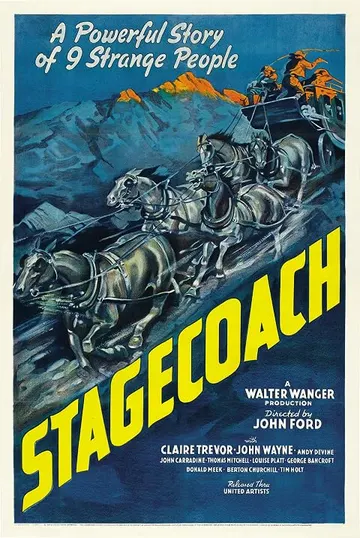
John Ford / 约翰·福特 · 1939
Stagecoach
Stagecoach
Cinema 1 chapter 9 defines S–A–S′ on pp. 141–142. Page 146 directly uses Stagecoach's alternation between coach interior and exterior to explain Ford's Encompasser and treats the circular S–A–S as a first approximation; p. 147 then distinguishes Ford's spiral as S–A–S′, moving toward a new situation. The atlas therefore locates three passages without treating a long shot as proof by itself. Around 00:35:10, the coach is reduced beneath Monument Valley and the sky, proposing rather than proving an encompassing situation. From 01:13:30 to 01:15:20, cross-cutting distributes driver, reins, horses, gunfighters, and passengers across a collective act, giving firmer evidence for A. From 01:33:50 to 01:35:28, Ringo is released and leaves with Dallas in a small cart. That departure may form S′, but it is also a countertest: the film clearly shows Ringo leaving town with Dallas after his release without directly showing whether legal and class positions inside the town are redistributed. Deleuze's criticism on p. 150 of American montage reducing social causes to a personal duel, together with the distinctions among whole mission, local action, and duel on pp. 151–152, sets the textual boundary for asking whether a changed situation for the pair amounts to a changed situation as a whole. The atlas is responsible for the three timecodes and for relating them in this way.
Film details
- Original title
- Stagecoach
- Director
- John Ford / 约翰·福特
- Year
- 1939
- Region
- United States
Film analysis: how shots organize concepts
Close-reading questions
- 01From 00:34:50 to 00:36:20, the coach becomes a small moving shape beneath Monument Valley and the sky. With which interior shots of seats, looks, and forms of address must this long shot connect before it can propose an Encompasser rather than mistake scenery for proof of S?
- 02The chase from 01:13:30 to 01:15:20 cuts among driver, reins, horses, gunfighters, passengers, and pursuers. Which joins transmit one shared problem of action, and which merely produce speed? How would that distinction alter the diagnosis of A?
- 03From 01:33:50 to 01:35:28, Ringo is released and leaves with Dallas as the small cart recedes, while Curley and the doctor remain in town laughing. Does the ending redistribute the opening's legal and class positions, or merely change the pair's destination while leaving the town's distribution off screen and unproven? What further visible difference would be required to support S′?
Scene–concept relations
- 01The coach enters the landscape: condition or compositional effect?
Atlas candidate reading:Action-image: large form
Criterion for holding or withdrawal: S–A–S′ holds only if this encompassing situation generates action and is transformed by that action into a new situation. If the landscape is merely a spectacular backdrop to movement, the classification should be withdrawn.
- 02The chase is not one heroic act but a set of simultaneous responses
Atlas candidate reading:Action-image: large form · Atlas candidate reading:Sensory-motor schema
Criterion for holding or withdrawal: If these local tasks remain organized by a clearly given global danger and lead to restoration of the situation, the passage supports the large form. If shot review shows delays between perception and response depriving the whole of its organizing force, the relation should be weakened.
- 03Leaving town after Ringo's release: new situation or self-preservation of the old order?
Countertest:Action-image: large form
Criterion for holding or withdrawal: If S′ means that the whole redistributes members' positions after action, this is a large-form candidate. Yet the passage confirms only that Ringo is released and leaves town with Dallas, not a corresponding change in the town's distribution. Until such a visible difference is found, a triumphal S′ reading should be withheld.
About scene-relation labels
Support requires one scene's audiovisual facts and textual relation to be checked, with a named source and locator. Candidate readings, adjacent concepts, and countertests carry separate labels.
Shots and scenes
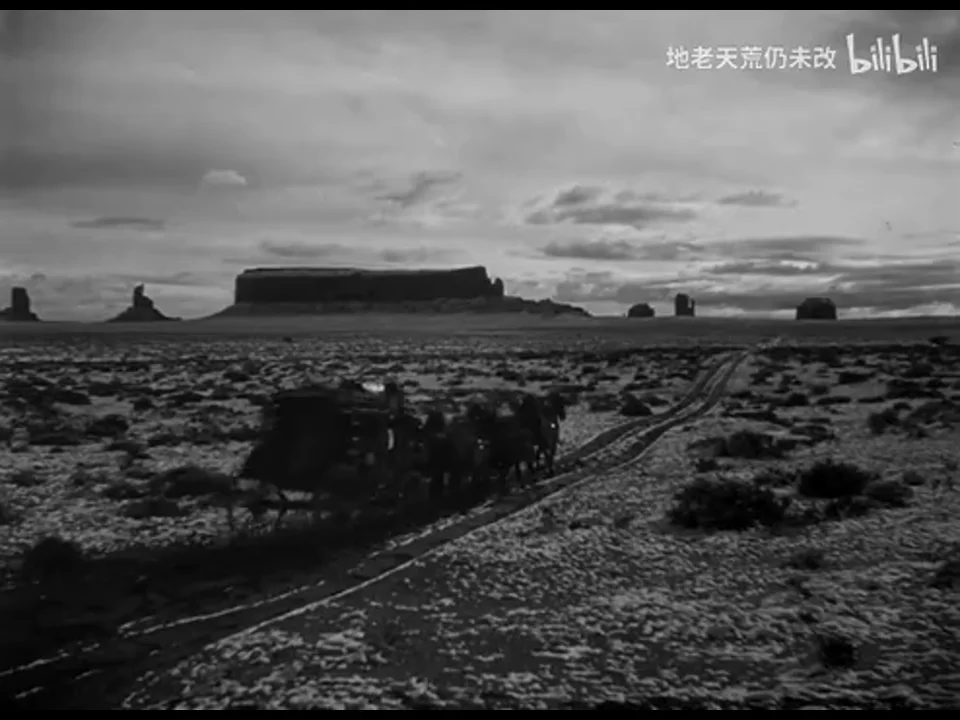
S–A–S′ holds only if this encompassing situation generates action and is transformed by that action into a new situation. If the landscape is merely a spectacular backdrop to movement, the classification should be withdrawn.
Open viewing position ↗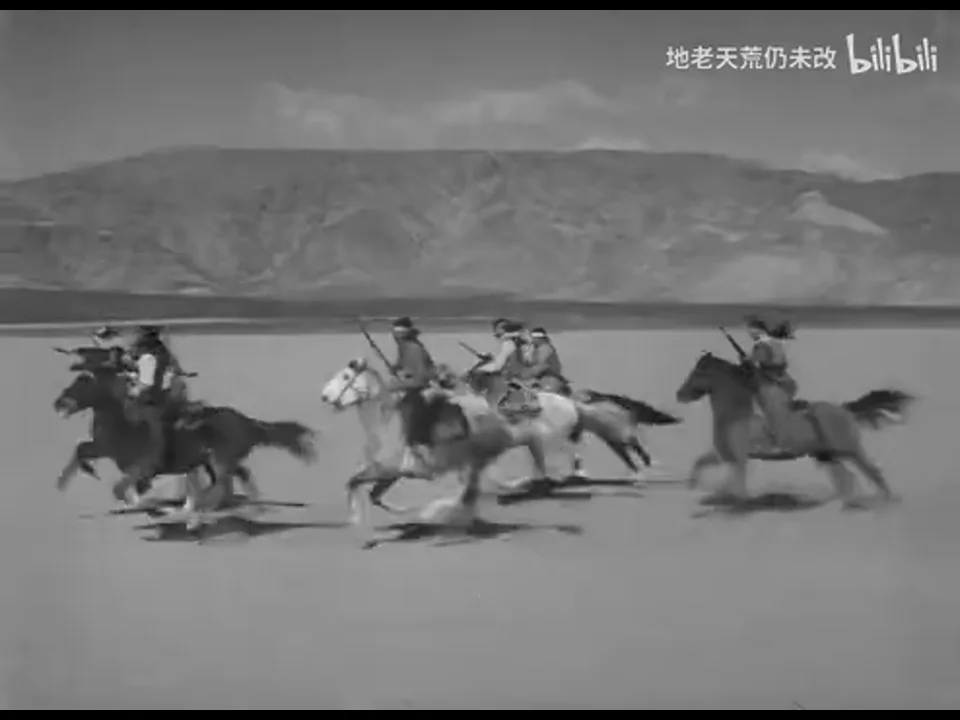
If these local tasks remain organized by a clearly given global danger and lead to restoration of the situation, the passage supports the large form. If shot review shows delays between perception and response depriving the whole of its organizing force, the relation should be weakened.
Open viewing position ↗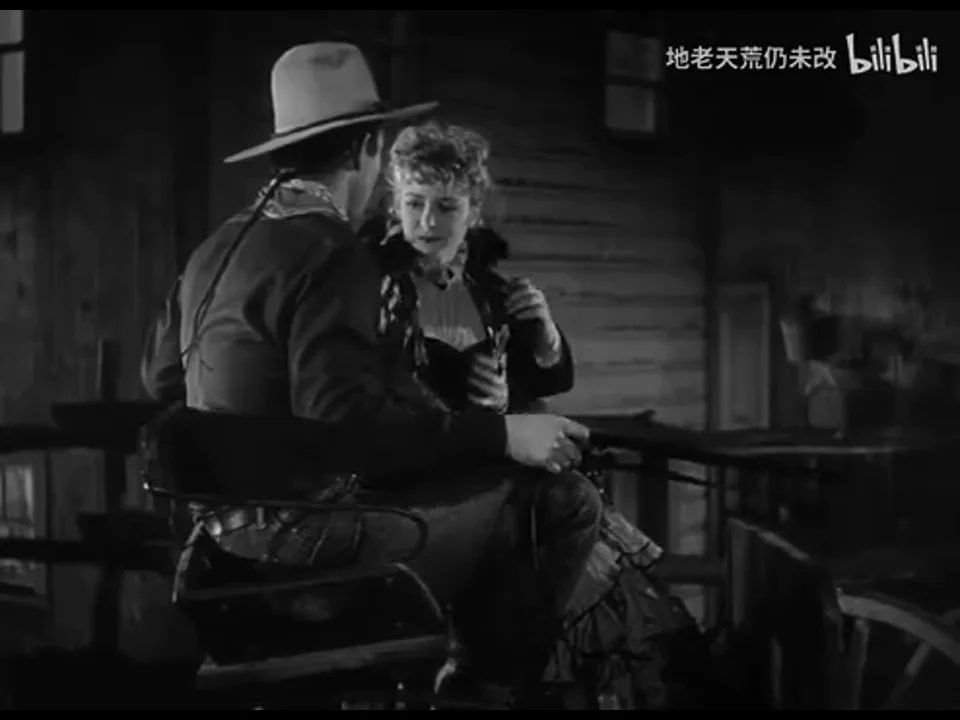
If S′ means that the whole redistributes members' positions after action, this is a large-form candidate. Yet the passage confirms only that Ringo is released and leaves town with Dallas, not a corresponding change in the town's distribution. Until such a visible difference is found, a triumphal S′ reading should be withheld.
Open viewing position ↗Primary texts, scholarship, and locators
Theory coordinate: Cinema 1, Minnesota 1986, ch. 9, pp. 141–153 (esp. pp. 141–142, 146–147, 150–152)
- 01Cinema 1: The Movement-Image
Standard Minnesota English translation and a principal citation edition in Anglophone scholarship.
Open the atlas source record →
This film in books and research
Cinema After Deleuze · Book case
Stagecoach
pp. 33–35
Film relation: Route, threat, character difference, and duel compose the SAS′ community.
Shot question: Who enters the stagecoach's America, and who becomes the outside used to unify it?
Viewing gateways and editions
- Verified complete Bilibili carrier: 关山飞渡【1939】bilibili.comOpen film page ↗
- Page access
- Accessible when checked
- Version extent
- Recorded as a complete version
- Source type
- User-uploaded page
Edition note: Complete single-part film · 1:35:34.
Link checked: 2026-08-14
- Criterion Collectioncriterion.comOpen film page ↗
- Source type
- Distributor or streaming platform