Argument
Wahlberg brings phenomenology and Deleuzian temporality into documentary studies, placing Ricoeur, Bazin, and Mitry in the same conversation. The nonfiction image's trace is no longer merely proof that something existed; it is reconfigured through screening duration, the viewing body, historical figures, and the potential archival memory of representation. Documentary time expands beyond narrative order into a joint organization of sensory experience, social memory, and historical ethics.
Core question
A documentary image is both a present viewing event and a trace left by the past. How do these times meet in nonfiction cinema? How do waiting, retrospection, archival recomposition, and sound give social memory a sensible form?
Argument structure
Trace, experience, and archive run through the classical films, video experiments, and Warhol cases. The moment of recording, the present of viewing, the recalled social past, and the image's archival future do not coincide. Duration, sound, and recomposition bring those times into relation within documentary.
Related concepts, chapters, and films
Original editions, translations, and access
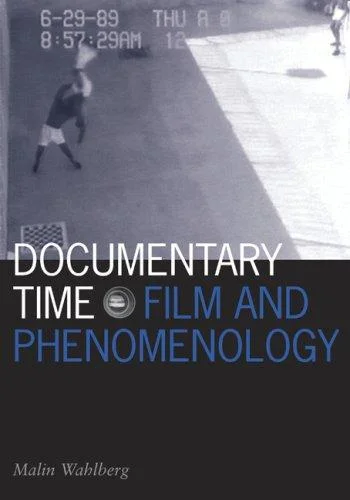
Documentary Time: Film and Phenomenology
English · University of Minnesota Press · 2008
ISBN 9780816649693Original edition detailsNo translation details listed.