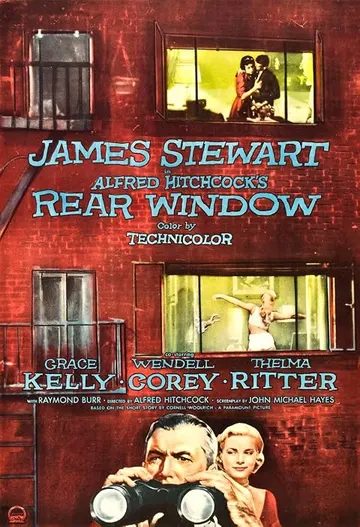
Alfred Hitchcock / 阿尔弗雷德·希区柯克 · 1954
Rear Window
Rear Window
Window frame, telephoto lens, and point-of-view editing turn the neighbours’ actions into relations to be inferred, while the immobilized Jeff cannot enter the scene. Observer, observed object, and the conjecture joining them all become image-content; relation itself becomes a third term.
Film details
- Original title
- Rear Window
- Director
- Alfred Hitchcock / 阿尔弗雷德·希区柯克
- Year
- 1954
- Region
- United States
Film analysis: how shots organize concepts
Close-reading questions
- 01As the opening camera first surveys the courtyard and opposite windows, then returns to Jeff's cast, camera, and photographs, how does it connect bodily confinement, professional gaze, and courtyard events into one system of relations?
- 02How do shot/reverse-shot exchanges among Jeff looking, the neighbours acting, and Lisa and Stella interpreting make murder first exist as a relational judgment rather than a directly seen fact?
- 03As Thorwald approaches, flashbulbs create momentary blindness while exposing Jeff's position; how does the photographic apparatus change from a tool of looking into an instrument through which the relation strikes back at the body?
Shots, relations, and concepts
- 1Record
The camera moves from the courtyard and sleeping Jeff to his leg cast, then across racing-crash photographs, a damaged camera, and magazine covers. The visual inventory has no explanatory voice-over; the following telephone exchange more explicitly supplies Jeff's profession and condition.
Open the scene currently used to ground this chain: Camera, racing photographs, and cast: how a viewing position is explained - 2Judge the relation
Jeff formerly entered danger through the camera; camera and crash traces now explain why he can only watch from the window. Capacity for action first appears through its damaged apparatus. The past accident is not replayed as a flashback but persists in cast, damaged equipment, and photographs. Present objects compress an unseen past into the viewing position.
- 3Name the concept last
Relation-image、Mental-image. Only concepts whose scene relation resolves to “supports” under the current record are named here; candidates, adjacent terms, and countertests are not merged into the conclusion.
- 4Countertest
If these objects merely provide rapid exposition and cease to govern how Jeff observes, infers, and delegates action, the relation-image claim should be downgraded. The passage becomes relational only because that fixed position continues to govern the film.
Shots and scenes
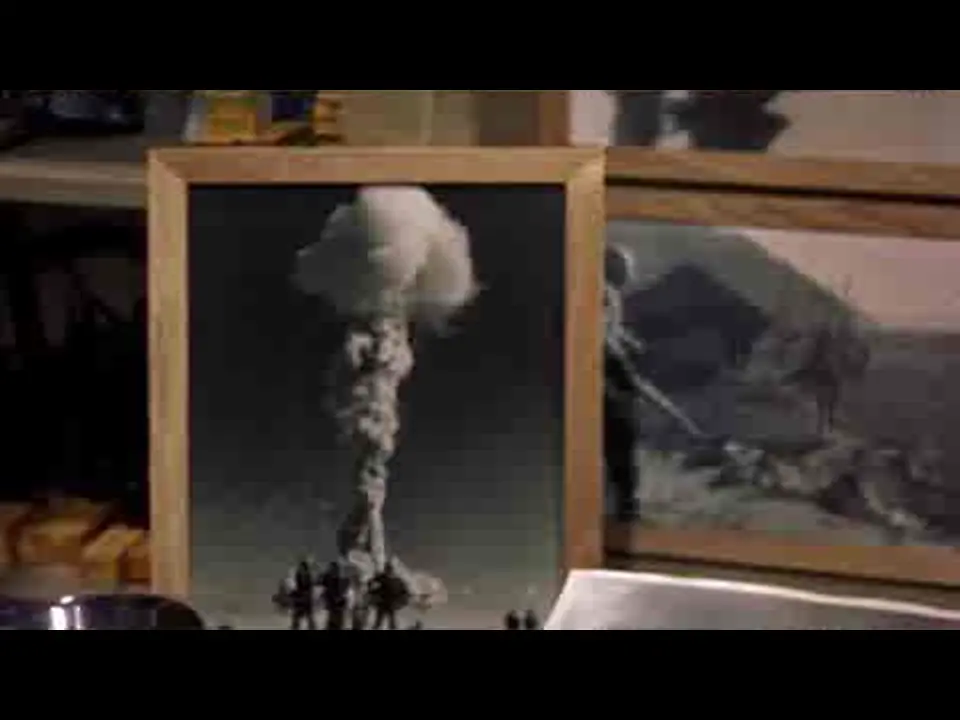
If these objects merely provide rapid exposition and cease to govern how Jeff observes, infers, and delegates action, the relation-image claim should be downgraded. The passage becomes relational only because that fixed position continues to govern the film.
Open viewing position ↗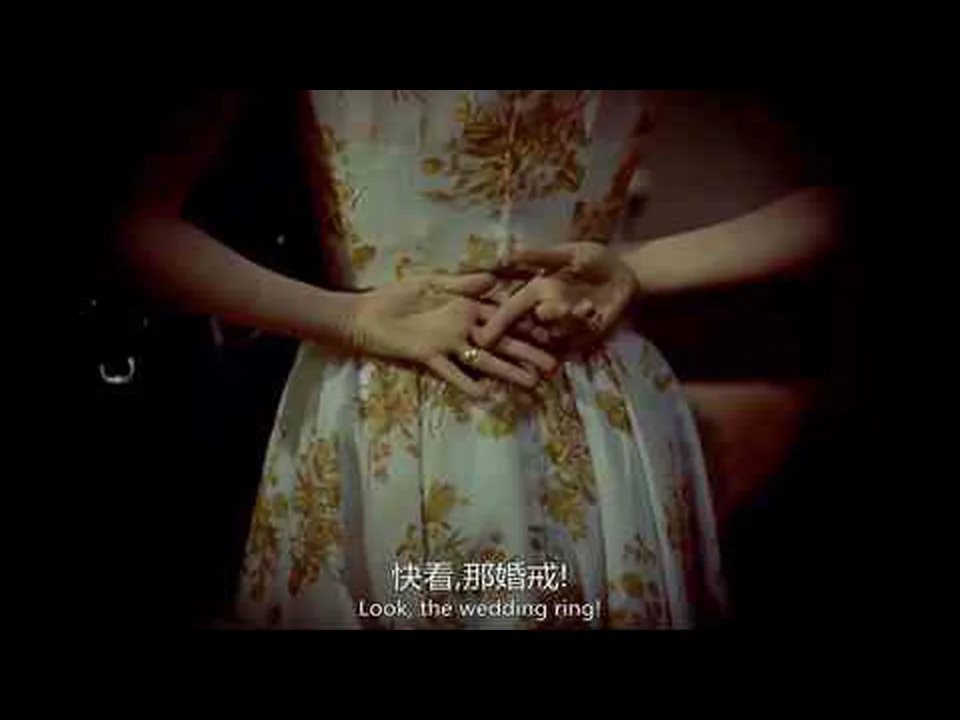
If the ring merely transmits evidence in a detective plot, it remains a clue consumed by action. The symbol claim holds only when the concrete object bears and reorganizes abstract relations among marriage, crime, knowledge, and positions of looking.
Open viewing position ↗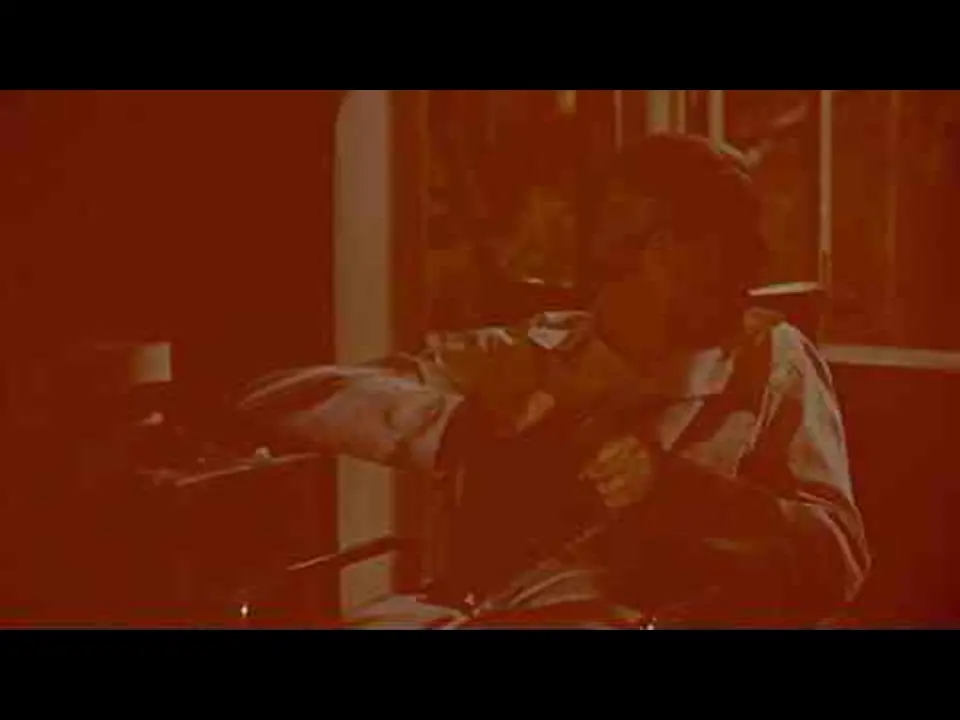
Calling the red afterimage a relation-image in isolation would mistake an optical effect for Thirdness. A mental or relational reading remains only a candidate when the flash is returned to the reversal in which the observer has been identified and becomes an observed, attacked object. If analysis reduces to flash defence and causal struggle, the passage belongs to sensory-motor action.
Open viewing position ↗Primary texts, scholarship, and locators
Theory coordinate: Cinema 1, Minnesota 1986, ch. 2, p. 12; ch. 12, pp. 201, 204–205
- 01Cinema 1: The Movement-Image
Standard Minnesota English translation and a principal citation edition in Anglophone scholarship.
Open the atlas source record →
Scholarship cited by the scene records: Each study is listed once, with its locators and supported scenes retained together.
- 01Deleuze’s Cinema Books: Three Introductions to the Taxonomy of Images
Locator(s): David Deamer, Deleuze’s Cinema Books (2016), pp. 132–135
Cited by scene(s): Camera, racing photographs, and cast: how a viewing position is explained · Lisa raises the wedding ring: how one object redirects several relations · After the flashbulb: does relation return to action or make the observer an object?
Deamer reconstructs the general taxonomy here: mark and demark are compositional signs of natural relations, while symbol is the genetic sign of abstract relations. These pages do not perform the atlas's shot analysis of Rear Window.
Open the atlas source record →
Viewing gateways and editions
- Verified complete Bilibili carrier: Rear Window 后窗 1954 中英文字幕bilibili.comOpen film page ↗
- Page access
- Accessible when checked
- Version extent
- Recorded as a complete version
- Source type
- User-uploaded page
Edition note: Complete single-part film with Chinese and English subtitles · 1:50:54.
Link checked: 2026-08-14