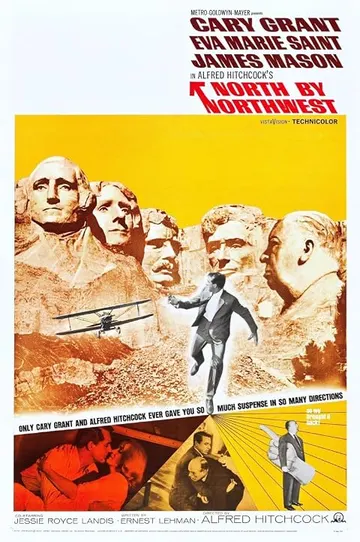
Alfred Hitchcock / 阿尔弗雷德·希区柯克 · 1959
North by Northwest
North by Northwest
The three passages require distinct evidentiary levels. At 00:00:50 the diagonal grid, title, and directional arrows propose that relational positions precede personal identity, but geometrical resemblance alone does not establish Thirdness. The farmland passage around 01:12:00 first composes a habitual series of waiting, road, vehicles, and fields; a stranger observes that the plane is dusting where there are no crops, and this relational contradiction makes it the demark that reroutes the series. At 02:15:59 the match cut joins cliff rescue to an embrace in the train berth, countertesting an overextended relation-image through sensory-motor closure and marital resolution. Deleuze, p. 203, and Rushton, pp. 48–53, supply the sign criteria; the edition bounds and comparison among opening, field, and ending are the atlas's responsibility.
Film details
- Original title
- North by Northwest
- Director
- Alfred Hitchcock / 阿尔弗雷德·希区柯克
- Year
- 1959
- Region
- United States
Film analysis: how shots organize concepts
Close-reading questions
- 01The title's diagonal coordinates dissolve into glass façade and pedestrian flow: abstract grid → urban movement → Thornhill's mistaken identity. How does relation organize the film before character does?
- 02Vehicles follow ordinary routes through the farmland until a crop-duster attacks against the series; how does an everyday object become Hitchcock's demark through one anomalous relation?
- 03From 02:15:40 to 02:16:08, how does the cliffside hand-pull continue through a match cut into the train-berth embrace? When unseen rescue and marriage are compressed into one gesture, does relation keep governing the image as an independent problem, or reclose as action and marital resolution?
Shots, relations, and concepts
- 1Record
Thornhill waits alone beside an open highway. Cars and a bus follow the road, another passenger waits and boards in the ordinary way, and the distant plane remains a small term in the environment. The other waiting passenger's dubbed dialogue first notes that the plane is dusting where there are no crops to spray. After the bus leaves, the engine grows louder with the approach.
Open the scene currently used to ground this chain: Where there are no crops to spray: how the crop-duster becomes a demark - 2Judge the relation
The plane initially belongs to a distant, negligible everyday series. Its presence where there are no crops to spray first breaks the customary relation to its setting; only its subsequent turn toward Thornhill inserts that anomaly into a chain of dodging, running, and collision. The extended wait delays classification of the plane: the spectator first sees a distant moving term and later reinterprets it through dialogue and low flight. This delay organizes recognition but still leads into a clear chase and does not automatically constitute a time-image.
- 3Name the concept last
Relation-image、Mental-image. Only concepts whose scene relation resolves to “supports” under the current record are named here; candidates, adjacent terms, and countertests are not merged into the conclusion.
- 4Countertest
The strict criterion for the demark is the plane's appearance where there are no crops to spray, not its later emergence as an attacker. If carrier evidence cannot establish this place–use mismatch, or if attack, explosion, and a symbolic evil machine are required to make the anomaly legible, withdraw the claim of direct primary-text support and retain only the atlas's candidate analysis of the action passage. The ensuing attack remains a visible consequence and must not be passed off as the primary text's shot analysis.
Shots and scenes
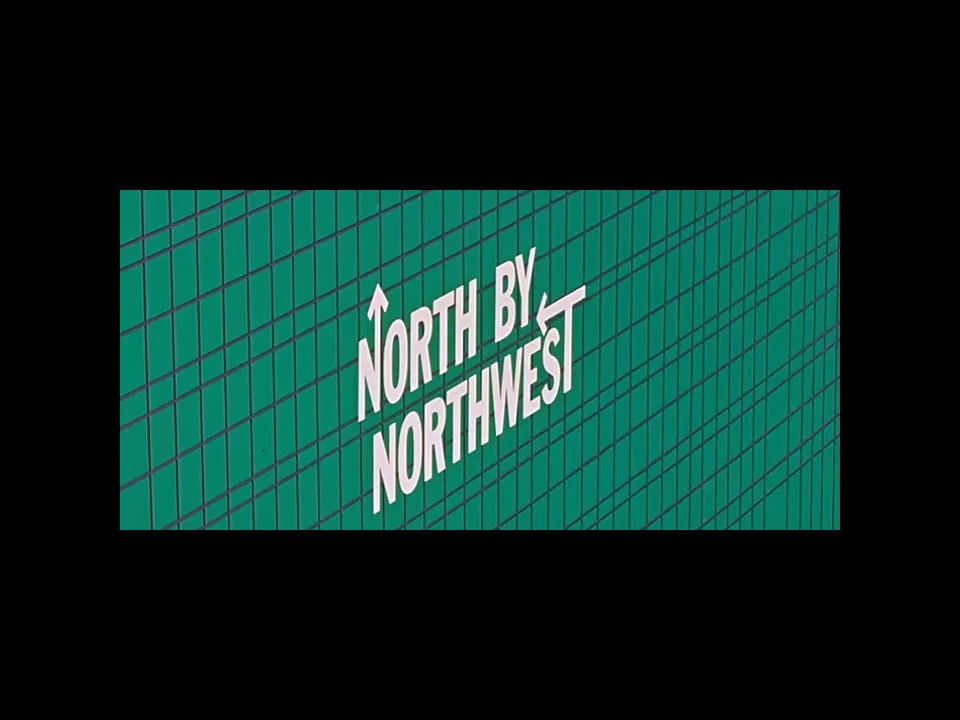
Visual resemblance between grid and façade is not sufficient to prove a relation-image. The title passage remains a candidate prelude to relational form only if the later film repeatedly subjects the character's position to names, institutions, others' actions, and relations known by the spectator. If that link can be supplied only by thematic association, withdraw it.
Open viewing position ↗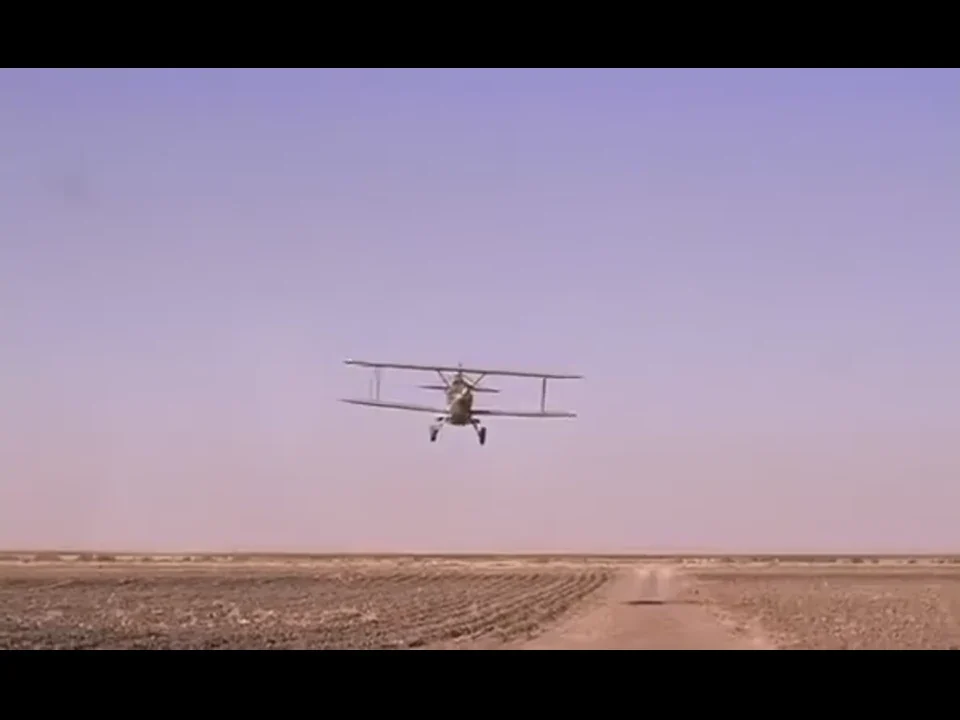
The strict criterion for the demark is the plane's appearance where there are no crops to spray, not its later emergence as an attacker. If carrier evidence cannot establish this place–use mismatch, or if attack, explosion, and a symbolic evil machine are required to make the anomaly legible, withdraw the claim of direct primary-text support and retain only the atlas's candidate analysis of the action passage. The ensuing attack remains a visible consequence and must not be passed off as the primary text's shot analysis.
Open viewing position ↗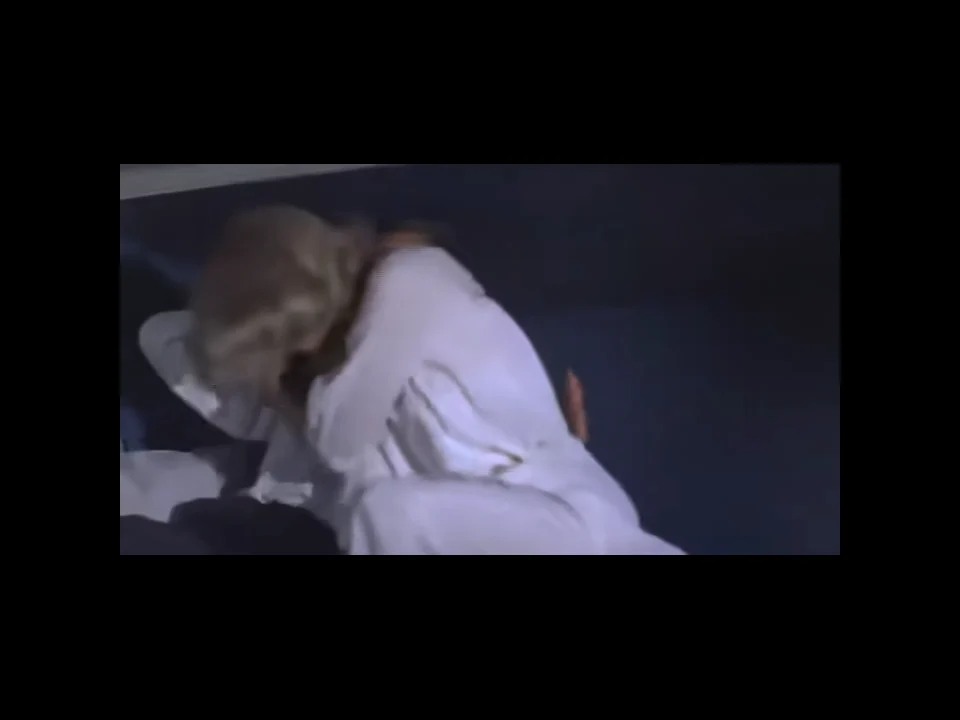
If a relation-image requires relation itself to keep governing action as an unresolved problem, this passage supplies a countertest: cliffside action closes as successful rescue, while marriage is resolved through the final form of address and berth embrace. Relational support should return only if identity, spectatorial knowledge, or relational conflict retains autonomous force across the cut; if the cut primarily completes action and marriage, withdraw the supportive classification.
Open viewing position ↗Primary texts, scholarship, and locators
Theory coordinate: Cinema 1, Minnesota 1986, ch. 12, pp. 202–205 (esp. p. 203); Richard Rushton, Cinema After Deleuze (2012), pp. 48–53; atlas scene-level application
- 01Cinema After Deleuze
Treats Hitchcock as a central case of the relation-image; pp. 48–53 distinguish relation, spectator knowledge, and the demark and include the crop-duster in North by Northwest.
Open the atlas source record → - 02Cinema 1: The Movement-Image
Standard Minnesota English translation and a principal citation edition in Anglophone scholarship.
Open the atlas source record →
Scholarship cited by the scene records: Each study is listed once, with its locators and supported scenes retained together.
- 01Cinema After Deleuze
Locator(s): Richard Rushton, Cinema After Deleuze (2012), pp. 48–53
Cited by scene(s): The title grid enters the city: does relation appear before character? · Where there are no crops to spray: how the crop-duster becomes a demark · From cliffside pull to train berth: how action and marriage reclose relation
Across these pages Rushton develops five general features of Hitchcock's relation-image through Strangers on a Train and Vertigo. North by Northwest enters only as a listed example of wrong identity, the exchange-of-crime tradition, and the crop-duster demark. The book does not supply the atlas's shot-level analysis of the title grid, the attack, or the final match cut.
Open the atlas source record →
This film in books and research
Gilles Deleuze : cinéma et philosophie · Atlas analysis
North by Northwest
Marrati pp. 33–34 · site test
Film relation: Marrati discusses Hitchcock's out-of-field relations here; this site applies the criterion to the crop-duster sequence, where the aircraft becomes threatening not by appearance but by a reversal of use that rewrites the entire open field.
Shot question: How do road, field, stranger, and aircraft first compose neutral waiting? Which relational reversal turns offscreen space into a killing apparatus?
Conclusion: The out-of-field is not a leftover zone beyond the frame but a relational whole capable of redefining what appears within it.
Viewing gateways and editions
- Verified complete Bilibili carrier: 西北偏北.1959译制片bilibili.comOpen film page ↗
- Page access
- Accessible when checked
- Version extent
- Recorded as a complete version
- Source type
- User-uploaded page
Edition note: Dubbed complete single-part film · 2:16:25.
Link checked: 2026-08-14