001

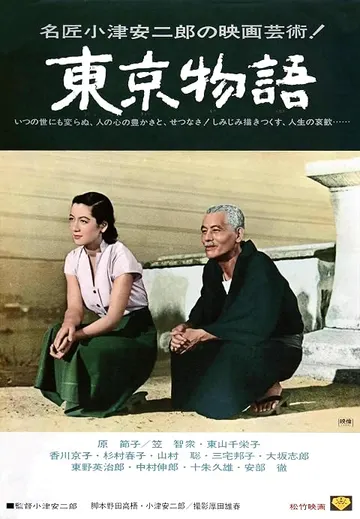
The vase still life intervenes between the daughter’s smile and tears, placing change within time’s unchanging form.
An index of 147 films, with shot analysis, concept explanations, stills, scholarship, and viewing links. Search by title, director, concept, or viewing source, then open a film to read its analysis.
147 films; showing all 28 matches
The vase still life intervenes between the daughter’s smile and tears, placing change within time’s unchanging form.
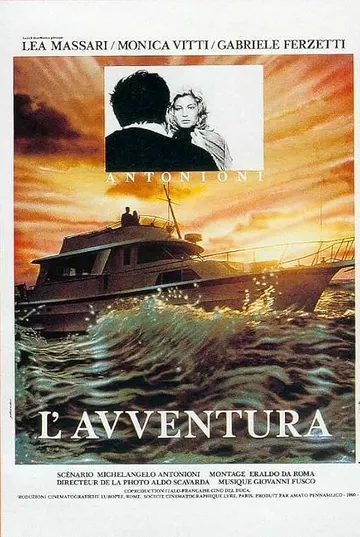
L’avventura · 1960
Michelangelo Antonioni / 米开朗基罗·安东尼奥尼 · Italy / France
The disappearance escapes the logic of a solvable mystery; islands, architecture, and bodily attitudes give duration to the void within relations.
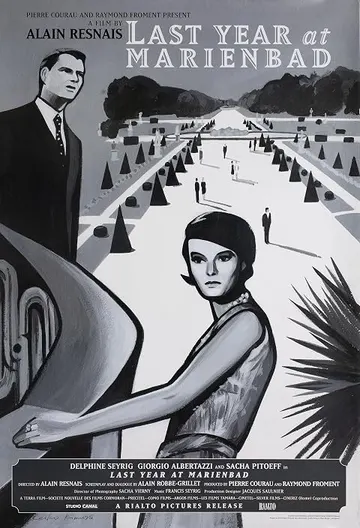
L’Année dernière à Marienbad · 1961
Alain Resnais / 阿伦·雷乃 · France
Bifocal structure: Robbe-Grillet organizes incompatible peaks of the present, while Resnais places characters in coexisting sheets of the past.

Hiroshima mon amour · 1959
Alain Resnais / 阿伦·雷乃 · France / Japan
Private memory and historical catastrophe remain incommensurable; sound and image place both experiences within one interval, making forgetting temporal structure.
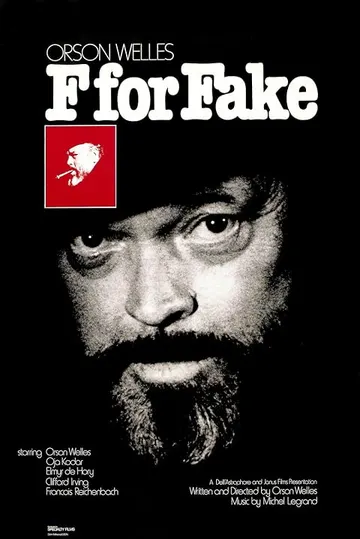
F for Fake · completed 1973 / released 1975
Orson Welles / 奥逊·威尔斯 · France / Iran / West Germany
Each expert, forger, director, and narrator passes the tribunal to another. The question becomes whose power can create.
Reality, memory, fantasy, rehearsal, and the film project crystallize together; the unfinished work is both seed and environment absorbing life.
Voices separate from visible bodies, while image and sound form autonomous series that meet at the edge of an absent event.
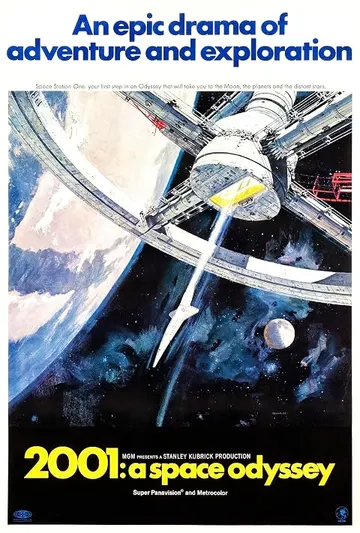
2001: A Space Odyssey · 1968
Stanley Kubrick / 斯坦利·库布里克 · United Kingdom / United States
Space becomes a topology of the brain; HAL and humans mirror one another across automatism, choice, and thought’s impotence.
Words, colours, bodies, songs, and quotations form multiple series. Thought is forced in the intervals between them.
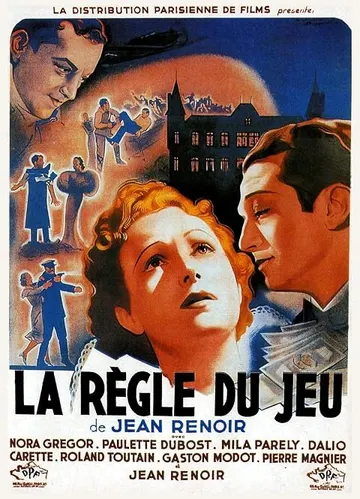
Theatre and life, masters and servants, roles and reality nest within one another while retaining a fissure through which escape remains possible: the cracked crystal.
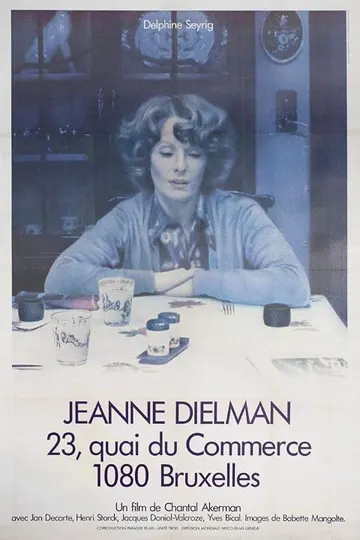
Jeanne Dielman, 23 quai du Commerce, 1080 Bruxelles · 1975
Chantal Akerman / 香特尔·阿克曼 · Belgium / France
Cooking, cleaning, waiting, and counting appear in their full duration. Minute disorder first develops in body and ceremony.
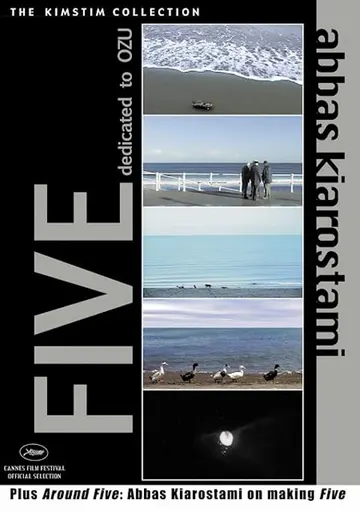
Five Dedicated to Ozu · 2003
Abbas Kiarostami / 阿巴斯·基亚罗斯塔米 · Iran
Human action leaves the centre; waves, driftwood, moonlight, frogs, and rain become temporal events that must be watched and heard.

ลุงบุญมีระลึกชาติ · 2010
Apichatpong Weerasethakul / 阿彼察邦·韦拉斯哈古 · Thailand
The dead, the living, animals, and former lives unfold incompatible times on the same perceptual plane.
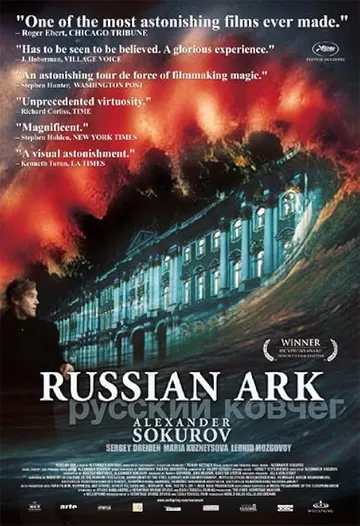
The single take turns the Hermitage into traversable sheets of the past, carrying history beyond a linear present.
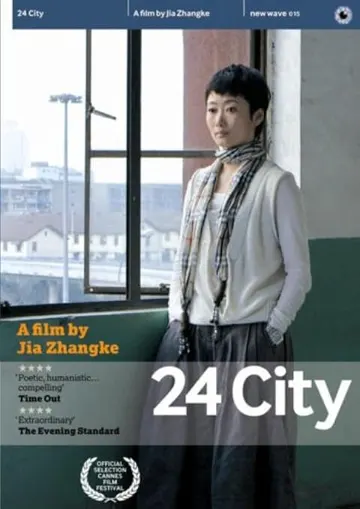
Factory 420 is being demolished, so the place named by testimony disappears from the image while it is being narrated. Workers and performers including Joan Chen, Lü Liping, and Zhao Tao share the same frontal interview form. The film neither lets professional identity settle truth nor equates performance with deceit; dialect, pause, facial detail, old photographs, popular songs, and demolition dust test one another. Here the power of the false does not abolish history. It forces history to acknowledge that urban memory can only be produced among heterogeneous tellings.
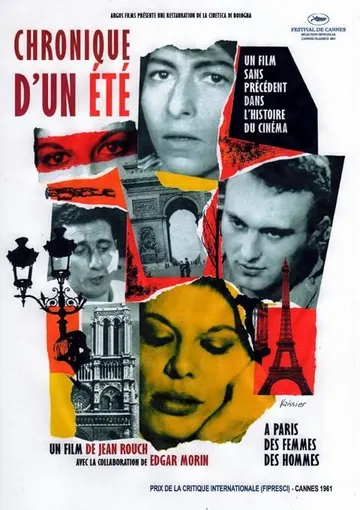
Chronique d’un été · 1961
Jean Rouch & Edgar Morin / 让·鲁什、埃德加·莫兰 · France
Participants answer, perform, and reorganize their experience, then watch the film together and criticize their screen images. Identity moves among lived position, filmed role, and collective discussion, turning the camera from an investigative tool into a participant in the event.
Identity, performance, and memory rewrite one another. Criterion: an actual/virtual circuit.
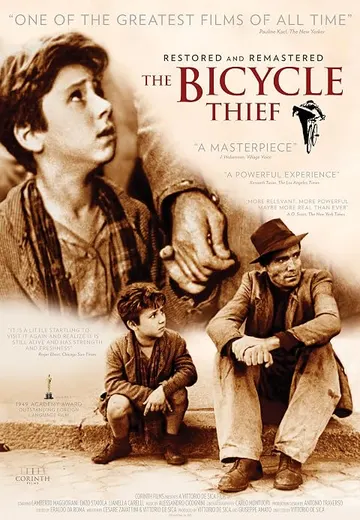
The search should organize Rome as a space of purposeful action, yet it carries father and son through crowds, streets, and encounters that never cohere. When the boy witnesses his father’s failed theft, seeing replaces solution: the character becomes a seer within a situation he can no longer answer.
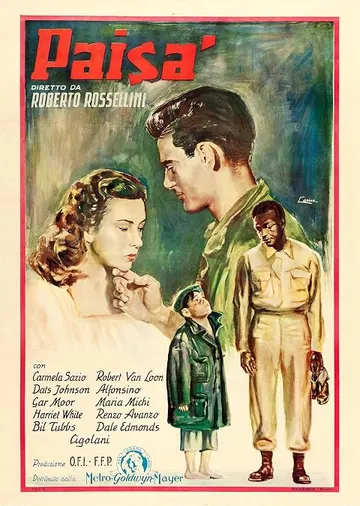
Six episodes join encounters, mistranslations, and abrupt deaths while withholding transitions that would explain them. Characters enter after a fact has begun and leave before its consequences can be mastered; the inexhaustible before and after of the event presses directly on perception.
Trains and buses deliver the parents to Tokyo without re-forming the family as a community of action. Low viewpoints, abbreviated visits, empty rooms, and smokestacks break the trip into everyday intervals. After the mother’s death, objects and spaces continue, and time appears as the persistence of ordinary life.
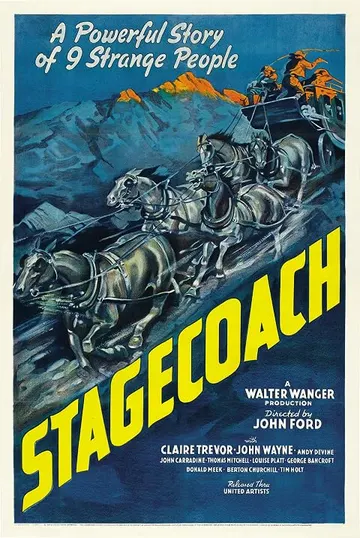
Cinema 1 chapter 9 defines S–A–S′ on pp. 141–142. Page 146 directly uses Stagecoach's alternation between coach interior and exterior to explain Ford's Encompasser and treats the circular S–A–S as a first approximation; p. 147 then distinguishes Ford's spiral as S–A–S′, moving toward a new situation. The atlas therefore locates three passages without treating a long shot as proof by itself. Around 00:35:10, the coach is reduced beneath Monument Valley and the sky, proposing rather than proving an encompassing situation. From 01:13:30 to 01:15:20, cross-cutting distributes driver, reins, horses, gunfighters, and passengers across a collective act, giving firmer evidence for A. From 01:33:50 to 01:35:28, Ringo is released and leaves with Dallas in a small cart. That departure may form S′, but it is also a countertest: the film clearly shows Ringo leaving town with Dallas after his release without directly showing whether legal and class positions inside the town are redistributed. Deleuze's criticism on p. 150 of American montage reducing social causes to a personal duel, together with the distinctions among whole mission, local action, and duel on pp. 151–152, sets the textual boundary for asking whether a changed situation for the pair amounts to a changed situation as a whole. The atlas is responsible for the three timecodes and for relating them in this way.
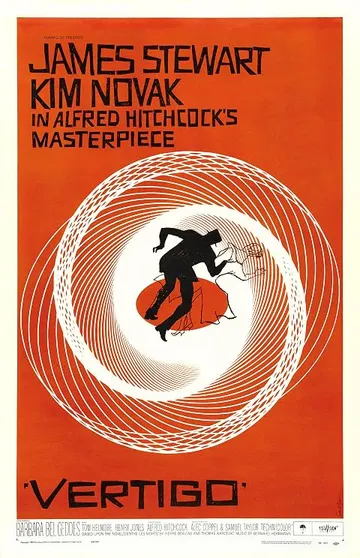
Cinema 1, pp. 204–205 both supplies a general criterion for Hitchcock's inclusion of spectator response within a director–film–spectator relation and directly explains Vertigo through variations in the Same's relations to the dead woman, husband, and detective; it does not analyze the atlas's three chosen passages shot by shot. Rushton, pp. 53–57, gives a more specific chain: Elster's commission scripts Scottie's viewing through the absent Carlotta; Judy's unsent letter confirms the deception for the spectator before Scottie; the remaking of Judy then unfolds inside that knowledge gap. Three atlas scene records bind commission, confession, and green-lit remaking to the 02:07:27 repost timeline. A boundary is equally important: Rushton p. 124 explicitly classifies the dolly zoom as the affection-image par excellence, so it cannot serve by itself as positive relation-image evidence. The green light's actual–virtual reading likewise remains a candidate pending evidence of a reciprocal circuit.
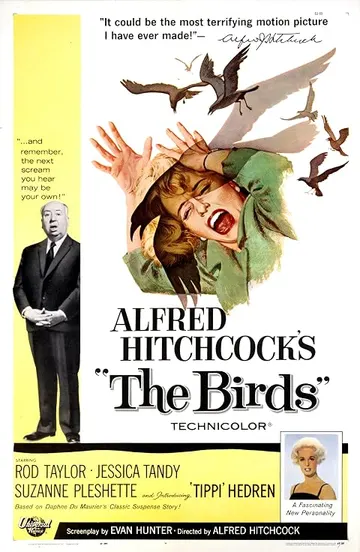
Cinema 1, p. 204 directly calls the first gull attacking the heroine a demark and the thousands of birds or flock as a whole a symbol, but it does not analyze the pet-shop or playground editing for the atlas. The three scene records therefore separate evidentiary levels: the pet shop at 00:02:00–00:07:10 only proposes an ordinary relation of merchandise, gift, and captivity; the bay crossing at 00:25:00–00:25:42 receives direct primary support for a gull that reroutes that relation; the playground at 01:09:45–01:12:15 tests how the flock changes school/play, song/alarm, perching/encirclement, and classroom order/urgent evacuation together. The children's song continues through the flock's accumulation, timing each cutback and delaying alarm.

La Passion de Jeanne d’Arc · 1928
Carl Theodor Dreyer / 卡尔·西奥多·德莱叶 · France
Close-ups strip the courtroom of continuous space, confronting Joan’s eyes, tears, and lips with the judges’ wrinkles. The face ceases to serve action and becomes a surface of intensive variation; fear, faith, and cruelty are perceived directly as qualities.
Village maps, formations, and reconnaissance gather every given condition of defence, then force a higher question: ‘What is a samurai at this historical moment?’ The rain battle secures the village, but burial mounds and peasant song answer that the peasants are the true victors and the samurai have become displaced shadows.
The close-up progressively withdraws the face’s functions of individuation, social role, and communication. Composite half-faces, the twice-told story of motherhood, and burning film detach affect from private psychology and expose the face’s terror before emptiness.
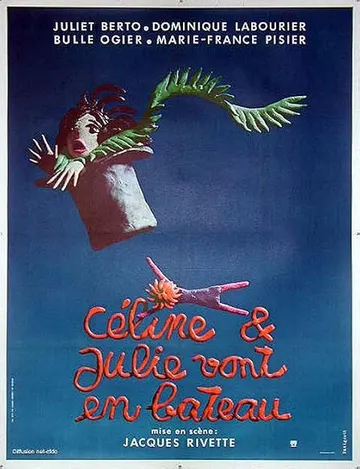
Céline et Julie vont en bateau · 1974
Jacques Rivette / 雅克·里维特 · France
A Paris chase loosens ordinary action; sweets then send the women into a repeatedly staged house story. They move from spectators and doubles to participants who rewrite the plot and rescue the child; bodies, play, and repetition fabricate another route through reality.
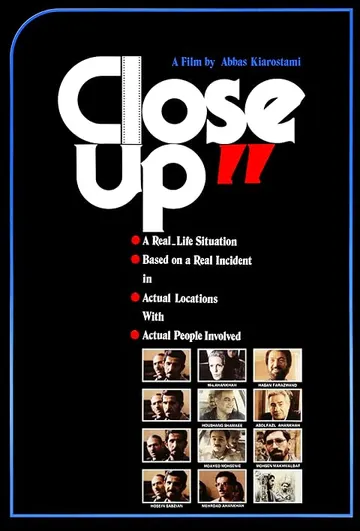
Sabzian enters a family as ‘Makhmalbaf,’ and trial footage plus reenactment asks the actual participants to perform themselves. No single judge settles identity as true or false; the camera follows how a lie produces relations, shame, and creative desire.
64 scene analyses describe images, sounds, characters’ actions, and temporal relations. Bilibili viewing links accompany 16 of the films.
Each essay begins with continuous scenes and connects them to primary passages, seminar records, cited scholarship, and atlas analysis.
Ask whether it merely supplies causal information; time becomes the issue only when distinct sheets of past coexist without reducing to one recollection.
A mirror is only a formal clue; a crystal requires actual and virtual to exchange while remaining indiscernible.
Duration is not the conclusion; ask whether persistence, waiting, and intervals subordinate movement to time rather than merely slowing action.
Timecodes refer to the edition named in each entry. Primary-text locators distinguish Minnesota 1989 from Bloomsbury Revelations 2013; scene analyses and bibliography records have direct links. Research library
Title, year, and director distinguish films with the same name. Posters include their source; original title cards are labelled separately.
Search by title and year for film records, cast, and edition details.
Viewing links distinguish features from excerpts. Part numbers, film start times, subtitles, login requirements, and region restrictions appear beside the relevant link.
Deleuze directly uses the film to establish, distinguish, or deepen a concept.
The film appears in Cinema 2 as a brief example, list item, or supporting mention.
Established by a named monograph, article, or special issue.
Conceptual interpretations and comparisons developed from specific shots.
Filter the film directory by platform, edition, or viewing conditions.