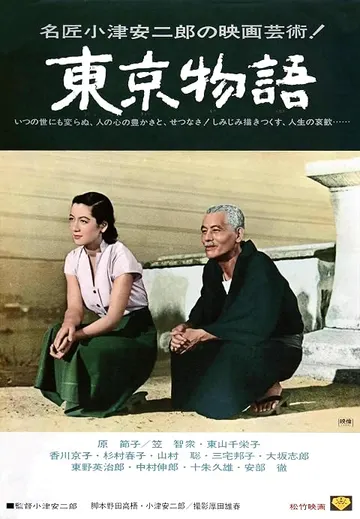
Yasujirō Ozu / 小津安二郎 · 1953
Tokyo Story
東京物語
Trains and buses deliver the parents to Tokyo without re-forming the family as a community of action. Low viewpoints, abbreviated visits, empty rooms, and smokestacks break the trip into everyday intervals. After the mother’s death, objects and spaces continue, and time appears as the persistence of ordinary life.
Film details
- Original title
- 東京物語
- Director
- Yasujirō Ozu / 小津安二郎
- Year
- 1953
- Region
- Japan
Film analysis: how shots organize concepts
Ozu lets rooms, smokestacks, and corridors outlast family action, making the everyday bear time directly.
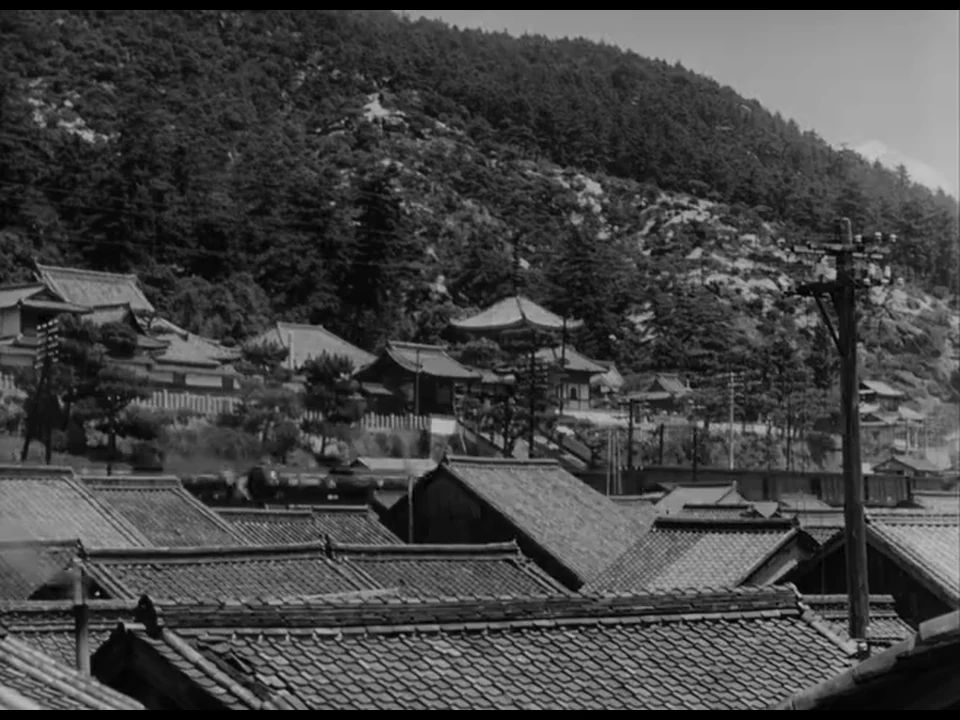 00:03:01
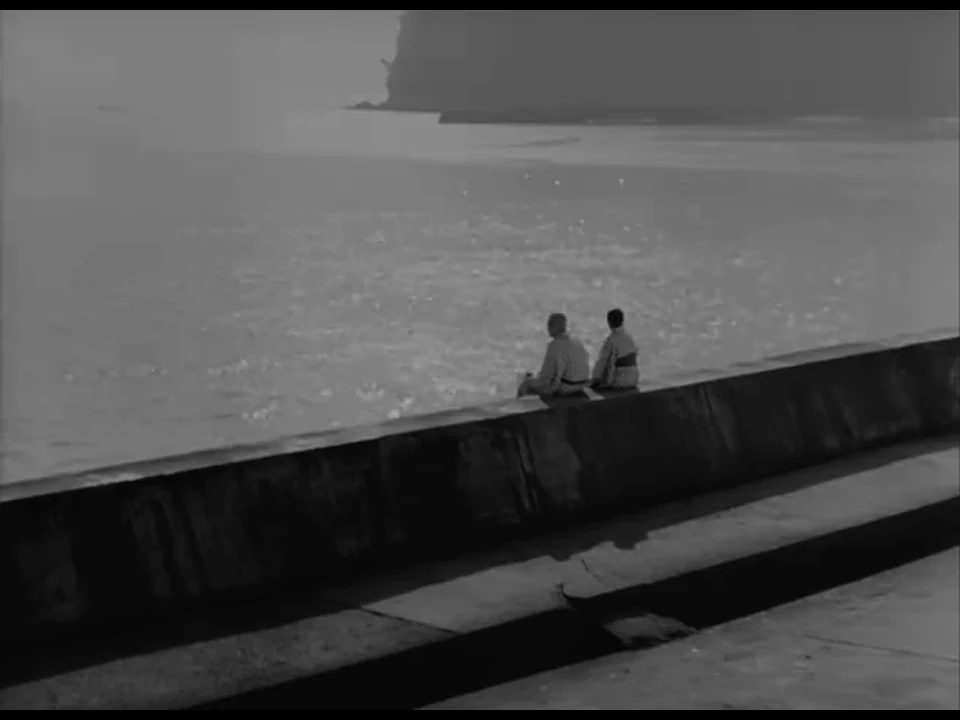 00:53:28
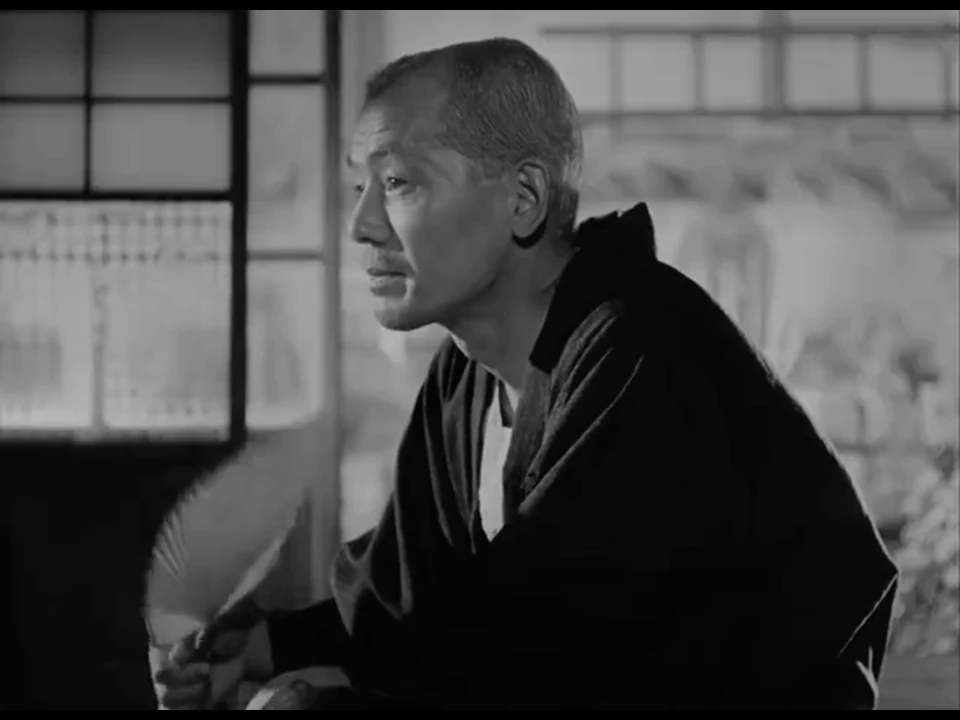 02:14:58
- 01Transit fails to form a community
Trains and buses complete the parents’ movement, while the children’s rescheduling breaks the visit into brief hosting duties.
Effective movement does not generate adequate family action. - 02Empty views take the interval
After characters leave, the fixed low camera remains with rooms, corridors, smokestacks, and sea.
Place changes from plot passage into an optical sign with duration of its own. - 03Change remains in an unchanging form
After the mother’s death, house, sea, and ordinary gestures continue; grief is not exhausted by climax.
Time appears as irreversible minute change within the persistence of life.
Close-reading questions
- 01As low, fixed shots repeatedly observe corridors, smokestacks, railway tracks, and laundry lines, how do these spaces acquire a duration no longer subordinate to character action?
- 02As the children manage their parents through work, appointments, and the Atami trip, which everyday acts sustain family order, and which pauses make its fracture directly perceptible?
- 03After the mother's death, how do empty views between the vacant room, slow packing, and Noriko's train departure carry time beyond the funeral event and let it remain after loss?
Analysis and scene sources
Shots and scenes
Primary texts, scholarship, and locators
Theory coordinate: Cinema 2, Minnesota 1989, ch. 1, pp. 13–17
- 01Cinema 2: The Time-Image
Authoritative source for the standard translation, translators, ISBN, and publication date.
Open the atlas source record →
This film in books and research
Gilles Deleuze : cinéma et philosophie · Atlas analysis
Tokyo Story
Marrati pp. 74–85 · site test
Film relation: This site uses Ozu's rooms, smokestacks, sea, and lingering views after exits to test a boundary: an empty shot becomes a time-image not because it lacks action, but because spatial duration is no longer exhausted by the result of family action.
Shot question: Compare the arriving train, the backs on the seawall, and the house after the mother's death: which displacements does transport complete, and which family changes can only be borne by spatial duration?
Conclusion: The everyday is not the opposite of event; what continues after plot withdraws can directly disclose irreversible change.
Viewing gateways and editions
- Verified complete Bilibili carrier: 东京物语 (1953)【小津安二郎】bilibili.comOpen film page ↗
- Page access
- Accessible when checked
- Version extent
- Recorded as a complete version
- Source type
- User-uploaded page
Edition note: Complete single-part film · 2:16:14.
Link checked: 2026-08-14
- Criterion Collectioncriterion.comOpen film page ↗
- Source type
- Distributor or streaming platform