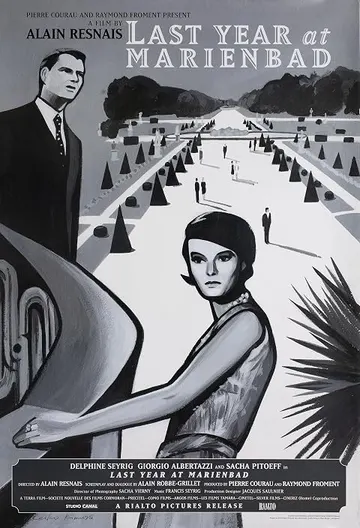
Last Year at Marienbad
L’Année dernière à Marienbad · 1961
Alain Resnais / 阿伦·雷乃 · France
Bifocal structure: Robbe-Grillet organizes incompatible peaks of the present, while Resnais places characters in coexisting sheets of the past.
An index of 147 films, with shot analysis, concept explanations, stills, scholarship, and viewing links. Search by title, director, concept, or viewing source, then open a film to read its analysis.
147 films; showing all 3 matches

L’Année dernière à Marienbad · 1961
Alain Resnais / 阿伦·雷乃 · France
Bifocal structure: Robbe-Grillet organizes incompatible peaks of the present, while Resnais places characters in coexisting sheets of the past.
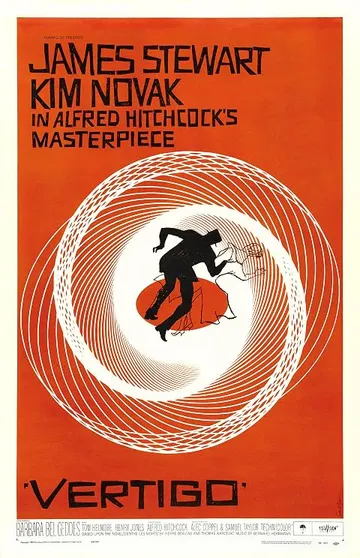
Cinema 1, pp. 204–205 both supplies a general criterion for Hitchcock's inclusion of spectator response within a director–film–spectator relation and directly explains Vertigo through variations in the Same's relations to the dead woman, husband, and detective; it does not analyze the atlas's three chosen passages shot by shot. Rushton, pp. 53–57, gives a more specific chain: Elster's commission scripts Scottie's viewing through the absent Carlotta; Judy's unsent letter confirms the deception for the spectator before Scottie; the remaking of Judy then unfolds inside that knowledge gap. Three atlas scene records bind commission, confession, and green-lit remaking to the 02:07:27 repost timeline. A boundary is equally important: Rushton p. 124 explicitly classifies the dolly zoom as the affection-image par excellence, so it cannot serve by itself as positive relation-image evidence. The green light's actual–virtual reading likewise remains a candidate pending evidence of a reciprocal circuit.
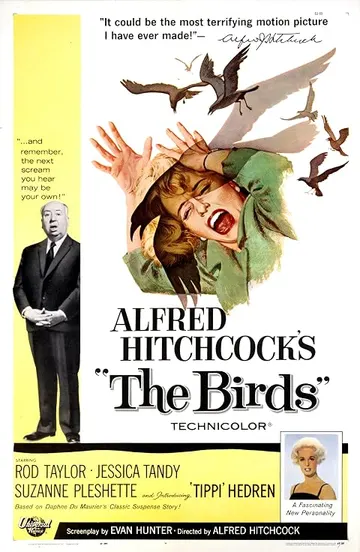
Cinema 1, p. 204 directly calls the first gull attacking the heroine a demark and the thousands of birds or flock as a whole a symbol, but it does not analyze the pet-shop or playground editing for the atlas. The three scene records therefore separate evidentiary levels: the pet shop at 00:02:00–00:07:10 only proposes an ordinary relation of merchandise, gift, and captivity; the bay crossing at 00:25:00–00:25:42 receives direct primary support for a gull that reroutes that relation; the playground at 01:09:45–01:12:15 tests how the flock changes school/play, song/alarm, perching/encirclement, and classroom order/urgent evacuation together. The children's song continues through the flock's accumulation, timing each cutback and delaying alarm.
64 scene analyses describe images, sounds, characters’ actions, and temporal relations. Bilibili viewing links accompany 16 of the films.
Each essay begins with continuous scenes and connects them to primary passages, seminar records, cited scholarship, and atlas analysis.
Ask whether it merely supplies causal information; time becomes the issue only when distinct sheets of past coexist without reducing to one recollection.
A mirror is only a formal clue; a crystal requires actual and virtual to exchange while remaining indiscernible.
Duration is not the conclusion; ask whether persistence, waiting, and intervals subordinate movement to time rather than merely slowing action.
Timecodes refer to the edition named in each entry. Primary-text locators distinguish Minnesota 1989 from Bloomsbury Revelations 2013; scene analyses and bibliography records have direct links. Research library
Title, year, and director distinguish films with the same name. Posters include their source; original title cards are labelled separately.
Search by title and year for film records, cast, and edition details.
Viewing links distinguish features from excerpts. Part numbers, film start times, subtitles, login requirements, and region restrictions appear beside the relevant link.
Deleuze directly uses the film to establish, distinguish, or deepen a concept.
The film appears in Cinema 2 as a brief example, list item, or supporting mention.
Established by a named monograph, article, or special issue.
Conceptual interpretations and comparisons developed from specific shots.
Filter the film directory by platform, edition, or viewing conditions.