FILM ATLAS

Film atlas

An index of 147 films, with shot analysis, concept explanations, stills, scholarship, and viewing links. Search by title, director, concept, or viewing source, then open a film to read its analysis.

Films and analyses

001
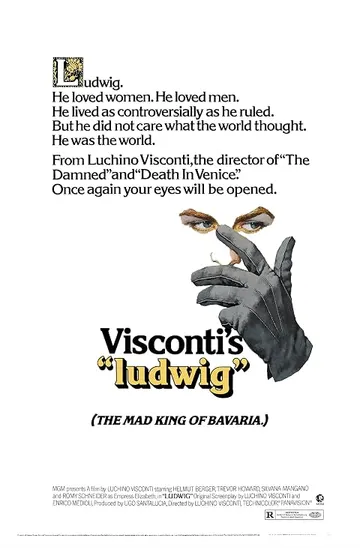
Ludwig identification poster
IMDb identification poster
Deleuze primary text

Ludwig

Ludwig · 1973

Luchino Visconti / 卢基诺·维斯康蒂 · Italy / France / West Germany

artificial crystaldecompositiontoo late

Palaces, opera, and aristocratic bodies compose an artificial crystal cut off from nature and history. Corruption spreads through desire, bodies, and architecture while war and Prussian power approach off-screen; too late becomes the film's temporal rhythm.

002
In the Mood for Love identification poster
IMDb identification poster
Atlas analysis

In the Mood for Love

花樣年華 · 2000

Wong Kar-wai / 王家卫 · Hong Kong

repetitionvirtual relationmemory

Su goes for noodles and Chow waits on stairs and corridors; the same music returns similar routes while distance, glance, and hesitation quietly change. When they act out how their spouses began the affair or how a confrontation might unfold, a scene often reveals only midway that it is rehearsal. The unactualized conversation thus determines what they can still say in actual life. The cavity at Angkor Wat preserves not a completed romance but a relation already becoming memory as it occurs and still continuing to act.

003
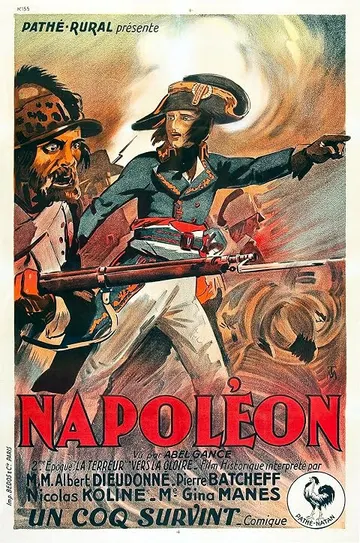
Napoléon identification poster
IMDb identification poster
Deleuze primary text

Napoléon

Napoléon vu par Abel Gance · 1927

Abel Gance / 阿贝尔·冈斯 · France

French montagepolyvisionmathematical sublime

Mounted on horseback or hurled like a weapon, the camera is first freed from fixed support. Superimpositions and the triptych screen then juxtapose, collide, and expand local movements. Present battle and immense history are not unified by one viewpoint; they produce a mathematical sublime between interval and whole.

004
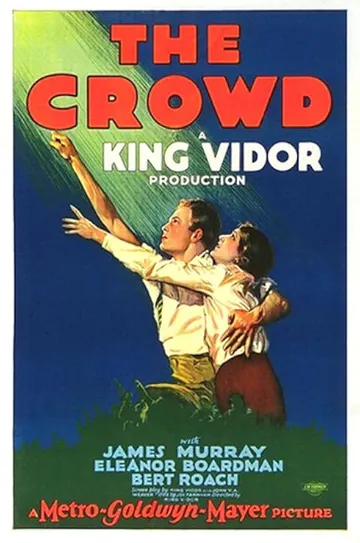
The Crowd identification poster
IMDb identification poster
Deleuze primary text

The Crowd

The Crowd · 1928

King Vidor / 金·维多 · United States

perception-imagelarge-form failureAmerican nightmare

The camera travels against the street crowd, enters a skyscraper, and finds one desk among countless windows, embedding the individual in an exchangeable mass. John repeatedly answers the city with effort only to return to the same situation. The large form S–A–S′ fails, turning upward mobility into an S–A–S loop.

005
Steamboat Bill, Jr. identification poster
IMDb identification poster
Deleuze primary text

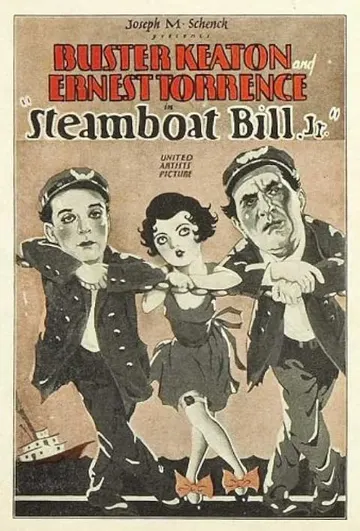
Steamboat Bill, Jr.

Steamboat Bill, Jr. · 1928

Buster Keaton / 巴斯特·基顿 · United States

burlesque large formtransformation-spacesublime action

The cyclone turns the town into a continuously transforming milieu: façades fall, buildings slide, and wind transports bodies. Keaton's small body does not overpower disaster but passes through it by exact position and improvised trajectory. Burlesque small form thereby carries a sublime scale usually reserved for epic large form.

SCENES · 16 DOSSIERS

Film stills and scene analysis

64 scene analyses describe images, sounds, characters’ actions, and temporal relations. Bilibili viewing links accompany 16 of the films.

Open scene evidenceTake films into cross-readingOpen poster–still atlas
FILM ARGUMENTS · 3

Theory unfolds inside the shot

Each essay begins with continuous scenes and connects them to primary passages, seminar records, cited scholarship, and atlas analysis.

Brief mention by Deleuze · 1948Germany Year ZeroRuins, historical sound, sensory-motor rupture, and the child seerDeleuze primary text · 1963Pour la suite du mondeOral memory, the beluga hunt, fabulation, and a people to comeAtlas analysis · 2004Tropical MaladyRupture, soundscape, queer time, and becoming in Tropical Malady
01A flashback is not direct time

Ask whether it merely supplies causal information; time becomes the issue only when distinct sheets of past coexist without reducing to one recollection.

02A mirror is not automatically a crystal

A mirror is only a formal clue; a crystal requires actual and virtual to exchange while remaining indiscernible.

03A long take does not automatically present time

Duration is not the conclusion; ask whether persistence, waiting, and intervals subordinate movement to time rather than merely slowing action.

Edition, source-label, and viewing notes

Timecodes refer to the edition named in each entry. Primary-text locators distinguish Minnesota 1989 from Bloomsbury Revelations 2013; scene analyses and bibliography records have direct links. Research library

IDENTIFY · VERIFY · WATCH

Film identification and viewing

Poster / title card

Title, year, and director distinguish films with the same name. Posters include their source; original title cards are labelled separately.

Douban lookup

Search by title and year for film records, cast, and edition details.

Features and excerpts

Viewing links distinguish features from excerpts. Part numbers, film start times, subtitles, login requirements, and region restrictions appear beside the relevant link.

Deleuze primary text

Primary conceptual case

Deleuze directly uses the film to establish, distinguish, or deepen a concept.

Brief mention by Deleuze

Brief mention by Deleuze

The film appears in Cinema 2 as a brief example, list item, or supporting mention.

Scholarly research

Cited later scholarship

Established by a named monograph, article, or special issue.

Atlas analysis

Atlas analysis

Conceptual interpretations and comparisons developed from specific shots.

ONLINE FILM SOURCE RESEARCH

Find a viewing source

Filter the film directory by platform, edition, or viewing conditions.

Viewing links
155
Version
Features, excerpts, restorations, and altered cuts
Bilibili sources
108