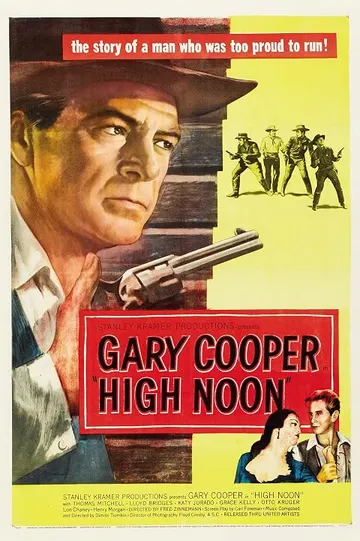
Fred Zinnemann / 弗雷德·金尼曼 · 1952
High Noon
High Noon
Clocks, tracks, and emptied streets compress the town into a one-hour countdown. Kane repeatedly asks for help, yet action cannot organize the community. The duel completes a classical action-image, but the badge dropped in the dust prevents victory from restoring trust.
Film details
- Original title
- High Noon
- Director
- Fred Zinnemann / 弗雷德·金尼曼
- Year
- 1952
- Region
- United States
Film analysis: how shots organize concepts
The countdown keeps time subordinate to an action deadline; after action succeeds, communal relation remains unrepaired.
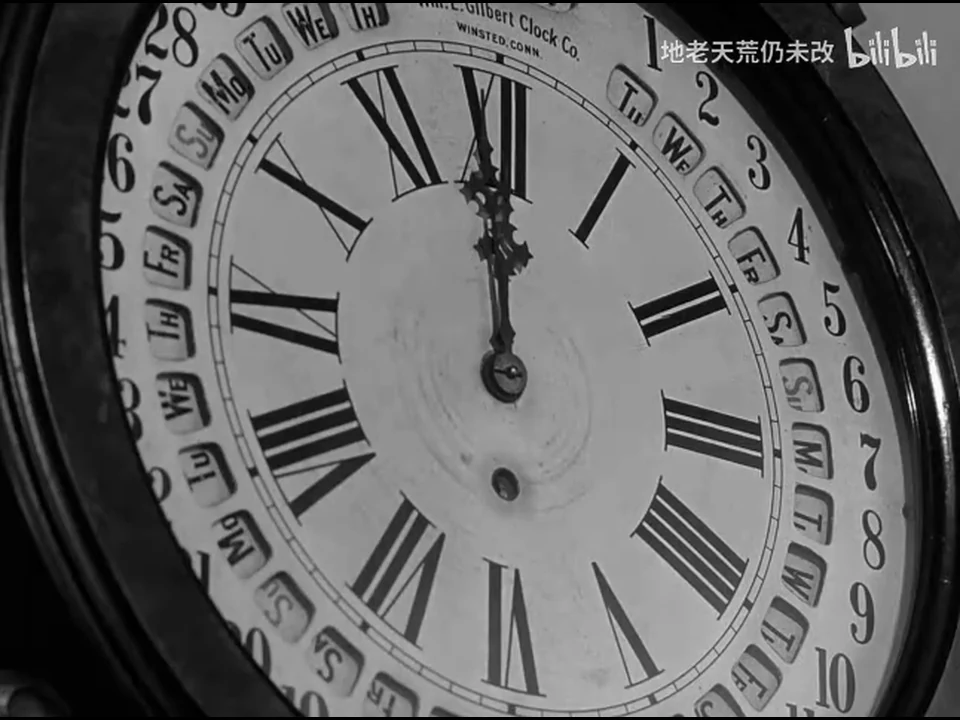 01:09:23
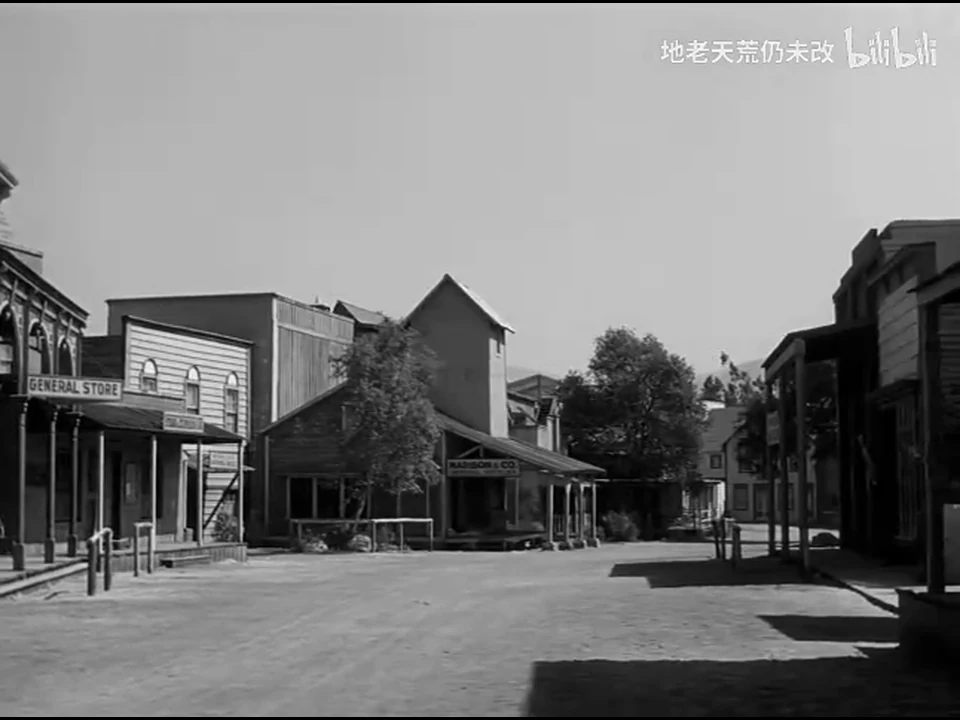 01:11:28
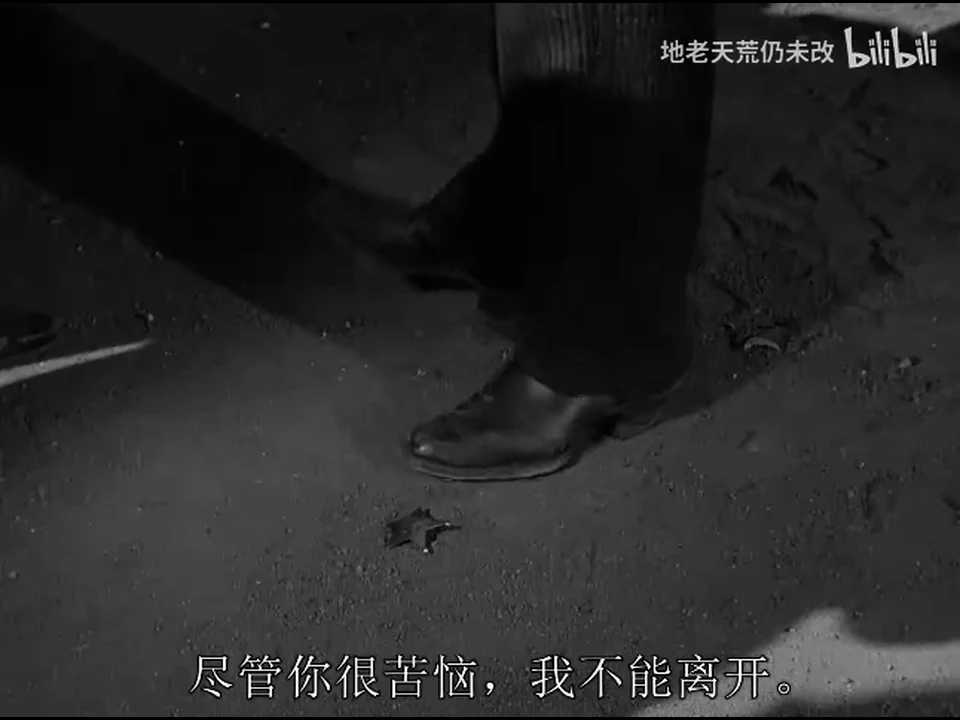 01:24:01
- 01Clocks organize perception
Clocks, tracks, empty streets, and waiting figures are cross-cut toward the noon arrival.
Every sight becomes information for a deadline; time remains an indirect measure. - 02Milieu refuses collective force
Kane asks door by door for help; doors, church, and offices return the request to him alone.
The situation of the large form cannot organize adequate collective action. - 03Victory cannot repair the world
After winning the duel, Kane throws the badge into the dust and leaves.
Action changes the danger without restoring belief in the community.
Close-reading questions
- 01As clock faces, empty streets, Miller's gang, and the noon train are repeatedly cross-cut, how is time compressed into a deadline within which Kane must complete an action?
- 02How do refusals in the church, marshal's office, and saloon sever Kane's available allies one by one, shrinking a town's conflict into one man's burden of action?
- 03After the train arrives, how do the gunfight, Amy's shot, and Kane dropping his badge close the crisis within clock time while exposing that victory has not repaired the community?
Analysis and scene sources
Shots and scenes
Primary texts, scholarship, and locators
Theory coordinate: Atlas analysis; theoretical basis: Cinema 1, Minnesota 1986, ch. 9, pp. 141–159; ch. 12, pp. 205–211
- 01Cinema 1: The Movement-Image
Standard Minnesota English translation and a principal citation edition in Anglophone scholarship.
Open the atlas source record →
This film in books and research
Gilles Deleuze : cinéma et philosophie · Atlas analysis
High Noon
Marrati pp. 68–71, 102–103 · site test
Film relation: This site places Marrati's account of the large action form S–A–S′ and classical cinema's belief in the world inside a one-hour countdown: the duel transforms the immediate danger but does not restore Kane's relation to the town.
Shot question: Clock faces repeatedly convert perception into a deadline for action. Why must the badge still fall into the dust after the gunfight ends?
Conclusion: Successful action is not repaired relation: danger disappears, yet the transformed situation S′ still fails to recompose the community.
Viewing gateways and editions
- Verified complete Bilibili carrier: 正午【1952】bilibili.comOpen film page ↗
- Page access
- Accessible when checked
- Version extent
- Recorded as a complete version
- Source type
- User-uploaded page
Edition note: Complete single-part film · 1:24:28.
Link checked: 2026-08-14