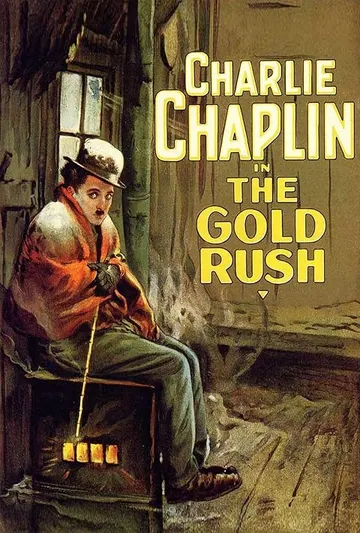
Charles Chaplin / 查理·卓别林 · 1925
The Gold Rush
The Gold Rush
Cabin, hunger, and dreams of wealth keep reversing through slight differences: a shoe becomes dinner, and the Tramp becomes a chicken in Big Jim's eyes. No character masters the total situation; each improvises at a critical instant. Comedy makes action from a minute perceptual shift while letting survival slide toward devouring.
Film details
- Original title
- The Gold Rush
- Director
- Charles Chaplin / 查理·卓别林
- Year
- 1925
- Region
- United States
Film analysis: how shots organize concepts
Hunger lets objects and bodies change function through a slight perceptual shift, keeping comic action adjacent to survival violence.
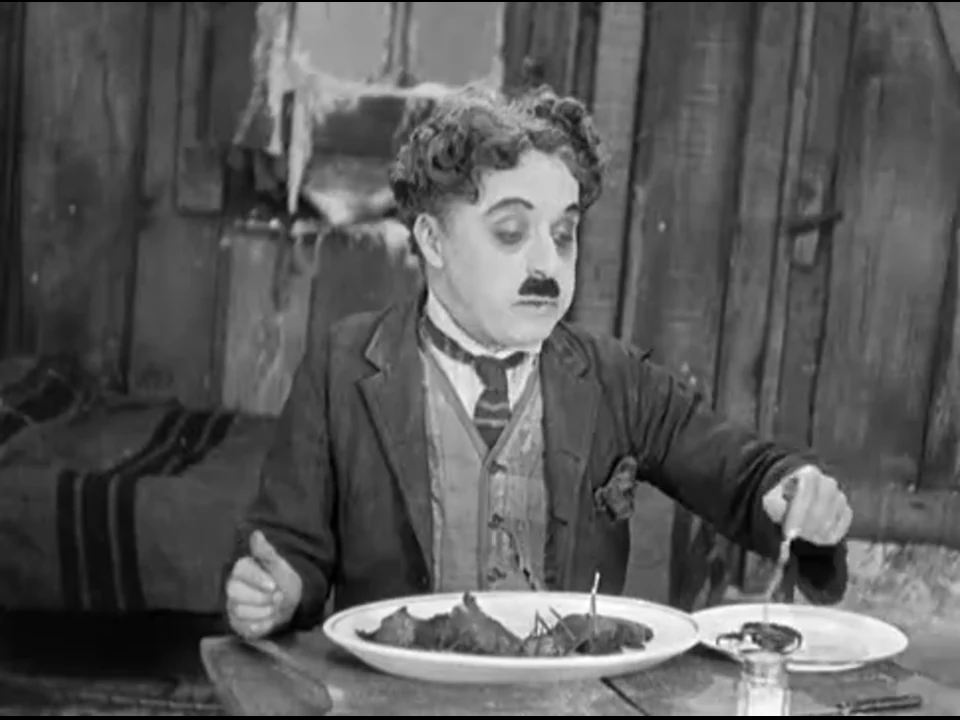 00:19:10
- 01Tool becomes food
Charlie boils a shoe, twirls laces like spaghetti, and picks nails like fish bones.
Table manners rewrite the object's use; slight difference makes the milieu of lack temporarily actionable. - 02Friend becomes prey
The starving Big Jim sees Charlie as a giant chicken and chases him.
A minute perceptual displacement instantly changes bodily relation from companionship to predation. - 03Performance faces an absence
The roll dance wins applause in an imagined dinner, but no guests occupy the table on waking.
Improvised action creates an imagined community while making actual deprivation more visible.
Close-reading questions
- 01Charlie boils a shoe, twirls its laces, and picks its nails: hunger → table manners → edible object. How do minute actions completely rewrite the object's function?
- 02Charlie becomes a chicken in Big Jim's eyes: perceptual shift → predatory action → interrupted friendship. How does a slight difference push comedy toward survival violence?
- 03The roll dance is first performed for absent guests: imagined applause → waking to an empty table → failed action. How does comedy make dream and material condition visible together?
Analysis and scene sources
Shots and scenes
Primary texts, scholarship, and locators
Theory coordinate: Cinema 1, Minnesota 1986, ch. 10, p. 169
- 01Cinema 1: The Movement-Image
Standard Minnesota English translation and a principal citation edition in Anglophone scholarship.
Open the atlas source record →
Viewing gateways and editions
- Verified complete Bilibili carrier: [卓别林]淘金记 The Gold Rush (1925)bilibili.comOpen film page ↗
- Page access
- Accessible when checked
- Version extent
- Recorded as a complete version
- Source type
- User-uploaded page
Edition note: Complete single-part film · 1:29:15.
Link checked: 2026-08-14