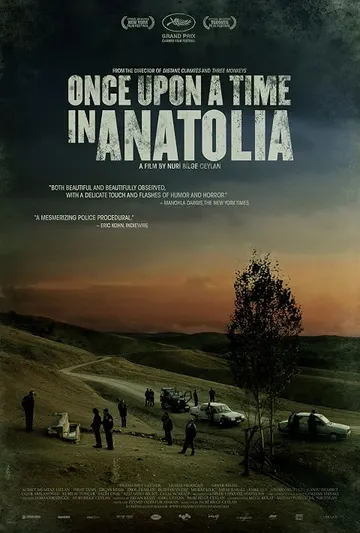
Nuri Bilge Ceylan / 努里·比格·锡兰 · 2011
Once Upon a Time in Anatolia
Bir Zamanlar Anadolu’da
Headlights repeatedly illuminate similar slopes and fountains, yet the suspect can only answer 'not here.' The search accumulates no mastery of the steppe; it releases wind, an apple rolling into a stream, car conversations about illness and family, and the pause produced when the mayor's daughter serves tea. Even after the body is found, transported, and examined, the doctor suppresses a detail that could alter responsibility. Procedure finishes while the event remains unexhausted: the time of death stays among landscape, fatigue, and a judgment left unwritten.
Film details
- Original title
- Bir Zamanlar Anadolu’da
- Director
- Nuri Bilge Ceylan / 努里·比格·锡兰
- Year
- 2011
- Region
- Turkey
Film analysis: how shots organize concepts
Why does a search for a body disclose more details incompatible with the task as it approaches its result?
The convoy can move, dig, and record, yet cannot reconnect everything it sees to procedure. Wrong locations, faces under lamplight, and autopsy findings detach perception from ‘information required for action’; time presses directly through what cannot be processed at once.
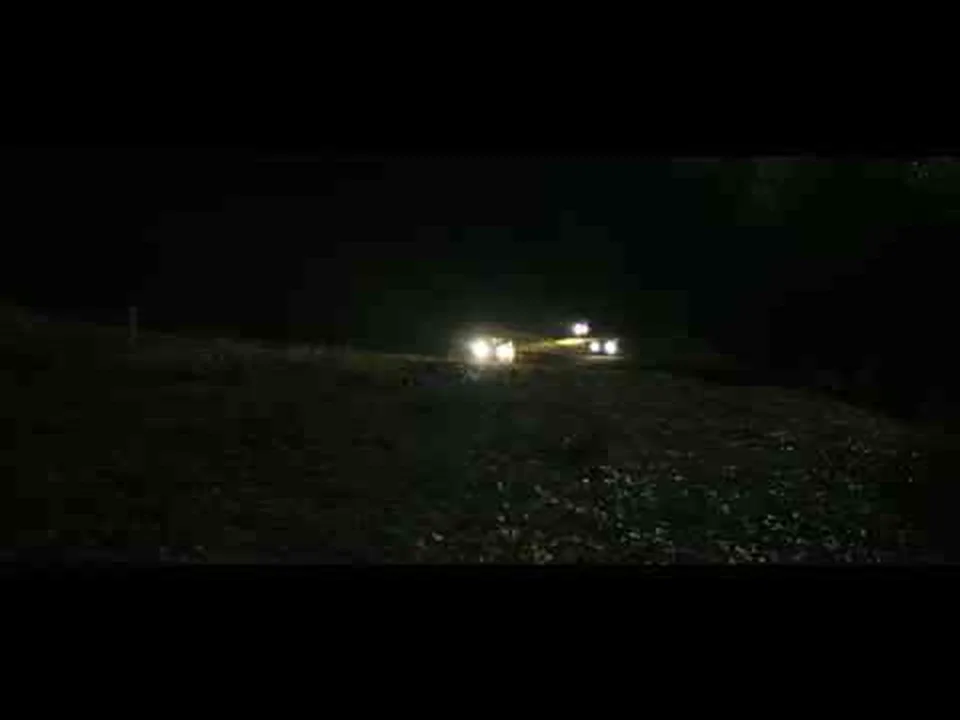
Headlights illuminate only a small patch of slope. Route words—old bridge, dam, opposite hill—return while digging repeatedly proves futile.
Landscape no longer offers readable cues for action but exposes gaps among memory, language, and space. This is what detaches the optical situation from the sensory-motor circuit.
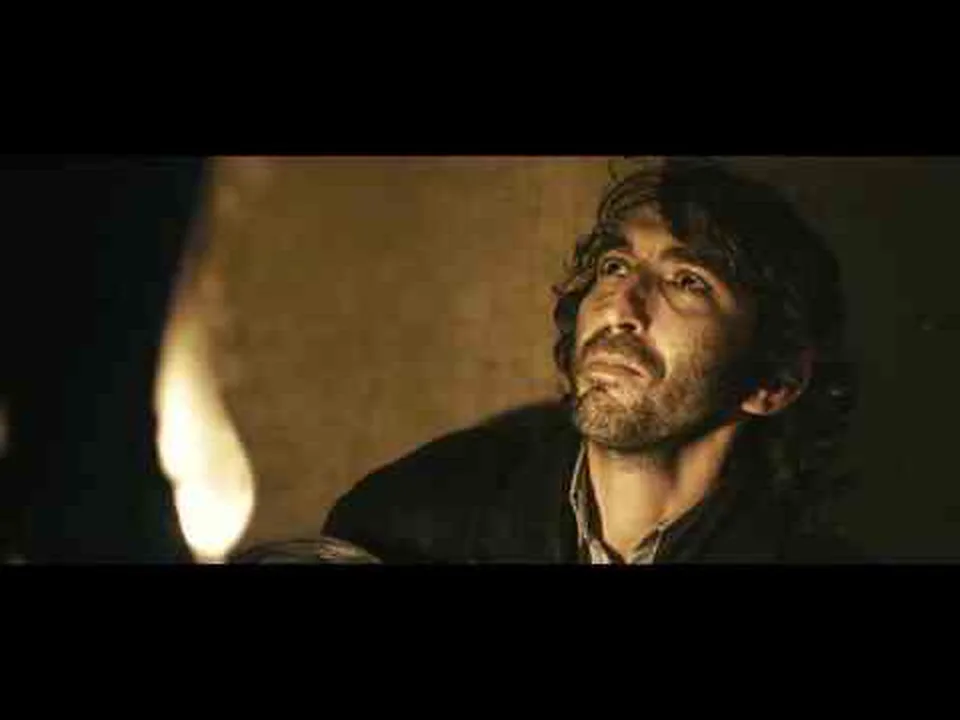
After the outage, a girl with one lamp successively illuminates prosecutor, doctor, and Kenan. An ordinary act of serving tea makes Kenan weep and briefly summons the dead man's image.
The girl is not a clue that solves the case. She turns procedural agents into seers who can only look and cannot convert what they see into immediate action.
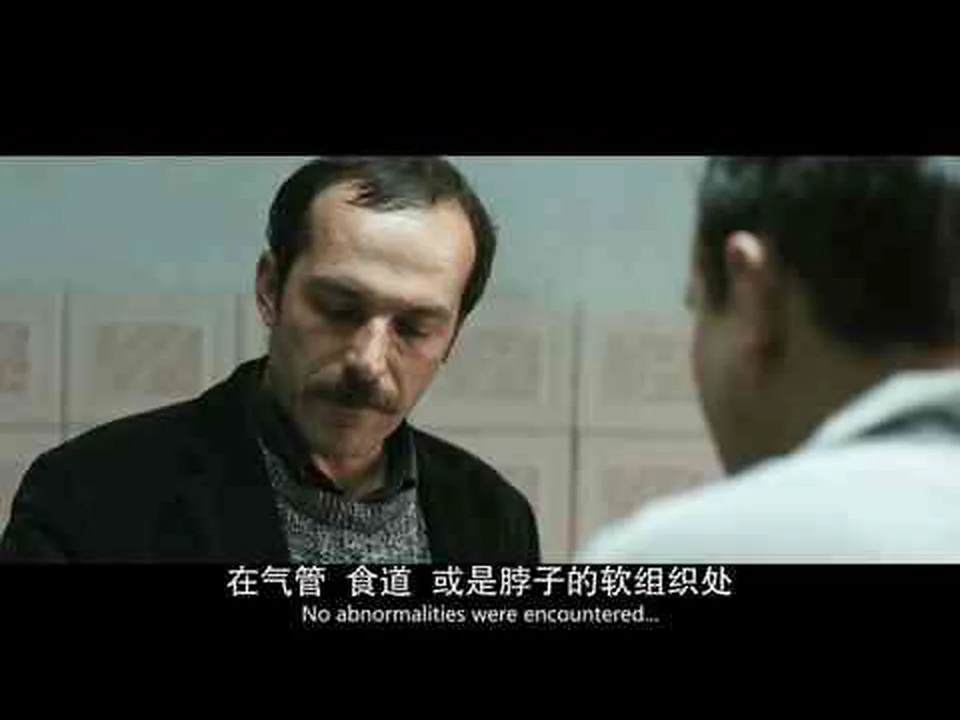
The assistant finds soil in the trachea and lungs and asks whether the victim was buried alive; after pausing, the doctor dictates ‘no abnormality observed.’
Perception has occurred, yet institutional action deletes it. The time-image does not automatically deliver truth; it leaves the ethical interval among seeing, judging, and recording to the viewer.
EDITION NOTE Stills and jumps use the user-supplied Bilibili carrier. The feature occupies 00:00:00–02:31:07; roughly 1 hour 43 minutes of unrelated tail padding follows.
The search for a corpse repeatedly reaches the wrong place, releasing night, talk, wind, and fatigue from clue-function and turning investigators into viewers who endure steppe and death.
- 01Headlights repeatedly illuminate nothing
The convoy stops at similar slopes and fountains as the suspect repeatedly says 'not here'; headlights isolate only fragments of grass, tree, and face.
The route accumulates no mastery; space changes from mapped coordinate to inexhaustible optical fragment. - 02Waiting releases irrelevant detail
Wind crosses the steppe and an apple rolls into a stream; car talk turns to illness, family, and death, while the mayor's daughter serving tea brings everyone to a pause.
Audio-visual details unable to advance the case acquire autonomous duration, briefly turning investigators into seers. - 03Finding the body does not complete truth
Exhumation, transport, and autopsy restore procedure, yet the doctor withholds a detail that could alter responsibility when recording cause of death.
Technical action completes while the event's ethical relation remains unexhausted; seeing retains more than closure.
Close-reading questions
- 01Compare the convoy's first three wrong stops. Which grass, trees, faces, and road edges do the headlights isolate each time? Why does the repeated 'not here' fail to narrow the search and instead make space less totalizable?
- 02As the apple falls, rolls downhill, and enters the stream, for how long does human action withdraw? How do camera route, water sound, and drift give an irrelevant detail a time of its own?
- 03In the autopsy, separately record visible/audible traces on the body, the assistant's actions, the doctor's dictated report, and what he finally omits. When technical procedure is complete, which truth continues to act as a judgment left unwritten?
Shots and scenes
Primary texts, scholarship, and locators
Theory coordinate: Death-Images special issue, 2025
- 01Death-Images: Revisiting Deleuze’s ‘Time-Image’ in Cinema after 1985
Open-access issue marking forty years of Cinema 2 through death, genocide, Kiarostami, Ceylan, archives, and Global South cinemas.
Open the atlas source record →
This film in books and research
Time-image research chapters
How unnamed, unreturned, and unaccounted-for deaths organize the present
Bearing Time Chinese DOCX, paragraphs 879–950.
Claim: The dead continue to organize the living’s time; a corpse, funeral, or ghost does not automatically make a death-image.
What to watch for: Record who is placed, omitted, or exposed to a second death; treat mourning as an institutional relation, not a mood.
Viewing gateways and editions
- Verified Bilibili feature interval: 2011剧情〈安纳托利亚往事〉BD中英双字1080P高清bilibili.comOpen film page ↗
- Page access
- Accessible when checked
- Version extent
- Recorded as a complete version
- Source type
- User-uploaded page
Edition note: The feature occupies 0:00:00–2:31:07, lasting 151:07. Turkish end credits continue to about 2:31; unrelated persimmon imagery has begun by 2:31:10. The video totals 4:14:03, including approximately 1:42:56 of tail padding. The feature occupies seconds 0–9067 of the carrier; the URL is positioned at the feature start. The feature occupies 0:00:00–2:31:07, lasting 151:07. Turkish end credits continue to about 2:31; unrelated persimmon imagery has begun by 2:31:10. The video totals 4:14:03, including approximately 1:42:56 of tail padding.
Link checked: 2026-08-25
- Death-Images issuerevistas.fcsh.unl.ptOpen film page ↗
- Source type
- Institutional source