
F. W. Murnau / F·W·茂瑙 · 1927
Sunrise: A Song of Two Humans
Sunrise: A Song of Two Humans
The dark marsh and luminous city are not two settings but two forces of a marriage moving through seduction, murder, and reconciliation. After the false report of drowning, searchlights cut across the lake and shadow changes by degrees into light. Milieu, faces, and movement together carry a passage from falling toward renewed illumination.
Film details
- Original title
- Sunrise: A Song of Two Humans
- Director
- F. W. Murnau / F·W·茂瑙
- Year
- 1927
- Region
- United States
Film analysis: how shots organize concepts
Changes of light between marsh and city directly rewrite the marriage, making ethical reversal a shared event of milieu, face, and movement.
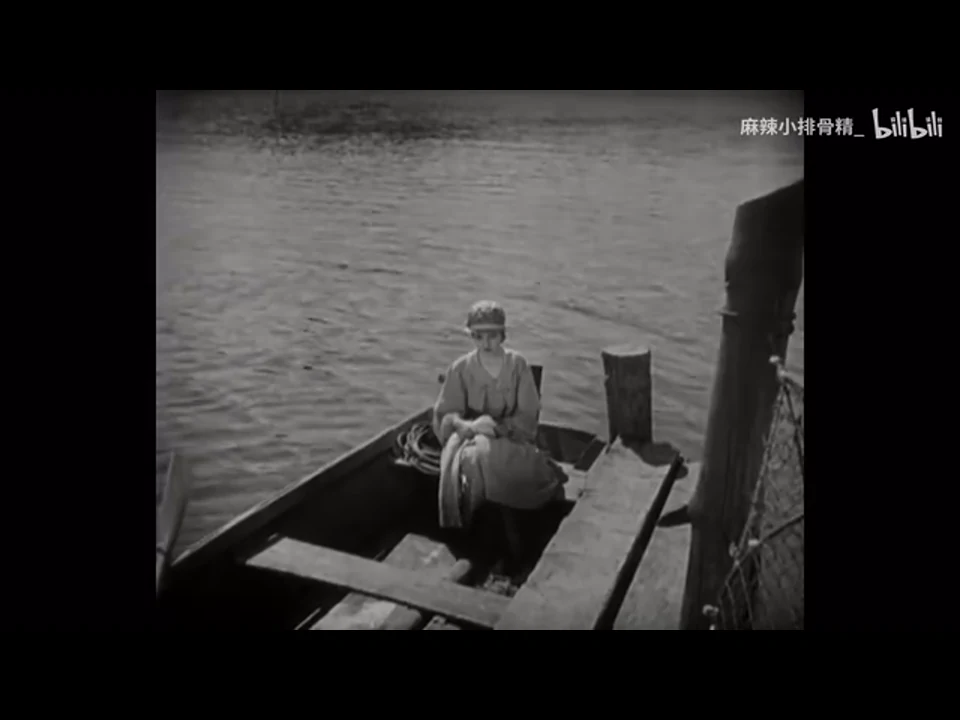 00:28:18
- 01Desire projects light into darkness
The man enters the marsh as city lights are superimposed over reeds and the lovers' bodies.
Distant temptation enters the present milieu as a virtual path of light; darkness ceases to be mere setting. - 02Action stops before the face
In the boat, the husband raises his arms to push his wife overboard, then stops before her terrified face.
The murderous act fails, the face takes over, and the crisis of action becomes affection. - 03Light recomposes relation
After the false report of her drowning, searchlights cut the lake before daylight illuminates the couple again.
Gradations of light transform milieu and relation together, giving the movement-image an ethical direction.
Close-reading questions
- 01As the man crosses the marsh to meet the Woman from the City, superimposed urban lights cover the reeds; how does desire generate a virtual path of light inside the dark milieu?
- 02During the attempted murder by boat, the wife recoils and the husband's raised arms stop; after action fails, how do faces and mist take over, turning an action-schema into an affective crisis?
- 03After the false drowning report, searchlights cut across the lake: darkness → search → sunrise. How do gradations of light transform milieu, marital relation, and ethical direction together?
Analysis and scene sources
Shots and scenes
Primary texts, scholarship, and locators
Theory coordinate: Cinema 1, Minnesota 1986, ch. 3, pp. 49–50, 54; ch. 6, p. 93
- 01Cinema 1: The Movement-Image
Standard Minnesota English translation and a principal citation edition in Anglophone scholarship.
Open the atlas source record →
This film in books and research
Gilles Deleuze : cinéma et philosophie · Atlas analysis
Sunrise: A Song of Two Humans
Marrati pp. 26–37, 54–59 · site test
Film relation: This site rereads the boat sequence through Marrati's open whole, mobile section, and impersonal affect: the murder-act is not completed, and fog, face, rocking boat, and water take over the transformation of relation.
Shot question: When the husband's raised hand stops before his wife, which movements of light, gesture, and milieu rewrite a planned action as fear and remorse?
Conclusion: Affect is not a psychological explanation added after action; when action is suspended, face and milieu can directly bear a relation's intensive change.
Viewing gateways and editions
- Verified complete Bilibili carrier: 日出.1927.BD1080p.中字bilibili.comOpen film page ↗
- Page access
- Accessible when checked
- Version extent
- Recorded as a complete version
- Source type
- User-uploaded page
Edition note: Chinese-subtitled complete single-part film · 1:34:22.
Link checked: 2026-08-14