RESEARCH GUIDE · ATLAS CROSS-INDEX
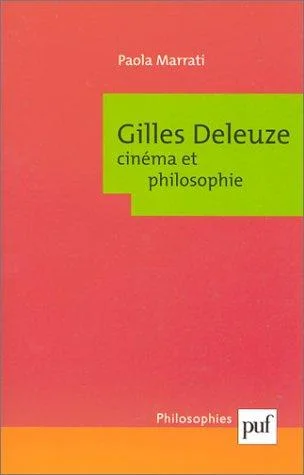
Gilles Deleuze : cinéma et philosophie
How does cinema constitute an independent mode of thought for philosophy? How does Deleuze use cinema to rethink movement, perception, time, subjectivity, and our belief in the world?
CORE QUESTION
How does cinema constitute an independent mode of thought for philosophy? How does Deleuze use cinema to rethink movement, perception, time, subjectivity, and our belief in the world?
CONTRIBUTION
Across six compressed chapters, Marrati returns the Cinema books to Deleuze's philosophy of immanence. Beginning with images in movement, perception, and montage, she shows how postwar cinema loosens the structure of action and gives time a direct form, before gathering the argument around images and world. Her decisive contribution is to reject cinema's subordination to philosophy: films create problems of thought for which philosophy must invent concepts.
READING ROUTE
Read Chapters 1–3 continuously to establish the common plane of movement, perception, and montage. Follow the postwar rupture and time-image through Chapters 4–5, then concentrate on immanence, subjectivity, and world in Chapter 6. Finish with the Cavell appendix, placing the lost everyday beside renewed belief in the world and marking where the two routes meet and diverge.
CONTINUE THROUGH THE ATLAS
Connect this book to concepts, chapters, films, and evidence
EDITIONS & ACCESS
Return from the argument to verifiable editions
Gilles Deleuze : cinéma et philosophie
French · Presses Universitaires de France · 2003
ISBN 9782130524434Verify original edition- Gilles Deleuze: Cinema and PhilosophyJohns Hopkins University Press · 2008 / 2012 · Trans. Alisa Hartz
Purchase / library / controlled lending
The French original appeared in 2003. The English hardback appeared in 2008 and the paperback in 2012.